A cross-border transaction is a financial exchange in which the payer and the recipient are in different countries. These transactions play an important role in today’s global economy, facilitating the movement of money across international borders.
Cross-border transactions can be retail or wholesale in nature. On the retail side, they include online purchases by consumers from merchants in other countries, subscription payments to international service providers, or remittances sent to family members abroad. On the wholesale or B2B side, cross-border transactions can involve large-scale investments, service agreements, supply chain payments, or distribution contracts between companies operating in different nations.
Such transactions are more complex than domestic payments due to factors like currency conversion, foreign exchange rates, international banking regulations, and additional processing steps. Despite these challenges, cross-border transactions are becoming increasingly common as businesses expand globally, eCommerce continues to grow, and individuals engage in international financial activities such as investing, working remotely, or sending money abroad.
In essence, cross-border transactions are a critical component of global trade and commerce, enabling businesses and consumers to operate seamlessly across national boundaries.
Retail Transactions
Retail cross-border transactions typically occur between individuals, between individuals and businesses, or between businesses. They include activities such as eCommerce purchases, bank transfers, card payments, mobile wallet transactions, digital payments, and international remittances. These transactions are generally smaller in value but high in volume, reflecting the growing trend of global consumer spending. Retail transactions also often involve multi-currency payments, cross-border shipping fees, and localized taxation considerations, which add complexity to the payment process.
Wholesale Transactions
Wholesale cross-border transactions usually take place between financial institutions to support their own operations or their clients’ international activities, including lending, foreign exchange, and securities trading. Governments and large corporations also engage in wholesale transactions for large-scale imports, exports, and participation in global financial markets. These transactions are typically high in value and complexity, often involving multiple intermediaries, compliance with international regulations, and risk management mechanisms like hedging against currency fluctuations.
Investment Transactions
These include cross-border investments in stocks, bonds, mutual funds, real estate, or other assets. Institutional and individual investors engage in these transactions to diversify portfolios, access foreign markets, or take advantage of higher returns abroad. Investment transactions may also involve tax considerations, regulatory approvals, and reporting requirements in both the home and host countries.
Corporate & Trade Transactions
Multinational corporations often conduct cross-border payments for supplier and vendor contracts, royalties, licensing fees, mergers and acquisitions, and joint ventures. These transactions require careful management of foreign exchange risk, documentation, and compliance with international trade laws and bilateral agreements.
Remittances and Payroll Transactions
Individuals working abroad frequently send money to family members in their home country. Similarly, companies with international employees need to process payroll across borders, considering local labor laws, taxation, and currency conversion.
Government & Intergovernmental Transactions
Governments conduct cross-border transactions for foreign aid, defense purchases, international collaborations, and participation in global financial institutions like the IMF or World Bank. These transactions often involve strict regulatory oversight and high transparency standards.
The rapid growth of online shopping by both consumers and businesses has led to an unprecedented increase in the movement of money across borders. The value of cross-border transactions is projected to surpass $250 trillion by 2027, a surge of over $100 trillion in just ten years.
Several key factors are driving this growth:
-
International trade and eCommerce – Businesses are increasingly selling goods and services across countries.
-
Global supply chains – Manufacturers are expanding operations and sourcing materials internationally.
-
Global investment and asset management – Investors are managing portfolios across multiple countries.
-
Remote work and international salaries – Employees receive payments from employers based in other countries.
-
International remittances – Individuals frequently send money abroad to family or business partners.
The globalization of work and personal life has led to more frequent cross-border financial flows. For example, the average international eCommerce site supports nearly 11 currencies and seven different payment methods. Similarly, B2B transactions are moving away from paper cheques and manual payments. Estimates suggest that the value of all B2B cross-border transactions could exceed $42.7 trillion by 2026.
This surge in cross-border payments is driving demand for services that are as efficient, secure, and cost-effective as domestic transactions. Consequently, both fintech companies and traditional financial institutions are innovating to capture market share fintechs through disruptive models, and established banks by integrating modern solutions to retain competitiveness.
When a purchase is made, funds move from the buyer’s account to the merchant’s account. However, in cross-border transactions, the process becomes more complex due to currency conversions, exchange rates, and foreign transaction fees. Multiple intermediaries, including international banking networks, domestic banks, and other financial systems, are involved at each step. In such transactions, a correspondent bank interacts with a respondent bank, though these may not always be the direct counterpart banks of the parties involved. As a result, payments often pass through several banks on both sides before finally reaching the merchant’s account.
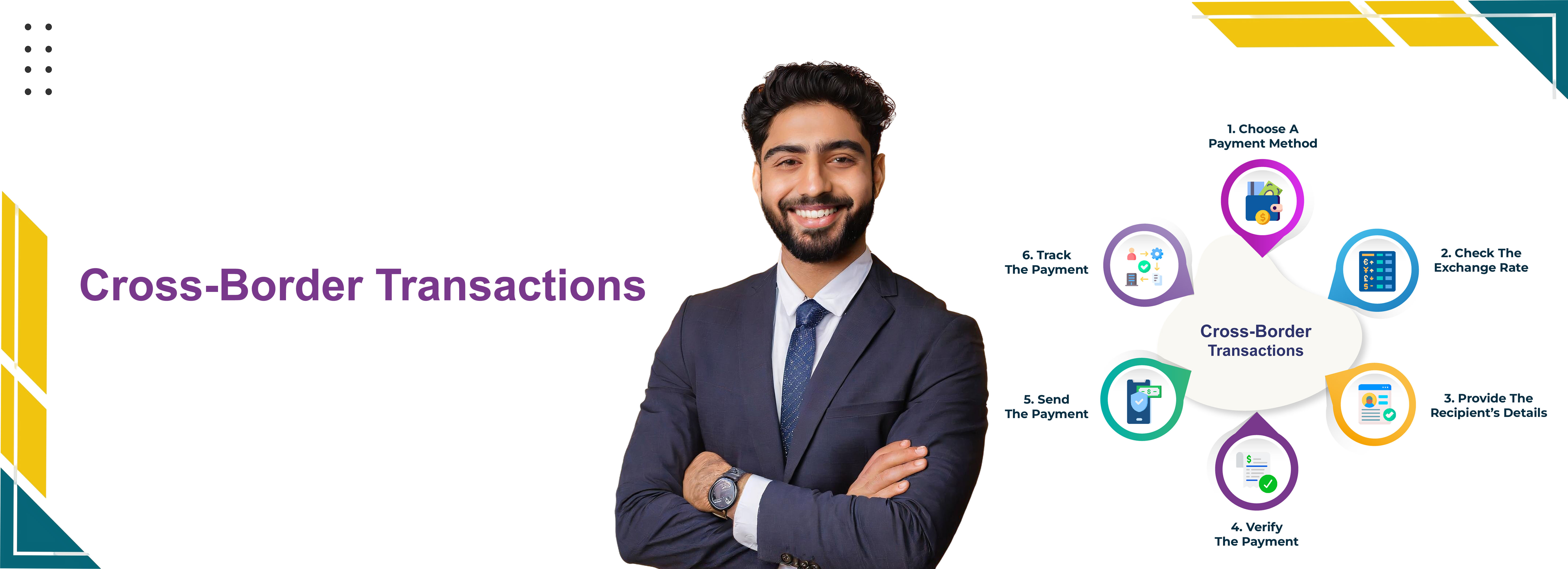
Most cross-border transactions involve seven steps
- Purchase or Initiation: An entity makes a purchase or starts the transaction process. The paying entity uses local payment options or methods to start the transaction.
- Routing and processing: The payment information or transaction is sent via an encrypted gateway to obtain authorisation to deduct the funds from the payee’s bank account. The more global banks connected to the gateway, the higher the chances the transaction is processed quickly and efficiently.
- Payment verification: The payment is verified and approved or declined by the receiving bank. The verification ensures there are sufficient funds in the payee account after currency conversion and fees are applied.
- Transaction confirmation: If approved, the transaction is sent to fulfilment or the next stage in the process. If declined, payee entity will receive an error message explaining why. This information is typically “translated” into a simple “payment/transaction is declined” message for end-users, covering various errors.
- Transaction fulfilment: For retail orders where a good or service was purchased with the transaction, the merchant can safely begin processing the fulfilment of the order. In all other cases, the transaction moves to the next stage.
- Settlement: At this stage, the transaction is approved, but the digital money hasn’t moved from the payee’s account to the recipients. This is because the transaction hasn’t cleared and hasn't been reconciled between the two entities. It must pass through a global automated clearing house (ACH) to be cleared and reconciled. This typically takes between two and five business days.
- Tracking: Each bank involved in the transaction sends a reconciliation report to the recipient entity. Global payments platforms can consolidate the reconciliation report making it easier to track the status of each transaction, reconciliation, and settlement.
Cross-border transactions are generally more costly and slower, with less access and transparency than domestic payments. They can take a few weeks to reconcile and cost up to 10 times more than a domestic transaction. Here are a few more challenges with cross-border transactions.
High funding costs
Depending on the transaction type and currencies involved, payee entities must provide funding in advance. They may need to access the relevant currencies or foreign currency markets to even initiate the transaction. That means putting aside capital to cover expected transactions, and those funds can’t be used for anything else.
Transaction fees
The more entities involved in a cross-border transaction, the higher the cost due to bank fees at each stage. Many of these fees are absorbed into the merchant bank fees and accounts, but they’re sometimes passed along to consumers or the originating payee. For example, credit card companies often charge card holders a foreign currency transaction fee for purchases made in currencies other than the card’s currency. This rate can vary between cards, issuers, and currency types, so it’s hard to know the fee for the transaction.
Currency exchange rates
Exchange rates fluctuate all the time, affecting both payee and recipient entities. Recipients could end up with a deficit if the rate decreased between the time the transaction was begun, processed, and settled. Likewise, payees may spend more on their end if the rate was higher when they started the process. To avoid this, many merchants offer the ability to purchase in a local currency and use a payment gateway or processor to find the best exchange rate for the merchant automatically. Consumers save money when spending, and merchants save during the transaction and settlement processes.
Long transaction chains
A transaction chain is the number of entities involved in a payment transaction. Domestic transactions or in-network single currency cross-border transactions tend to have shorter chains. Multi-currency cross-border transactions tend to have longer ones. The correspondent bank model allows entities to offer cross-border transactions, but it can lengthen the transaction chain at the same time. Each “link” in the chain increases the timeline, funding needs, fees, validation checks, and the potential for data to be corrupted as it is transmitted.
Complex compliance checks
Cross-border transactions tend to face broader and more stringent compliance checks against fraud, sanctions, and financial crime. Each check takes time and may happen multiple times during the transaction’s journey. Each bank or payment gateway may use different rules and guidelines when checking transactions, leading to incorrect flagging or declines. For example, if a customer has a similar name to one in financial crime databases, they may be declined automatically.
Domestic compliance checks may complicate these transactions if they move through different domestic banking networks or systems and trigger domestic compliance rules. For example, in the US and Canada, transactions that move across states and provinces may trigger unique checks that other transactions may not. And that’s even before the transaction gets to an international border.
Tax and legal implications
Taxes and local laws are another complication for cross-border transactions. There are implications for individual countries involved in the transaction and any tax-related treaties between their governments. Sales tax is the most obvious example of tax implications for cross-border transactions and how it’s applied to different transaction types depends on the countries involved. For example, it may apply to goods over a certain threshold in one country, and under that threshold in another. It may not apply to services at all in most countries and apply to all services in another, but at different rates depending on the recipient entity’s location.
Limited operating hours
Digital transactions can happen at any hour of the day, but balances and settlements often depend on bankers’ hours of operation for updates. That means that reconciliation and settlements can only happen during the hours banks are open in the payee and recipient entity’s location. This can create long delays and bottlenecks in clearing and settling cross-border transactions, especially across large time differences.
The impact is that transaction fees may fluctuate since foreign exchange rates may change during this time. Banks, entities, and recipients often must hold enough balance to cover unknown costs of the eventual foreign exchange rate, driving up overall transaction costs.
Fragmented and truncated data formats
Financial transactions contain sufficient information to confirm the identity of the those involved in the transaction and confirm its legitimacy. However, data standards and formats can vary significantly across countries, systems, message networks, and financial jurisdictions. This variation results in data fragmentation or loss as systems are not set up to handle unfamiliar data. Data may need to be translated and could lead to slight changes in spellings or formats, making it difficult to set up automated processes and increasing delays and decreasing transaction success rates.
Legacy technology platforms
Traditional financial institutions are notorious for using legacy technologies that may not interface well with newer technologies. These legacy processes and technologies may have fundamental limitations that cause settlement delays and create processing bottlenecks, such as relying on batch processing, no real-time monitoring, and low data processing capacity. These systems may not be able to handle the ebb and flow of financial transactions in real-time. Legacy technology may be a significant barrier for emerging business models and cross-border transaction technologies who want to enter a new market.
Improving cross-border transactions to make them faster, cheaper, more transparent, and easier to manage offers significant benefits to the global online payments market. While widespread systemic change takes time, individuals, merchants, banks, and financial companies can leverage modern solutions in the meantime. One such solution is the global payables platform, which streamlines and optimizes cross-border payments.
Reduce Transaction Delays
Global payment platforms use built-in features to automatically identify the most efficient processors, banking networks, and gateways for both payee and recipient. This eliminates the need for merchants and individuals to establish direct partnerships with multiple banking networks, as the platform already maintains these connections.
Save on Transaction Fees
Intelligent payment processing within these platforms lowers costs associated with cross-border fees and currency conversions. By applying predetermined routing rules based on factors such as origin, destination, currency, and product type transactions are automatically processed through the most cost-effective channels.
Optimize Compliance Checks
Since global payment platforms partner with regulated and approved payment processors, transactions are routed through pre-authorized systems. This enhances efficiency in compliance verification and provides greater security for both origin and destination entities.
Increase Accuracy and Transparency
Automation and intelligent routing ensure that transactions are processed accurately and recorded systematically. Key transaction data is stored for future reference, enabling better reconciliation, reporting, and settlement. This provides greater transparency and visibility at every stage of the transaction lifecycle.
Automate Manual Processes
Tasks such as reconciliation reporting and settlement balancing traditionally time-consuming and manual are automated within the platform. This not only accelerates processing but also frees staff to focus on higher-value activities, while improving forecasting and liquidity management.
Enable Multiple Transaction Types
Global payment platforms also provide flexibility by enabling recipients to choose the fastest and most cost-efficient transaction type. For instance, they can be programmed to always use international ACH transfers for certain destinations, or apply custom rules such as comparing multiple options before executing a high-value credit card transaction
Cross-border transactions involve multiple legal, regulatory, and operational requirements, which make documentation and approvals a critical part of the payment lifecycle. Each transaction may require contracts, invoices, licenses, or proof of compliance with both domestic and international regulations. For example, businesses may need to provide import/export documentation, letters of credit, or customs clearance papers for goods, while financial transactions may require KYC (Know Your Customer) verification, anti-money laundering (AML) certificates, and tax compliance reports.
Modern global payment platforms help automate and centralize these documentation and approval processes. By integrating document management systems and digital approval workflows, these platforms ensure that all required forms are submitted, verified, and approved before the transaction proceeds. Automated alerts notify parties of missing or incomplete documentation, reducing delays and the risk of non-compliance.
Furthermore, approval workflows can be customized according to transaction size, jurisdiction, or currency type. For instance, high-value payments may trigger additional internal approvals or regulatory checks, while standard payments follow a streamlined process. This automation not only speeds up transactions but also ensures that legal and regulatory obligations are consistently met, minimizing operational risks and providing a clear audit trail for future reference.
In essence, by embedding documentation and approval processes within modern cross-border transaction platforms, businesses and individuals can navigate the complexity of international payments with greater efficiency, accuracy, and compliance assurance.
Cross-border transactions in India are governed by a comprehensive legal and regulatory framework aimed at ensuring foreign exchange management, tax compliance, investor protection, and overall financial stability. The primary laws, regulatory authorities, and international agreements involved are as follows:
Foreign Exchange Management Act (FEMA), 1999
The Foreign Exchange Management Act (FEMA), 1999, regulates all foreign exchange transactions in India, including cross-border payments, investments, and remittances. It governs the inflow and outflow of foreign currency and distinguishes between capital account transactions, such as foreign investment, loans, and acquisition of assets, and current account transactions, including trade payments, services, and remittances. All transactions must comply with RBI-approved procedures and reporting mechanisms, and individuals or businesses are required to either obtain prior approval from the RBI or conduct transactions under the automatic routes prescribed in FEMA guidelines.
Reserve Bank of India (RBI)
The Reserve Bank of India (RBI) serves as the central authority overseeing all cross-border financial transactions in India. Its key functions include issuing regulatory guidelines for foreign investments, inward and outward remittances, and banking operations; regulating Authorized Dealers (ADs) such as banks that facilitate cross-border payments; and monitoring exchange rates, foreign currency flows, and international settlement mechanisms. Examples of RBI initiatives include the Liberalised Remittance Scheme (LRS), which allows individuals to remit up to USD 250,000 per financial year, as well as guidelines governing Foreign Direct Investment (FDI), External Commercial Borrowings (ECBs), and other capital account transactions.
Securities and Exchange Board of India (SEBI)
The Securities and Exchange Board of India (SEBI) regulates cross-border investment in securities, including Foreign Portfolio Investment (FPI) in Indian markets. Its key functions include approving and monitoring FPIs and Foreign Institutional Investors (FIIs), setting compliance requirements for international capital flows, disclosure norms, and insider trading regulations, and ensuring transparency and investor protection in all cross-border securities transactions.
Income Tax Act, 1961
The Income Tax Act, 1961 governs taxation on cross-border transactions, including income earned from foreign investments or payments made to foreign entities. It covers taxable categories such as interest, royalties, fees for technical services, dividends, and capital gains, requires withholding tax (TDS) on payments to non-residents, and determines the residential status of individuals and entities for taxation of foreign income.
Double Taxation Avoidance Agreements (DTAAs)
India has entered into Double Taxation Avoidance Agreements (DTAAs) with multiple countries to prevent double taxation on cross-border income. These agreements reduce withholding tax rates on cross-border payments, provide mechanisms for claiming tax credits in the home country, and encourage foreign investment while facilitating smoother international business operations. DTAAs typically apply to income categories such as interest, dividends, royalties, salaries, and capital gains earned by Indian residents from foreign sources.
Other Relevant Guidelines & Frameworks
Other relevant regulations and frameworks governing cross-border transactions in India include the Customs Act, 1962, which regulates import/export transactions, customs duties, and clearances; the Companies Act, 2013, which oversees foreign investments in Indian companies; and the Goods and Services Tax (GST), applicable to the international supply of goods and services, including imports and exports. Additionally, Anti-Money Laundering (AML) regulations ensure compliance with financial crime prevention laws, while India also adheres to international agreements and treaties such as FATCA (for US reporting), CRS (Common Reporting Standard), and other bilateral arrangements for cross-border information exchange.
Cross-border transactions carry higher risks than domestic payments due to the involvement of multiple jurisdictions, currencies, financial intermediaries, and regulations. Effective risk management strategies are essential for businesses, governments, and individuals to ensure smooth, secure, and cost-efficient international financial flows.
Currency Risks
-
Risk: A major risk in cross-border transactions is currency exchange rate fluctuations and settlement delays, which can increase the cost of imports or reduce the value of receivables due to volatile foreign exchange markets.
-
Mitigation: To mitigate this, businesses use hedging strategies, multi-currency accounts, real-time FX monitoring, and diversification across markets, ensuring greater stability and predictability in international operations.
Compliance Risks
-
Risk: A key risk in cross-border transactions is regulatory complexity, as varying laws under FEMA, RBI, SEBI, FATF guidelines, AML/KYC norms, and tax regimes can cause penalties, delays, or reputational damage if not followed.
-
Mitigation: To mitigate this, businesses implement robust compliance frameworks, AI-driven KYC/AML systems, regular audits, and proactive engagement with regulators, ensuring smooth and lawful international operations.
Fraud Prevention & Cybersecurity Risks
-
Risk: Cross-border transactions face significant cybersecurity threats, including phishing, money laundering, identity theft, and cyberattacks. The complexity of long transaction chains and fragmented data further increases opportunities for fraudulent activity.
-
Mitigation: These risks can be addressed through advanced authentication methods (biometrics, 2FA, tokenization), AI-powered transaction monitoring, blockchain and distributed ledger technology for secure records, robust cybersecurity protocols (encryption, firewalls, penetration testing), and ongoing staff training on fraud prevention and safe transaction practices.
Legal Safeguards
-
Risk: Cross-border transactions can lead to disputes arising from contract breaches, taxation issues, intellectual property rights, or trade restrictions. Enforcing contracts internationally is often difficult due to differing legal systems.
-
Mitigation: Risks can be minimized by drafting clear contracts with governing law, jurisdiction, and arbitration clauses, using international arbitration forums (ICC, LCIA, SIAC), securing insurance or letters of credit, planning taxes under DTAAs, and performing thorough legal and financial due diligence on international partners.
Cross-border transactions are evolving rapidly, driven by globalization, technology, fintech innovation, and changing regulatory frameworks. Here are the key trends shaping the future:
Digital Payment Adoption & Fintech Disruption
Recent trends in cross-border transactions highlight the shift toward digital-first solutions. The rise of digital wallets, UPI, and mobile banking is making cross-border payments faster, cheaper, and more accessible. Fintech companies are challenging traditional banking models by offering instant currency conversion, low-cost transfers, and borderless payment platforms. As a result, businesses and consumers increasingly prefer digital solutions over traditional wire transfers, particularly for eCommerce, B2B, and remittance purposes.
Blockchain & Distributed Ledger Technology (DLT)
Emerging technologies are reshaping cross-border transactions, particularly through blockchain-based payments. These systems promise real-time settlement, greater transparency, and lower costs by reducing reliance on intermediaries. Distributed ledger technology (DLT) ensures immutable transaction records, which helps minimize fraud and compliance risks. Additionally, central banks and financial institutions are exploring Central Bank Digital Currencies (CBDCs) to enable faster, secure, and fully regulated cross-border transactions.
Artificial Intelligence & Automation
Artificial intelligence (AI) is increasingly being applied to cross-border transactions to enhance efficiency and reduce risk. AI-powered platforms optimize payment routing, foreign exchange conversions, and fraud detection. The automation of compliance checks, reconciliation, and approvals helps minimize delays and errors in complex multi-step transactions. Additionally, predictive analytics enables businesses to anticipate currency fluctuations and manage cross-border cash flows more effectively, improving overall financial planning and operational efficiency.
Multi-Currency Accounts & Real-Time FX Conversion
The adoption of multi-currency accounts by banks and fintech platforms is transforming cross-border transactions for both businesses and individuals. These accounts allow users to hold, pay, and receive multiple currencies within a single account, significantly reducing transaction costs and minimizing foreign exchange risks. Coupled with real-time FX conversion, businesses can lock in favorable rates instantly, providing greater predictability and efficiency in their cross-border operations.
Regulatory Harmonization & Open Banking
Global regulatory trends are increasingly focused on standardizing cross-border payment rules to simplify and streamline international transactions. Initiatives like Open Banking and APIs enable secure sharing of financial data across borders, allowing seamless integration of payments, loans, and treasury operations. Clear and harmonized regulations not only encourage foreign investment and international partnerships but also ensure compliance with key requirements such as AML, KYC, and taxation norms, fostering a safer and more efficient cross-border payment ecosystem.
Growth of E-Commerce & Global Trade
Cross-border eCommerce is expected to expand rapidly, with small and medium enterprises increasingly tapping into international markets. This growth will be fueled by faster, cheaper payment solutions and improved logistics networks that make even micro-transactions and small-value cross-border payments viable. Moreover, integrated platforms combining payments, shipping, and customs clearance are set to dominate the global trade ecosystem, providing businesses and consumers with seamless end-to-end international commerce experiences.
Enhanced Security & Fraud Prevention
With the rise in cross-border transaction volumes, cybersecurity threats have also grown significantly, making payment security a top priority. To counter these risks, financial systems are increasingly adopting biometric authentication, tokenization, and AI-driven fraud monitoring as standard safeguards. These measures, along with secure transaction protocols, not only ensure regulatory compliance but also help build trust and confidence among consumers and businesses participating in international trade and payments.
Sustainability & ESG Considerations
Companies and financial institutions are increasingly integrating Environmental, Social, and Governance (ESG) criteria into their cross-border transactions. This shift means that green finance initiatives are starting to influence areas such as international lending, remittances, and trade financing. As a result, businesses that prioritize sustainability and ethical practices are more likely to benefit from favorable funding opportunities, regulatory support, and stronger global partnerships in the evolving international financial landscape.
Increasing Use of Data & Analytics
In the future, transaction data will play a pivotal role in shaping cross-border payments and business strategies. By analyzing payment flows and consumer behavior, companies can predict demand patterns, optimize supply chains, and design tailored financial products for global customers. At the same time, analytics-driven insights will enable businesses to reduce operational costs, improve liquidity management, and mitigate risks associated with currency fluctuations or regulatory compliance, ultimately making international operations more efficient and resilient.
Integration with Global Trade Finance
In the coming years, cross-border payments will become tightly integrated with trade finance platforms, enabling businesses to track shipments, invoicing, and payments in real time. This integration will improve transparency across global supply chains and ensure smoother settlement of international trade. Additionally, the use of smart contracts will automate payment triggers based on predefined milestones, such as shipment dispatch or delivery confirmation. This automation will reduce delays, minimize disputes, and enhance trust among international trading partners.

 Compliance Calendar ®