




Closing a Limited Liability Partnership is not only a business decision. It is also a legal process that must be completed through proper filing, documentation and approval from the Registrar of Companies. Many LLPs stop business operations, but their partners do not formally close the LLP on the MCA portal. This creates future problems because an LLP continues to remain active in government records until its name is struck off or it is legally wound up. Once an LLP remains active, annual compliance, return filing, statutory records and penalties may continue to apply even if there is no business activity.
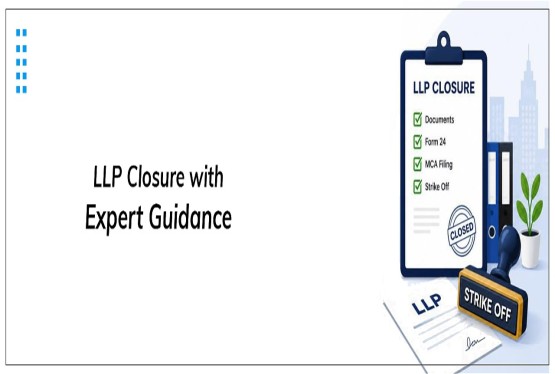
In India, the closure of an inactive LLP is mainly done through the strike-off route by filing Form 24 with the Registrar. This is generally used when the LLP has stopped business, has no assets, has no liabilities and does not intend to carry on any future operations. The legal basis for strike-off comes from Section 75 of the Limited Liability Partnership Act, 2008 and Rule 37 of the Limited Liability Partnership Rules, 2009. Section 75 gives the Registrar power to strike off a defunct LLP after giving a reasonable opportunity of being heard, and Rule 37 provides the procedure for striking off the name of the LLP from the register.
Understanding LLP Closure
LLP closure means legally ending the existence of the LLP as a registered business entity. Merely stopping work, closing the office, surrendering GST registration or stopping bank transactions does not close an LLP. Until the LLP is removed from the MCA register, it may still be treated as an existing entity under law.
An LLP may be closed mainly in two ways. The first is strike-off, which is used for an LLP that has become inactive and has no assets or liabilities. The second is winding up, which may be required where the LLP has debts, disputes, assets, creditors, pending litigation or other legal matters that cannot be settled through a simple strike-off process. Strike-off is simpler, faster and more suitable for non-operational LLPs, while winding up is more formal and may involve tribunal or legal proceedings.
For most small and inactive LLPs, partners usually prefer strike-off through Form 24 because it helps avoid future annual filing burden. However, this option should be used only after checking that the LLP is eligible and that all pending matters have been properly settled.
Legal Provision for Strike-Off of LLP
Section 75 of the LLP Act, 2008 is the main section that deals with the power of the Registrar to strike off a defunct LLP. It provides that where the Registrar has reasonable cause to believe that an LLP is not carrying on business or operation, the name of the LLP may be struck off from the register in the manner prescribed. The section also states that the Registrar must give the LLP a reasonable opportunity of being heard before striking off its name.
Rule 37 of the LLP Rules, 2009 explains the practical procedure. It covers situations where the Registrar may act on his own and where the LLP itself applies for strike-off. Under the rule, the notice or contents of the application are placed on the MCA website for public information for one month. After the expiry of the prescribed period, if no valid objection is received and the Registrar is satisfied, the name of the LLP may be struck off and notice is published in the Official Gazette. On publication in the Official Gazette, the LLP stands dissolved.
This means closure is not automatic on filing Form 24. Filing is only an application. The LLP is legally closed only after the Registrar approves the application and the strike-off notice is published as required under the rules.
Recent Update and Current Filing Position
The LLP closure process has become more system-driven through MCA online filing. LLP Form 24 is the key form for voluntary strike-off of an LLP. The MCA framework allows inactive LLPs to apply for strike-off electronically, subject to documents, declarations and verification by the Registrar.
A recent government update through PIB in August 2025 also highlighted that Rule 37(1) of the LLP Rules was amended to enable filing of LLP e-Form 24 for processing striking-off of LLPs through ROC, and that thousands of LLPs had been struck off under the mechanism as of 31 July 2025. This shows that LLP strike-off remains an active legal route for closing non-operational LLPs, but it must be handled with correct documents and pending compliance checks.
Partners should also keep in mind that MCA processes, forms, attachments and portal requirements may change from time to time. Therefore, before filing, the latest MCA portal requirements, form version, fee, attachments and professional certification requirements should be checked.
When Can an LLP Apply for Closure?
An LLP should apply for closure when it has stopped business permanently and the partners do not want to continue the entity. Common reasons include business failure, no commercial activity, change in business model, merger of operations into another entity, partner dispute settlement, high compliance cost or completion of the purpose for which the LLP was formed.
For strike-off, the LLP should generally not be carrying on any business or operation. It should have no assets and no liabilities at the time of filing. Any bank balance, receivable, payable, loan, tax liability, vendor due, employee due or partner settlement should be completed before filing the closure application. If there are pending liabilities, the Registrar may ask for clarification or reject the application.
The LLP should also ensure that pending statutory filings are completed. If annual returns, statements of accounts or income tax returns are pending, they should be reviewed before strike-off. Filing Form 24 without checking past compliance is one of the biggest mistakes partners make.
Important Forms Involved in LLP Closure
Form 24 is the main form used for applying for strike-off of the LLP. It is filed with the Registrar of Companies through the MCA portal. The form contains basic details of the LLP, date from which it stopped business, reason for closure, declarations and attachments.
Before Form 24, partners may also need to check whether Form 11 and Form 8 filings are pending. Form 11 is the annual return of an LLP, while Form 8 is the statement of account and solvency. If the LLP has carried on business in earlier years, pending filings may need to be completed before closure. If the LLP never commenced business after incorporation, the filing position should still be reviewed carefully based on MCA requirements.
If the LLP had GST registration, GST cancellation should also be completed separately. GST cancellation does not close the LLP under MCA records. Similarly, surrendering MSME registration, closing a bank account or cancelling a trade licence does not automatically strike off the LLP.
Documents Required for LLP Strike-Off
The documents required for LLP strike-off are very important because the Registrar of Companies checks these documents before approving closure. The purpose of these documents is to confirm that the LLP has stopped business, has no assets, has no liabilities and does not have any pending dispute that may affect closure.
If the documents are incomplete, incorrect or not properly signed, the ROC may raise a clarification, send the form for resubmission or reject the application. Therefore, partners should prepare all documents carefully before filing Form 24 for LLP closure.
Consent of All Partners
Consent of all partners is one of the most important documents for LLP strike-off. Since an LLP is formed by partners, the decision to close the LLP should be taken with the approval of all partners.
This consent shows that every partner agrees to close the LLP and that there is no internal dispute regarding closure. If one partner does not agree or if there is a disagreement between partners, the strike-off process may become difficult.
Affidavit by Partners
An affidavit is a written declaration given by the partners or designated partners. It usually confirms that the LLP has stopped business operations, has no pending liabilities and the information submitted to ROC is true.
This document helps the Registrar rely on the statements made by the partners. If any false information is given in the affidavit, the partners may face legal consequences later.
Indemnity Bond
An indemnity bond is given to protect the authorities and third parties from future claims. Through this bond, the partners generally undertake that if any liability, claim or dispute arises after the LLP is struck off, they will be responsible for it.
This is important because strike-off does not remove the responsibility of partners for genuine pending dues or hidden liabilities. If any unpaid tax, creditor claim or legal issue comes up later, partners may still be held responsible.
Statement of Accounts
A statement of accounts is required to show the financial position of the LLP at the time of closure. It should generally show that the LLP has nil assets and nil liabilities. This statement is usually certified by a Chartered Accountant. It helps the Registrar confirm that there is no money, property, loan, creditor, debtor or other financial matter pending in the LLP.
Recent Statement of Accounts
The statement of accounts should be recent and not outdated. Usually, it should not be older than 30 days from the date of filing Form 24. This is required because the Registrar wants to know the latest financial status of the LLP before allowing strike-off. An old statement may not correctly reflect whether the LLP currently has any assets or liabilities.
Latest Income Tax Return Acknowledgement
If the LLP has filed income tax returns, the latest income tax return acknowledgement may be required. This helps show that the LLP has complied with income tax filing requirements. If the LLP never started business or had no income, the filing position should still be checked properly. Pending tax returns or tax demands may create issues during closure.
Bank Account Closure Proof
If the LLP had a bank account, proof of bank account closure should be kept ready. This may include a bank closure letter or confirmation from the bank. An active bank account may indicate that the LLP still has assets or financial activity. Therefore, before filing Form 24, the bank account should generally be closed after settling all balances.
Statement Regarding Pending Litigation or Liabilities
The LLP should also give a statement regarding pending litigation, dues or liabilities. This confirms whether there is any court case, tax demand, creditor claim, employee claim or government notice pending against the LLP.
If there is any pending matter, it should be disclosed and settled before filing the strike-off application. Hiding liabilities may create future legal problems for partners.
Partner Approval Record
Apart from consent, it is advisable to properly record the decision of partners to close the LLP. This may be done through a resolution or written approval, depending on the LLP’s internal process. A clear approval record helps show that the closure decision was taken properly and with full knowledge of all partners. It also helps avoid future disputes between partners.
Role of Affidavit and Indemnity Bond
Affidavit and indemnity bond are key documents in LLP closure. Through these documents, the partners or designated partners usually confirm that the LLP has stopped business, has no assets or liabilities and that the information provided to the Registrar is true. The indemnity bond also protects the authorities and third parties by making partners responsible for future claims if any liability appears after strike-off.
Rule 37 also makes it clear that even after the name is removed, assets of the LLP may be made available for payment or discharge of liabilities and obligations. It further states that the liability of every designated partner of the dissolved LLP continues and may be enforced as if the LLP had not been dissolved. Therefore, strike-off does not become a shield against hidden debts, fraud, misstatement or unpaid dues.
This is why partners must not file false declarations. If there is any pending liability, bank loan, tax demand, vendor due, employee claim or litigation, it should be disclosed and settled before filing.
Income Tax and GST Checks Before Closure
Before closing an LLP, partners should check income tax compliance. If the LLP has filed earlier income tax returns, the latest return acknowledgement may be required. If the LLP has not commenced business, the tax filing position should still be reviewed based on the period of existence and income status. Any pending tax demand, TDS default, notice or refund issue should be resolved before closure.
GST compliance should also be checked. If the LLP was registered under GST, cancellation of GST registration must be filed separately on the GST portal. Pending GSTR-1, GSTR-3B, annual return, late fees, interest or tax dues should be cleared before applying for LLP closure. If GST registration remains active after LLP strike-off, it may create confusion and future notices.
Other registrations such as PF, ESI, Shops and Establishment, professional tax, FSSAI, IEC, trademark user details and other business licences should also be reviewed. The LLP should surrender or update registrations wherever required.
Step-by-Step Process for Closing an LLP
Closing an LLP is a legal process and should be done in a proper sequence. Partners should not directly file Form 24 without checking business activity, liabilities, pending filings, tax dues and required documents. If the LLP closure application is filed without proper preparation, the Registrar may send it for resubmission, ask for clarification or reject it.
The strike-off process is mainly suitable for an LLP that has stopped business, has no assets, has no liabilities and does not intend to operate in future. Therefore, before applying for closure, the partners should make sure that the LLP is fully ready for strike-off.
Step 1: Stop Business Operations Completely
The first step is to stop all business activities of the LLP. The LLP should not continue issuing invoices, accepting new orders, entering fresh contracts, providing services or carrying out any commercial transaction if it wants to apply for strike-off.
The date on which business operations stopped should be clearly identified. This date may be mentioned in closure documents, affidavits or declarations. If the LLP continues business even after claiming that it has stopped operations, the closure application may face objection.
Step 2: Settle Assets and Liabilities
After stopping business, the LLP should settle all financial matters. Any bank balance should be adjusted, creditors should be paid, loans should be closed, debtors should be recovered and partners’ capital accounts or current accounts should be settled.
The LLP should not have any pending assets or liabilities at the time of filing Form 24. If the LLP has a bank account, it should generally be closed after settling the balance. Bank account closure proof should be obtained because the ROC may ask for it during verification.
Step 3: Complete Pending Filings and Tax Compliance
Before applying for closure, partners should check whether any statutory filing is pending. This includes Form 8, Form 11, income tax returns, GST returns, TDS returns and any other applicable compliance.
If any return or filing is pending, it should be completed or properly reviewed before filing Form 24. Pending compliance may create objections during ROC processing. Even if the LLP has not done business, its filing status should still be checked carefully.
Step 4: Prepare Closure Documents
Once compliance and financial matters are checked, the LLP should prepare all closure documents. These usually include consent of partners, affidavit, indemnity bond, statement of accounts, CA certification, latest income tax return acknowledgement if applicable and other supporting documents.
The documents should clearly show that the LLP has stopped business and has no assets or liabilities. All documents should be properly signed, dated and prepared as per MCA requirements. Any mismatch in documents may lead to resubmission.
Step 5: File Form 24 on MCA Portal
After preparing the documents, Form 24 must be filed on the MCA portal. This is the main form used for voluntary strike-off of an inactive LLP.
The form should be filled carefully with correct LLP details, date of cessation of business and reason for closure. It must be signed by the designated partner. Professional certification may also be required as per the form requirements. Wrong details or incomplete attachments may delay the closure process.
Step 6: ROC Verification
After Form 24 is filed, the Registrar of Companies verifies the application and attached documents. The ROC checks whether the LLP is eligible for strike-off, whether all documents are proper and whether there are any pending issues.
The Registrar may approve the form, ask for resubmission, seek clarification or reject the application if facts are not clear. If any clarification is raised, the LLP should reply within the prescribed time with proper documents and explanation.
Step 7: Strike-Off Approval and Publication
If the Registrar is satisfied with the application, the strike-off process moves ahead. The details may be placed for public notice as per the prescribed process, allowing objections, if any.
After the notice period and final approval, the name of the LLP is struck off from the register. The LLP stands dissolved after publication in the Official Gazette as per Rule 37 of the LLP Rules, 2009. Only after this stage can the LLP be treated as legally closed.
Common Mistakes While Closing an LLP
One of the most common mistakes is assuming that an LLP is closed just because business has stopped. An LLP must be legally closed through MCA records. Until then, annual filings and legal responsibilities may continue.
Another mistake is filing Form 24 without completing previous compliance. If Form 8, Form 11, income tax return, GST return or bank closure proof is missing, the application may face resubmission or rejection. Partners should not treat Form 24 as a shortcut to avoid pending compliance.
A third mistake is not closing the bank account. If the LLP still has an active bank account or balance, it may indicate that the LLP has assets. The statement of accounts should show nil assets and nil liabilities, so bank settlement is very important.
Another major mistake is giving incorrect declarations. If the LLP has outstanding loans, unpaid vendor bills, tax dues or pending litigation, partners should not declare that there are no liabilities. False filings may create personal risk for designated partners.
Many LLPs also forget to cancel GST registration, professional tax, shops and establishment registration or other licences. MCA strike-off does not automatically cancel every business registration. Each registration should be reviewed separately.
Liability After LLP Strike-Off
Partners often believe that once the LLP is struck off, all responsibilities end. This is not fully correct. Rule 37 clearly states that the liability of designated partners continues and may be enforced as if the LLP had not been dissolved. It also states that assets may be used for payment or discharge of liabilities even after removal of the LLP’s name.
This means if any creditor, tax department, employee, customer or authority later proves that there was an outstanding liability, partners may still face consequences. Strike-off cannot be used to escape genuine dues.
Therefore, before closure, the LLP should prepare a proper liability review. Partners should check bank loans, GST dues, income tax notices, TDS defaults, vendor dues, employee dues, rent dues, professional fee dues and ongoing contracts. Written confirmations or settlements should be maintained wherever required.
Difference Between Strike-Off and Winding Up
Strike-off is suitable for an LLP that is inactive, has no assets, has no liabilities and does not have disputes. It is a Registrar-based process and is generally simpler. Winding up is more suitable where the LLP has business operations, assets, liabilities, creditors, disputes or legal claims that need formal settlement.
If an LLP has unpaid creditors or pending litigation, strike-off may not be the right option. In such cases, professional advice should be taken to decide whether winding up or another legal route is required. Choosing the wrong closure route can lead to rejection, objections or future liability.
Why Proper Filing Matters
Proper filing matters because LLP closure is a declaration-based process. The Registrar relies on documents submitted by the partners. If there is any mismatch between the statement of accounts, bank account status, income tax filing, GST registration or MCA records, the application may not move smoothly.
Proper filing also protects partners. When documents are correctly prepared, liabilities are settled and filings are completed, the risk of future notices reduces. On the other hand, careless filing can create long-term problems for designated partners.
A properly closed LLP also helps partners move forward with new business plans. It avoids unnecessary annual filing fees, late fees, penalties and compliance tracking for an inactive entity.
Practical Checklist Before Filing Form 24
Before filing Form 24, partners should check whether the LLP has actually stopped business, whether all partners have agreed to closure, whether the bank account is closed, whether the statement of accounts shows no assets or liabilities, whether tax returns are updated, whether GST and other registrations are reviewed, whether there is any litigation and whether the affidavit and indemnity bond are properly prepared.
The LLP should also check whether there are any charges, loans, contracts, leases, employee claims, vendor disputes or government notices. If any such matter exists, it should be settled before applying for strike-off.
Conclusion
Closing an LLP is not only about stopping business operations. It is about legally removing the LLP from MCA records through proper filing and compliance. Section 75 of the LLP Act, 2008 gives the Registrar power to strike off a defunct LLP, while Rule 37 of the LLP Rules, 2009 provides the process for strike-off and dissolution. Form 24 is the key form used for voluntary closure of an inactive LLP.
Partners should avoid mistakes such as ignoring pending filings, keeping bank accounts active, not settling liabilities, giving false declarations or assuming that GST cancellation means LLP closure. A proper closure process should include compliance review, liability settlement, partner consent, statement of accounts, affidavit, indemnity bond, tax checks and accurate Form 24 filing.
A legally closed LLP gives peace of mind to partners and prevents future compliance burden. If your LLP has stopped operations and has no assets or liabilities, proper strike-off filing can help you close it cleanly and avoid unnecessary penalties, notices and legal complications.
Frequently Asked Questions (FAQs)
Q1. How can an LLP be closed in India?
Ans: An LLP can be closed by filing Form 24 with the Registrar of Companies if it is inactive and has no assets or liabilities. This process is known as strike-off under Section 75 of the LLP Act, 2008 and Rule 37 of the LLP Rules, 2009.
Q2. Is Form 24 mandatory for closing an LLP?
Ans: Yes, Form 24 is the main form used for voluntary closure or strike-off of an inactive LLP. Without proper MCA filing and ROC approval, the LLP continues to exist in government records.
Q3. Can an LLP be closed without filing annual returns?
Ans: Generally, pending compliances should be checked and completed before filing Form 24. If Form 8, Form 11 or other filings are pending, the ROC may ask for clarification or reject the closure application.
Q4. What are the documents required for LLP closure?
Ans: Common documents include consent of partners, affidavit, indemnity bond, statement of accounts, bank closure proof and latest income tax return acknowledgement, if applicable. The statement of accounts should show nil assets and nil liabilities.
Q5. Can an LLP with liabilities apply for strike-off?
Ans: An LLP with outstanding liabilities should not apply for strike-off through Form 24. All dues, loans, tax liabilities, vendor payments and partner settlements should be cleared before filing the closure application.
Q6. Does GST cancellation mean LLP closure?
Ans: No, GST cancellation and LLP closure are different processes. GST cancellation only closes GST registration, while LLP closure must be completed separately through MCA by filing Form 24.
Q7. Can partners be liable after LLP strike-off?
Ans: Yes, designated partners may still be liable if any hidden liability, unpaid due or false declaration comes up after strike-off. Closure does not protect partners from fraud, misstatement or genuine pending claims.
Q8. Is bank account closure required before Form 24?
Ans: Yes, the LLP bank account should generally be closed before filing Form 24. If the bank account is active or has balance, it may show that the LLP still has assets.
Q9. How long does LLP closure take?
Ans: The timeline depends on ROC processing, document correctness and whether any clarification is raised. If documents are proper and there are no objections, the closure process may move smoothly.
Q10. What happens after ROC approves LLP closure?
Ans: After ROC approval and required publication, the LLP’s name is struck off from the register and the LLP stands dissolved. After this, it should not carry on any business activity.








_crop10_thumb.png)
_crop10_thumb.png)
_crop10_thumb.jpg)