_crop6_thumb.jpg)



Trademark registration in India is one of the most important legal steps for protecting a brand name, logo, tagline, label, device, symbol, packaging style, sound mark, colour combination or any other mark that identifies the goods or services of a business. A trademark gives a business a separate commercial identity and helps customers distinguish one brand from another in the market. In India, trademarks are governed mainly by the Trade Marks Act, 1999 and the Trade Marks Rules, 2017. The registration process is administered by the Trade Marks Registry under the Office of the Controller General of Patents, Designs and Trade Marks.
A registered trademark gives the owner statutory rights, legal protection against misuse, and the ability to take infringement action against unauthorised use. Trademark registration is useful for startups, MSMEs, companies, LLPs, partnership firms, proprietorships, e-commerce brands, manufacturers, service providers, consultants, exporters, franchise businesses and digital businesses. In today’s competitive market, a brand without trademark protection may face copying, objections, oppositions, rebranding costs and legal disputes.
Meaning of Trademark under Indian Law
As per Section 2(1)(zb) of the Trade Marks Act, 1999, a trademark means a mark capable of being represented graphically and capable of distinguishing the goods or services of one person from those of others. It may include the shape of goods, packaging and combination of colours. Section 2(1)(m) defines a “mark” to include a device, brand, heading, label, ticket, name, signature, word, letter, numeral, shape of goods, packaging or combination of colours. In simple words, a trademark is any sign, name or symbol that helps people identify the source of goods or services. For example, a brand name for clothing, a logo for a food business, a tagline for a consulting firm, or a product label for a cosmetic brand may be protected as a trademark.
Why Trademark Registration is Important
Trademark registration gives legal ownership over the brand in relation to the goods or services for which it is registered. It prevents others from using identical or deceptively similar marks in the same or related business category. A registered trademark also builds brand value. It can be licensed, assigned, franchised, sold or used as an intangible business asset. For growing businesses, investors and partners often check whether the brand name is legally protected before entering into commercial arrangements. Without registration, the brand owner may still claim common law rights through prior use, but enforcement becomes more difficult. Section 27 of the Trade Marks Act states that no person shall be entitled to institute proceedings for infringement of an unregistered trademark. However, the law preserves the right to file a passing off action.
Types of Trademarks in India
1. Word Mark
A word mark protects the name or word itself, regardless of font, design or style. It is one of the strongest forms of trademark protection. Examples include business names, brand names, product names and service names.
2. Device or Logo Mark
A device mark protects the visual appearance of a logo, symbol, label or artistic brand representation. If a business wants to protect its specific design, colour style or symbol, it may apply for a device mark.
3. Tagline or Slogan
A tagline can be protected if it is distinctive and capable of identifying the business source. Generic promotional lines may face objection unless they have acquired distinctiveness.
4. Shape Mark
The shape of goods or packaging can be registered if it is distinctive and not merely functional. The shape should help customers identify the brand.
5. Colour Combination Mark
A combination of colours may be protected if it has acquired recognition and distinctiveness in the market. Single colour marks are generally difficult unless strong evidence of use is available.
6. Sound Mark
A sound mark may be registered if it can be graphically represented through musical notation and is capable of distinguishing the goods or services of one person from another.
7. Collective Mark
A collective mark is used by members of an association to show membership or common standards. It is governed under specific provisions of the Trade Marks Act.
8. Certification Mark
A certification mark certifies that goods or services meet certain standards of quality, origin, material, mode of manufacture or performance.
Eligibility for Trademark Registration in India
Any person claiming to be the proprietor of a trademark may apply for registration under Section 18 of the Trade Marks Act, 1999.
Eligible Applicants
- Individual
- Sole proprietorship
- Partnership firm
- Limited Liability Partnership
- Private Limited Company
- Public Limited Company
- One Person Company
- Trust
- Society
- Association of persons
- Hindu Undivided Family
- Startup
- MSME
- Foreign individual or foreign company
- Joint applicants
- Government body or statutory organisation
Basic Eligibility Conditions
- The mark should be distinctive.
- The mark should not be generic or descriptive.
- The mark should not be identical to an existing trademark.
- The mark should not be deceptively similar to a registered or pending mark.
- The mark should not hurt religious sentiments.
- The mark should not contain prohibited emblems or official symbols.
- The mark should not falsely describe the goods or services.
- The applicant must have a genuine intention to use the mark or must already be using it.
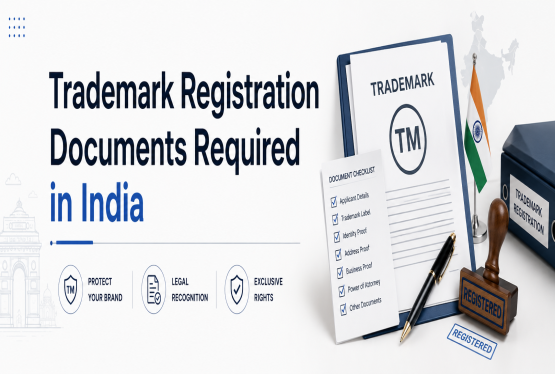
Documents Required for Trademark Registration
For Individual or Proprietor
- Applicant’s name, address and nationality
- Aadhaar card or PAN card
- Logo or brand name, if any
- Description of goods or services
- User affidavit, if claiming prior use
- Proof of use, if applicable
- Signed Power of Attorney
- Mobile number and email ID
For Partnership Firm or LLP
- Partnership deed or LLP agreement
- PAN card of firm or LLP
- Incorporation certificate, if LLP
- Partner details
- Brand name or logo
- Goods or services description
- User affidavit, if prior use is claimed
- Proof of use, if available
- Signed Power of Attorney
For Company
- Certificate of incorporation
- Company PAN card
- Registered office address
- Director or authorised signatory details
- Board authorisation, if required
- Brand name or logo
- Goods or services description
- User affidavit, if prior use is claimed
- Proof of use
- Signed Power of Attorney
For Startup or MSME
- Startup India recognition certificate, if applicable
- Udyam Registration Certificate, if applicable
- Identity and address proof
- Brand name or logo
- Goods or services details
- Power of Attorney
- User affidavit and proof of use, if applicable
Common Proof of Use Documents
- Invoices
- Website screenshots
- Product packaging
- Brochures
- Advertisements
- Social media pages
- Domain registration proof
- Business cards
- Catalogues
- Purchase orders
- Export documents
- Marketplace listings
Legal Provisions Related to Trademark Registration
Section 9: Absolute Grounds for Refusal
Section 9 is one of the most important provisions in trademark examination. It provides that marks which are not distinctive, descriptive, generic or commonly used in trade may be refused. A mark may be objected under Section 9 if it directly describes the quality, quantity, kind, intended purpose, value, geographical origin or other characteristics of goods or services.
For example, using a purely descriptive term like “Best Quality Rice” for rice may face objection. The proviso to Section 9 allows registration if the mark has acquired distinctiveness due to prior use or if it is a well-known trademark.
Section 11: Relative Grounds for Refusal
Section 11 deals with conflict with earlier trademarks. A mark may be refused if it is identical or deceptively similar to an earlier trademark and covers identical or similar goods or services. This section is used when the Registry finds an earlier registered or pending mark that may confuse consumers. It also protects well-known trademarks against misuse, even across different classes, where unfair advantage or dilution may occur.
Section 12: Honest Concurrent Use
Section 12 allows the Registrar to permit registration of identical or similar marks in cases of honest concurrent use or special circumstances. This provision is helpful where two businesses have honestly used similar marks for a long time without dishonest intention.
Section 18: Application for Registration
Section 18 provides that any person claiming to be the proprietor of a trademark may apply in writing to the Registrar for registration. The application must be filed in the prescribed manner and for the relevant goods or services.
Section 20: Advertisement of Application
After acceptance, the application is advertised in the Trade Marks Journal. Publication gives the public an opportunity to oppose the mark if they believe it should not be registered.
Section 21: Opposition to Registration
Any person may file a notice of opposition within four months from the date of advertisement or re-advertisement of the trademark application. Opposition proceedings are legal proceedings before the Trade Marks Registry.
Section 23: Registration
If the application is accepted and no opposition is filed, or if the opposition is decided in favour of the applicant, the mark proceeds to registration. The registration certificate is issued thereafter.
Section 25: Duration and Renewal
A trademark is registered for a period of 10 years. It can be renewed from time to time for further periods of 10 years. If renewal is not completed, the mark may be removed from the register, subject to restoration provisions.
Section 27: No Infringement Action for Unregistered Trademark
Section 27 states that infringement proceedings cannot be filed for an unregistered trademark. However, it preserves the common law remedy of passing off.
Section 28: Rights Conferred by Registration
Registration gives the proprietor the exclusive right to use the trademark in relation to the goods or services for which it is registered and to obtain relief for infringement.
Section 29: Infringement of Registered Trademark
Section 29 explains when a registered trademark is infringed. Infringement may occur when another person uses an identical or deceptively similar mark in relation to identical or similar goods or services, causing likelihood of confusion.
Section 30: Limits on Effect of Registered Trademark
Section 30 provides certain limits and defences. For example, fair use, descriptive use, use to indicate kind or quality, and honest practices may not amount to infringement in certain situations.
Section 31: Registration as Prima Facie Evidence
Registration of a trademark is considered prima facie evidence of validity in legal proceedings.
Section 34: Protection of Prior User
Section 34 protects the rights of a prior user. Even a registered proprietor may not be able to stop another person who has honestly and continuously used the mark from an earlier date.
Section 47: Removal for Non-Use
A registered trademark may be removed if it has not been used for a continuous period as prescribed under law. This prevents unused marks from blocking genuine businesses.
Section 57: Rectification of Register
Section 57 allows correction or cancellation of entries in the register. A person may seek rectification if a mark has been wrongly registered or wrongly remains on the register.
Trademark Registration Process in India
1. Trademark Search
The first step is to conduct a trademark search. A search helps identify identical or similar marks already filed or registered in the same class. It reduces the risk of objection, opposition and future disputes. A proper search should include wordmark search, phonetic search, class-wise search and logo/device search if applicable. Businesses should also check domain names, company names, social media handles and marketplace listings.
2. Selection of Trademark Class
India follows the Nice Classification system, under which goods and services are divided into 45 classes. Classes 1 to 34 cover goods, while Classes 35 to 45 cover services. Choosing the correct class is very important. Filing in the wrong class may reduce protection and may require fresh filing later. If the brand is used for multiple goods or services, multi-class filing may be required.
3. Filing of Application in Form TM-A
The trademark application is filed in Form TM-A. The application includes applicant details, trademark details, class, description of goods or services, user details, priority claim if any, and representation of the mark. The application can be filed physically or through e-filing. E-filing is commonly preferred because it is faster and cost-effective.
4. Vienna Codification
If the application contains a logo or device element, it may be sent for Vienna Codification. This is a classification system for figurative elements in trademarks.
5. Formality Check
The Registry checks whether the application is properly filed with correct documents, fee, Power of Attorney and representation of the mark. If there is any defect, the applicant may be required to correct it.
6. Examination by Registry
The trademark examiner examines the application under the Trade Marks Act and Rules. The examiner may accept the mark or issue an examination report raising objections under Section 9, Section 11 or other relevant provisions.
7. Reply to Examination Report
If an objection is issued, the applicant must file a proper reply within the prescribed time. The reply should contain legal arguments, evidence of use, distinctiveness, difference from cited marks and supporting documents. A weak or incomplete reply may lead to hearing or refusal. Therefore, the reply should be carefully drafted.
8. Show Cause Hearing
If the examiner is not satisfied with the reply, the matter may be listed for hearing. The authorised attorney or applicant appears before the hearing officer and presents legal submissions. The hearing may result in acceptance, conditional acceptance, refusal or requirement of further documents.
9. Advertisement in Trademark Journal
Once accepted, the mark is advertised in the Trade Marks Journal. The purpose of advertisement is to allow third parties to oppose the mark within the statutory period.
10. Opposition Period
Any person may oppose the application within four months from the date of advertisement. If no opposition is filed, the mark proceeds towards registration.
11. Opposition Proceedings, if Any
If opposition is filed, the applicant must file a counter statement. Thereafter, both parties file evidence and submissions. The matter may be heard and decided by the Registrar.
12. Registration Certificate
If no opposition is filed or opposition is decided in favour of the applicant, the trademark is registered and a certificate is issued. The applicant may then use the ® symbol with the registered mark.
Use of TM and ® Symbols
After filing a trademark application, the applicant may use the ™ symbol to indicate that the mark is being claimed as a trademark. However, the ® symbol should be used only after the trademark is registered.
Trademark Objection
A trademark objection is raised by the Registry during examination. It does not mean rejection. It means the Registry requires clarification, legal justification or evidence before accepting the application. Common grounds include lack of distinctiveness, descriptive nature, similarity with earlier marks, incorrect classification, defective documents or vague goods and services description.
Trademark Opposition
Trademark opposition is filed by a third party after advertisement of the mark in the Trade Marks Journal. Unlike objection, opposition is an inter-party proceeding. It may be filed by a competitor, prior user, registered proprietor or any person who believes that the mark should not be registered. Opposition can be based on prior rights, similarity, bad faith, descriptiveness, passing off, likelihood of confusion or violation of statutory provisions.
Trademark Renewal
A trademark is valid for 10 years from the date of application and can be renewed every 10 years. Renewal is important because non-renewal may lead to removal of the mark from the register. Businesses should maintain a trademark calendar to track renewal deadlines, opposition matters, hearing dates and compliance actions.
Assignment and Licensing of Trademark
A registered trademark can be assigned or licensed. Assignment means transfer of ownership from one person to another. Licensing allows another person to use the mark under agreed terms while ownership remains with the proprietor. Trademark assignment and licensing are important in franchise models, brand collaborations, mergers, acquisitions and business transfers.
Recent Updates and Practical Developments
The trademark registration system in India has become more digital and process-driven. E-filing, online status tracking, digital records, online public search and virtual hearings have made the process more accessible. The Trade Marks Registry has also been using dynamic utilities for hearing cause lists and online tracking. AI/ML-based trademark search tools have been introduced to improve search convenience and examination support.
Another important development is the focus on updated trademark guidelines. The CGPDTM has invited stakeholder suggestions for improving trademark registration and opposition procedures. This shows that trademark practice in India is moving towards more clarity, efficiency and stakeholder participation. Businesses should also note that trademark journals are published regularly, and once a mark is advertised, the four-month opposition period becomes very important. Missing notices, examination reports or opposition timelines may seriously affect the application.
Common Mistakes to Avoid
Many businesses file trademarks without conducting a proper search. This increases the risk of objection or opposition. Another common mistake is choosing a descriptive or generic brand name that cannot easily function as a trademark. Some applicants file only a logo mark and forget to protect the word mark. In many cases, protecting the word mark gives broader protection. Businesses also make mistakes in class selection, user date claims, proof of use and drafting of goods or services descriptions. Using the ® symbol before registration, ignoring examination reports, missing hearing dates and not renewing the mark on time are also serious mistakes.
Conclusion
Trademark registration in India is not just a formality. It is a legal protection system that helps businesses secure their brand identity, prevent misuse and build long-term commercial value. The Trade Marks Act, 1999 and Trade Marks Rules, 2017 provide a complete framework for filing, examination, opposition, registration, renewal and enforcement. A strong trademark should be distinctive, legally available and properly filed in the correct class. Businesses should conduct a proper search, prepare accurate documents, respond to objections on time and monitor the mark even after registration.
For startups, MSMEs, companies and growing brands, trademark registration is an early investment in brand protection. It helps avoid future disputes, supports business expansion and gives the owner enforceable legal rights in India.
FAQs
Q1. What is trademark registration?
Ans. Trademark registration is the legal process of protecting a brand name, logo, tagline, label, symbol or other mark used to identify goods or services. Once registered, the owner gets exclusive rights over the mark for the registered class.
Q2. Which law governs trademark registration in India?
Ans. Trademark registration in India is governed by the Trade Marks Act, 1999 and the Trade Marks Rules, 2017. The process is handled by the Trade Marks Registry under the CGPDTM.
Q3. Who can apply for trademark registration?
Ans. Any individual, company, LLP, partnership firm, trust, society, startup, MSME, foreign entity or joint applicant can apply for trademark registration if they claim ownership of the mark.
Q4. How long is a trademark valid in India?
Ans. A registered trademark is valid for 10 years. It can be renewed every 10 years for an unlimited period by filing the renewal application with the prescribed fee.
Q5. Can I use TM after filing the application?
Ans. Yes. The ™ symbol can be used after filing or even while claiming trademark rights. However, the ® symbol should be used only after the trademark is registered.
Q6. What is the difference between trademark objection and opposition?
Ans. An objection is raised by the Trademark Registry during examination. Opposition is filed by a third party after the mark is advertised in the Trademark Journal.
Q7. What happens if my trademark is objected to?
Ans. You must file a reply to the examination report within the prescribed time. The reply should include legal submissions, evidence of use and reasons why the mark should be accepted.
Q8. Can an unregistered trademark be protected?
Ans. An unregistered trademark cannot be enforced through infringement action, but the owner may file a passing off action if prior use, goodwill and misrepresentation can be proved.
Q9. Can I register a descriptive trademark?
Ans. Generally, descriptive trademarks face objection under Section 9. However, if the mark has acquired distinctiveness through long and continuous use, it may be considered for registration.
Q10. Is trademark registration mandatory in India?
Ans. Trademark registration is not mandatory, but it is highly recommended. Without registration, enforcement becomes more difficult and the brand remains exposed to copying, misuse and disputes.


![Why Most People Fail at [Topic] — And How You Can Succeed](https://compliancecalendar.s3.ap-south-1.amazonaws.com/assets/blogimagemain/Valuation_of_Shares_in_NBFC_learn_crop10_thumb.jpg)