
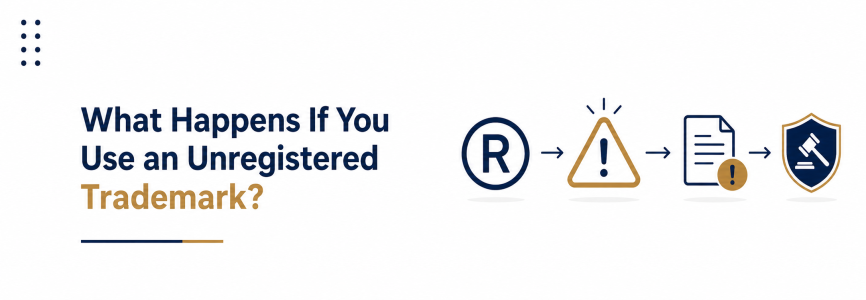



A trademark is more than a business name, logo or tagline. It is the identity through which customers recognise a product or service in the market. Businesses often start using a brand name before filing a trademark application, either because they are testing the market, launching quickly or unaware of the legal importance of registration.
Using an unregistered trademark is not automatically illegal in India. A business can use a brand name even before registration, provided it does not copy or conflict with another person’s trademark. However, using an unregistered trademark comes with serious legal and commercial risks. The biggest risk is that the owner does not get the full statutory protection available to a registered trademark proprietor. Under the Trade Marks Act, 1999, no person can file an infringement action to protect an unregistered trademark. However, the law does preserve the right to take action for passing off, where one person misrepresents their goods or services as those of another.
Meaning of an Unregistered Trademark
An unregistered trademark is a brand name, logo, slogan, label, device, packaging style or business identity that is being used in the market but has not yet been registered with the Trade Marks Registry.
For example, if a startup starts selling cosmetics under a unique brand name but has not filed or obtained trademark registration, that name may be treated as an unregistered trademark. The business may still develop goodwill through actual use, advertisements, invoices, website presence, packaging and customer recognition. However, registration gives stronger legal proof of ownership. The Trade Marks Registry examines and registers marks that qualify under the Act and maintains the official Register of Trade Marks.
Can You Use an Unregistered Trademark?
Yes, a person may use an unregistered trademark in India. There is no general prohibition on using a mark before registration. Many businesses use the “TM” symbol after filing an application or even while claiming brand use. However, this use must be honest, original and non-conflicting. If the mark is identical or deceptively similar to an already registered or reputed mark, the user may face legal action from the prior owner. The issue is not only whether your mark is registered, but whether your use causes confusion among consumers.
What Legal Protection Is Available?
The owner of an unregistered trademark cannot file a statutory infringement suit. Section 27 of the Trade Marks Act, 1999 clearly states that no person is entitled to institute proceedings to prevent or recover damages for infringement of an unregistered trademark. However, the same provision protects the common law remedy of passing off. This means that if a business has built goodwill in an unregistered mark, it may still take action against another person who tries to misrepresent their goods or services as belonging to that business.
To succeed in passing off, the claimant generally has to prove:
- Goodwill or reputation in the mark
- Misrepresentation by the other party
- Damage or likelihood of damage to the business
This is usually harder than proving infringement of a registered trademark because the owner must produce evidence of market reputation and customer association.
Main Risks of Using an Unregistered Trademark
1. No Statutory Infringement Protection
The biggest disadvantage is the absence of infringement protection. A registered trademark owner can sue for infringement when another person uses an identical or deceptively similar mark in relation to similar goods or services. An unregistered owner cannot use this direct statutory remedy.
2. Difficulty in Proving Ownership
Trademark registration acts as official evidence that the mark belongs to the registered proprietor. Without registration, ownership must be proved through business records, sales invoices, advertising material, website records, social media pages, packaging, customer data and other documents.
3. Risk of Someone Else Registering the Mark
If a business delays filing its trademark application, another person may apply for a similar or identical mark. This can create objections, opposition proceedings, legal disputes and even rebranding costs. The earlier user may still claim prior use, but proving prior use requires proper documentary evidence. If records are weak, the business may lose valuable rights.
4. Rebranding Cost
If the unregistered mark conflicts with another registered mark, the business may be forced to stop using it. This can lead to loss of packaging material, marketing investment, domain value, customer recognition and goodwill. Rebranding can be expensive, especially when the business has already invested in websites, advertisements, labels, brochures, invoices, social media pages and product packaging.
5. Investor and Franchise Concerns
Investors, franchise partners, distributors and online marketplaces often prefer brands with proper trademark protection. An unregistered trademark may be seen as a legal risk because ownership is not clearly secured. For startups and growing businesses, trademark registration supports brand valuation and improves investor confidence.
6. Marketplace and Domain Disputes
E-commerce platforms, domain registrars and social media platforms may ask for proof of trademark ownership in case of brand misuse or impersonation. A registration certificate makes enforcement much easier. Without registration, the business may have to rely on limited evidence of use, which may not always be accepted quickly.
What If You Use Someone Else’s Registered Trademark?
Using an unregistered mark becomes risky when the mark is similar to someone else’s registered trademark. If your mark creates confusion in the mind of consumers, the registered owner may issue a legal notice, file an infringement suit, seek injunction, claim damages or demand removal of the mark from packaging, website, advertisements and listings. Trademark infringement under Indian law generally relates to unauthorised use of a registered mark or a deceptively similar mark in a manner that affects the rights of the registered proprietor. Section 29 of the Trade Marks Act deals with infringement of registered trademarks.
For example, if a business uses a name, logo or packaging style similar to a known brand in the same industry, it may be treated as an attempt to mislead customers, even if the new business has not registered its mark.
Can You Use the ® Symbol for an Unregistered Trademark?
No. The ® symbol should be used only for a registered trademark. Using it for an unregistered mark may amount to falsely representing the trademark as registered. Section 107 of the Trade Marks Act, 1999 deals with penalty for falsely representing a trademark as registered. It also treats the use of words, symbols or signs that imply registration as a reference to registration in India, unless limited exceptions apply. For an unregistered or pending trademark, businesses generally use the “TM” symbol for goods and “SM” symbol for services. The ® symbol should be used only after registration is granted.
Difference Between TM and ®
The “TM” symbol indicates that the business is claiming the mark as a trademark. It may be used even before registration. It does not prove registration, but it gives public notice that the brand is being claimed.
The ® symbol indicates that the mark is registered. It should not be used unless the trademark has been officially registered.
What Should a Business Do Before Using a Trademark?
Before using a brand name, a business should conduct a trademark search. This helps identify whether the same or similar mark is already registered or pending in the same class or related classes. The business should also check domain availability, company name availability, social media handles, marketplace listings and industry usage. A trademark may appear available as a domain but still conflict with an existing trademark. After search and clearance, the business should file a trademark application as early as possible. Filing creates an official record and helps secure priority from the application date, subject to examination and registration.
Benefits of Registering a Trademark
Trademark registration gives stronger protection to the brand. It helps the owner claim exclusive rights, file infringement proceedings, stop unauthorised use, protect brand identity and build commercial value. Registration also makes it easier to license, assign, franchise or sell the brand. For businesses planning expansion, online selling, exports or investment, trademark registration is a practical necessity. The IP India portal also provides basic trademark information, filing workflow, search tools, classification details and official fee-related resources for applicants.
Conclusion
Using an unregistered trademark is allowed, but it is not the safest way to build a brand. The business may get limited protection through passing off if it can prove goodwill, reputation and misuse by another party. However, it cannot file a direct infringement action unless the trademark is registered.
An unregistered mark can also expose the business to disputes, objections, rebranding costs, marketplace issues and legal notices if the mark conflicts with another owner’s rights. The safest approach is to conduct a proper trademark search, avoid copying existing brands and file a trademark application before investing heavily in branding.
FAQs
Q1. Is it illegal to use an unregistered trademark?
Ans. No, using an unregistered trademark is not automatically illegal in India. However, it must not be identical or deceptively similar to another person’s registered or reputed mark.
Q2. Can I sue someone for using my unregistered trademark?
Ans. You cannot file a trademark infringement suit for an unregistered mark. However, you may file a passing off action if you can prove goodwill, misrepresentation and damage.
Q3. Can I use the TM symbol without registration?
Ans. Yes, the TM symbol can generally be used to show that you claim rights over the mark. It does not mean the trademark is registered.
Q4. Can I use the ® symbol before registration?
Ans. No, the ® symbol should be used only after the trademark is registered. Using it without registration may create legal consequences.
Q5. What happens if someone registers my brand name first?
Ans. You may oppose or challenge it if you can prove prior use. However, the process becomes more difficult if you do not have proper evidence.
Q6. Is trademark registration mandatory for business?
Ans. Trademark registration is not mandatory to start a business, but it is strongly recommended for brand protection, enforcement and long-term growth.
Q7. Can an unregistered trademark be protected in court?
Ans. Yes, through a passing off action. But the owner must prove reputation, customer recognition and damage caused by the other party.
Q8. Can I sell products under an unregistered brand?
Ans. Yes, but you should first check whether the brand conflicts with existing trademarks. Selling under a conflicting mark may invite legal action.
Q9. What documents prove use of an unregistered trademark?
Ans. Invoices, packaging, advertisements, website screenshots, social media posts, domain records, product catalogues and customer records may help prove use.
Q10. When should I apply for trademark registration?
Ans. Ideally, you should apply before launching or immediately after finalising the brand name, logo or tagline. Early filing reduces legal and commercial risk.


![Why Most People Fail at [Topic] — And How You Can Succeed](https://compliancecalendar.s3.ap-south-1.amazonaws.com/assets/blogimagemain/Valuation_of_Shares_in_NBFC_learn_crop10_thumb.jpg)



_crop10_thumb.jpg)