


Research Analyst Registration is an important regulatory approval required for persons and entities that provide research reports, securities analysis, stock recommendations, buy/sell/hold views, model portfolio suggestions, or market research services relating to securities in India. The purpose of this registration is to ensure that research-based investment information is provided only by qualified, certified, and accountable professionals.
In India, many investors depend on research reports, newsletters, videos, social media posts, webinars, Telegram groups, WhatsApp messages, stock market courses, and paid subscriptions before making investment decisions. If such information is provided by unregistered or unqualified persons, investors may be misled and may suffer financial loss. Therefore, SEBI regulates Research Analysts to protect investors and maintain transparency in the securities market.
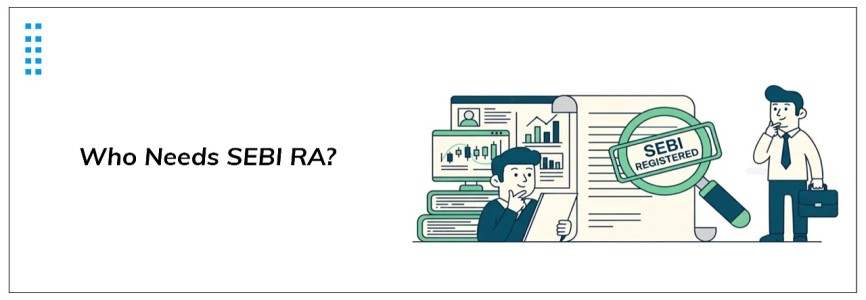
The key question is: who needs Research Analyst Registration under SEBI rules? In simple words, any person or entity engaged in providing securities-specific research or recommendations may require SEBI Research Analyst Registration. The requirement depends on the nature of the activity, not merely on the name used for the service. Even if a person calls the service “education,” “market learning,” “stock ideas,” or “premium calls,” SEBI may examine whether the actual content amounts to research or recommendation.
Meaning of Research Analyst
A Research Analyst is a person or entity engaged in preparing, publishing, communicating, or distributing research reports or recommendations relating to securities. This may include analysis of listed companies, financial statements, sector performance, industry trends, stock valuation, market outlook, technical analysis, fundamental analysis, target prices, and investment views.
A Research Analyst may provide research through written reports, email newsletters, websites, mobile applications, webinars, videos, social media platforms, client dashboards, paid groups, or offline reports. The method of communication does not change the regulatory requirement. If the activity involves securities-specific research or actionable recommendations, SEBI registration may be required.
The role of a Research Analyst is different from casual market discussion. A Research Analyst influences investment decisions. Therefore, SEBI expects such persons to follow qualification standards, disclosure norms, conflict management rules, code of conduct, and record-keeping requirements.
Legal Context for Research Analyst Registration
SEBI Act, 1992
The SEBI Act, 1992 is the main law that gives SEBI power to regulate the securities market and protect investors. Section 11 empowers SEBI to take measures for investor protection and development of the securities market. This includes regulating intermediaries and preventing unfair, fraudulent, or misleading market practices.
Section 12 of the SEBI Act is also important because it requires regulated intermediaries to obtain registration before carrying out specified securities market activities. Since Research Analysts provide research services that may influence investment decisions, they fall under the regulated. This means a person cannot freely provide securities research services to the public without checking whether SEBI registration is required.
SEBI Research Analysts Regulations, 2014
The SEBI Research Analysts Regulations, 2014 are the principal regulations governing Research Analyst Registration in India. These regulations cover eligibility, qualification, certification, application procedure, conditions of registration, disclosures, conflict of interest, restrictions on trading, public appearance rules, audit, record maintenance, and code of conduct.
These regulations apply to individuals, companies, LLPs, partnership firms, body corporates, and research entities engaged in research services. They also cover associated persons who are involved in preparation or publication of research reports.
SEBI Circulars and Guidelines
SEBI also issues circulars and guidelines from time to time to clarify practical compliance requirements. These may relate to client onboarding, deposit requirements, model portfolio recommendations, audit, advertising, social media communication, grievance redressal, and supervisory body requirements. A Research Analyst must follow not only the main regulations but also all applicable circulars, guidelines, and supervisory directions.
RAASB Framework
Research Analyst Administration and Supervisory Body, commonly known as RAASB, is part of the supervisory structure for Research Analysts. It supports administration, compliance monitoring, application processing, and supervision of Research Analysts. This framework has made Research Analyst compliance more structured. Applicants and registered RAs must follow the procedure, documentation, and ongoing requirements prescribed under the supervisory framework.
Who Needs Research Analyst Registration?
Individual Research Analysts
An individual who independently provides securities research, stock recommendations, target prices, entry-exit levels, buy/sell/hold views, or market analysis may require SEBI Research Analyst Registration. This applies whether the person provides such services through a website, YouTube channel, Telegram group, WhatsApp group, mobile app, email newsletter, paid subscription, or personal brand.
For example, if a person regularly recommends specific stocks or provides investment views on listed securities, such activity may come under Research Analyst rules. If the person charges fees for such services, the need for registration becomes even stronger.
An individual cannot avoid compliance merely by calling the activity “learning” or “education” if the actual communication gives actionable stock recommendations.
Paid Recommendations
If an individual charges money for stock calls, research reports, target prices, market views, or securities recommendations, SEBI RA Registration may be required. Paid services show that the person is carrying out research activity as a business or profession. Since investors may act on such paid recommendations, SEBI expects the person to be registered, qualified, certified, and accountable.
Public Market Views
Regular public recommendations on listed securities may also fall under SEBI’s regulatory scope. If a person is publicly giving buy, sell, hold, target price, or entry-exit level calls, investors may rely on that content while making investment decisions. Therefore, such public communication should be carefully checked from a Research Analyst compliance perspective.
Digital Platforms
YouTube, Telegram, WhatsApp, websites, mobile applications, email newsletters, and social media pages are also covered if they are used for research services. The law focuses on the nature of the activity, not only the platform used. Therefore, a person cannot avoid SEBI compliance merely because the recommendation is shared through an online channel.
Companies Providing Research Services
A company that provides stock research, securities analysis, research reports, model portfolios, market reports, technical calls, or fundamental analysis services may need SEBI Research Analyst Registration. This may include fintech companies, research portals, stock market platforms, subscription-based research businesses, corporate research houses, and digital wealth platforms. If the company publishes or distributes securities-specific recommendations, registration is required.
The company must also ensure that employees and associated persons involved in research work meet qualification and certification requirements. Internal policies for disclosure, conflict management, client communication, audit, and record keeping must also be maintained.
Company-Level Approval
If a company provides research services, the company itself must obtain SEBI RA Registration before offering such services to clients or the public. Registration gives legal recognition to the company’s research activity and brings it under SEBI’s compliance framework. Without registration, the company may face regulatory action for carrying out unregistered research services.
Employee Compliance
A company cannot appoint unqualified persons to prepare or communicate research reports. Employees, analysts, research writers, and associated persons involved in research services must meet the applicable qualification and certification requirements. This ensures that research is prepared by competent persons who understand securities markets and regulatory obligations.
Internal Control
A registered research company must maintain proper internal controls. This includes a research approval process, disclosure checklist, conflict management policy, employee trading policy, client communication policy, and record maintenance system. These controls help ensure that research is fair, transparent, independent, and compliant with SEBI rules.
LLPs and Partnership Firms
LLPs and partnership firms engaged in securities research services also require Research Analyst Registration. The legal form of the business does not remove the requirement. If the firm is giving stock recommendations or research reports, SEBI compliance applies.
Such firms must submit documents relating to partners, business structure, qualification, certification, compliance policies, financial details, research process, and internal controls. The firm must also ensure that partners or employees involved in research meet prescribed eligibility requirements.
Firm Registration
If an LLP or partnership firm provides research services, the firm must obtain SEBI RA Registration in its own name. The firm cannot rely only on the qualification of one partner while offering research services as a business. Registration ensures that the firm, its partners, and its associated persons are accountable under the regulatory framework.
Partner Responsibility
Partners involved in research activity must follow qualification, certification, disclosure, and conduct requirements. Since partners are responsible for the management and operation of the firm, they must ensure that research services are provided lawfully and ethically. If the firm violates SEBI rules, partners may also face regulatory consequences.
Policy Framework
LLPs and partnership firms must maintain written policies for conflict management, research disclosures, client onboarding, record keeping, grievance redressal, and employee trading. These policies help create a structured compliance system and reduce the risk of misleading recommendations or regulatory violations.
Stock Market Research Platforms
Online platforms offering stock research, research subscriptions, technical analysis, model portfolios, sector reports, company analysis, or market recommendations may require RA Registration. Many platforms claim to provide “stock ideas” or “market insights.” However, if the content gives actionable securities recommendations, SEBI may treat it as research service. A platform cannot avoid registration simply by saying that it is a technology platform if it is publishing or distributing research recommendations.
If the platform only provides general educational material without recommending specific securities, registration may not always be required. However, once the platform starts recommending securities, the regulatory requirement should be examined.
Subscription Portals
Paid research portals generally need to evaluate RA Registration because they provide research content to users in exchange for fees. If the platform provides stock-specific recommendations, target prices, model portfolios, or research reports, it may be treated as a regulated research service.
Model Portfolio Platforms
Platforms suggesting stock baskets or ready-made portfolios may also come under the Research Analyst framework. A model portfolio can influence investor decisions because it gives a structured securities selection. Therefore, such platforms must provide proper risk disclosures, methodology, assumptions, and compliance documentation.
Research Distribution
Even distribution of research may create compliance responsibility if the platform is actively publishing, marketing, or selling securities recommendations. A platform cannot claim to be only a distributor if it controls, packages, edits, promotes, or monetises research content. The actual role of the platform should be assessed carefully.
Finfluencers and Social Media Creators
Finfluencers, YouTubers, Instagram creators, Telegram channel owners, WhatsApp group admins, bloggers, and online educators may need Research Analyst Registration if they provide stock-specific recommendations or securities-related actionable views. General financial education may not require RA Registration. For example, explaining the meaning of shares, mutual funds, SIPs, inflation, compounding, or diversification is usually educational. However, giving a specific stock recommendation, target price, entry level, exit level, or portfolio allocation may fall under regulated research activity.
SEBI has become more watchful of unregistered online financial activity because many retail investors act on social media content. Therefore, content creators must be very careful while discussing listed securities.
Educational Content is Different
General finance education is different from regulated research. If a creator explains basic concepts like “what is equity,” “how mutual funds work,” or “meaning of diversification,” it may be treated as educational content. However, if the creator starts recommending specific securities, the content may move from education to regulated research.
Stock Calls Need Caution
Buy, sell, hold, target price, and entry-exit calls require caution because these are actionable investment views. Investors may directly rely on such calls to make trading or investment decisions. Therefore, anyone giving such calls regularly should check whether SEBI RA Registration is required.
Paid Private Groups
Paid Telegram groups, WhatsApp communities, premium Discord channels, or private stock recommendation groups may attract SEBI scrutiny. When a creator charges money and provides stock-specific views, it appears like a professional research or advisory service. Such activity should not be carried out without proper regulatory evaluation.
Persons Providing Model Portfolio Recommendations
A person or entity providing model portfolio recommendations may require Research Analyst Registration. A model portfolio usually means a basket of securities recommended in a structured manner. It may include stock allocation, risk category, rebalancing schedule, holding period, and investment theme. Model portfolios can strongly influence investor decisions. Therefore, they must be handled carefully. The person providing such portfolios should clearly disclose whether the service is research-based and not personalised investment advice.
If the model portfolio is customised according to a particular client’s financial situation, it may also raise Investment Adviser-related compliance issues.
Structured Stock Baskets
Model portfolios usually contain selected securities arranged in a particular proportion or theme. Since investors may follow such portfolios directly, they can influence investment decisions. Therefore, offering structured stock baskets may require RA compliance, especially when provided as a paid service.
Clear Risk Disclosure
Every model portfolio should clearly explain the risk involved, assumptions used, investment horizon, review frequency, and limitations. Investors must understand that model portfolios are not guaranteed to generate profit and may not be suitable for every investor. Proper disclosure reduces the risk of mis-selling.
No Personal Advice Claim
A Research Analyst should not present a model portfolio as personalised investment advice unless separately permitted under applicable regulations. If the portfolio is customised based on a client’s income, risk appetite, financial goals, or investment needs, it may fall closer to investment advisory activity.
Brokerage Research Departments
Brokerage firms that publish research reports or stock recommendations through research departments may fall under the Research Analyst framework. Such entities must ensure that their research activities are properly registered and compliant. Brokerage research creates possible conflicts because the broker may also earn brokerage from client trades. Therefore, disclosures and internal separation between research, sales, and dealing functions are important.
Research reports issued by brokerage firms must mention relevant disclosures, including financial interest, business relationship, ownership interest, and other conflicts.
Research Independence
Research should remain independent from sales, dealing, and revenue pressure. If analysts are influenced by brokerage business targets, the quality and fairness of research may be affected. Therefore, brokerage firms must create internal separation between research and commercial teams.
Conflict Disclosure
Brokerage firms must disclose any financial or business interest in the securities or companies covered in their research reports. If the firm, its associates, or analysts have any relationship with the subject company, investors should be informed clearly.
Certified Analysts
Persons preparing research reports in brokerage firms must satisfy qualification and certification requirements. Certification ensures that analysts understand research standards, securities regulations, ethical duties, and disclosure obligations.
Merchant Bankers and Investment Banking Entities
Merchant bankers, investment banking firms, and corporate advisory entities may require RA Registration if they also issue research reports or securities recommendations. These entities may have business relationships with companies. If they publish research on companies with whom they have commercial arrangements, conflict of interest may arise. Therefore, proper disclosures and separation of activities are necessary.
Research activity should not be used to promote securities or support corporate transactions without proper disclosure.
Conflict Risk
Merchant bankers and investment banking entities may have commercial relationships with listed or proposed-to-be-listed companies. If they publish research on such companies, investors may assume that the research is independent, even though the entity may have a business interest. This creates conflict risk and must be managed carefully.
Internal Separation
Research teams should be separate from deal, advisory, fundraising, and investment banking teams. This separation helps ensure that research views are not influenced by corporate mandates or business relationships.
Transparent Disclosure
Any commercial relationship, financial interest, advisory mandate, or other conflict should be clearly disclosed in the research report. Transparent disclosure helps investors assess whether the recommendation is independent or influenced by business interest.
Employees and Associated Persons
Even when registration is obtained by an entity, the employees and associated persons involved in research services must also satisfy qualification and certification requirements. This includes analysts, research writers, report reviewers, research heads, and persons communicating research recommendations.
The registered entity is responsible for ensuring that such persons are competent and certified. If unqualified persons prepare or issue research reports, it may create compliance risk.
Associated Person Compliance
Employees and associated persons involved in research preparation, publication, or communication must comply with SEBI requirements. Their role directly affects the quality of research and investor protection. Therefore, entities must verify their qualifications and certification before assigning research work.
Supervision by Entity
The registered entity must supervise all employees and associated persons involved in research services. Supervision includes reviewing reports before publication, monitoring public communication, checking disclosures, and ensuring that employees do not issue unauthorised recommendations.
Valid Certification
Certification should remain valid during the period in which the person is involved in research activity. If certification expires, the person should not continue regulated research work until renewal or compliance is completed.
Foreign Entities Offering Research to Indian Investors
Foreign research firms or overseas analysts may also need to evaluate SEBI requirements if they provide research services to Indian investors or issue research relating to Indian securities. Applicability depends on factors such as whether the service targets Indian investors, whether the research covers Indian securities, whether fees are collected from Indian clients, and whether the service is promoted in India.
A foreign location does not automatically remove Indian regulatory requirements if the service is directed at Indian securities market participants.
Indian Investor Focus
If a foreign entity targets Indian investors through websites, subscriptions, marketing campaigns, emails, webinars, or social media, SEBI regulations may become relevant. The location of the service provider is not the only factor; the target market also matters.
Indian Securities Coverage
Research on Indian listed securities or securities proposed to be listed in India may attract SEBI rules. If the research influences Indian market investors, the entity should evaluate whether RA Registration or any other compliance is required.
Cross-Border Caution
Foreign entities should be careful before offering research services in India. Cross-border services may involve Indian securities laws, foreign exchange rules, tax considerations, contractual issues, and investor protection requirements.
Who May Not Need Research Analyst Registration?
General Financial Educators
Persons who provide only general education on finance, investment concepts, stock market basics, mutual funds, risk, inflation, compounding, taxation, or financial awareness may not require RA Registration. However, the content should remain educational and should not include stock-specific recommendations, target prices, buy/sell calls, or model portfolios.
News Media Reporting Market Updates
News platforms reporting market news, corporate announcements, economic updates, stock price movement, or regulatory developments may not always require RA Registration. However, if the media platform gives regular actionable stock recommendations or paid research services, registration may become relevant.
Internal Research for Own Use
A company or individual preparing research only for internal decision-making may not require RA Registration. For example, a company analysing securities for its own treasury investments may not be treated as providing research services to others. However, if the research is shared with clients, investors, or the public, registration may be required.
Academic Research Without Recommendations
Academic research, classroom teaching, college projects, or market studies may not require registration if they do not include actionable securities recommendations. If academic content is converted into paid investment research or stock recommendations, RA applicability should be checked.
Practical Test to Decide Whether RA Registration is Required
Nature of Content
The first test is whether the content is general education or securities-specific recommendation. If the content recommends a particular security or gives actionable views, registration may be required.
Business Activity
The second test is whether the person is carrying out the activity as a business. Paid subscriptions, research plans, premium groups, and advisory packages increase regulatory risk.
Investor Reliance
The third test is whether investors are likely to rely on the content for investment decisions. If the content influences buying, selling, or holding securities, it may fall within the research framework.
Mode of Communication
The fourth test is how the content is communicated. Public videos, paid groups, email reports, websites, apps, and social media platforms can all fall under regulatory scrutiny.
Personalisation
The fifth test is whether the advice is general or personalised. Personalised advice based on client financial goals may fall under Investment Adviser regulations instead of only RA rules.
Eligibility Requirements for Persons Who Need RA Registration
Educational Qualification
The applicant must satisfy the educational qualification requirements prescribed under SEBI rules. The qualification requirement ensures that the applicant has the basic knowledge needed to analyse securities, financial statements, risks, and market conditions.
Certification Requirement
The applicant and associated persons involved in research services must hold valid Research Analyst certification as prescribed. Certification helps establish knowledge of securities analysis, regulations, ethics, and investor protection.
Fit and Proper Requirement
The applicant must be a fit and proper person. This means the applicant should have integrity, honesty, good reputation, competence, and financial soundness. Serious regulatory action, fraud, market manipulation, or criminal misconduct may affect eligibility.
Infrastructure Requirement
The applicant must have adequate infrastructure to provide research services. This includes research tools, data sources, compliance systems, record maintenance, client communication process, and grievance redressal mechanism.
Financial and Deposit Requirement
Applicants may need to satisfy deposit or financial requirements as prescribed under the updated framework. This requirement supports accountability and investor protection.
Compliance Duties After Registration
Display of Registration Details
A registered Research Analyst must display the registration number, registered name, address, contact details, and grievance details on research reports, website, advertisements, and client-facing material.
Disclosure in Research Reports
Research reports must include proper disclosures. These may relate to financial interest, beneficial ownership, compensation, business relationship, conflict of interest, and trading restrictions.
Client Terms and Conditions
The RA must clearly communicate terms of service, fee structure, refund policy, risk disclosure, grievance process, and limitations of research services.
Record Maintenance
The RA must maintain records of research reports, recommendations, rationale, client communication, complaints, disclosures, audit reports, and compliance documents.
Compliance Audit
A registered RA must comply with audit requirements. The audit checks whether the RA has followed SEBI regulations, circulars, disclosures, records, and code of conduct.
Advertisement and Social Media Compliance
Advertisements and social media posts must not contain misleading claims, guaranteed returns, fake testimonials, unrealistic profits, or manipulated performance data.
Conclusion
Research Analyst Registration is required by individuals, companies, LLPs, partnership firms, research platforms, finfluencers, brokerage research teams, and other persons who provide securities-specific research or recommendations in India. The requirement depends on the nature of activity. If the content includes stock recommendations, research reports, buy/sell/hold views, model portfolios, target prices, or actionable securities analysis, SEBI RA Registration may be required.
The legal framework is mainly based on the SEBI Act, 1992, SEBI Research Analysts Regulations, 2014, SEBI circulars, RAASB requirements, code of conduct provisions, and disclosure norms. Recent regulatory changes have made Research Analyst compliance more structured, especially for online content creators, model portfolio providers, and paid research platforms.
In the present regulatory environment, any person planning to offer research services should first evaluate whether registration is required. A proper compliance structure from the beginning helps avoid penalties, builds investor trust, and gives professional credibility. A registered Research Analyst can operate with legal recognition, transparency, and accountability in the Indian securities market.
Frequently Asked Questions (FAQs)
Q1. What is Research Analyst Registration?
Ans. Research Analyst Registration is a mandatory approval required from SEBI for persons or entities that provide securities research, stock recommendations, research reports, buy/sell/hold views, model portfolios, or market analysis related to securities. It ensures that research services are provided by qualified, certified, and accountable professionals.
Q2. Who needs Research Analyst Registration in India?
Ans. Any individual, company, LLP, partnership firm, research platform, brokerage research department, finfluencer, or other entity that provides securities-specific research or recommendations may need Research Analyst Registration. If the service influences investment decisions in listed or proposed-to-be-listed securities, SEBI registration should be checked.
Q3. Is Research Analyst Registration required for individual stock advisors?
Ans. Yes, an individual providing stock-specific research, target prices, entry-exit levels, buy/sell/hold calls, or securities recommendations may need Research Analyst Registration. This applies even if the person operates independently through online or offline channels.
Q4. Do companies providing stock research need SEBI RA Registration?
Ans. Yes, companies offering research reports, stock analysis, market recommendations, model portfolios, or subscription-based research services need SEBI RA Registration. The company must also ensure that its analysts and associated persons meet qualification and certification requirements.
Q5. Do LLPs and partnership firms need Research Analyst Registration?
Ans. Yes, LLPs and partnership firms need RA Registration if they provide securities research or stock recommendations. The firm must register in its own name and maintain proper compliance policies, disclosures, records, and certified research personnel.
Q6. Do finfluencers need Research Analyst Registration?
Ans. Finfluencers may need Research Analyst Registration if they provide stock-specific recommendations, buy/sell calls, target prices, entry-exit levels, or model portfolios. General financial education may not require registration, but actionable securities recommendations can fall under SEBI’s regulatory framework.
Q7. Is SEBI RA Registration required for YouTube stock market channels?
Ans. A YouTube channel may need SEBI RA Registration if it gives specific stock recommendations, target prices, investment calls, or model portfolios. If the channel only provides general educational content without recommending specific securities, registration may not always be required.
Q8. Do Telegram or WhatsApp stock tips groups need registration?
Ans. Yes, Telegram, WhatsApp, Discord, or similar paid/private groups giving stock tips, buy/sell calls, or securities recommendations may require SEBI RA Registration. Charging fees for such recommendations increases the need for regulatory compliance.
Q9. Is registration required for general financial education?
Ans. General financial education may not require RA Registration if it only explains concepts like shares, mutual funds, SIPs, diversification, risk, inflation, or taxation. However, once the content includes specific securities recommendations, registration may become necessary.
Q10. What is the difference between a Research Analyst and an Investment Adviser?
Ans. A Research Analyst gives general research-based views or recommendations on securities. An Investment Adviser gives personalised investment advice based on a client’s income, risk profile, financial goals, and investment needs. Both are regulated separately under SEBI rules.


![Why Most People Fail at [Topic] — And How You Can Succeed](https://compliancecalendar.s3.ap-south-1.amazonaws.com/assets/blogimagemain/Valuation_of_Shares_in_NBFC_learn_crop10_thumb.jpg)




_crop10_thumb.jpg)