
_crop6_thumb.png)



Choosing the right legal structure is one of the first important decisions for any new business. A traditional partnership may appear simple, but it does not ordinarily provide a separate legal identity or comprehensive liability protection. A private company provides a stronger corporate structure, but it may involve more formal governance and compliance.
A Limited Liability Partnership, commonly known as an LLP, offers a middle path. It combines the operational flexibility of a partnership with the benefit of a separate legal entity and limited liability. This makes it particularly useful for professional firms, consultants, service providers, family businesses, technology ventures and businesses managed by a small group of founders.
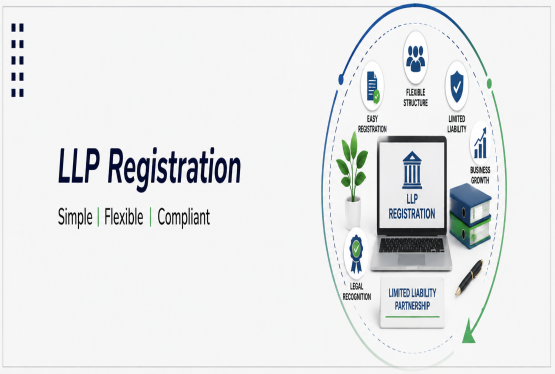
LLP Registration in India is completed electronically through the Ministry of Corporate Affairs’ MCA21 V3 portal. The principal incorporation form is FiLLiP—Form for Incorporation of Limited Liability Partnership, which integrates name reservation, incorporation, DPIN allotment, consent of designated partners and PAN and TAN applications.
What Is a Limited Liability Partnership?
A Limited Liability Partnership is a partnership formed and registered under the Limited Liability Partnership Act, 2008. Unlike an ordinary partnership firm, an LLP is legally separate from the individuals or entities that become its partners. Section 3 declares that an LLP is a body corporate and a legal entity separate from its partners. It also has perpetual succession, meaning that a change in partners does not automatically affect the LLP’s existence, rights or liabilities.
This separate identity allows an LLP to own assets, enter agreements, borrow funds, employ individuals and initiate or defend legal proceedings in its own name. The Indian Partnership Act, 1932 does not apply to an LLP because its formation and operation are governed by the LLP Act and the agreement between its partners.
Legal Provisions Governing LLP Registration
LLP Registration is principally governed by the Limited Liability Partnership Act, 2008 and the Limited Liability Partnership Rules, 2009. The incorporation process must also comply with relevant provisions of the Information Technology Act, tax laws, stamp laws, foreign-exchange regulations and sector-specific legislation.
Sections 3 to 21 of the LLP Act contain the main provisions relating to the legal nature of an LLP, partners, designated partners, incorporation documents, registered office, name reservation and the legal effect of registration. Sections 23 to 35 regulate the LLP Agreement, changes in partners, liability, contribution, books of account, audit and annual returns.
Rule 8 governs the consent of designated partners, while Rules 10 and 11 deal with particulars of designated partners and the incorporation document. Rule 18 governs LLP name reservation. The FiLLiP web form is specifically designed to provide the services required under these provisions.
Minimum Requirements for LLP Registration
Before beginning the online application, the founders should finalise the proposed partners, designated partners, business objects, contribution, profit-sharing arrangement, registered office and LLP name. An incomplete commercial understanding between partners may not prevent incorporation, but it can create disputes after registration. The founders should therefore decide the management structure and financial rights before preparing the LLP Agreement.
Minimum Two Partners
Section 6 requires every LLP to have at least two partners. An individual or an eligible body corporate may become a partner, subject to the LLP Act and other applicable laws. If the number of partners falls below two and the LLP continues its business for more than six months, the sole remaining partner who is aware of the situation may become personally liable for obligations incurred after that six-month period.
There is no general statutory maximum number of partners in an LLP. This gives the structure greater flexibility than a conventional partnership firm, although the practical management and filing requirements become more complex as the number of partners increases.
Minimum Two Designated Partners
Every LLP must have at least two designated partners, and both must be individuals. Where a body corporate becomes a partner, it may nominate an individual to act as its designated partner. At least one designated partner must be resident in India. For this purpose, a resident means a person who has stayed in India for at least 120 days during the relevant financial year.
A designated partner is not merely a partner with a different title. Under Section 8, designated partners are responsible for completing statutory filings and ensuring compliance with the LLP Act. They may also be liable for penalties imposed for failures relating to those legal duties.
DPIN or DIN Requirement
Every designated partner must obtain a Designated Partner Identification Number. The legal framework integrates DPIN with the DIN system used under the Companies Act. A person who already holds a valid DIN or DPIN should use the same number. A person should not obtain multiple identification numbers merely because they are joining another company or LLP.
FiLLiP allows DPIN applications for a maximum of five proposed designated partners who do not already have a valid DIN or DPIN. Their identity, address and consent information must be entered and supported by the prescribed documents.
Digital Signature Certificate
Because LLP incorporation is completed electronically, at least one proposed designated partner must obtain a valid Digital Signature Certificate. The practising professional certifying the application must also use a valid DSC. The name, PAN and other particulars associated with the DSC should match the information entered in FiLLiP. The DSC must also be properly associated with the relevant MCA user profile before the signed form is uploaded.
Registered Office in India
Section 13 requires every LLP to maintain a registered office where communications and official notices can be received. The proposed registered office determines the Registrar’s jurisdiction and may also affect the stamp duty payable on the LLP Agreement. The office may be owned, rented, leased or provided with the owner’s consent. However, the application must include adequate evidence showing that the LLP has permission to use the premises.
Contribution by Partners
The LLP Act does not prescribe one universal minimum contribution for all LLPs. The partners may decide their respective contribution according to the business requirements and record it in the incorporation documents and LLP Agreement.
Section 32 permits contribution in the form of money, movable or immovable property, intangible property, agreements to contribute property, or services performed or agreed to be performed. The monetary value of each contribution must be properly accounted for and disclosed.
Selecting a Name for the LLP
The proposed name is a significant part of the registration process. It should be distinctive, lawful and connected with the intended business. Section 15 requires the name to end with the words “Limited Liability Partnership” or the abbreviation “LLP.” It cannot be undesirable or identical or too similar to an existing LLP, company or registered trademark.
A basic search should be conducted on the MCA portal for existing company and LLP names. A separate trademark search should also be conducted because the availability of a name on MCA does not automatically establish the right to use it as a trademark.
Where the name contains a registered trademark or a word requiring regulatory approval, the applicant may need to attach the trademark owner’s consent or the competent authority’s approval.
RUN-LLP Name Reservation
The applicant may reserve the name separately through the RUN-LLP—Reserve Unique Name LLP service. The application is governed by Section 16 of the LLP Act and Rule 18 of the LLP Rules. Once approved, the name is ordinarily reserved for three months from the approval date. The FiLLiP incorporation form must be submitted before the reservation expires.
Alternatively, the applicant may request name reservation directly through FiLLiP while applying for incorporation. Separate RUN-LLP filing may be useful where the promoters want certainty regarding the name before finalising the remaining documents.
Documents Required for LLP Registration
The documents required for LLP Registration depend on the legal status, nationality and residential status of the proposed partners and designated partners. Indian individuals, NRIs, foreign nationals and body corporates must provide different supporting documents to establish their identity, address, authority and eligibility.
All documents should be clear, valid and consistent with the information entered in the FiLLiP form, Digital Signature Certificate and MCA records. Any mismatch in the name, date of birth, address or identification details may result in a resubmission request from the Registrar.
1. Documents of Indian Partners and Designated Partners
Indian partners generally need to provide a copy of their PAN card as the primary tax and identity document. They must also submit an accepted identity proof, such as an Aadhaar card, voter identity card, driving licence or passport. A recent residential-address proof, passport-size photograph, active email address and mobile number are also required. The details mentioned in these documents should match the information recorded in the DSC and FiLLiP application.
2. Residential Address Proof
A recent bank statement, electricity bill, telephone bill, mobile bill or another accepted utility document may be submitted as residential-address proof. The document should clearly display the partner’s complete name and current residential address. It should also satisfy the recency requirement prescribed in the current MCA form and instruction kit.
3. Registered-Office Documents
The proposed LLP must provide documentary proof of its registered-office address. Where the premises are owned, an ownership document or another valid property record may be submitted along with a recent utility bill. Where the premises are rented or leased, a valid rent agreement or lease deed should be attached. The address mentioned in the agreement, utility bill and FiLLiP form should remain consistent.
4. No-Objection Certificate from the Owner
Where the registered-office premises are not owned by the LLP or its partners, a no-objection certificate should be obtained from the lawful owner. The NOC should clearly state that the owner has no objection to the premises being used as the registered office of the proposed LLP. It should be properly signed and dated by the owner.
5. Subscriber’s Sheet and Consent
The FiLLiP incorporation set includes a subscriber’s sheet containing the particulars of the proposed partners. It records their consent, proposed contribution and subscription details. The subscriber’s sheet must be properly completed and signed by the relevant partners. It is uploaded as a supporting attachment with the incorporation application.
6. Documents of a Body Corporate Partner
Where a company, LLP or another eligible body corporate becomes a partner, its incorporation and constitutional documents may be required. A board resolution or appropriate authorisation should also be submitted. The resolution must approve participation in the proposed LLP and identify the individual authorised to represent the body corporate.
7. Documents of Foreign Nationals and NRIs
Foreign nationals and NRIs generally need to provide a valid passport as their primary identity document. They must also submit an overseas residential-address proof and other supporting documents required under the incorporation rules. Documents executed outside India may require notarisation, apostille or consular authentication. The applicable authentication method depends on the country in which the documents are signed.
8. Digital Signature and Identification Details
The proposed designated partner signing the incorporation application must hold a valid Digital Signature Certificate. The name and identification details linked with the DSC should match the supporting documents. An existing DIN or DPIN should be provided where already allotted. Eligible proposed designated partners may apply for DPIN through the FiLLiP incorporation form.
9. Additional Supporting Documents
Depending on the nature of the proposed business, regulatory approval or sector-specific permission may also be required. This may apply where the LLP intends to operate in a regulated industry. The Registrar may also request clarification or additional evidence during the examination process. Applicants should therefore retain complete and properly signed copies of all incorporation records.
Step-by-Step Online LLP Registration Process
The LLP Registration process is completed through the MCA21 V3 portal. The following stages explain how the incorporation application is prepared and submitted.
Step 1: Finalise the Partners and Business Structure
The promoters should first decide who will become partners and who will act as designated partners. They should also finalise contribution, profit-sharing ratios, voting rights, management responsibilities and the principal business activity. These details are not merely administrative. They form the foundation of the LLP Agreement and determine the legal and financial relationship among the partners.
Step 2: Obtain Digital Signatures
A DSC should be obtained for the proposed designated partner who will sign FiLLiP. Additional DSCs may be required depending on the partners, linked Form 9 and post-incorporation filings. The practising professional engaged for incorporation must also have an active DSC registered with MCA.
Step 3: Create or Update MCA Accounts
The applicant and relevant signatories should create MCA21 V3 user accounts and complete the required profile details.The DSCs should be associated with the correct PAN, DIN, DPIN or professional membership number. Incorrect association can cause signature-validation errors during submission.
Step 4: Reserve the LLP Name
The applicant may submit RUN-LLP or request the name through FiLLiP. The proposed name, business objects and significance of coined or abbreviated words should be explained clearly. The name search should cover companies, LLPs and trademarks. Consent or approval should be attached where the name contains a protected mark or regulated expression.
Step 5: Complete Form FiLLiP
FiLLiP captures the proposed LLP’s name, registered-office address, business activity, NIC classification, partner details, designated-partner details, contribution and PAN and TAN information.The form can also be used for DPIN allotment and designated-partner consent. Upon successful processing, the LLP is registered and LLPIN, PAN and TAN are allocated.
Step 6: Complete Form 9 Consent
Form 9 records the proposed designated partners’ consent to act in that capacity. Under the current MCA workflow, Form 9 is linked with FiLLiP.Where a proposed designated partner does not have a DPIN, the physically signed consent may have to be uploaded as an optional attachment in FiLLiP. Existing DPIN holders appearing in the linked Form 9 generally authenticate it through their DSC.
Step 7: Upload Supporting Documents
The applicant uploads registered-office proof, utility bill, owner’s NOC, identity and address proofs, subscriber’s sheet, body-corporate authorisations and regulatory approvals where applicable.Documents should be legible and internally consistent. Differences in the LLP name, partner name, registered-office address or contribution frequently lead to resubmission.
Step 8: Professional Certification
Section 11 requires a compliance statement from an advocate, Company Secretary, Chartered Accountant or Cost Accountant engaged in the formation of the LLP, together with a subscriber to the incorporation document.The professional certifies that the statutory requirements relating to incorporation and matters incidental to it have been complied with. A person who knowingly makes a false incorporation statement may face imprisonment of up to two years and a fine ranging from ?10,000 to ?5 lakh.
Step 9: Sign and Submit the Application
After the web form is completed, a PDF is generated for digital signatures. The proposed designated partner and the practising professional affix their DSCs in the prescribed fields.The signed PDF is uploaded to MCA, after which the applicable filing fee is paid. The fee depends primarily on the contribution and the nature of the application, while name-reservation and professional charges may apply separately.
Step 10: Examination by the Registrar
The Central Registration Centre or concerned Registrar examines the proposed name, registered-office documents, partner details, consent, contribution and professional certification.The application may be approved or marked for resubmission. A resubmission notice must be answered within the time permitted by the portal, and every connected field and attachment should be corrected consistently.
Step 11: Certificate of Incorporation
Once the application is approved, the Registrar issues the Certificate of Incorporation containing the LLP Identification Number.Section 12 states that the Registrar should register a compliant incorporation document and issue the incorporation certificate within 14 days. The certificate is conclusive evidence that the LLP has been incorporated under the approved name.
Legal Effect of LLP Registration
Upon registration, the LLP becomes capable of suing and being sued, acquiring and holding property, having a common seal if it chooses and performing other acts that a body corporate may lawfully perform.The LLP’s liabilities ordinarily belong to the LLP itself. A partner is generally not personally liable merely because another partner has committed a wrongful act.
However, limited liability should not be misunderstood as protection against personal misconduct. Under Section 30, where an LLP or its partner acts with an intention to defraud creditors or for a fraudulent purpose, the liability of the persons involved may become unlimited.Partners should therefore maintain separate bank accounts, contracts, invoices, accounting records and statutory documents in the LLP’s name rather than treating its funds as personal money.
LLP Agreement and Form 3
The LLP Agreement is the principal document governing the relationship among the partners and between the partners and the LLP. It should deal with contribution, profit sharing, decision-making, partner duties, admission and retirement, intellectual property, confidentiality, dispute resolution and dissolution.
Section 23 recognises the written LLP Agreement as the document determining the partners’ mutual rights and duties. Where an issue is not addressed in the Agreement, the default provisions of the First Schedule to the LLP Act may apply.The Agreement should be executed on stamp paper of the value required under the applicable State stamp law. Stamp duty is State-specific and may depend on the partners’ contribution and the place where the Agreement is executed.
The initial LLP Agreement must be filed with the Registrar through LLP Form 3 within 30 days from the date of incorporation. Form 3 also records the partners’ profit-sharing percentages and must be used for later changes to the Agreement.
Failure to execute and file the Agreement on time can result in additional filing fees and uncertainty over the partners’ rights.
LLPs with Foreign Partners
A foreign national or foreign body corporate may participate in an Indian LLP, subject to the LLP Act, FEMA and the Foreign Exchange Management (Non-Debt Instruments) Rules.
Foreign investment is generally permitted in an LLP operating in a sector where 100% foreign investment is permitted under the automatic route and there are no FDI-linked performance conditions. Contribution, valuation, remittance and reporting requirements must also be followed.
MCA incorporation approval does not itself complete FEMA compliance. The LLP and the authorised dealer bank should separately review the entry route, valuation, mode of remittance, beneficial ownership and applicable foreign-investment filings.
Post-Incorporation Compliance
After receiving the Certificate of Incorporation, the partners should open the LLP’s bank account and deposit the agreed monetary contributions. Contracts, invoices and business receipts should be issued in the LLP’s legal name.
Section 21 requires official correspondence, invoices and publications to display the LLP’s name, registered-office address, registration number and a statement that it is registered with limited liability. Non-compliance may attract a ?10,000 penalty.
The LLP must maintain books of account on a cash or accrual basis under the double-entry system. It must prepare a Statement of Account and Solvency within six months from the end of each financial year and file it through Form 8 within the prescribed period.
The LLP must also file its annual return through Form 11 within 60 days from the closure of the financial year. For a normal financial year ending on 31 March, this generally corresponds to 30 May, unless MCA grants a specific extension.
Under the present audit framework, an LLP is generally required to have its accounts audited when both its turnover exceeds ?40 lakh and its contribution exceeds ?25 lakh. An LLP below either prescribed limit is ordinarily covered by the audit exemption, subject to current rules and any sector-specific requirement.
GST Registration, professional-tax registration, Shops and Establishment Registration, import-export registration and other licences are separate from MCA incorporation and depend on the LLP’s turnover, location and business activity.
Recent MCA and LLP Updates
MCA21 V3 is now the operative platform for LLP and company filings. In February 2026, the Government confirmed that all MCA filings are being made through V3 and that the LLP module, web filings, e-enforcement and e-adjudication functions have been implemented.
The LLP (Amendment) Act, 2021, effective for major provisions from 1 April 2022, decriminalised several technical and procedural contraventions and introduced the concept of a small LLP. A small LLP presently refers to an LLP meeting the statutory contribution and turnover criteria and any additional prescribed conditions.
From 31 March 2026, MCA replaced the earlier annual DIN KYC requirement with a simplified KYC intimation once every three years. Since designated partners operate through the DIN and DPIN framework, they should review the revised KYC form and keep their mobile number, email address and residential information current.
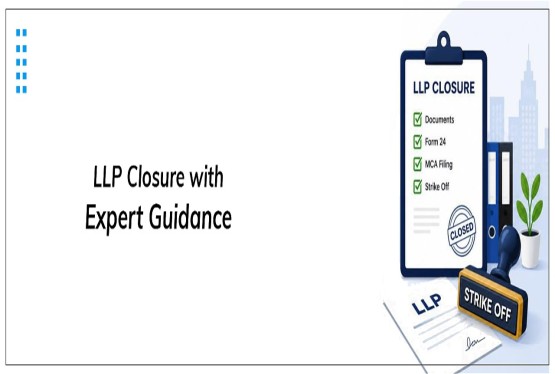
MCA has also centralised voluntary LLP strike-off processing through C-PACE. Although this does not change the incorporation process, it reflects the broader movement toward centralised and electronic administration of an LLP’s complete legal lifecycle.
Common Mistakes During LLP Registration
One common mistake is selecting a name without conducting a proper company, LLP and trademark search. A name may appear available on a basic MCA search but still conflict with a registered trademark.
Applicants also frequently upload old utility bills, incomplete rent agreements, unsigned NOCs or identity documents containing inconsistent names and addresses. Another mistake is choosing contribution and profit-sharing ratios casually. These details affect the LLP Agreement, filing fees, stamp duty, financial rights and future disputes.
Foreign partners should not assume that MCA approval removes the need for FEMA compliance. Similarly, businesses carrying on regulated activities must obtain the necessary sectoral approval rather than treating LLP Registration as a complete business licence.
The most serious post-registration mistake is failing to execute and file Form 3 within 30 days. Without a properly drafted Agreement, the default provisions of the First Schedule may govern matters that the partners intended to handle differently.
Conclusion
Applying for LLP Registration online in India has become more organised through the MCA21 V3 portal and the integrated FiLLiP web form. The process allows founders to reserve the name, obtain DPINs, register the LLP and receive PAN and TAN through a connected electronic application.
However, successful incorporation requires more than completing an online form. The founders must understand the legal role of partners and designated partners, select a compliant name, provide a valid registered office, determine contribution and profit-sharing arrangements and prepare accurate documents.
After incorporation, the partners must execute and file the LLP Agreement, deposit their contributions, maintain statutory records and complete annual Form 8 and Form 11 filings.
An LLP can provide flexibility, separate legal identity, perpetual succession and limited liability. These advantages are meaningful only when the founders treat the LLP as an independent legal entity and maintain ongoing compliance from the first day of business.
Frequently Asked Questions (FAQs)
Q1. How many partners are required to register an LLP?
Ans: An LLP must have at least two partners.
It must also appoint at least two individual designated partners.
At least one designated partner must be resident in India.
Q2. Is minimum capital required for LLP Registration?
Ans: The LLP Act does not prescribe a fixed minimum contribution.
Partners may decide their contribution according to business requirements.
The contribution should be recorded in FiLLiP and the LLP Agreement.
Q3. What is Form FiLLiP?
Ans: FiLLiP is the main MCA form used for LLP incorporation.
It records the LLP name, partners, office and contribution details.
It can also facilitate DPIN, PAN and TAN allotment.
Q4. Is a Digital Signature Certificate mandatory?
Ans: Yes, LLP incorporation forms are signed and filed electronically.
A proposed designated partner must have a valid DSC.
The certifying professional must also digitally sign the application.
Q5. What documents are required for LLP Registration?
Ans: Partners generally need PAN, identity proof and address proof.
Registered-office proof, an owner’s NOC and a utility bill are also required.
Foreign documents may need notarisation or apostille.
Q6. Is a registered office compulsory for an LLP?
Ans: Yes, every LLP must maintain a registered office in India.
The office should be capable of receiving official communications.
Owned, rented or consent-based premises may be used.
Q7. What is the validity of an approved LLP name?
Ans: A name approved through RUN-LLP is generally reserved for three months.
The FiLLiP incorporation form must be filed within that period.
The reservation may expire if registration is not completed in time.
Q8. Is an LLP Agreement mandatory?
Ans: Yes, the Agreement governs the partners’ rights and responsibilities.
It should cover contribution, profit sharing, management and dispute resolution.
Form 3 must be filed within 30 days of incorporation.
Q9. What annual filings are required for an LLP?
Ans: An LLP generally files Form 11 as its annual return.
It also files Form 8 for its Statement of Account and Solvency.
These filings may apply even where the LLP has no business activity.
Q10. Can a foreign national become an LLP partner?
Ans: Yes, a foreign national or foreign body corporate may become a partner.
The LLP must still appoint at least one resident designated partner.
FEMA, authentication and foreign-investment conditions must also be followed.










_crop10_thumb.png)
_crop10_thumb.jpg)
