


India is one of the world’s major tea-producing and tea-exporting countries, and businesses involved in manufacturing, buying, storing, distributing or exporting tea operate within a specialised regulatory framework. One of the first questions for a new exporter or tea business is therefore: How long does Tea Board Registration take?
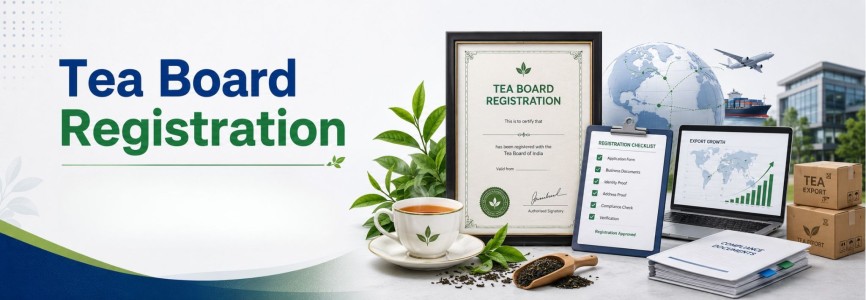
The answer depends on what type of Tea Board licence or registration is actually required. “Tea Board Registration” is not one single registration. Tea Board India administers separate registrations and licences for tea exporters, permanent exporters, buyers, manufacturers, tea gardens, warehouses, auction brokers, auction organisers, flavoured-tea manufacturers and certain other regulated activities.
A particularly important development came on 8 January 2026, when Tea Board India issued a formal notice prescribing timeframes for disposal of different licence and registration applications. Under this notice, a Tea Exporter Licence is intended to be disposed of within 10 working days from receipt of an application that is complete in all respects. Permanent Exporter applications and Buyer Registrations also carry a 10-working-day timeframe.
This article explains the complete timeline, legal framework, application procedure, statutory provisions, RCMC requirements, validity, compliance obligations and important 2026 updates affecting businesses dealing in tea.
What Is Tea Board Registration?
Tea Board Registration India is a statutory body functioning under the Ministry of Commerce and Industry, Government of India. It was established under Section 4 of the Tea Act, 1953. Section 4 provides for the establishment of the Tea Board as a statutory body for carrying out the purposes of the Act.
For businesses, however, the term “Tea Board Registration” can refer to several different permissions. An exporter normally requires an Exporter Business Licence, whereas a business buying tea directly from manufacturers or through public tea auctions may require Buyer Registration. Manufacturers, warehouses, auction brokers, auction organisers and flavoured-tea manufacturers may fall under separate licensing or registration requirements.
Therefore, determining the correct category before submitting the application is essential. Applying under the wrong category can result in clarification, rejection or the need to make a fresh application.
How Long Does Tea Board Registration Take in 2026?
Tea Board India’s notice dated 8 January 2026 provides the clearest current benchmark for application processing. According to the notice, the prescribed timeframe is calculated in working days from the date of receipt of an application that is complete in all respects as per the applicable guidelines.
For an Exporter Licence, the stipulated timeframe is 10 working days. A Permanent Exporter Licence is also listed at 10 working days. Distributor registration takes approximately 10 working days, Buyer Registration 10 working days, Broker in Tea Auction licence 10 working days and Organiser of Tea Auction licence 10 working days. New Garden Registration is also assigned a 10-working-day timeframe.
Other Tea Board permissions can take longer. Flavour Registration has a stated timeframe of 20 working days, a Warehouse Licence 25 working days, NOC for construction of a manufacturing unit under the accelerated scheme 15 working days, NOC under the non-accelerated scheme 20 working days, registration certificate for a manufacturing unit 20 working days, change of ownership of a garden or factory 20 working days, Tea Waste applications 20 working days and Mini Tea Factory applications 25 working days.
Accordingly, where a business is asking specifically about a Tea Board Exporter Licence, a practical answer in 2026 is that a complete application should normally be processed within 10 working days under Tea Board’s published disposal timeframe.
When Does the 10-Working-Day Period Start?
An important qualification in the 2026 notice is that the timeframe applies from the receipt of an application that is complete in all respects.
Submitting an online form does not necessarily mean that the substantive processing period will proceed without interruption. If the application contains incorrect information, incomplete documents, a mismatch between IEC details and the application, unsigned forms or any other deficiency, Tea Board may seek clarification before deciding the application.
The January 2026 notice is particularly significant because Tea Board states that only one opportunity will be provided for submission of required documents or clarification when an application is found deficient. If the applicant fails to provide the documents or clarification sought, the application may be rejected and the application fee may be forfeited.
Businesses should therefore treat document preparation as part of the registration timeline. A properly prepared application may move within the published 10-working-day window, whereas deficiencies can make the overall process longer.
Laws Governing Tea Board Registration
The principal legislation regulating the tea industry is the Tea Act, 1953. The Act was enacted to provide for Union control over the tea industry, including cultivation, production and export-related regulation. Tea Board itself is constituted under Section 4.
Of particular importance is Section 30 of the Tea Act, 1953. Section 30(3) empowers the Central Government to regulate matters concerning tea or tea waste, including through licences, permits or other regulatory mechanisms. Section 30(5) further enables orders to require persons engaged in the production, supply, distribution or trade of tea to maintain records, furnish information and comply with requirements relating to licences, permits and fees.
Using these powers, the Central Government has issued several control orders governing different parts of the tea industry. For exporters, the most important is the Tea (Distribution and Export) Control Order, 2005, notified on 1 April 2005 under Section 30(3) and Section 30(5) of the Tea Act, 1953. It replaced the earlier Tea (Distribution and Export) Control Order, 1957.
For domestic manufacturing, buying and tea auctions, the Tea (Marketing) Control Order, 2003 is also relevant. Consequently, the appropriate licence depends on the exact activity undertaken by the applicant.
Tea Exporter Licence Under the 2005 Control Order
The Tea (Distribution and Export) Control Order, 2005 defines an exporter broadly to include a person, firm, company, corporate body or co-operative society engaged in the business of exporting tea, including export of imported tea outside India.
Under Paragraph 4, a person seeking a business licence is required to apply to the Licensing Authority in the prescribed form. The consolidated statutory text refers to application in Form A for the exporter business licence.
Tea Board’s current supporting-document guidance similarly states that a new exporter should apply through the Board’s online system and submit the duly completed and signed Form A, together with the Importer Exporter Code and applicable application fee. The IEC address should correspond with the address shown in the Tea Board application.
Laws Governing Tea Board Registration
Paragraph 8 of the Tea (Distribution and Export) Control Order, 2005 governs grant and refusal of business licences to exporters. The Licensing Authority may refuse an application for sufficient reasons that must be recorded in writing. Importantly, before refusing the licence, the applicant must be given an opportunity of being heard. Where the application is not refused, the Licensing Authority grants the business licence in the prescribed Form F. This provision provides an important procedural safeguard. Tea Board cannot simply reject an exporter application arbitrarily under Paragraph 8; refusal is to be supported by recorded reasons and an opportunity of hearing.
Documents Required for Tea Exporter Registration
To apply for Tea Exporter Registration, the applicant must submit the prescribed documents and ensure that the information provided matches the records available with other government authorities. Any mismatch in the business name, address, constitution or IEC details may lead to a clarification request and delay the application.
The main documents and requirements generally include:
- Duly completed and signed Form A
- Copy of Importer Exporter Code (IEC) issued by DGFT
- Proof of payment of the prescribed application fee
- Supporting business/entity documents, wherever applicable
- Properly attested copies of documents, as required
- Matching business address in the IEC and Tea Board application
- Correct legal name and constitution of the entity
- Authorised signatory details, wherever applicable
The applicant must also complete the online application process through the Tea Board licensing portal. This generally involves creating an account, completing OTP verification, selecting the appropriate state and licence category, entering the required details, uploading supporting documents and paying the applicable fee.
After completing the online form, the applicant may also be required to upload the signed system-generated application form. Once the submission is successfully completed, an acknowledgement is generated for future reference and tracking.
Importance of IEC Before Tea Board Registration
An Importer Exporter Code (IEC) is one of the fundamental prerequisites for businesses intending to export tea. Tea Board’s exporter guidelines specifically require a copy of the IEC issued by the Directorate General of Foreign Trade. Therefore, a new business that does not yet have an IEC should normally obtain or activate its IEC before submitting the Tea Board exporter application. The applicant should also ensure that the IEC profile is accurate and updated. Address or constitution discrepancies between the IEC and the Tea Board application can delay scrutiny.
Tea Board Exporter Licence and RCMC Are Not the Same
A common compliance mistake is to treat the Tea Board Exporter Licence and the Registration-cum-Membership Certificate (RCMC) as the same document.
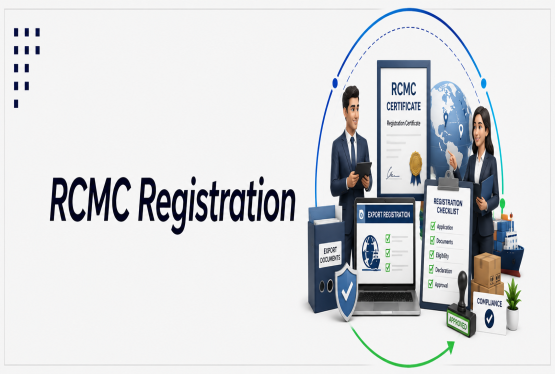
They perform different regulatory functions. The Exporter Licence permits the business to operate as a tea exporter under the Tea (Distribution and Export) Control Order, 2005. RCMC, on the other hand, operates within India’s Foreign Trade Policy framework and establishes registration with the competent Export Promotion Council, Commodity Board or other recognised registering authority.
Tea Board’s RCMC guidance states that exporters of bulk tea, packet tea, tea bags and instant tea may obtain RCMC from Tea Board for purposes connected with benefits and entitlements under the foreign trade framework. Tea Board’s detailed guidance also requires a copy of the IEC and Tea Board exporter licence for RCMC purposes. Consequently, businesses should not assume that obtaining an IEC alone completes tea-export compliance.
How Long Does Tea Board RCMC Take?
Tea Board’s RCMC guideline states that, where the application is complete in all respects, RCMC may be issued within 2 working days where the application is received at the Head Office and within 10 working days where it is submitted through Zonal or Regional Offices. The same guideline warns that incomplete applications may be rejected. Businesses should distinguish this RCMC processing benchmark from the January 2026 Tea Board notice prescribing 10 working days for an Exporter Licence. The exporter licence should generally be obtained first where it is required, after which the exporter can proceed with the appropriate RCMC process.
Validity of RCMC
DGFT’s current e-RCMC guidance states that an RCMC is generally issued for five financial years. It is deemed valid from 1 April of the licensing year in which it is issued and ordinarily continues through 31 March of the fifth financial year, unless otherwise specified. An active IEC and updated IEC profile are prerequisites for e-RCMC filing.
Businesses should therefore maintain a compliance calendar for both their Tea Board licence and RCMC rather than treating the initial registration as a one-time activity.
Validity and Renewal of the Tea Exporter Licence
The statutory text of the Tea (Distribution and Export) Control Order, 2005 published in Tea Board’s consolidated legal manual states in Paragraph 12 that an exporter business licence is valid for three years from its date of issue and may be renewed for another three-year period unless suspended or cancelled. A permanent business licence continues until cancelled or suspended. Paragraph 14 deals with renewal.
However, applicants should note an important practical point when relying on older consolidated legal material. Tea Board’s current online fee structure presently displays an Exporter Licence as having a five-year period for new and renewal applications, while Permanent Exporter status is shown with lifetime validity.
Because the consolidated statutory compilation and the current portal display different validity periods, an applicant should follow the validity printed on the licence actually issued and verify the latest notified amendment or Tea Board instruction when renewal planning is material. This is preferable to relying solely on an older copy of the Control Order.
Permanent Exporter Licence
The 2005 Control Order also provides for conversion of an ordinary exporter business licence into a Permanent Business Licence.
Under Paragraph 8, the statutory eligibility conditions include that the applicant must already be an exporter, must not have violated the Tea Act, Tea Rules, Tea Board Bye-Laws or an order made under the Act, and must have exported at least 1,00,000 kilograms of tea annually during the preceding three years.
Tea Board’s January 2026 timeframe notice provides a 10-working-day disposal period for Permanent Exporter applications that are complete in all respects.
A permanent licence does not require periodic renewal in the same manner as the ordinary business licence, although it remains subject to compliance and can be suspended or cancelled.
Compliance After Registration
Obtaining the licence is only the beginning of Tea Board compliance.
Paragraph 18 of the Tea (Distribution and Export) Control Order, 2005 makes the business licence personal to the licence holder and prohibits transfer of the licence. If the business itself is transferred to another person, the transferee is required to obtain a fresh business licence. The Order also provides reporting and amendment obligations where there is a change in partnership or particulars underlying the licence.
The Order further gives Tea Board authority to inspect tea meant for export. Under Paragraph 24, authorised Tea Board officials or approved inspection agencies may inspect tea intended for export to verify compliance. Under Paragraph 25, the Licensing Authority or an authorised Tea Board officer may prevent shipment where a violation of contractual obligations or the Control Order is suspected. Paragraph 26 empowers the authority to register export contracts in accordance with procedures stipulated from time to time.
These provisions show why Tea Board registration should not be viewed merely as a certificate needed to open an export business. It forms part of an ongoing regulatory system governing the quality, origin, documentation and movement of tea.
Suspension and Cancellation of Tea Board Exporter Licence
Paragraph 27 of the Tea (Distribution and Export) Control Order, 2005 allows Tea Board to suspend or cancel an exporter business licence or permanent business licence after giving the licence holder an opportunity of being heard.
Grounds include obtaining the licence through material misrepresentation, failure to honour contractual obligations towards a foreign buyer or seller, violation of the Tea Act, Tea Rules, Tea Board Bye-Laws or applicable control orders, failure to comply with directions issued by the Licensing Authority and other violations of the Order. A permanent exporter may also face action where no tea has been exported from India during the preceding three consecutive years.
The order suspending or cancelling the licence is required to be in writing, state the reasons and be communicated to the licence holder.
At the statutory level, Section 41 of the Tea Act, 1953 also provides penalties for contravention of orders made under Section 30. This underlines that non-compliance may have consequences beyond mere rejection of an online application.
Recent 2026 Update for Flavoured Tea Manufacturers
Businesses manufacturing or marketing flavoured tea should pay attention to a separate February 2026 update. Tea Board issued revised guidelines for registration as a manufacturer of tea with added flavour on 4 February 2026. These guidelines state that manufacturing tea with added flavour requires valid Tea Board registration and connect the process with applicable FSSAI standards.
The revised procedure provides that the marketing company under whose brand the flavoured tea is marketed should apply for registration, while the manufacturing or blending and packaging premises should be properly reflected in the applicant’s FSSAI licence. The guidelines also require supporting entity documents, a valid FSSAI licence and product annexure, laboratory test reports covering prescribed biochemical, pesticide-residue and metal-contaminant parameters, and specified declarations regarding the tea and flavour used.
Under the January 2026 disposal notice, Flavour Registration carries a 20-working-day timeframe, rather than the 10-working-day period applicable to ordinary exporter licences.
Why Can Tea Board Registration Take Longer Than Expected?
Although Tea Board now publishes defined disposal timeframes, the actual calendar time may increase where an application is incomplete. Mismatch between the IEC and Tea Board application, incorrect entity details, an improperly signed application, missing authorisation of the signatory, incomplete supporting documents, incorrect licence category or failure to respond to a clarification can interrupt processing.
This became even more important after the January 2026 notice because the applicant may receive only one opportunity to rectify deficiencies or provide the requested clarification. Businesses planning an export shipment should therefore avoid waiting until a confirmed shipping date before applying.
Practical Timeline for a New Tea Exporter
For a completely new tea-export business, the total compliance time should be considered in stages rather than looking only at Tea Board’s 10-working-day processing benchmark.
The business should first ensure that its legal entity and registered address are properly documented and that its IEC is active and accurate. It can then prepare and submit the Tea Board Exporter Licence application through the online portal. Where the application is complete, Tea Board’s 2026 timeframe is 10 working days. After obtaining the exporter licence, the business may proceed with Tea Board RCMC where applicable under the Foreign Trade Policy framework.
Additional time should be planned where the business is manufacturing tea, operating a tea warehouse, dealing in flavoured tea, buying tea directly or through auction, or using protected geographical indications, because separate registrations or certifications may apply.
Can Tea Be Exported Immediately After Tea Board Registration?
Obtaining the exporter licence does not automatically mean that every regulatory requirement connected with a particular shipment has been completed.
Depending on the tea, destination and contract, the exporter may need to comply with certificate-of-origin requirements, quality requirements, customs documentation, Foreign Trade Policy provisions, FSSAI requirements and specific requirements of the importing country.
The 2005 Control Order contains specific provisions concerning Certificates of Origin and geographical-indication teas. Paragraphs 5 to 11 address certificate-of-origin requirements and the rules applicable to tea represented as originating from India or designated geographical areas.
Accordingly, exporters should distinguish between registration of the exporter and shipment-level export compliance.
Conclusion
For a standard Tea Exporter Licence, Tea Board India’s notice dated 8 January 2026 prescribes a disposal timeframe of 10 working days from receipt of a complete application. The same 10-working-day timeframe applies to Permanent Exporter applications and several other categories such as Buyer Registration. Depending on the activity, other permissions may take between 15 and 25 working days.
The legal foundation comes primarily from the Tea Act, 1953, particularly Sections 4 and 30, together with the Tea (Distribution and Export) Control Order, 2005, the Tea (Marketing) Control Order, 2003, applicable Tea Board guidelines and the Foreign Trade Policy framework governing RCMC.
For businesses intending to export tea, early preparation is the safest approach. An accurate IEC, correct registration category, properly signed application and complete supporting documents can significantly reduce the possibility of clarification or rejection. Since Tea Board’s 2026 procedure places greater emphasis on complete filing and permits only one opportunity to cure deficiencies, careful document review before submission has become particularly important.
A properly planned Tea Board application is therefore not a long process in itself. For an exporter with a complete file, around 10 working days is the official 2026 processing benchmark, but the complete business-compliance journey may take longer where IEC, RCMC, FSSAI, manufacturing, warehousing, flavour registration or shipment-specific approvals are also required.
Frequently Asked Questions (FAQs)
Q1. How long does Tea Board Exporter Registration take?
Ans: Tea Board India currently provides a processing benchmark of around 10 working days for a complete exporter licence application.
Incomplete documents or clarification requirements can extend the overall timeline.
Q2. Is Tea Board Registration mandatory for tea exporters?
Ans: Businesses engaged in exporting tea may require an Exporter Business Licence from Tea Board India.
The exact requirement depends on the nature of the business and activity undertaken.
Q3. What documents are required for Tea Board Registration?
Ans: Common requirements include the prescribed application form, IEC details and supporting business documents.
The information submitted should be accurate and consistent across all registrations.
Q4. Can Tea Board Registration be completed online?
Ans: Yes, applications for several Tea Board licences and registrations can be submitted through the online licensing portal.
Applicants must complete the form, upload documents and pay the applicable fee.
Q5. Is IEC required before Tea Board Exporter Registration?
Ans: Yes, an Importer Exporter Code issued through DGFT is generally required for a tea exporter licence.
Applicants should ensure their IEC details and business address are updated.
Q6. Is Tea Board RCMC the same as an Exporter Licence?
Ans: No. A Tea Board Exporter Licence and RCMC serve different regulatory purposes.
Exporters may need both depending on their business activities and Foreign Trade Policy requirements.
Q7. How long does Tea Board RCMC take?
Ans: The processing period depends on how and where the application is submitted.
A complete application may be processed faster, while deficiencies can cause delays.
Q8. Why can Tea Board Registration get delayed?
Ans: Delays may occur due to incorrect details, document mismatches, missing signatures or incomplete information.
Responding promptly to Tea Board clarification requests can help avoid further delay.
Q9. Does a Tea Board Exporter Licence require renewal?
Ans: The validity and renewal requirements depend on the category of licence issued by Tea Board India.
Businesses should check the validity mentioned on their actual licence and renew it within time.
Q10. What happens if a Tea Board application is incomplete?
Ans: Tea Board may request additional documents or clarification where deficiencies are identified.
Failure to rectify the application can result in rejection and may also affect the application fee.