


Obtaining an Importer-Exporter Code is usually the first major milestone for a new exporter. The next question often sounds simple but causes considerable confusion: Which Export Promotion Council should issue the RCMC?
Many exporters select a council based on its name, membership fee or a recommendation received from another business. However, the correct authority must generally be identified from the exporter’s main line of business, product classification, service category and the jurisdiction assigned under Appendix 2T of the Foreign Trade Policy .
Choosing the wrong council may lead to objections, rejection, incorrect product coverage or difficulties while claiming an authorisation, concession or benefit under the Foreign Trade Policy. A careful assessment should therefore be completed before the online e-RCMC application is signed and paid.
What Is RCMC Registration?
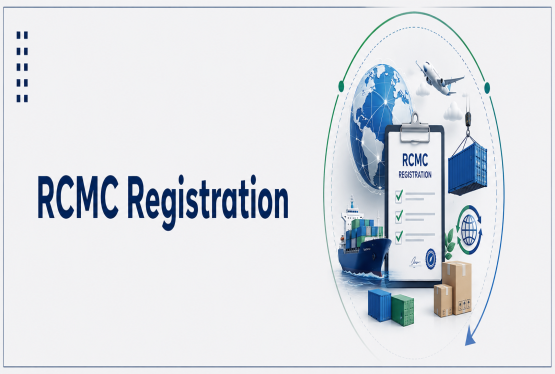
A Registration-cum-Membership Certificate, commonly called RCMC Registration, is issued by an authorised Export Promotion Council, Commodity Board, Development Authority or another competent registering authority. It confirms that an exporter is registered with the body responsible for promoting and administering its relevant product or service sector.
Under paragraph 2.56 of the Foreign Trade Policy 2023, Export Promotion Councils promote particular groups of products, projects or services specified in Appendix 2T. Recognised councils can act as registering authorities and issue RCMC to eligible members.
RCMC Connects the Exporter with a Sector
RCMC is not merely a general certificate confirming that a business intends to export. It connects the applicant with the competent organisation responsible for the products or services forming its principal export activity. For this reason, ANF 2C asks the applicant to state the Export Promotion Council or Commodity Board, main line of business, exporter category, product description and applicable ITC (HS) or service codes.
DGFT Provides the Common Platform
DGFT operates the common digital e-RCMC system, but the certificate is examined and issued by the selected council, board or authority. The applicant must log in through its IEC-linked profile, select the registering authority and submit the council-specific information and documents.
The process is completely electronic and paperless. ANF 2C expressly states that applicants should use the DGFT website’s e-RCMC service and should not submit paper or scanned copies of the ANF form to a DGFT office.
When Is an RCMC Required?
RCMC is not automatically required merely because a person obtains an IEC or completes one ordinary export transaction. Its requirement depends on the relevant Foreign Trade Policy provision, the authorisation or benefit being claimed and any separate commodity-specific legislation.
Paragraph 2.57 of FTP 2023 requires an RCMC when a person applies for an import or export authorisation under the policy, subject to the stated treatment of restricted items, or applies for another benefit or concession under the FTP, unless specifically exempted.
Commodity Laws May Impose Separate Registration
Certain sectors are governed by statutory boards or commodity-specific legislation. In such cases, the sectoral certificate may have a different name but still be recognised as an RCMC for Foreign Trade Policy purposes. FTP 2023 specifically provides that the Certificate of Registration as Exporter of Spices issued by the Spices Board and the Certificate of Registration as Exporter of Coir and Coir Products issued by the Coir Board are treated as RCMC for covered products.
RCMC Is Not Required for Every Remission Scheme
DGFT clarified through Trade Notice No. 19/2024-25 that RCMC is not required merely to claim post-export remission-based benefits such as Duty Drawback, RoSCTL and RoDTEP. These schemes remit specified duties and taxes on exported goods and are distinguished from the authorisations, benefits and concessions contemplated in paragraph 2.57.
This distinction is important because an exporter should not purchase an unsuitable council membership only because it intends to claim RoDTEP or Duty Drawback. The requirement must be checked against the exact scheme, product law and purpose for which the certificate is sought.
Why Selecting the Right Council Matters
The applicant’s chosen council determines the products or services appearing on the RCMC, the membership category, documentation, fees and post-registration obligations. It may also determine access to sector-specific trade fairs, market reports, buyer-seller events and export-promotion programmes.
ANF 2C requires the exporter to declare that it has applied to the council pertaining to its main line of business. Where an application is submitted to another council, it must fall within the applicable Handbook of Procedures provisions. The declaration also confirms that incorrect selection or breach of the undertakings may expose the registration to cancellation.
Incorrect Selection Can Affect Product Coverage
Suppose an exporter manufactures electrical equipment but obtains registration from a council whose jurisdiction covers an unrelated product category. Even if the certificate is technically generated, it may not support an authorisation or benefit connected with the actual exported product.
The authority may raise a deficiency, require an amendment or direct the applicant to approach another registering body. This can delay transactions and result in avoidable payment of membership or processing fees.
Council Fees Are Not the Deciding Factor
Each registering authority may prescribe its own admission fee, annual subscription, membership categories and supporting documents. The cheapest authority is not necessarily the legally competent authority. The correct approach is to identify product jurisdiction first and compare fees only after the competent council has been established. Payment does not cure an incorrect classification or create jurisdiction in an unrelated council.
Step One: Identify the Main Line of Business
The main line of business is the central factor in choosing an RCMC authority. It refers to the principal product, product group or service activity that the exporter manufactures, trades or intends to export.
DGFT’s e-RCMC guidance states that an exporter must declare its main line of business and obtain RCMC from the council concerned with that product. The e-RCMC application accordingly captures the applicant’s main business, branch, exporter type, ITC (HS) codes and product or service description.
Review Actual and Proposed Export Activity
An established exporter may identify its main line from export turnover, invoice values, production capacity and shipment history. A new exporter without previous turnover should consider its proposed principal product, business objects, supplier arrangements, manufacturing licences and target customers.
The declaration should reflect a genuine and commercially supportable activity. Applicants should not select a product merely to access a convenient council where their constitutional documents and business records indicate a different operation.
Distinguish Main Products from Incidental Products
A business may export several related items, but one product group may represent its principal activity. For example, packaging material supplied with the main product does not necessarily become the exporter’s main line of business. The applicant should consider which product generates or is expected to generate the largest share of export turnover and which activity represents the core commercial identity of the business.
Step Two: Determine the Correct ITC (HS) Code
Goods exported from India are classified under the Indian Trade Classification based on the Harmonized System. India maintains national-level product classifications at eight digits, and the export policy applicable to each item is identified through Schedule II of ITC (HS).
The ITC (HS) code is important because two products with similar commercial names may fall under different chapters or council jurisdictions. A food preparation, chemical mixture, electronic component or textile article should not be classified solely from a marketing description.
Use the Technical Product Description
The exporter should examine the product’s composition, function, material, degree of processing and intended use. Product catalogues, specifications, manufacturing processes and Customs classification records may be required to identify the correct code.
Where classification remains uncertain, professional classification advice should be obtained before the RCMC application is filed. Incorrect classification can affect not only council selection but also export policy, Customs treatment, incentives and product-specific approvals.
Match the Code with Appendix 2T
After identifying the most appropriate ITC (HS) code, the exporter should compare it with the product jurisdiction assigned to councils, commodity boards and development authorities in the latest Appendix 2T.
Appendix 2T should be checked in its current amended form because council names, addresses and jurisdictional details may change through DGFT public notices. FTP 2023 expressly links each council’s responsibility to the products, projects or services allocated under that appendix.
Step Three: Check Whether a Commodity Board Has Priority
Certain products are administered by specialised Commodity Boards or statutory development authorities. Where a product clearly falls within such an authority’s jurisdiction, the exporter should ordinarily apply to that authority rather than selecting a general Export Promotion Council.
This is particularly important where the commodity legislation independently requires registration. In those circumstances, the sector-specific registration may serve both as a statutory exporter certificate and as an RCMC for Foreign Trade Policy purposes.
Spices and Coir Products
For spice exporters, the Certificate of Registration as Exporter of Spices issued by the Spices Board is treated as an RCMC. Similarly, the exporter certificate issued by the Coir Board for coir and coir products is recognised as RCMC. Applying to a general council for the same covered products may create unnecessary duplication and may not satisfy the separate commodity law.
Sector-Specific Authorities
Agricultural and processed food products, tea, marine products and other regulated commodities may fall within the jurisdiction of specialised boards or development authorities. The applicant must verify the exact product coverage instead of assuming that every agricultural product belongs to one authority.
A processed product may fall under a different category from its raw agricultural ingredient. Its composition, processing stage and ITC (HS) classification must therefore be reviewed carefully.
Step Four: Understand the Role of FIEO
Where an export product is not covered by an Export Promotion Council, Commodity Board or another designated authority, the exporter may generally obtain RCMC from the Federation of Indian Export Organisations.
DGFT’s e-RCMC guidance also provides that where a multi-product exporter’s main line of business has not yet been settled, the exporter may opt to obtain RCMC from FIEO.
FIEO Is Not a Default Shortcut
FIEO should not be selected simply because the exporter deals in more than one item. If one product clearly represents the main line of business and is covered by a specialised council, the exporter should ordinarily approach that competent council. The multi-product option is most relevant where the export basket is genuinely diverse and no single principal product has been established. The applicant should retain a written product analysis explaining why FIEO was selected.
Products Not Covered Elsewhere
If no council or commodity board covers the relevant product, the exporter should document the Appendix 2T review and apply to FIEO with the correct product codes. The fact that a product is unusual, newly developed or sold through e-commerce does not eliminate the need to identify its ITC (HS) classification.
Step Five: Consider Special Regional Provisions
DGFT guidance recognises certain special cases based on the exporter’s location and product category. These should be considered before a general council is selected. For multi-product exporters whose head office or registered office is situated in the North-Eastern States, the guidance permits registration through the Shellac and Forest Products Export Promotion Council, except for products handled by APEDA, the Spices Board and the Tea Board.
For exporters of handicraft and handloom products from Jammu and Kashmir, the Director of Handicrafts, Government of Jammu and Kashmir, is authorised to issue the RCMC. These provisions demonstrate that council selection cannot always be determined from the product name alone. The exporter’s registered office, sector and special authority arrangements may also be relevant.
Step Six: Select the Correct Exporter and Membership Category
Even after identifying the correct council, the applicant must select the appropriate membership and exporter category. Options may include merchant exporter, manufacturer exporter, service exporter, associate member or ordinary member, depending on the authority.
A merchant exporter generally purchases products from third parties and exports them in its own name. A manufacturer exporter produces or processes the goods and must usually submit evidence supporting its manufacturing status.
New Exporters Without Turnover
New exporters should not enter estimated figures as completed export turnover. They should select the category available for prospective, new or associate members and provide truthful details of their current business position. ANF 2C separately captures previous-year turnover, export performance, MSME status, exporter category and the number of years for which membership is sought.
Manufacturer Status Must Be Supported
An exporter selecting manufacturer status may be required to submit Udyam Registration, a factory licence, FSSAI licence, pollution-control consent, industrial registration or another sector-specific document. Choosing manufacturer status without a genuine manufacturing facility may result in an objection, rejection or later cancellation.
Step Seven: Review Council Rules Before Payment
The common e-RCMC platform standardises the application process, but it does not make every council’s membership rules identical. Each authority may prescribe specific documents, admission fees, subscriptions, certificates and post-registration returns. The applicant should therefore review the selected authority’s current membership guidelines before signing the application. Fees should be compared only after the product jurisdiction and membership category have been confirmed.
Verify Document Consistency
The IEC, PAN, GST certificate, incorporation document, bank records and manufacturing approvals should show a consistent legal name and business address. The DGFT portal requires an active and updated IEC before an e-RCMC application can be submitted. The official e-RCMC page also identifies a linked DSC or Aadhaar e-signature as a prerequisite.
Review the Declaration Carefully
ANF 2C requires the applicant to undertake that the information is correct, the certificate conditions will be followed and required export returns will be furnished. It also expressly records that the applicant has applied to the council related to its main line of business.
The declaration should not be treated as a routine checkbox. Incorrect classification or council selection can become a compliance issue if it is based on misleading information.
Validity, Amendment and Change of Council
An RCMC is generally issued for five financial years, commencing from 1 April of the licensing year in which it is issued and ending on 31 March of the fifth financial year, unless a different period is prescribed by the relevant authority.
Where the business changes its name, constitution, registered office, ownership, principal product or main line of business, the existing certificate should be reviewed. A mere change in commercial operations should not be allowed to create a continuing mismatch between the RCMC and the exporter’s actual business.
Amendment of an Existing Certificate
An active RCMC can be amended through the DGFT portal. Existing application information is pre-populated, and the applicant can update the relevant particulars and upload supporting documents.
Where the main line of business moves to a completely different council, a simple product amendment may not always be sufficient. The exporter should obtain guidance from both authorities and complete the appropriate surrender, amendment or fresh-registration procedure.
De-registration and Appeal
A registering authority may initiate de-registration where the exporter ceases to qualify, breaches membership conditions or provides incorrect information. The applicable procedure requires notice and an opportunity to present the exporter’s case.
An aggrieved exporter may use the appeal mechanism prescribed under the Handbook of Procedures. All correspondence, product-classification records and proof supporting the original council selection should therefore be retained.
Recent Updates Affecting Council Selection
DGFT periodically updates Appendix 2T to reflect changes in recognised councils, their names and contact details. Public Notice No. 11/2025-26, for example, changed the name of the Sports Goods Export Promotion Council to the Sports Goods and Toys Export Promotion Council and updated its details.
This type of amendment shows why an exporter should not rely on an old blog, archived checklist or previously issued RCMC when identifying the current authority. The latest Appendix 2T and public notices should be checked immediately before filing.
DGFT also issued Trade Notice No. 14/2026-27 on 20 July 2026 seeking stakeholder comments on a draft proposal for a de minimis exemption from RCMC or equivalent certificate requirements for export consignments with an FOB value not exceeding ?10,000. As of 1 August 2026, this was a consultation proposal and should not be treated as a final operative exemption unless a formal amendment is notified.
Common Mistakes While Choosing an RCMC Council
The most common mistake is selecting a council from the product’s everyday name without checking its eight-digit classification. Exporters also confuse raw commodities with processed goods, select FIEO despite having a clearly identifiable main product or choose a council based solely on lower fees.
Another frequent error is assuming that one RCMC automatically covers every product exported under the same IEC. The certificate should be checked for the exact product or service descriptions and codes appearing on it.
Businesses also fail to revisit their RCMC after changing from trading to manufacturing, adding a new product division or acquiring another business. An outdated certificate can cause problems when the exporter later applies for an authorisation or scheme benefit.
Practical Decision Test
Before selecting a council, the exporter should be able to answer five questions clearly: What is the exact product or service? What is its correct ITC (HS) or service code? Which authority covers it under the latest Appendix 2T? Does a commodity-specific law require another exporter certificate? Does this product genuinely represent the business’s main export activity?
Where the answers point to one specialised authority, that authority should ordinarily issue the RCMC. Where no authority covers the product, or a genuine multi-product exporter has no settled main line, FIEO may be considered under the applicable procedure.
Conclusion
Choosing the right council for RCMC Registration is a legal classification exercise, not merely a membership decision. The applicant must identify its main line of business, determine the correct product or service code and match that activity with the current jurisdiction assigned under Appendix 2T.
Commodity-board registrations must be considered before selecting a general council. Multi-product exporters should use the FIEO option only where the prescribed conditions genuinely apply, while special regional provisions should also be reviewed.
The safest approach is to prepare a written product-classification and jurisdiction note before filing. This note should record the product description, ITC (HS) code, principal export activity, applicable authority and reasons supporting the selection.
A correctly chosen RCMC can support smooth applications for relevant Foreign Trade Policy authorisations and benefits. An incorrectly chosen council can result in objections, amendments, duplicated fees and compliance difficulties at a later stage.
Frequently Asked Questions (FAQs)
Q1. What is the main factor in choosing an RCMC council?
Ans: The exporter’s main line of business is the most important factor.
The principal product or service should be identified before applying.
Its ITC (HS) or service code should be matched with Appendix 2T.
The application should then be filed with the authority covering that category.
Q2. Can an exporter choose any Export Promotion Council?
Ans: No, an exporter should not select a council only by preference or fee.
The selected authority must cover the applicant’s main export product or service.
Choosing an unrelated council may lead to objections or incorrect product coverage.
The latest DGFT Appendix 2T should be reviewed before filing.
Q3. What is Appendix 2T in RCMC Registration?
Ans: Appendix 2T lists recognised Export Promotion Councils and registering authorities.
It also indicates the products, services or sectors assigned to them.
Exporters use this appendix to identify the correct council for registration.
Its latest amended version should always be checked before applying.
Q4. Why is the ITC (HS) code important for council selection?
Ans: The ITC (HS) code provides the legal classification of exported goods.
Products with similar names may fall under different classifications and councils.
The code helps determine the applicable export policy and registering authority.
Incorrect classification may affect RCMC, Customs and export benefits.
Q5. When should an exporter apply for RCMC through FIEO?
Ans: FIEO may be considered when no specific council covers the export product.
It may also apply to genuine multi-product exporters without a settled main line.
FIEO should not be used as a shortcut where a specialised council exists.
The exporter should document the reasons supporting its selection.
Q6. Can a multi-product exporter obtain one RCMC?
Ans: A multi-product exporter may obtain registration based on its main business activity.
The council should cover the principal product generating most export turnover.
Where no main line is settled, FIEO may be considered under DGFT provisions.
The products mentioned on the certificate should be checked carefully.
Q7. Are Commodity Board certificates treated as RCMC?
Ans: Certain Commodity Board registrations are recognised as RCMC under the FTP.
The Spices Board exporter certificate is treated as RCMC for covered spices.
The Coir Board exporter certificate receives similar recognition for coir products.
Sector-specific requirements should therefore be checked before choosing a council.
Q8. What happens if the wrong RCMC council is selected?
Ans: The registering authority may issue a deficiency or reject the application.
The exporter may be asked to amend, surrender or obtain a fresh registration.
Incorrect selection can delay export authorisations and applicable benefits.
Membership fees already paid may also become an avoidable business cost.
Q9. Can an existing RCMC be amended after issue?
Ans: Yes, an active RCMC can generally be amended through the DGFT portal.
Changes in business details, products or exporter category may be updated.
Supporting documents must be uploaded for the requested modification.
A major change in the main business may require another council’s registration.
Q10. How long is an RCMC generally valid?
Ans: An RCMC is generally valid for five financial years unless otherwise specified.
Its validity usually begins from 1 April of the licensing year.
It normally expires on 31 March of the fifth financial year.
The exact validity should be checked on the issued certificate.