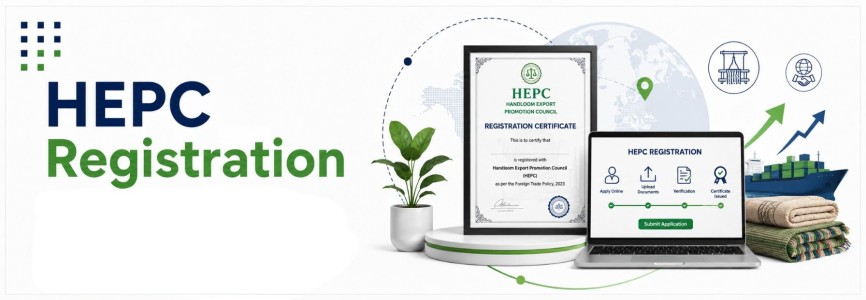



India has one of the world’s largest and most diverse handloom industries, producing fabrics, home furnishings, carpets, floor coverings, bed linen, table linen, towels, curtains and several other textile products for international markets. For businesses engaged in exporting handloom products from India, registration with the Handloom Export Promotion Council (HEPC) is an important part of the export compliance framework. HEPC functions as a nodal export promotion body under the Ministry of Textiles, Government of India, and supports Indian handloom exporters through export promotion initiatives, international exhibitions, buyer-seller meets, policy representation and market-development activities.
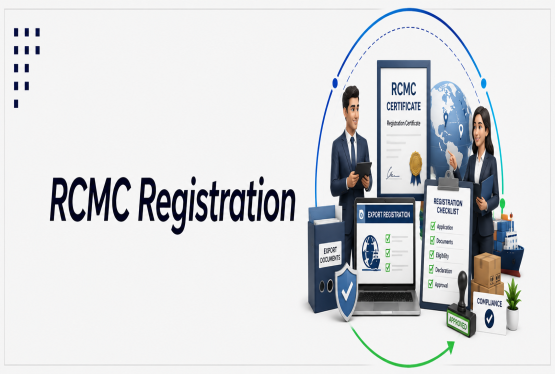
The principal registration issued through an Export Promotion Council such as HEPC is the Registration-cum-Membership Certificate (RCMC). Under the current Foreign Trade Policy framework, RCMC acts as evidence that an exporter is registered with the appropriate Export Promotion Council or other competent registering authority responsible for the exporter’s principal line of business. For exporters of handloom products, HEPC is one of the recognised registering authorities under DGFT’s Appendix 2T. The presently published Appendix 2T identifies HEPC as the Export Promotion Council having jurisdiction over handloom products including fabrics, home furnishings, carpets and floor coverings.
Legal Provisions Governing HEPC Registration
HEPC registration must be understood within India's broader foreign trade regulatory framework. The principal legislation governing imports and exports is the Foreign Trade (Development and Regulation) Act, 1992, commonly referred to as the FT(D&R) Act. The Act empowers the Central Government to formulate and implement India's foreign trade policy. Section 5 provides the statutory basis for formulation and amendment of the Foreign Trade Policy, while Section 7 establishes the requirement of an Importer Exporter Code for persons carrying out imports or exports, subject to the applicable statutory framework and exemptions.
The presently applicable policy is the Foreign Trade Policy 2023, administered by the Directorate General of Foreign Trade. Para 2.56 of FTP 2023 recognises Export Promotion Councils as organisations established for promoting and developing Indian exports and provides that each Council is responsible for a particular category of products, projects or services specified in Appendix 2T. The same provision recognises eligible EPCs as registering authorities authorised to issue RCMC to their members.
Para 2.57 of FTP 2023 contains the principal RCMC requirement. It provides that a person applying for an authorisation to import or export under FTP, except in the circumstances specified for restricted items, or applying for another benefit or concession under the Foreign Trade Policy, is required to provide an RCMC granted by the competent authority unless specifically exempted under the policy. RCMC is therefore particularly relevant for exporters who intend to access benefits, authorisations, concessions or promotional facilities available under India's foreign trade framework.
The detailed procedural requirements are contained in the Handbook of Procedures 2023. Para 2.77 defines a Registering Authority as a body notified by DGFT to register importers and exporters and issue RCMC. Para 2.78 prescribes governance requirements for EPCs functioning as registering authorities, while Paras 2.79 to 2.85 deal specifically with RCMC registration, selection of the appropriate Council, validity, changes in business details, de-registration, appeals and DGFT's power to issue directions to registering authorities.
What is HEPC Registration?
HEPC registration essentially involves obtaining membership of the Handloom Export Promotion Council and an RCMC associated with the exporter's handloom business. FTP 2023 defines RCMC as a registration and membership certificate granted by an Export Promotion Council, Commodity Board, Development Authority or other competent authority prescribed under FTP or the Handbook of Procedures.
According to Para 2.79 of the Handbook of Procedures, an exporter may apply in the prescribed form, presently ANF 2C, to register and become a member of the appropriate Export Promotion Council. Upon admission to membership, the applicant is granted an RCMC in the prescribed format contained in Appendix 2R. Where registration is sought as a manufacturer-exporter, evidence establishing the manufacturing status must be submitted. The provision also permits prospective or potential exporters to register as associate members of an EPC.
HEPC currently explains that new exporters are ordinarily enrolled initially as Registered Textile Exporters (RTEs) and may subsequently become Members after satisfying the applicable eligibility criteria, including the required export performance. Members enjoy voting rights and may participate in elections to the Executive Committee, subject to HEPC's governing documents. RTEs and Members otherwise receive the Council's applicable services and benefits.
Who Can Apply for HEPC Registration?
An exporter whose principal business relates to products falling within HEPC's jurisdiction may apply for registration. The current HEPC membership information indicates that an individual, company, society or Hindu Undivided Family having an Importer Exporter Code may apply for membership along with the prescribed documents and applicable fee. Businesses may generally register either as manufacturer-exporters or merchant-exporters depending upon the nature of their operations.
A manufacturer-exporter is generally a business engaged in manufacturing handloom products and exporting them from India. HEPC requires evidence supporting the applicant's manufacturing status. Its published instructions provide that manufacturer-exporters should produce appropriate Udyam/manufacturing documentation showing handloom products. Where the supporting certificate does not adequately indicate handloom products, HEPC's instructions contemplate an affidavit in the Council's prescribed format.
A merchant-exporter, on the other hand, procures handloom products from manufacturers or producers and exports them in its own capacity. Such exporters do not necessarily own the manufacturing facilities but may obtain HEPC registration where handloom products constitute their relevant line of export business.
HEPC also provides a category for master weavers, weavers and artisans. According to its currently published instructions, such applicants are required to obtain appropriate confirmation from the concerned Weavers' Service Centre, Directorate of Handlooms or Development Commissioner for Handlooms regarding their status.
Main Line of Business Requirement
Selecting the correct Export Promotion Council is legally important. Para 2.80(a) of the Handbook of Procedures requires an exporter applying for RCMC to declare the main line of business and obtain RCMC from the Council responsible for the product forming that main line of business. Therefore, an exporter principally dealing in handloom fabrics, handloom home textiles, floor coverings or other products falling within HEPC's notified jurisdiction should ordinarily select HEPC as the relevant Registering Authority.
Where an export product is not covered by any Export Promotion Council or Commodity Board, Para 2.80 allows the exporter to obtain RCMC from the Federation of Indian Export Organisations (FIEO). It also provides an option for certain multi-product exporters whose principal line of business has not yet been determined. An important special provision exists for exporters of handicraft and handloom products from the Union Territories of Jammu & Kashmir and Ladakh, where the Director, Handicrafts, Government of Jammu & Kashmir is authorised under Para 2.80(d) to issue RCMC.
Prerequisites for HEPC RCMC Application
Before applying for HEPC registration, an exporter should have an active Importer Exporter Code (IEC) issued by DGFT. The DGFT e-RCMC portal currently specifies an active IEC as a prerequisite. The applicant's IEC profile should also be properly updated and linked with the relevant user account. A linked Digital Signature Certificate or Aadhaar-based e-Sign facility is required for electronic submission of the application.
The particulars appearing in the IEC database should correspond with the entity's PAN, constitution, registered address, directors or partners and other relevant details. Since the e-RCMC ecosystem is integrated with DGFT's IEC data, inconsistencies between the application and IEC profile may result in queries or deficiencies.
Documents Required for HEPC Registration
The documents required for HEPC registration may differ depending on the legal constitution of the applicant and the nature of the export business. A manufacturer-exporter, merchant-exporter, master weaver, weaver or artisan may be required to submit different supporting documents. Applicants should ensure that the information provided in the HEPC application is consistent with their IEC, PAN, GST registration and other business records.
The following documents and details are generally required for HEPC registration:
- Importer Exporter Code (IEC): A valid and active IEC issued by the Directorate General of Foreign Trade (DGFT) is generally required for exporters applying for HEPC membership and RCMC.
- PAN Card: PAN details of the applicant entity, proprietor, partnership firm, LLP or company, as applicable, should be kept ready.
- GST Registration Certificate: A GST registration certificate may be required where GST registration is applicable to the business.
- Specimen Signature Form: HEPC requires a duly completed Specimen Signature Form containing the details and signature of the nominated authorised representative.
- Authorised Representative Details: In a proprietorship concern, the proprietor is generally self-nominated. In the case of a partnership firm, one partner may be nominated as the authorised representative and the nomination may be attested by another partner. For a company, cooperative society or similar entity, an eligible director or authorised official may be nominated.
- Udyam Registration Certificate: Manufacturer-exporters should submit appropriate evidence of manufacturing activity. Udyam Registration showing the relevant handloom products may be submitted as proof of manufacturing status.
- Affidavit for Handloom Manufacturing Activity: Where the manufacturing or Udyam document does not clearly specify handloom products, HEPC may require an affidavit in the prescribed format confirming the applicant's handloom manufacturing activity.
- Certificate for Weavers and Artisans: Master weavers, weavers and artisans may be required to submit certification or confirmation from the concerned Weavers' Service Centre, Directorate of Handlooms or Development Commissioner for Handlooms confirming their status.
- Business Constitution Documents: Depending on the applicant's constitution, documents such as Certificate of Incorporation, Partnership Deed, LLP incorporation documents, Memorandum and Articles of Association or other relevant registration documents should be kept ready.
- Product Details: The applicant should provide details of the handloom products proposed to be exported, including the relevant product descriptions and applicable ITC(HS) classifications.
- Turnover and Export Details: Information relating to business turnover, export turnover and export performance may be required during the application or membership process.
- Bank and Payment Details: Applicants should keep the required payment information ready for payment of the applicable admission fee, membership subscription and other prescribed charges.
Applicants should carefully verify all documents before submission because discrepancies in the name of the entity, registered address, IEC details, business constitution, product category or authorised representative may result in a deficiency notice or delay in processing the HEPC RCMC application.
How to Apply for HEPC Registration Online
The HEPC RCMC registration process is now carried out electronically through the DGFT common e-RCMC platform. Pursuant to Trade Notice No. 35/2021-22 dated 24 February 2022, electronic filing and issuance of RCMC through the common DGFT portal became mandatory from 1 April 2022. The Foreign Trade Policy 2023 also recognises the electronic system for issuance, renewal and amendment of RCMC. Exporters dealing primarily in handloom products can therefore complete the HEPC registration process online by following the steps below.
- Step 1: Register or Login on the DGFT Portal:
The applicant must visit the DGFT portal and log in using the registered credentials. New users must first create an account and link their Importer Exporter Code (IEC) with the user profile. - Step 2: Verify and Update IEC Details:
Before applying for HEPC registration, the exporter should ensure that the IEC is active and all details such as business name, address, constitution, PAN, directors or partners and contact information are correctly updated. - Step 3: Select the e-RCMC Service:
After logging in, the applicant should navigate to the relevant Services section and select the e-RCMC facility. The option for applying for a new Registration-cum-Membership Certificate should then be selected. - Step 4: Select HEPC as the Registering Authority:
The applicant should choose the Handloom Export Promotion Council (HEPC) as the concerned Registering Authority, particularly where handloom products form the primary export activity of the applicant. - Step 5: Enter Business and Membership Details:
The applicant is required to furnish comprehensive details of the business, including the nature of export operations, category of exporter, desired membership type, MSME classification if applicable, annual turnover, and any other relevant commercial information as sought in the application form. - Step 6: Provide Product and Export Details:
The exporter must accurately specify the handloom products intended for export or already being exported. This includes detailed product descriptions, applicable ITC(HS) classification codes, export performance data, and key destination countries or international markets. - Step 7: Enter Authorised Representative Details:
The applicant must provide complete particulars of the authorised signatory, such as the proprietor, partner, director, or designated representative. These details should match the authorisation documents and the Specimen Signature Form submitted with the application. - Step 8: Upload Supporting Documents:
The applicant is required to upload all necessary supporting documents, including IEC certificate details, Specimen Signature Form, Udyam Registration (if applicable), proof of manufacturing or trading activity, constitutional documents of the business entity, and any other records mandated for the selected membership category. - Step 9: Complete the Declaration:
The applicant must carefully read and accept the declarations provided in the application. All information submitted should be accurate, complete and consistent with the applicant's DGFT and business records. - Step 10: Pay the Applicable Fees:
The prescribed admission fee, annual membership subscription and applicable taxes or other charges must be paid through the available online payment mechanism. - Step 11: Sign and Submit the Application:
After reviewing the complete application, it should be electronically authenticated through the permitted mechanism, such as a Digital Signature Certificate (DSC) or Aadhaar-based e-Sign, as applicable, and submitted online. - Step 12: Track the Application Status:
Once the application is submitted, it is electronically forwarded to HEPC for verification. The applicant can track the status of the application through the DGFT portal. - Step 13: Respond to Deficiency, if Raised:
If HEPC finds any discrepancy, missing document or incomplete information, a deficiency or clarification may be raised electronically. The applicant should respond within the prescribed time and submit the required clarification or revised documents. - Step 14: Issue of e-RCMC:
After successful verification and approval of the application, the Registration-cum-Membership Certificate is issued electronically. The exporter can access the approved e-RCMC through the DGFT portal and use it for applicable export-related purposes.
HEPC Registration Fees
HEPC's currently published enrollment instructions list an admission fee of ?500 and annual subscription of ?6,500 for exporters, together with GST at 18%, giving a stated total of ?8,260. For master weavers, weavers and artisans, the published annual subscription is ?1,000 plus applicable GST, resulting in a stated total of ?1,180. These figures are based on HEPC's presently published instruction page and applicants should verify the fee displayed on the DGFT/HEPC system at the time of filing because Council fees may be revised.
Processing and Issue of e-RCMC
Once the application, supporting documents and fee are found satisfactory, the registering authority may approve the application and issue the electronic Registration-cum-Membership Certificate. DGFT's e-RCMC architecture provides for digitally generated certificates capable of electronic verification. The system is designed to use a Unique Document Identification Number and QR-based verification for authenticity, and applicants can track application status electronically.
HEPC's membership information states that, upon receipt of a duly completed application with supporting documents, the RCMC may ordinarily be issued within approximately a week. This should, however, be treated as an indicative administrative timeline rather than a statutory guarantee because processing may take longer where deficiencies, document verification or clarification are involved.
Validity of HEPC RCMC
Para 2.81 of the Handbook of Procedures provides that an RCMC is deemed valid from 1 April of the licensing year in which it is issued and remains valid for five years ending on 31 March, unless otherwise specified. The DGFT's current e-RCMC information similarly describes RCMC as a certificate issued for five financial years.
This five-year RCMC validity should not be confused with HEPC's annual membership subscription requirement. HEPC states that even though the registration certificate has a five-year validity period, the Council's membership is required to be renewed annually by payment of the applicable membership subscription beginning from each financial year. Failure to pay annual subscription may affect continuation of membership and the effective status of the RCMC.
Renewal and Amendment of HEPC Registration
The DGFT portal provides separate electronic facilities for renewal and amendment of RCMC. An exporter whose RCMC is approaching expiry should use the e-RCMC renewal service and provide the updated information, documents and applicable membership details required by HEPC. DGFT's system currently expressly provides services for new RCMC applications, renewal, amendment and viewing existing RCMC details.
Amendment becomes particularly relevant when there is a change in the exporter's constitution, name, ownership, address or other material information. Para 2.82 of the Handbook of Procedures creates an important compliance obligation: where there is a change in ownership, constitution, name or address, the RCMC holder is required to intimate the Registering Authority within one month from the date of the change. The Registering Authority may condone a delay on merits, but exporters should not rely on such discretionary relief and should update the registration promptly.
De-registration and Opportunity of Hearing
HEPC membership and RCMC are subject to continuing compliance with registration conditions. Para 2.83 of the Handbook of Procedures empowers a Registering Authority to de-register an RCMC holder for a specified period where the conditions of registration have been violated.
However, de-registration cannot ordinarily be imposed without following the prescribed procedure. Before taking such action, the Registering Authority must issue a show-cause notice and provide the exporter with an adequate and reasonable opportunity to make a representation against the proposed action. Once de-registration occurs, the concerned Export Promotion Council is required to communicate the position to the relevant DGFT Regional Authorities.
Appeal Against HEPC or RCMC Decisions
Exporters also have a statutory procedural safeguard against adverse RCMC decisions. Under Para 2.84 of the Handbook of Procedures, a person aggrieved by a decision of the Registering Authority concerning an RCMC matter may file an appeal before the DGFT or an officer designated for this purpose within 45 days of the relevant decision. The decision of the appellate authority is treated as final under this provision.
Further, Para 2.85 authorises DGFT to issue directions to a Registering Authority concerning registration or de-registration of exporters and other matters necessary for implementing the FT(D&R) Act, the Rules and Orders made under it, FTP and the Handbook of Procedures.
Benefits of HEPC Registration
HEPC membership connects handloom exporters with institutional export-promotion programmes. The Council currently highlights services such as participation in international fairs, buyer-seller meets, trade delegations, market-development programmes, dissemination of buyer enquiries, awareness seminars, policy updates and representation of trade-related issues before government departments and other institutions.
RCMC is also relevant where an exporter seeks authorisations, concessions or benefits under FTP for which registration with the competent Export Promotion Council is prescribed. However, registration itself should not be interpreted as automatically granting every export incentive. Eligibility for schemes such as remission, drawback, market-access assistance or any other government benefit must always be examined under the specific scheme, notification and conditions applicable at the time of export.
Recent Updates Relevant to HEPC Registration
The most important continuing procedural development is the complete digitalisation of the RCMC lifecycle. Electronic filing through DGFT's common e-RCMC platform has been mandatory since 1 April 2022, and FTP 2023 formally continues the digital system for issuance, renewal and amendment. DGFT's current e-RCMC service requires an active IEC, an updated IEC profile and a linked Digital Signature Certificate or Aadhaar e-Signature for submission.
DGFT's currently published Appendix 2T continues to identify the Handloom Export Promotion Council as the competent council for handloom products, confirming its continuing role as the relevant Export Promotion Council for the covered product categories.
Another practical development is that the e-RCMC ecosystem increasingly relies on electronically authenticated entity information. DGFT's system architecture provides for integration of IEC information and validation of identifiers such as PAN, CIN and DIN, electronic fee processing, deficiency communication and online verification of certificates. This makes consistency between the applicant's IEC profile, corporate records and HEPC application particularly important.
Common Reasons for Delay or Deficiency
HEPC applications may face queries where the exporter selects an incorrect Council, enters products outside HEPC's jurisdiction, provides an outdated IEC profile, fails to establish manufacturer-exporter status, submits an incorrect authorised representative form, provides inconsistent entity details or fails to upload the required documents.
Exporters should therefore verify the relevant ITC(HS) classification of their products and confirm that handloom products constitute the appropriate main line of business before selecting HEPC. Manufacturer-exporters should also ensure that their supporting Udyam or manufacturing documentation adequately reflects their handloom activity.
Compliance After Obtaining HEPC Registration
Obtaining the certificate is not the end of compliance. The exporter should keep its IEC active and updated, pay HEPC's annual membership subscription within the prescribed period, maintain accurate export turnover and product information, respond to Council communications, intimate material changes within the required period and apply for renewal before expiry of the RCMC.
Exporters should also maintain proper commercial documents, invoices, shipping bills, foreign exchange realisation records, GST records where applicable and other records required under customs, FEMA, GST and foreign trade laws. HEPC registration does not replace these separate statutory obligations.
Conclusion
HEPC registration is an important institutional and regulatory requirement for Indian exporters whose principal business involves handloom products. The registration process is governed primarily by the Foreign Trade (Development and Regulation) Act, 1992, Foreign Trade Policy 2023, Handbook of Procedures 2023, DGFT's Appendix 2T and the membership requirements prescribed by HEPC.
Under the present framework, an exporter should first obtain and maintain an active IEC, ensure that the IEC profile is updated, identify HEPC as the appropriate Export Promotion Council based on the main line of business and submit an electronic RCMC application through DGFT's e-RCMC portal. Manufacturer-exporters must provide evidence of manufacturing status, while other applicants must submit the supporting documents applicable to their constitution and membership category.
The RCMC ordinarily operates for five financial years under Para 2.81 of the Handbook of Procedures, while HEPC membership subscription is payable annually. Changes in ownership, constitution, name or address should be notified within one month, and violations of registration conditions can lead to de-registration after issuance of a show-cause notice and reasonable opportunity of representation. An aggrieved exporter also has the right to appeal an RCMC-related decision within 45 days under Para 2.84 of the Handbook of Procedures.
With the transition to the DGFT e-RCMC platform, the registration process has become substantially paperless and electronically verifiable. Exporters planning to enter or expand in international handloom markets should therefore treat HEPC registration not merely as a certificate but as part of an ongoing export-compliance system involving DGFT, HEPC, customs, foreign-exchange regulations and other applicable laws.