


In today’s competitive business environment, a brand is one of the most valuable assets of an organisation. A business name, logo, slogan, product identity, or service mark helps customers recognise and differentiate one business from another. However, simply creating a brand is not enough. Protecting it legally is equally important.
This is where Trademark Registration plays a crucial role.
Many businesses today operate across multiple segments. A company may sell physical products, provide services, operate an online platform, offer consultancy, launch merchandise, or expand into new industries over time. In such cases, protecting the brand under only one trademark class may not provide complete coverage.
This is why businesses often consider Trademark Registration for Multiple Classes.
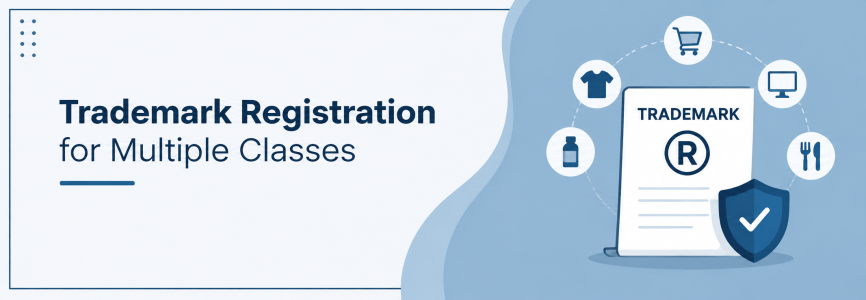
Multi-class trademark registration allows a proprietor to seek protection for the same trademark across different categories of goods and services covered under the trademark classification system. For growing businesses, startups, and established companies, registering a trademark under multiple classes can become an important part of a long-term brand protection strategy.
What Is Trademark Registration for Multiple Classes?
Trademark registration in India is based on a classification system consisting of different classes of goods and services.
The Nice Classification System divides goods and services into 45 different classes:
- Classes 1 to 34 cover goods
- Classes 35 to 45 cover services
A trademark owner must select the relevant class or classes depending on the nature of business activities for which protection is required. When a business applies for trademark registration under more than one class using the same trademark, it is known as multi-class trademark registration.
For example: A company named “ABC” may operate as:
- A clothing brand
- An online retail platform
- A marketing agency
- A software service provider
In such a situation, the business may require trademark protection under:
- Class 25 for clothing products
- Class 35 for retail and business services
- Class 42 for software-related services
A single trademark application can cover multiple classes, allowing businesses to protect their brand identity across different business activities.
Why Is Multi-Class Trademark Registration Important?
Businesses are constantly evolving. A company that starts with one product line may later expand into multiple industries.
Without proper trademark protection, expansion can create risks such as:
- Third-party trademark registrations
- Brand conflicts
- Legal disputes
- Loss of market identity
- Restrictions on future expansion
Multi-class trademark registration helps businesses secure broader protection for their brand.
1. Protects Brand Identity Across Multiple Areas
A trademark is not limited to a name or logo. It represents customer trust and business reputation. If a company operates in different sectors, registering the trademark in relevant classes helps prevent others from using the same or similar mark in those areas.
For example, a food company expanding into packaged products, restaurants, and online delivery services may need protection across multiple classes.
2. Supports Business Expansion
A business may have future plans to enter new markets. Registering trademarks in multiple classes at an early stage can make expansion smoother. Instead of filing new applications after entering every new sector, businesses can strategically protect their brand based on their growth plans.
3. Strengthens Legal Protection
Trademark rights are generally connected to the goods or services covered in the registration. If a trademark is registered only in one class, protection may be limited to that category. Multi-class registration allows businesses to establish stronger ownership claims over their brand in multiple areas.
4. Builds Brand Value
A registered trademark is an intangible business asset.
A strong trademark portfolio can increase business value during:
- Investment discussions
- Mergers and acquisitions
- Licensing arrangements
- Franchise expansion
- Business valuation
Investors and partners often consider intellectual property protection as an indicator of business maturity.
Understanding Trademark Classes
Selecting the correct trademark classes is one of the most important parts of the registration process.
Incorrect class selection can result in limited protection or unnecessary complications.
Goods Classes (Class 1 to 34)
These classes cover physical products.
Examples include:
Class 25
Clothing, footwear, headwear
Class 30
Food products, beverages, spices, bakery items
Class 3
Cosmetics, skincare products, beauty items
Class 9
Electronic devices, software, downloadable applications
Class 12
Vehicles and automobile-related products
Service Classes (Class 35 to 45)
These classes cover services.
Examples include:
Class 35
Advertising, business management, retail services
Class 41
Education, training, entertainment services
Class 42
Technology services, software development, scientific services
Class 43
Food services, restaurants, hospitality
Class 45
Legal services, security services, personal and social services
Single Class vs Multiple Class Trademark Registration
Businesses often face a choice between single-class and multi-class trademark applications.
Single Class Trademark Registration
A single-class application protects the trademark only for one selected class.
Advantages:
- Lower initial filing cost
- Suitable for businesses operating in one category
- Easier management
Limitations:
- Limited protection
- Additional filings required for future expansion
Multiple Class Trademark Registration
A multi-class application covers the trademark under multiple classes.
Advantages:
- Wider protection
- Better brand security
- Suitable for expanding businesses
- Reduces the need for multiple separate applications
Limitations:
- Higher government fees
- Requires careful class selection
- More detailed application preparation
The right choice depends on the business model and future plans.
Who Should Consider Multi-Class Trademark Registration?
Multi-class registration is particularly beneficial for:
Startups
Startups often begin with one idea but expand into multiple products and services. Protecting the brand early can prevent future conflicts.
E-Commerce Businesses
Online businesses may sell products across multiple categories and provide marketplace-related services.
Franchise Businesses
Franchise models depend heavily on brand identity and require strong trademark protection.
Technology Companies
Technology businesses often combine software, hardware, consulting, and digital services.
Consumer Brands
Companies dealing in lifestyle products, food, fashion, and personal care products often require protection across several classes.
Process of Trademark Registration for Multiple Classes
The registration process for multiple classes is similar to regular trademark registration but requires additional planning.
Step 1: Trademark Search
Before filing, businesses should conduct a trademark search.
The search helps identify:
- Existing similar trademarks
- Potential objections
- Conflicting marks
- Availability of the brand name
A proper search reduces the risk of rejection.
Step 2: Identify Relevant Classes
The business must determine the classes applicable to its current and future activities.
This step requires understanding:
- Products offered
- Services provided
- Expansion plans
- Industry requirements
Choosing unnecessary classes may increase costs, while missing important classes may reduce protection.
Step 3: Filing Trademark Application
The application is filed with the Trademark Registry.
The application includes:
- Applicant details
- Trademark details
- Selected classes
- Goods/services description
- User details
- Supporting documents
A multi-class application mentions all selected classes in one application.
Step 4: Examination by Trademark Registry
After filing, the Trademark Registry examines the application.
The examiner checks:
- Compliance requirements
- Similar existing trademarks
- Absolute and relative grounds for refusal
If objections are raised, the applicant must submit a suitable reply.
Step 5: Advertisement in Trademark Journal
If accepted, the trademark is published in the Trademark Journal. This provides an opportunity for third parties to oppose the registration.
Step 6: Registration Certificate
If no opposition is filed or the opposition is resolved in favour of the applicant, the trademark is registered. The owner receives the registration certificate and gains statutory trademark rights.
Documents Required for Multi-Class Trademark Registration
Common documents include:
- Applicant identity proof
- Business registration documents
- Address proof
- Logo or word mark details
- User claim details, if applicable
- Power of Attorney (Form TM-48)
- Description of goods/services
The exact requirements depend on the applicant type and circumstances.
Common Mistakes in Multiple Class Trademark Registration
1. Choosing Incorrect Classes
Selecting unsuitable classes can reduce the effectiveness of protection. Businesses should analyse their actual and planned activities before filing.
2. Filing Only for Current Business Activities
Many businesses ignore future expansion. A brand strategy should consider long-term growth.
3. Using Broad Descriptions Without Strategy
While broader descriptions may appear beneficial, they should accurately represent business activities.
4. Ignoring Trademark Search
Failure to conduct a proper search may lead to objections or disputes.
5. Not Monitoring Trademark Rights
Registration does not eliminate the need for brand monitoring. Businesses should watch for unauthorised use of their marks.
Cost of Trademark Registration for Multiple Classes
The cost depends on several factors:
- Number of classes selected
- Applicant category
- Professional assistance required
- Additional legal proceedings, if any
Government fees are generally calculated per class, meaning adding more classes increases the filing cost. Businesses should evaluate the importance of each class before filing.
Importance of Professional Assistance
Trademark classification can be complex because similar business activities may fall under different classes.
Professional guidance can help businesses:
- Identify appropriate classes
- Conduct trademark searches
- Prepare applications
- Respond to objections
- Manage trademark portfolios
A well-planned trademark filing can save businesses from future legal and financial complications.
Future of Multi-Class Trademark Protection
As businesses increasingly diversify, trademark protection strategies are becoming more sophisticated. Companies are no longer protecting only their current products. They are creating intellectual property strategies aligned with future growth.
Multi-class trademark registration supports:
- Brand expansion
- Market entry
- Licensing opportunities
- Franchise development
- Global business plans
A strong trademark portfolio can become one of the most valuable assets of a growing business.
Conclusion
Trademark Registration for Multiple Classes is an effective way for businesses to protect their brand identity across different products and services. In a competitive marketplace, a trademark is not just a legal registration; it is a representation of customer trust, business reputation, and future growth potential.
Businesses planning expansion should carefully evaluate their current operations and future objectives before selecting trademark classes. A properly structured multi-class trademark strategy helps companies secure stronger protection, reduce legal risks, and build a valuable brand asset for the future.
FAQs
Q1. What is multi-class trademark registration?
Ans. Multi-class trademark registration allows an applicant to register the same trademark under multiple classes of goods and services through a single trademark application.
Q2. How many classes can be included in one trademark application?
Ans. A trademark applicant can apply for protection under multiple classes in one application, subject to applicable rules and fees.
Q3. Is registering a trademark in multiple classes better than one class?
Ans. It depends on the business requirements. Businesses operating in multiple sectors or planning expansion may benefit from multi-class registration.
Q4. Can I add more classes after trademark registration?
Ans. Yes, businesses may file separate trademark applications for additional classes if protection is required later.
Q5. What happens if I select the wrong trademark class?
Ans. Incorrect class selection may result in limited protection or failure to protect the brand for intended business activities.
Q6. Are trademark fees higher for multiple classes?
Ans. Yes, trademark filing costs generally increase when additional classes are included.
Q7. Can startups register trademarks under multiple classes?
Ans. Yes, startups can choose multiple classes based on their current and future business activities.
Q8. Does multi-class trademark registration protect the brand worldwide?
Ans. No. Indian trademark registration provides protection within India. Separate applications are required for international protection.
Q9. Why is trademark search important before filing?
Ans. A trademark search helps identify similar existing marks and reduces the possibility of objections or disputes.
Q10. How long does trademark registration for multiple classes take?
Ans. The timeline depends on examination, objections, opposition proceedings, and other factors involved in the registration process.