


ISI Certification is one of the most important product quality approvals in India. It is granted by the Bureau of Indian Standards, commonly known as BIS. The ISI mark shows that a product meets the applicable Indian Standard and has passed the required quality, safety and performance checks. For many products, ISI certification is not optional. It is mandatory under Quality Control Orders issued by the Government of India. The BIS product certification scheme is generally voluntary, but several products are brought under compulsory certification in public interest, safety, health, environmental protection, prevention of unfair trade practices and national security.
Products such as cement, steel products, electrical appliances, pressure cookers, helmets, wires, cables, footwear, chemicals and many other notified goods may require ISI certification before they can be manufactured, sold, imported or distributed in India. For manufacturers, the two biggest questions are usually: how much does ISI certification cost and how long does it take? The answer depends on the product category, Indian Standard number, testing requirements, factory readiness, BIS inspection, lab testing time and document accuracy. A simple product with ready test facilities may get approval faster, while a product requiring long-duration testing may take more time.
Meaning of ISI Certification
ISI Certification is a licence granted by BIS to use the ISI Standard Mark on a product. The licence confirms that the manufacturer has proper production facilities, testing arrangements, quality control systems and the ability to produce goods as per the relevant Indian Standard. The certification is mainly applicable to manufacturers. Traders, distributors and sellers generally cannot apply for ISI certification unless they are also manufacturing the product. For imported products, the foreign manufacturer may need approval under the Foreign Manufacturers Certification Scheme, while the Indian importer may need to coordinate the compliance process. The ISI mark is not just a logo. It is a legal permission to mark certified products with the Standard Mark. Selling a product under mandatory certification without a valid BIS licence may lead to penalties, seizure, prosecution or business restrictions.
Why ISI Certification Cost Varies
There is no single fixed cost for all ISI certification applications. The cost changes from product to product because every product has a different Indian Standard, testing requirement and marking fee. A low-risk product may involve basic testing, while electrical, chemical, construction or safety products may require detailed testing. The cost also depends on whether the applicant is a micro, small, medium or large manufacturer. BIS marking fees may be different based on product and enterprise scale. BIS provides a marking fee search facility where the minimum marking fee and product-wise fee details can be checked under Scheme-I. Another major factor is testing. If the product must be tested in a BIS-recognized lab, the lab fee will depend on the product and the tests involved. Some products require multiple samples, multiple varieties or long-duration tests. This can increase both cost and timeline.
Main Cost Components of ISI Certification
The total ISI certification cost usually includes government fee, inspection fee, product testing fee, marking fee and professional charges if the business appoints a consultant. As per BIS product certification FAQs, the application fee is Rs. 1,000. BIS also mentions an inspection fee of Rs. 7,000 per man-day before the preliminary inspection visit. After evaluation and decision to grant licence, the applicant is required to deposit an annual licence fee of Rs. 1,000 plus the minimum marking fee specified for the product.
The major cost heads are explained below.
1. Application Fee
The application fee is paid at the time of filing the ISI certification application. This is a basic government fee for processing the application. The application must be filed with the required product details, manufacturing details, test facilities, documents and declarations. Although the application fee is small, the application must be accurate. Any mismatch in product name, Indian Standard, factory address, manufacturing process, machinery details or test equipment details can delay the approval.
2. Inspection Fee
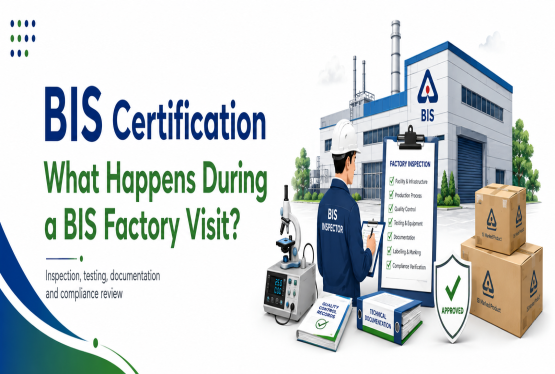
BIS conducts factory inspection before granting the licence. During inspection, BIS officials check whether the manufacturer has the required production facilities, testing equipment, quality control process and technical staff. The inspection fee is charged on a man-day basis. The inspection may cover raw material control, manufacturing process, in-house testing, calibration records, quality records, packaging, marking details and product samples. If the factory is not ready, BIS may raise observations, which can increase the timeline and cost.
3. Product Testing Fee
Product testing fee is one of the most important parts of ISI certification cost. BIS may draw samples during inspection and send them to a BIS-recognized laboratory. The testing fee depends on the product and the Indian Standard. For example, testing of a simple product may cost less, while testing of electrical goods, chemicals, cement, steel, pressure equipment or safety products may be expensive. Some products also require endurance tests, performance tests, safety tests or chemical analysis. If the sample fails, retesting may be required, which adds extra cost and time.
4. Marking Fee
Marking fee is paid for using the ISI Standard Mark on the certified product. BIS provides product-wise marking fee details under Scheme-I. The marking fee may include a minimum annual marking fee and unit-based marking charges. The marking fee is important because the licence holder must pay it to continue using the ISI mark. Under the 2026 amendment to the BIS conformity assessment framework, the fee is to be paid on an annual basis in advance at the time of grant of licence and for continuation of a valid licence.
5. Annual Licence Fee
After approval, the applicant must pay the annual licence fee. BIS FAQs mention an annual licence fee of Rs. 1,000, along with the applicable minimum marking fee for the product. This fee is part of maintaining the licence. The licence holder must also follow all licence conditions, submit production details, maintain records and pay applicable dues on time.
6. Testing Equipment and Factory Readiness Cost
Many manufacturers forget this cost. BIS approval is not only about paying government fees. The factory must have proper machinery, testing equipment, calibrated instruments and quality control records. If the manufacturer does not have the required testing facility, it may need to purchase equipment or upgrade the lab. This cost can be small or large depending on the product. For example, an electrical product manufacturer may need safety testing equipment, while a chemical manufacturer may need specific lab instruments. Without proper in-house testing facilities, the application may face objections.
7. Professional Fee
Many manufacturers appoint a BIS consultant or compliance professional to handle documentation, application filing, coordination, inspection preparation, lab testing and query response. Professional charges vary depending on product complexity, location, number of models and urgency. Professional fee is not a government fee. It is optional, but useful for businesses that are applying for the first time or dealing with a mandatory product category.
Approximate ISI Certification Cost in India
The basic government fee may start with the application fee, inspection fee, annual licence fee and marking fee. However, the total practical cost can be higher because testing fee, factory readiness cost and professional charges are also involved. For a small domestic manufacturer, the total cost may commonly range from a moderate amount to a higher amount depending on the product. A simple product may cost less, while technical products may cost more because of testing and inspection requirements.
A general cost estimate may include:
Application fee: Rs. 1,000Inspection fee: Rs. 7,000 per man-day
Annual licence fee: Rs. 1,000
Minimum marking fee: product-specific
Testing fee: product-specific
Professional fee: depends on scope
Factory readiness cost: depends on machinery and testing setup
This is only an estimate. The actual ISI certification cost should be checked based on the exact Indian Standard number, product category, number of varieties and BIS marking fee schedule.
ISI Certification Timeline in India
The ISI certification timeline generally depends on three things: document readiness, inspection readiness and testing time. If all documents are correct and the factory is ready, the process can move faster. If the product requires long testing or the application has errors, approval can take longer. For many domestic manufacturers, ISI certification may take around 30 to 90 days. In some cases, it may take more time, especially where product testing is detailed or factory compliance is incomplete. For products with long-duration testing, the timeline may extend further. The timeline should not be calculated only from the date of application. A business must also consider pre-application preparation time, arrangement of test equipment, calibration, document preparation and internal quality checks.
Stage-wise Timeline of ISI Certification
The first stage is product identification. The applicant must confirm the applicable Indian Standard and whether the product is under mandatory certification. This may take a few days if the product category is clear.
The second stage is document preparation. The applicant must collect business documents, factory documents, manufacturing process details, machinery list, testing equipment list, calibration certificates, quality control details and product information. This may take one to two weeks depending on the factory’s readiness.
The third stage is application filing on the BIS portal. After filing, BIS examines the application. If documents are incomplete, BIS may raise queries. Query response time depends on the applicant.
The fourth stage is factory inspection. BIS officials visit the manufacturing premises and verify the production and testing setup. Samples may be drawn during inspection.
The fifth stage is product testing. Samples are tested as per the relevant Indian Standard. This stage can take the longest time. If the product passes, the process moves ahead. If the product fails, corrective action and retesting may be needed.
The final stage is grant of licence. Once BIS is satisfied with the inspection report, test report and compliance status, the licence is granted. The applicant then pays the required licence fee and marking fee and can use the ISI mark as per licence conditions.
Factors That Delay ISI Certification
ISI certification may get delayed due to incomplete documents, wrong Indian Standard selection, lack of testing equipment, expired calibration certificates, failed sample testing, mismatch in factory details or delay in responding to BIS queries. Another common reason is poor inspection preparation. If the factory team is not aware of the process or records are not maintained properly, BIS may raise observations. The manufacturer should keep production records, test records, raw material records and quality control documents ready before inspection. Testing delay is also common. Some products need detailed testing in recognized labs. If the lab has a queue or the product needs long-duration testing, the timeline naturally increases.
How to Reduce ISI Certification Cost
The best way to reduce cost is to prepare correctly before filing the application. The manufacturer should identify the correct Indian Standard, arrange required testing equipment, complete calibration, maintain quality records and conduct internal testing before BIS inspection. A failed sample can increase cost because retesting becomes necessary. Therefore, the product should be tested internally before official sampling. Manufacturers should also check product-wise marking fee in advance to avoid surprises. If the applicant is eligible as an MSME, it should check whether any applicable fee concession or benefit is available under BIS rules or notifications. Proper planning helps reduce unnecessary expenses.
How to Reduce ISI Certification Timeline
The timeline can be reduced by keeping documents ready before filing the application. The applicant should avoid filing an incomplete application just to start the process. A wrong or incomplete application usually takes more time. The factory should be inspection-ready. Testing equipment should be available, calibrated and functional. Quality control staff should know the product standard and testing method. Product samples should be ready for inspection and testing. Quick response to BIS queries is also important. Many applications remain pending because applicants delay query replies or submit unclear documents.
Documents Required for ISI Certification
The documents may vary by product, but generally include business registration certificate, factory address proof, manufacturing process flow chart, machinery list, testing equipment list, calibration certificates, product details, raw material details, quality control records, nomination of quality control personnel, lab test reports if available and authorization documents. For companies, incorporation certificate and company authorization may be required. For partnership firms or proprietorships, relevant business registration documents may be needed. If the application is filed through an authorized representative, an authorization letter may also be required.
Legal Importance of ISI Certification
For products notified under mandatory certification, ISI certification is a legal requirement. A manufacturer cannot legally sell such products without a BIS licence. The purpose is to protect consumers from unsafe or poor-quality products. The BIS Act, BIS Rules and BIS Conformity Assessment Regulations form the legal base for certification and use of the Standard Mark. BIS has also issued amendments and updated regulations over time. The BIS Act, Rules and Regulations page lists the BIS Act, 2016, BIS Rules, 2018 and BIS Conformity Assessment Regulations, along with amendments including 2026 updates. Non-compliance can create serious business risk. It can affect manufacturing, sale, import, tender participation, buyer trust and market access.
Validity and Renewal of ISI Licence
Once granted, the BIS licence remains valid for the period mentioned in the licence, subject to compliance with conditions. The licence must be renewed before expiry. The manufacturer must pay applicable fees, marking fee and submit required production details. The 2026 amendment also highlights payment of annual dues and continuation requirements for valid licences. Therefore, manufacturers should not treat BIS approval as a one-time task. It is an ongoing compliance responsibility.
Conclusion
ISI Certification cost and timeline in India depend on the product, Indian Standard, testing requirements, factory readiness and BIS inspection process. The basic government cost includes application fee, inspection fee, annual licence fee and marking fee. However, the actual cost may also include testing charges, equipment cost, calibration cost and professional charges.
The timeline may generally range from a few weeks to a few months. A well-prepared manufacturer can complete the process faster, while incomplete documents, failed testing and poor inspection readiness can cause delays. For businesses dealing in mandatory products, ISI certification should be planned before production, sale or import. It helps build customer trust, ensures legal compliance and protects the business from regulatory action.
FAQs
1. What is the cost of ISI certification in India?
The cost depends on the product, testing fee, inspection fee, marking fee and professional charges.
2. What is the BIS application fee for ISI certification?
The BIS application fee is Rs. 1,000 as per BIS product certification FAQs.
3. Is inspection fee required for ISI certification?
Yes, BIS charges inspection fee. BIS mentions Rs. 7,000 per man-day for inspection.
4. What is marking fee in ISI certification?
Marking fee is paid for using the ISI Standard Mark on certified products.
5. How long does ISI certification take?
It usually takes around 30 to 90 days, depending on product testing and factory readiness.
6. Can ISI certification be delayed?
Yes, delay may happen due to incomplete documents, failed testing or inspection observations.
7. Is ISI certification mandatory for all products?
No, it is mandatory only for products notified by the Government under compulsory certification.
8. Who can apply for ISI certification?
Generally, the manufacturer of the product can apply for ISI certification.
9. Is product testing compulsory?
Yes, product testing is an important part of ISI certification.
10. Can I sell a mandatory product without ISI mark?
No, notified products cannot be legally sold without valid BIS certification.