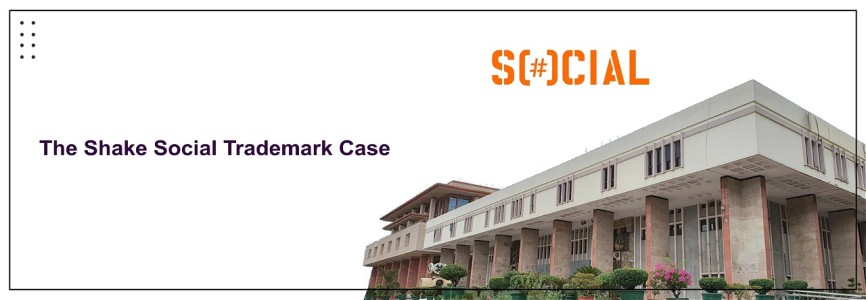



The law of trademarks in India has experienced steady evolution in terms of the degree of protection awarded to brands with the necessary degree of public appreciation over the last twenty years or so. One of the most effective methods of protecting such brands is through the concept of the well-known trademark which provides the mark with a level of protection above that warranted for its types of goods or services and protects it from dilution as well as unlawful use in the market place. The ruling of the Delhi High Court in the case Impresario Entertainment & Hospitality Pvt. Ltd. v. The Shake Social is a recent decision in this area of law of great importance. The significance of the ruling is determined not only by the fact that the plaintiff won the case, but also by the fact that the judge announced the trademark SOCIAL to be a well-known trademark in accordance with the provisions of Section 2(1)(zg) of the Indian Trade Marks Act, 1999. The article analyzes the facts of the case, legal reasoning of the judge, and implications of the decision in terms of future trademark law practice in India
Background of the Case
Plaintiff – Impresario Entertainment and Hospitality Pvt. Ltd. is a well-known entity in the hospitality industry of India. The Company opened its first branch with a unique café work space model under the brand name "SOCIAL" in Bengaluru in the year 2014, and thereafter spread its wings across the country with approximately fifty-five restaurants and bars being operated in the names "SOCIAL" and "S(=)CIAL" with the prefix of locality in their names (for example: "Todi Mill Social," "Hauz Khas Social"). The brand "SOCIAL" gained a lot of goodwill through continuous usage, heavy spending on marketing and promotions (approximately ?29.9 crore in FY 2023–24) and maintaining an exclusive online presence by having a website named "socialoffline."\Impresario Entertainment and Hospitality Pvt. Ltd. is a well-known litigant for the brand "SOCIAL," and had previously obtained injunctions from the Court against many others who had been using similar marks in disputes with Star Hospitality, Social Kitchen, and Mocha Blue Coffee Shop.
Facts of the Case
In August 2022, Impresario came to know that the Defendant was carrying on business through the outlets named "THE SHAKE SOCIAL," providing the same services through the same trade channels.It was also known that there were reviews for the Defendant's outlets where it was stated that the quality of service provided was not up to the mark, which posed a threat to the premium status of the brand because of consumer confusion.
Impresario gave cease-and-desist letters to the Defendant to stop the use of the mark and cancel their trademark registration. However, the Defendant failed to comply.A suit was filed before the court by Impresario claiming permanent injunction against trademark infringement, copyright infringement, passing off, dilution, and unfair competition, along with rendition of accounts and damages, and declaring "SOCIAL" as a well-known trademark.Summons were appropriately issued (issued on 13 February 2025), and Defendant did not enter appearance and/or file any written statement. Time for filing the written statement expired on 2 July 2025.
Issues Before the Court
Did the usage of "THE SHAKE SOCIAL" by the Defendant constitute infringement and passing off of the Plaintiff's marks?
-
Whether there likelihood of confusion and dilution due to the Defendant's adoption of the mark?
-
Whether Plaintiff's marks were "well-known trademarks" under Section 2(1)(zg) of the Trade Marks Act, 1999?
-
Whether the Plaintiff entitled to the injunctions and other reliefs?
Arguments
Submissions of the Plaintiff: Impresario submitted that it was the owner of the "SOCIAL" mark in question, which was in continuous and extensive use since 2014 and had developed distinct secondary meaning and goodwill all across the nation. The Defendant adopted a deceptively similar mark despite being in identical trade with the Plaintiff and using identical channels for their business purposes and therefore was liable for tarnishment of "SOCIAL". Impresario made the same request for recognition as well-known mark as in other courts on the basis of its profits and expenses.
Court’s Analysis and Reasoning
While the fact that the Defendant did not attend the case rendered the Plaintiff's assertions admitted by the Court, it nevertheless proceeded to evaluate the evidence on its merits as follows:
Deception and confusing similarities: The two companies belonged to the same industry, provided the same services, utilized similar digital trade networks and catered to the same urban clientele. The common dominant word 'SOCIAL' in 'THE SHAKE SOCIAL' gave rise to the likelihood of consumers associating the Defendant with the brand of the Plaintiff.
Passing-off: Based on the principles of goodwill, misrepresentation and damage that comprise passing-off in common law, the Court ruled that the use of the mark without authority constituted misrepresentation as to the trade origin which could damage the goodwill of Impresario, especially due to the inconsistency of the quality of its service.
Dilution: The Court agreed that use of the mark almost identical to Impresario's diluted its distinctive nature and premium positioning, built up in a decade.
Well-known Mark Status: This was the crux of the judgment. The Court took into account the various criteria under the law for granting well-known mark status, including longevity, widespread and geographically extensive use (since 2014, throughout India); level of promotion costs incurred; turnover; degree of distinctiveness achieved; online and cross-border visibility; and successful history of enforcement of the mark by Impresario in earlier cases. On an overall consideration, the Court held that both "SOCIAL" and "S (=) CIAL" have achieved well-known status.
Consequences of absence of contest: It was made clear by the Court that merely because a defendant is not contesting a case, it doesn’t mean that the plaintiff is entitled to a favorable decision; it needs to prove its claim based on pleadings and evidence, and in this case, the Court found that Impresario had done just that.
Decision of the Court
Delhi High court ordered grant of permanent injunction against the use by the Defendant, its proprietor and its agents of the "THE SHAKE SOCIAL," or any deceptively similar mark to "SOCIAL"/"S (=) CIAL," for restaurant/cafe/hospitality services. Deemed "SOCIAL" and "S (=)CIAL" famous trademarks within Section 2(1)(zg).Ordered the granting of relief claimed for trademark infringement, passing off, dilution, and unfair competition. Costs and damages not awarded, given that this was an ex parte decision on essentially injunctive terms.
Key Legal Principles
Famousness is a question of fact. Factors include length of usage, geographical coverage, marketing, market recognition, and enforcement history, and not just the mere fame aspect. Same trade channels increase chances of confusion. Common usage of food delivery applications, social media, and listing sites makes cases of infringement and passing off stronger.
Quality differentiation is material in cases of dilution. Infringing party's inferior quality service could lead to tarnishment because of association with the famous brand without it being responsible for the bad experience.
Ex parte application requires showing merit. Admission of the pleaded facts does not relieve the court from its responsibility of verifying the presence of statutory and common law elements in the claim.
Importance of the Case
Unlike regular trademarks, a well-known mark enjoys protection regardless of class of goods/services; thus, even though the said marks were only registered under restaurants/hospitality, Impresario may now prevent any party from using the name "SOCIAL" for unrelated products/services like clothes, electronics, and events, without having to prove separate confusion in those categories. It provides a template for brand holders attempting to achieve well-known mark status.
Contrary to relying solely on Impresario's claims, the court looked into a number of verifiable criteria such as long-term continuous usage, nationwide presence, cores spent in advertising, turnover figures, and a track record of successful anti-infringement litigation against other infringers. It would now be somewhat easier for future litigants to create a roadmap in order to argue for well-known mark status.
Significances of the Case
The decision carries great significance in a number of ways. Firstly, it grants the "SOCIAL" brand recognition as yet another mark belonging to the Indian hospitality/ F&B sector and included among the exclusive few considered "well-known" under law, providing greater, class-crossing legal protection from imitation for Impresario down the road — highly relevant in an industry characterized by widespread imitative brand names. Secondly, it exemplifies the way in which the specialized commercial/IP bench of the Delhi High Court suggests strong and speedy protection to established brands in cases of ex parte infringement, sending a message of deterrence to small and regional businesses that attempt to create confusion through their naming practices. Thirdly, it shows the increased importance being accorded to the consideration of digital era-related evidence in measuring both consumer confusion and the reputation of the brand at issue. Lastly, it is one of many instances of nationwide litigation undertaken by Impresario concerning the "SOCIAL" brand (including the subsequent lawsuit brought against Sid Luxury Homes LLP).
Future Aspects and Implication
Precedential value: The decision will be referred to in future cases which involve a deceptive similarity in the name of restaurants and cafés especially where evidence of overlap in marketing can be shown based on the usage of delivery and social media applications.
Enhanced cross-class protection: Given the well-known status of the mark, Impresario will find it easier to object to any usage of "SOCIAL" or deceptive marks within any other goods/services classification.
Encouragement to proactive enforcement: Since it is now clear that a track record of enforcement of trademarks against infringing parties will greatly help the claim for well-known trademark status, brand owners will be encouraged to sue their infringers proactively.
Warning for operators of regional and small businesses: Any operator who uses names which have a similar sound to well-known trademarks even if there is an additional prefix/suffix in the name will put themselves at high litigation risks especially if they use common digital platforms which increase the overlap with the senior mark.
Conclusion
The Impresario Entertainment & Hospitality Pvt. Ltd. v. M/S The Shake Social case is an important case in Indian trademark law within the hospitality industry. In addition to granting injunction as remedy for the infringement and passing-off, the official recognition by the Delhi High Court of "SOCIAL" as a well-known trademark is indicative of the courts' increasing willingness to protect the interests of brand owners who have invested consistently in their brand. From the point of view of brand owners, the case demonstrates the importance of creating a record of brand use and protection, while from the point of view of other, especially small or regional firms, it is a warning against using trademarks that are too similar to well-known pan-India brands.
FAQ’s
Q1. What was the case about?
Ans. The case concerned trademark infringement of the mark “SOCIAL” by the defendant using “THE SHAKE SOCIAL” for café and restaurant services.
Q2. Who were the parties?
Ans. Plaintiff: Impresario Entertainment and Hospitality Pvt. Ltd.
- Defendant: The Shake Social.
Q3. What was the plaintiff’s claim?
Ans. The plaintiff claimed that “THE SHAKE SOCIAL” was deceptively similar to its registered trademark “SOCIAL” and could confuse consumers.
Q4. Which law was involved?
Ans. The case involved provisions of the Trade Marks Act, 1999, especially Sections 28 and 29 relating to trademark rights and infringement.
Q5. What was the Court’s decision?
Ans. The Delhi High Court restrained the defendant from using “THE SHAKE SOCIAL” and protected the plaintiff’s trademark “SOCIAL.”
Q6. Was “SOCIAL” declared a well-known trademark?
Ans. Yes, the Court recognized “SOCIAL” as a well-known trademark due to its reputation and extensive use.
Q7. What is the significance of the case?
Ans. The case confirms that even common words can receive strong trademark protection if they acquire distinctiveness and goodwill.
Q8. Whether addition of the words “THE SHAKE” removed the similarity between the marks?
Ans. No. The Court held that the essential and dominant part of the defendant’s mark remained “SOCIAL.”
Q9. Whether the plaintiff was entitled to a permanent injunction?
Ans. Yes. The Court restrained the defendant from using the infringing mark.
Q10. What legal principle was established in this case?
Ans. The case established that trademarks with strong goodwill and acquired distinctiveness receive enhanced protection against confusingly similar marks.