


Starting an investment advisory business requires financial knowledge, professional qualifications and regulatory compliance. Individuals and businesses planning to provide investment advice must assess whether their proposed services require registration with the Securities and Exchange Board of India.
SEBI Registered Investment Adviser registration, commonly called RIA registration, provides the regulatory foundation for offering investment advisory services covered by the applicable regulations. Registration involves meeting eligibility requirements, preparing supporting documents and completing the prescribed application process. This guide explains the qualifications, documents, fees, registration procedure and continuing responsibilities involved in establishing an investment advisory practice.
What Is SEBI RIA Registration?
RIA stands for Registered Investment Adviser. The registration framework operates under the SEBI (Investment Advisers) Regulations, 2013, as amended. Investment advice includes advice relating to investing in, purchasing, selling or otherwise dealing in securities. It also includes advice on investment portfolios containing securities and relevant financial planning.
A person providing covered investment advice for consideration must assess the registration requirement, subject to applicable exemptions. Consideration can include economic benefits beyond a separately identified advisory fee.
Why the Nature of the Service Matters
The actual activity determines the regulatory assessment. Describing a service as financial coaching, wealth guidance or portfolio support does not automatically place it outside the investment adviser framework.
Before launching, the business should examine what clients receive, how recommendations are prepared and how the service earns income.
Who Should Assess the Need for RIA Registration?
Individuals and businesses planning to provide personalised securities-related investment advice for payment should assess whether registration is required. For example, a professional who examines a client’s financial position and recommends a securities portfolio should review the investment adviser requirements before offering the service.
Online Investment Advisory Services
The same assessment applies to advice delivered through websites, mobile applications, video calls or messaging platforms. Providing services online does not remove the need to consider registration.
Businesses should distinguish personalised advice from research, general education, distribution and execution activities. Each proposed service should be assessed on its own facts.
Choosing the Appropriate Business Structure
Individual or Sole Proprietor
An individual can apply for registration after meeting the applicable conditions. A sole proprietor may also apply under the requirements applicable to individuals. This structure may suit a professional starting an independent practice. However, the decision should consider expected client numbers, staffing, liability and future expansion.
Partnership Firm
A partnership firm can apply under the relevant framework. The designated principal officer and partners engaged in providing investment advice must satisfy the applicable qualification and certification requirements. The partnership arrangement should clearly allocate responsibility for advisory services, compliance and business management.
Company or LLP
A company or LLP may suit a business planning a larger advisory team or a more structured operation. Incorporating the entity does not itself authorise investment advisory services. The entity must separately meet registration requirements and appoint eligible personnel. Applicants should assess these requirements before finalising their proposed management structure.
Qualification Requirements
Recent amendments have relaxed the qualification framework. A graduate degree or equivalent qualification, accompanied by the relevant certification, provides an eligibility route for individual advisers, principal officers and persons associated with investment advice.
Specified NISM postgraduate programmes provide another route, with particular conditions concerning initial and subsequent certification. Applicants should therefore assess their qualifications against the current provisions. Older material describing postgraduate qualifications or prior experience as universally mandatory may no longer reflect the applicable framework.
NISM Certification Requirements
The standard certification route includes the NISM Series X-A: Investment Adviser Level 1 and NISM Series X-B: Investment Adviser Level 2 examinations. Applicants should confirm which certification requirements apply to their qualification route and maintain the required validity. Passing NISM examinations does not, by itself, grant SEBI registration.
Certification for Sales and Non-Core Personnel
Certification requirements should be mapped to the actual responsibilities of employees. A separate NISM Series XXV-B framework applies to persons associated with investment advice who perform only sales and other non-core services.
This should not be treated as a substitute for the requirements applicable to personnel directly involved in investment advice. Businesses should review job descriptions carefully when deciding which certification an employee needs.
Deposit Requirement for Investment Advisers
The current framework uses a client-based deposit requirement. The earlier net-worth requirement should not be treated as the current financial eligibility test. The prescribed deposit is ?1 lakh for up to 150 clients, ?2 lakh for 151–300 clients, ?5 lakh for 301–1,000 clients and ?10 lakh for 1,001 or more clients.
The applicable band is based on the maximum number of clients on any day of the previous financial year. New applicants must comply with the deposit arrangements applicable to their registration.
How the Deposit Is Maintained
The deposit must be maintained with a scheduled bank and marked as a lien in favour of the Investment Adviser Administration and Supervisory Body in the prescribed manner.
Businesses must monitor changes affecting the applicable deposit amount and make adjustments within the specified timeline. The deposit is separate from registration fees and business operating expenses.
Role of BSE and IAASB
BSE Limited acts as the Investment Adviser Administration and Supervisory Body, commonly called IAASB. Applications are submitted through the prescribed IAASB process. The IAASB assesses the application and recommends eligible applications to SEBI for registration.
Applicants should follow the current BSE process for registration and relevant post-registration matters. Older instructions referring to previous filing arrangements should not be followed without checking their continued applicability.
Documents Required for RIA Registration
Identity and Address Information
Applicants should prepare the identification and address information required by the application. Names and other details should remain consistent across supporting documents. Any difference in names, entity details or addresses should be explained and supported before submission.
Educational and Certification Records
Educational certificates and relevant NISM certificates should establish the eligibility of the applicant and relevant personnel. For an entity application, the proposed principal officer’s qualifications should be reviewed early. Missing eligibility documents can affect the entire application.
Business Constitution Documents
Companies, LLPs and partnership firms should prepare the relevant incorporation or constitution records, together with ownership and management information. The proposed advisory activity should be consistent with the entity’s legal structure and supporting documents.
Declarations and Business Information
The application also requires relevant declarations and undertakings. Applicants should explain their proposed services clearly and disclose other activities where required. The final document set should follow the current application checklist rather than a generic list used for every applicant.
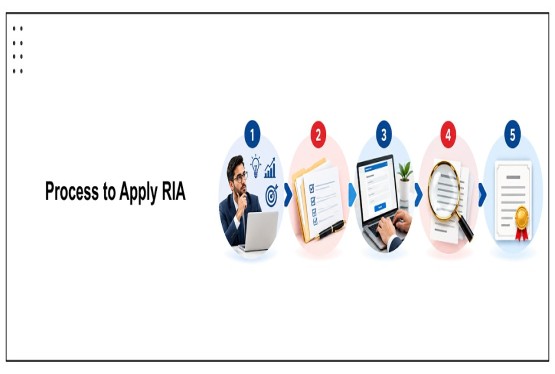
Step-by-Step RIA Registration Process
Step 1: Define the Proposed Services
Prepare a clear description of the business. Explain whether it will offer personalised investment advice, research, financial planning, product distribution or execution-related services. This assessment helps determine the appropriate registration route and identify potential conflicts before the application is prepared.
Step 2: Review Eligibility
Check the applicant’s qualifications, certifications, business structure and relevant personnel. Identify gaps before filing. For an entity application, confirm the eligibility of the proposed principal officer and other relevant staff.
Step 3: Prepare the Operating Model
Decide how the business will onboard clients, collect information, prepare recommendations, charge fees and handle complaints. Documenting these processes before registration helps the business prepare for its continuing responsibilities.
Step 4: Complete and Submit the Application
Enter the required information through the prescribed application process, upload supporting documents and pay the applicable application fee. Before submission, reconcile names, dates, qualifications and declarations across the complete document set.
Step 5: Respond to Queries
Monitor the application and respond to requests for clarification. Each response should address the specific issue and include supporting evidence where necessary. Maintaining a complete record of submissions and correspondence helps prevent inconsistent responses.
Step 6: Complete Approval Conditions
Follow the instructions concerning registration fees, the deposit and other applicable conditions. After registration is issued, review its details and complete the required operational arrangements before commencing the regulated activity.
How Long Does RIA Registration Take?
The registration process depends on application completeness, eligibility assessment and the queries raised during review. Missing documents, inconsistent declarations and unresolved qualification issues can affect progress.
Applicants should complete their eligibility review and document reconciliation before filing. Professional assistance can improve preparation and coordination, but it cannot guarantee approval or a fixed processing period.
Fees an RIA Can Charge Clients
For applicable individual and HUF clients, the framework provides fixed-fee and assets-under-advice modes.
The specified fixed-fee ceiling is ?1,51,000 per annum per family of client. Under the assets-under-advice mode, the ceiling is 2.5% per annum per family of client, subject to the prescribed conditions.
Applying the Correct Fee Rules
These limits exclude statutory charges and do not apply identically to every client category. Non-individual clients and accredited investors have different treatment. Advisers should check the applicable provisions concerning fee calculation, advance collection, changes in fee mode and refunds before finalising client agreements.
Continuing Compliance After Registration
Client Onboarding
An advisory business should establish a documented process for collecting client information and completing the applicable onboarding requirements. Client records should support the assessment of financial circumstances, objectives and investment needs.
Risk Profiling and Suitability
Investment recommendations should be linked to the client’s assessed risk profile and circumstances. Advisers should document the information considered and the basis for their recommendations. Changes in client circumstances should be addressed through an appropriate review process.
Record Maintenance
The business should maintain the records required under the applicable framework, including relevant client information, agreements, advice and supporting rationale. Organised records help demonstrate how recommendations were prepared and support responses to complaints or regulatory queries.
Reporting and Audit
A compliance calendar should cover applicable reporting, annual audit, certification, fee and administrative requirements. Responsibilities should be assigned clearly so that submissions and reviews do not depend on informal reminders.
Advertising and Social Media
Advisers should review websites, advertisements, videos and social media content before publication. Applicable requirements include disclosures of registered names and registration numbers on relevant social media profiles and securities-related content. Registration should not be presented as a guarantee of investment performance or regulatory endorsement of recommendations.
Transition from Individual to Non-Individual Status
An individual adviser whose clients exceed 300, or whose fees collected during the financial year exceed ?3 crore, whichever occurs earlier, must initiate the prescribed transition to non-individual status.
The framework requires immediate intimation to the supervisory body and an application for in-principle approval within three months of reaching the relevant threshold. Growing practices should monitor both client numbers and fee collections throughout the year and plan the transition before operational pressure develops.
RIA Registration and Related Registrations
Personalised investment advice, research recommendations, product distribution and discretionary portfolio management involve different regulatory assessments. An applicant should not assume that RIA registration authorises every securities-related service.
Similarly, another registration should not automatically be treated as permission to provide personalised investment advice. Before applying, businesses should prepare examples of their actual services and deliverables. Reviewing these examples helps identify the correct regulatory scope.
Conclusion
SEBI RIA registration is an important step for individuals and businesses planning to offer regulated investment advisory services in India. Applicants must assess their eligibility, obtain the required certifications, prepare accurate documents and fulfil applicable financial requirements. However, registration is only the beginning. Maintaining client records, conducting risk assessments, ensuring suitable recommendations, following fee requirements and completing ongoing compliance remain essential. Careful preparation and regular reviews help advisers build a responsible and organised advisory practice.
A successful advisory practice requires consistent attention to regulatory obligations and client interests. Applicants should define their services clearly, select an appropriate business structure and establish practical systems before commencing operations. Monitoring certification validity, reporting deadlines, client thresholds and changes in regulations can help prevent compliance gaps. By maintaining transparent communication, accurate records and sound internal processes, investment advisers can support informed client decisions while operating within the scope of their registration and applicable requirements.
Frequently Asked Questions (FAQ’s)
Q1. What is SEBI RIA registration?
Ans. SEBI RIA registration authorises an eligible individual or entity to provide investment advisory services within the scope of the SEBI (Investment Advisers) Regulations, 2013, as amended.
Q2. Who needs to apply for RIA registration?
Ans. Individuals and businesses planning to provide investment advice for consideration must assess whether registration is required. Applicability depends on the actual services offered and any relevant exemption.
Q3. Can a sole proprietor apply for RIA registration?
Ans. Yes. A sole proprietor can apply subject to satisfying the eligibility and registration conditions applicable to an individual investment adviser.
Q4. Can a company or LLP become an investment adviser?
Ans. Yes. A company or LLP can apply after meeting the applicable requirements relating to its structure, principal officer, personnel, infrastructure and regulatory deposit.
Q5. What qualifications are required for RIA registration?
Ans. A graduate degree or equivalent qualification, together with the relevant certification, provides an eligibility route. Specified NISM programmes offer another route, subject to the applicable conditions.
Q6. Which NISM examinations are relevant for investment advisers?
Ans. The standard certification route includes NISM Series X-A: Investment Adviser Level 1 and NISM Series X-B: Investment Adviser Level 2. Applicants must check the requirements applicable to their qualification route and responsibilities.
Q7. What is the deposit requirement for an investment adviser?
Ans. The prescribed deposit ranges from ?1 lakh to ?10 lakh, depending on the applicable client band. It must be maintained in the prescribed manner and is separate from registration fees.
Q8. Does passing NISM examinations allow someone to start advisory services?
Ans. No. Passing the examinations satisfies only the relevant certification requirement. The applicant must obtain registration and meet the other applicable conditions before undertaking activities requiring registration.
Q9. Does RIA registration expire after five years?
Ans. Registration remains valid until suspended or cancelled, subject to payment of applicable periodic fees and continuing compliance. The five-year fee cycle does not mean registration automatically expires after five years.
Q10. What compliance is required after RIA registration?
Ans. Continuing responsibilities include client onboarding, risk profiling, suitability assessment, record maintenance, fee compliance, reporting, audit and grievance handling. Advisers must also follow applicable advertising requirements and maintain required certifications.