
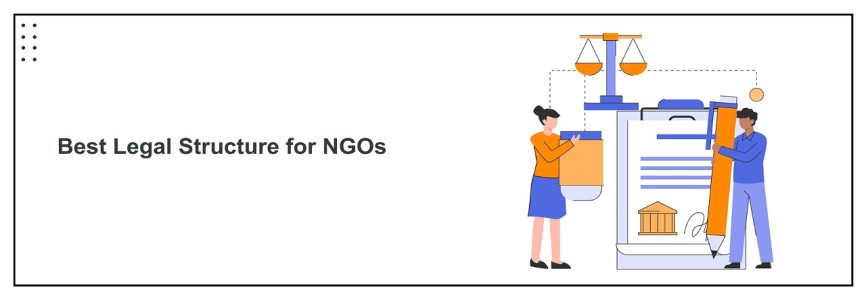



Forming an NGO is more than just completing a legal formality, it’s about choosing a structure that aligns with mission, scale of operations, funding plans, and long-term vision. One of the most common questions founders face before registering an NGO is;
Should I register my NGO as a Trust, a Society, or a Section 8 Company?
Each NGO structure comes with its own set of laws, compliance obligations, advantages, and practical limitations. There is no single structure that works best for everyone. The right choice depends on the nature of your activities, the way you plan to run the organisation, and the level of transparency and growth you aim for.
This article explains all three NGO structures in India in a clear and real manner considering you to choose the option that suits your objectives most.
NGO Structures in India
In India, NGOs can be legally established in three main forms:
While all three are created for charitable, social, educational, religious, or cultural purposes, they are different in terms of governance, regulation, compliance, credibility, and funding preference.
Trust
Private trusts are governed by the Indian Trusts Act, 1882, whereas public charitable trusts fall under the Trust Acts enacted by individual states. As a result, the applicable rules and procedures may differ depending on the state in which the trust is established.
Registration & Authority
Trusts are registered and regulated by the Deputy Registrar of the concerned area.
Constitution Document
The primary document governing a trust is the Trust Deed, which clearly sets out the objectives of the trust, details of the trustees and their powers, the manner in which the trust will be managed, and the rules relating to its dissolution. The Trust Deed must be executed on non-judicial stamp paper, and the applicable stamp duty is paid in accordance with the Stamp Act of the respective state. In some cases, the amount of stamp duty may also vary depending on the value of the trust property.
Members & Management
A trust requires a minimum of two trustees to be formed. The management of the trust is handled by the trustees, either individually or collectively through a Board of Trustees. Trustees can be individuals, artificial persons, or even foreign nationals serving in this capacity, depending on the provisions of the Trust Deed.
Ownership & Dissolution
The property of the trust is in the name of Trustee as Trust itself has no legal identity. Most trusts can be dissolved in accordance with the conditions laid down in the applicable Trust Act. However, public charitable trusts are generally difficult to dissolve and are subject to stricter legal restrictions.
Compliance & Transparency
Trusts are not required to file annual returns, which means they operate with minimal reporting obligations. As a result, they offer a lower level of transparency compared to other NGO structures like societies or Section 8 companies.
Pros & Cons
A trust is relatively easy to set up and involves low registration and operational costs, making it an attractive option for those who want to start charitable activities quickly. The compliance requirements are minimal, which further reduces administrative burden.
However, trusts often have limited credibility when it comes to securing large grants, especially from government bodies or corporate donors. They also offer lower transparency compared to other NGO structures and are generally less preferred for receiving foreign contributions.
Suitable For
Local charitable programs, community-based projects, religious organizations, and philanthropic work managed by families.
Society: Democratic but Moderately Regulated
Societies are governed by the State Societies Acts for state-level operations and by the Societies Registration Act, 1860 for those operating nationwide.
Registration & Authority
Societies are registered and regulated by the Deputy Registrar of the concerned area.
Constitution Document
A society is established through a Memorandum of Association (MoA) along with its Rules and Regulations, which outline its objectives, governance, and functioning. The formation documents are subject to stamp duty as per the Stamp Act of the respective state.
Members & Management
A society requires a minimum of seven members for state-level registration and at least eight members from different states for a national-level society. All members must be individuals, and the society is managed by a Managing Committee or Governing Council that oversees its operations and decision-making.
Ownership & Dissolution
All properties belong to the society itself, not its members.
A society can be dissolved with the approval of 3/5th of its members.
Compliance & Transparency
Societies are required to file annual returns, ensuring a moderate level of transparency in their operations compared to trusts.
Pros & Cons
A society offers a more democratic form of governance, as it is managed by a group of members rather than a single authority. It also enjoys better credibility compared to a trust, making it more acceptable for certain grants and collaborations. This structure is particularly suitable for member-based organisations such as cultural, educational, or professional bodies. However, societies are governed by state-specific regulations, which can make compliance and interpretation of rules slightly complex. Additionally, changes related to the registered office or membership can be time-consuming, and societies are generally less preferred when it comes to receiving foreign funding.
Best Suited For: Cultural groups, educational associations, professional bodies, and member-driven NGOs.
Section 8 Company: Most Structured and Credible
Section 8 Companies are governed by the Companies Act, 2013.
Registration & Authority
Section 8 companies are regulated by the Registrar of Companies (RoC), with registration carried out at the central office, while day-to-day regulation and oversight are managed by the Regional RoC office.
Constitution Document
A Section 8 company is formed through a Memorandum of Association (MoA) and Articles of Association (AoA), which define its objectives, governance, and operational rules. The formation documents are subject to stamp duty as per the applicable Stamp Act..
Members & Management
Section 8 companies can be either Private Limited, requiring a minimum of two shareholders, or Public Limited, requiring at least seven shareholders. The company is managed by a Board of Directors, ensuring structured and professional governance.
Ownership & Dissolution
All properties are owned by the company itself as a separate legal entity.
Winding up follows strict procedures under the Companies Act.
Compliance & Transparency
Section 8 companies are required to file annual returns and financial statements, ensuring a high level of transparency, as all records are publicly accessible.
Funding & Credibility
Section 8 companies are highly preferred for receiving government grants and subsidies, as well as foreign contributions under the FCRA, and they enjoy strong credibility with corporate donors and CSR funding agencies.
Pros & Cons
A Section 8 Company enjoys the highest level of credibility among all NGO structures, making it a preferred choice for government bodies, corporate donors, and international organisations. It follows a strong and well-defined governance, which ensures transparency and professional management. Changing the registered office is comparatively easier, and the structure is well suited for organisations that plan to scale their operations over time. However, these advantages come with higher compliance and operational costs. The registration process also takes longer, usually around 60 to 75 days, and the organisation remains under closer regulatory scrutiny compared to trusts and societies.
Best Suited For: Large NGOs, CSR-funded projects, international operations, professionally managed social enterprises.
Comparative Snapshot
|
Factor |
Trust |
Society |
Section 8 Company |
|
Cost |
Low |
Medium |
High |
|
Registration Time |
10–15 days |
30–45 days |
60–75 days |
|
Transparency |
Low |
Low |
High |
|
Government Grants |
Less preferred |
Less preferred |
Highly preferred |
|
Foreign Funding |
Less preferred |
Less preferred |
Highly preferred |
|
Compliance |
Minimal |
Moderate |
High |
Closing Remarks
Which NGO Structure Is Best for You?
There is no single NGO structure that can be universally called the “best” the right choice depends on your organisation’s goals, scale, and how you want to operate. A Trust is most suitable for those who want a quick, low-cost setup with minimal compliance requirements, making it ideal for small, local initiatives or family-managed charitable work. A Society works well for organisations that are member-driven, value democratic decision-making, and focus on collaborative governance, often fitting educational, cultural, or professional bodies. On the other hand, a Section 8 Company is the preferred choice for NGOs with ambitions of long-term growth, transparency, and credibility. This structure is highly valued by government agencies, corporates, and foreign donors because it ensures professional governance, public accountability, and the ability to scale operations effectively. Ultimately, the choice of structure is not just a legal formality it lays the foundation for your NGO’s credibility, sustainability, and impact, determining how effectively your organisation can achieve its mission and reach the communities it aims to serve.


_crop10_thumb.jpg)


_crop10_thumb.jpg)


-Form_crop10_thumb.jpg)

_crop10_thumb.jpg)


_learn_crop10_thumb.jpeg)


_crop10_thumb.jpg)

_crop10_thumb.jpg)


_crop10_thumb.jpg)




_for_Foreign_Directors_learn_crop10_thumb.jpeg)


_Act,_2015_learn_crop10_thumb.jpg)








_learn_crop10_thumb.jpg)




























_crop10_thumb.jpg)
_crop10_thumb.jpg)
_(1)_crop10_thumb.jpg)





_crop10_thumb.png)



_crop10_thumb.jpg)

_crop10_thumb.jpg)





_crop10_thumb.png)
_crop10_thumb.jpg)






_crop10_thumb.png)







_crop10_thumb.jpg)
