
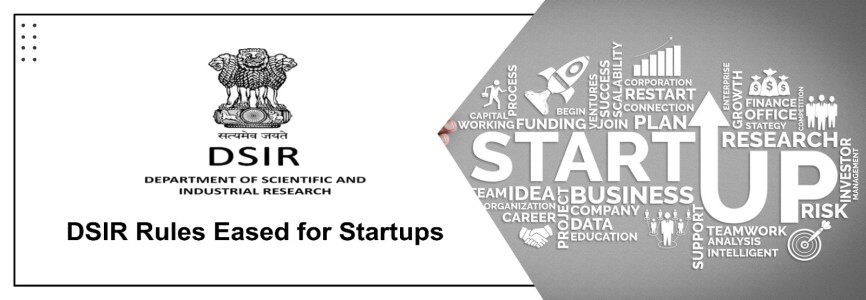



Big Win for Deep-Tech: Govt Removes the 3-Year Wait for DSIR Recognition
If you’ve been running a tech startup in India, you know the "waiting game" all too well. Until recently, getting your R&D unit recognized by the DSIR felt like a distant milestone because of the mandatory three-year existence rule. But the government has finally cleared the path. In a major move to fuel early-stage innovation, the DSIR has scrapped the three-year requirement for deep-tech startups. This isn't just a paperwork update; it’s a massive unlock for founders who need access to duty exemptions and R&D grants from day one, rather than day one-thousand. If you're building something groundbreaking, the doors to government support just swung wide open.
From 'Waiting List' to 'Priority Access': What Has Actually Changed?
For years, the DSIR recognition was seen as a "seniority badge"—something you applied for only after your company had survived the initial three-year grind. This created a catch-22: startups needed R&D tax breaks and duty exemptions to survive those early years, but they couldn't get the recognition because they hadn't been around long enough. By scrapping this timeline for deep-tech firms, the Ministry of Science & Technology has effectively acknowledged that innovation doesn't have a calendar. Now, even a year-old startup working on high-end robotics, AI, or biotech can apply for an in-house R&D certificate. This allows them to claim weighted tax deductions and import high-end lab equipment without the crushing burden of customs duty right from the prototype stage.
The Rs.1 Crore Advantage: Early Capital Without the Red Tape
Perhaps the most significant "fine print" in this announcement is the immediate access to financial assistance. Previously, the DSIR’s Industrial Research and Development Promotion Programme (IRDPP) acted as a closed door for new players; you could only knock if you had three years of audited balance sheets to prove your "viability." By removing this barrier, the government has essentially turned the DSIR recognition into a launchpad rather than a retirement benefit. Eligible deep-tech startups can now apply for financial support and loans of up to Rs.1 Crore much earlier in their lifecycle. When you combine this with the newly launched PRISM Network Platform and Creative India 2025 initiatives, it’s clear that the focus has shifted from how long you’ve existed to how disruptive your technology actually is.
DSIR Eligibility 2026: Why Innovation Depth Now Beats Company Age
The most striking change in the 2026 DSIR guidelines is the pivot toward Technological Maturity over historical data. Under the new relaxation, deep-tech startups—specifically those working in AI, Robotics, Biotech, and Clean Energy—can bypass the three-year track record if they can demonstrate a high Technology Readiness Level (TRL). This means if you have a functional prototype or a pilot-tested technology, the DSIR is ready to listen. The focus has moved to your R&D infrastructure: you still need a dedicated lab space (typically a minimum of 1000 sq. ft.), qualified scientific manpower, and a clear roadmap for indigenous technology development. Essentially, the government is saying: "If you have the brains and the gear, we’ll provide the recognition, regardless of when you incorporated."
Fast-Tracking Your Application: A Strategic Checklist
With the three-year barrier removed, the focus now shifts to the quality of your documentation. To capitalize on this relaxation, your startup must treat the DSIR application as a technical audit rather than a simple registration. First, ensure your R&D unit is physically segregated from your commercial production area—DSIR inspectors prioritize "dedicated" research spaces. Second, map your projects against the Technology Readiness Level (TRL) framework; the closer you are to a functional prototype, the stronger your case. Lastly, prepare a three-year R&D roadmap that highlights indigenous technology development, as the government is specifically looking for 'Aatmanirbhar' (Self-Reliant) innovations. By aligning your application with these technical benchmarks, you can transform a complex regulatory process into a competitive advantage for your brand.
Frequently Asked Questions (FAQs)
Q1: What is the new DSIR rule for deep-tech startups in 2026?
Ans. The government has scrapped the mandatory three-year existence requirement. Now, early-stage deep-tech startups can apply for DSIR recognition immediately, provided they demonstrate high technological maturity and innovative potential through prototypes or pilot-tested technologies.
Q2: Which sectors fall under the 'Deep-Tech' category for this relaxation?
Ans. Startups working in Artificial Intelligence (AI), Robotics, Biotechnology, Semiconductors, Quantum Computing, and Clean Energy are eligible. The focus is on "knowledge-intensive" areas that require significant R&D before reaching commercial or market viability.
Q3: Can a one-year-old startup apply for DSIR recognition now?
Ans. Yes. Under the 2026 guidelines, even newly incorporated startups can apply. The evaluation is now based on your Technology Readiness Level (TRL) and R&D infrastructure rather than the number of years you have been in business.
Q4: What financial assistance can startups get after DSIR recognition?
Ans. Recognized startups can access grants and loans up to Rs.1 Crore under the Industrial Research and Development Promotion Programme (IRDPP). This funding helps early-stage ventures bridge the gap between lab research and market-ready products.
Q5: What are the primary tax benefits of getting DSIR recognized?
Ans. Startups can claim a 100% deduction on R&D capital expenditure in the first year. Additionally, they benefit from customs duty exemptions on imported high-end R&D equipment and spares, significantly reducing the cost of innovation.
Q6: What is the minimum infrastructure requirement for an R&D unit?
Ans. A startup must have a dedicated R&D lab, typically measuring at least 1,000 square feet. This area must be physically separate from the manufacturing line and staffed by qualified scientific or technical personnel.
Q7: How does the 'Technology Readiness Level' (TRL) affect my application?
Ans. The DSIR now uses TRL to judge eligibility. Startups with a functional prototype or pilot (usually TRL-4 or higher) have a stronger chance of approval, as it proves the technical merit of the innovation despite a lack of history.
Q8: Is the Rs.1 Lakh Crore RDI Fund available for early-stage startups?
Ans. The major RDI Fund is generally for startups with higher technological maturity. However, the removal of the 3-year DSIR rule provides a vital "early-stage bridge," allowing younger firms to access institutional support much sooner.
Q9: What is the PRISM Network Platform launched in 2026?
Ans. The PRISM Network Platform (TOCIC Innovator Pulse) is a new digital initiative to strengthen innovation pipelines. It helps individual innovators and startups track their R&D progress and connect with government-backed support systems more efficiently.
Q10: Can I apply if I don’t have an audited balance sheet for 3 years?
Ans. Since the 3-year viability rule is removed for deep-tech, you only need to provide financial documents for your period of existence. The focus shifts to your R&D roadmap and the quality of your technical manpower


_crop10_thumb.jpg)


_crop10_thumb.jpg)


-Form_crop10_thumb.jpg)

_crop10_thumb.jpg)


_learn_crop10_thumb.jpeg)


_crop10_thumb.jpg)

_crop10_thumb.jpg)


_crop10_thumb.jpg)





_for_Foreign_Directors_learn_crop10_thumb.jpeg)


_Act,_2015_learn_crop10_thumb.jpg)









_learn_crop10_thumb.jpg)
























_crop10_thumb.jpg)
_crop10_thumb.jpg)

_(1)_crop10_thumb.jpg)





_crop10_thumb.png)


_crop10_thumb.jpg)

_crop10_thumb.jpg)





_crop10_thumb.png)
_crop10_thumb.jpg)




_crop10_thumb.png)








_crop10_thumb.jpg)
