
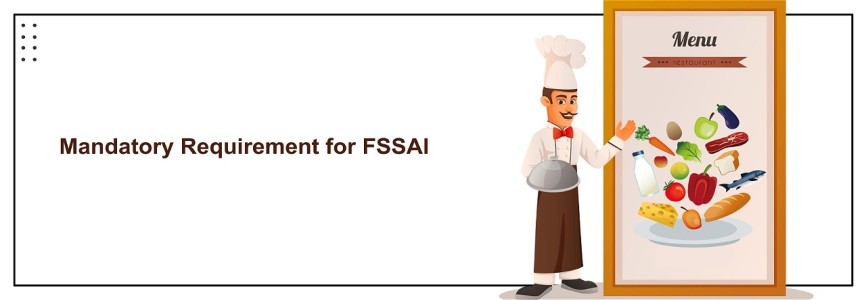



Food is something we all depend on every day, and its safety directly affects public health. In India, the government has made it mandatory for every food-related business to follow food safety laws to ensure that the food reaching consumers is safe, hygienic, and of good quality. This is where FSSAI Registration and License becomes important. Any person or business involved in manufacturing, storing, selling, transporting, or distributing food must comply with the Food Safety and Standards Act, 2006.
The Food Safety and Standards Authority of India (FSSAI) is the central authority responsible for regulating and monitoring food safety in India. It sets standards for food products and ensures that food businesses operate responsibly. Whether you run a small home kitchen or a large food manufacturing unit, FSSAI compliance is not optional it is a legal requirement.
What is FSSAI Registration and License?
FSSAI Registration or License is an official approval issued to food business operators (FBOs) to carry out food-related activities. It confirms that the business meets the prescribed food safety standards. Based on the size, turnover, and nature of the food business, FSSAI approval is divided into three categories: Basic Registration, State License, and Central License.
Small food businesses with limited turnover are required to obtain FSSAI Registration, while medium and large food businesses must apply for an FSSAI License. The objective is to ensure that even the smallest food seller follows minimum hygiene and safety norms.
Why is FSSAI Registration Mandatory?
FSSAI Registration and License is mandatory because food safety is a matter of public interest. Unsafe or unhygienic food can cause serious health issues, food poisoning, and long-term diseases. The law ensures that food businesses are accountable for the quality of food they sell or manufacture.
Another important reason is consumer trust. When customers see an FSSAI number on food packaging or at a food outlet, it gives them confidence that the food complies with government standards. It also helps the government track food businesses and take action against defaulters.
Who Needs FSSAI Registration or License?
Any individual or entity involved in the food supply chain must obtain FSSAI approval. This includes food manufacturers, traders, wholesalers, retailers, distributors, transporters, storage units, and even online food sellers. Restaurants, cafés, bakeries, cloud kitchens, caterers, food trucks, dairy units, meat shops, and packaged food sellers are all covered under FSSAI regulations.
Even home-based food businesses and small vendors selling food items locally are required to take at least Basic FSSAI Registration. Running a food business without FSSAI approval is considered illegal.
Types of FSSAI Registration and License
FSSAI approval is classified based on annual turnover and business activity. Basic FSSAI Registration is meant for small food businesses with turnover up to Rs.1.5 crore per year. State FSSAI License is required for businesses with turnover between Rs.1.5 crore and Rs.50 crore operating within a single state. Central FSSAI License is mandatory for large food businesses, importers, exporters, and those operating in multiple states or having turnover above Rs.50 crore.
Choosing the correct category is important because applying under the wrong category may lead to rejection or penalties.
Legal Provisions Under the Food Safety Law
The Food Safety and Standards Act, 2006 clearly states that no person shall commence or carry on any food business without a valid FSSAI Registration or License. The Act empowers food safety officers to inspect premises, collect samples, and initiate legal action against non-compliant businesses.
The law also mandates that the FSSAI license or registration number must be displayed at the business premises and printed on food packaging. This promotes transparency and accountability.
Penalties Operating Without FSSAI License
Operating a food business without FSSAI Registration or License can lead to serious Penalties. Authorities may impose heavy penalties, suspend business operations, or even initiate criminal proceedings. In some cases, imprisonment may also be imposed for repeated violations or serious food safety breaches.
Apart from legal trouble, lack of FSSAI compliance can damage business reputation. Customers are becoming more aware and often avoid food businesses that do not display FSSAI details.
Benefits of FSSAI Registration and License
FSSAI Registration not only ensures legal compliance but also offers several business benefits. It builds credibility and increases consumer trust. It helps food businesses expand their operations, especially when dealing with online platforms, distributors, or export markets.
Many online food delivery platforms and retail chains require FSSAI License as a basic onboarding requirement. Banks and investors also prefer dealing with compliant businesses, making it easier to raise funds or partnerships.
Display and Usage of FSSAI Number
Once registered or licensed, the FSSAI number must be displayed clearly at the business location. For packaged food, the number should be printed on labels along with other mandatory details. This helps consumers identify compliant businesses and allows authorities to monitor food safety standards.
Improper display or misuse of FSSAI numbers can attract penalties, so businesses must follow labeling and display rules carefully.
Renewal and Ongoing Compliance
FSSAI Registration and License are not lifetime approvals. They must be renewed before expiry to continue operations legally. Failure to renew on time can result in late fees or cancellation of the license.
Food businesses must also follow ongoing compliance requirements, such as maintaining hygiene standards, proper storage, clean equipment, and trained staff. Regular inspections may be conducted to ensure continued compliance.
Conclusion
FSSAI Registration and License is not just a legal formality it is a responsibility toward public health and consumer safety. Every food business, big or small, must comply with FSSAI norms to operate lawfully in India. Timely registration, proper licensing, and ongoing compliance help businesses grow sustainably while ensuring safe food for consumers. Ignoring FSSAI requirements can lead to penalties, business disruption, and loss of trust. Therefore, obtaining FSSAI Registration or License should be a priority for anyone involved in the food industry.
FAQs
Q1. Is FSSAI Registration compulsory for small food businesses?
Ans. Yes, even small food businesses and home-based food sellers must obtain at least Basic FSSAI Registration.
Q2. Can I run a food business without FSSAI License?
Ans. No, operating without FSSAI Registration or License is illegal and can attract penalties.
Q3. What is the validity of FSSAI Registration or License?
Ans. FSSAI approval is generally valid for 1 to 5 years, depending on what the applicant chooses at the time of application.
Q4. Is FSSAI required for online food sellers?
Ans. Yes, online food sellers, cloud kitchens, and e-commerce food businesses must have valid FSSAI approval.
Q5. Do restaurants need FSSAI License?
Ans. Yes, all restaurants, cafés, and eateries are required to obtain FSSAI License or Registration based on turnover.
Q6. What happens if FSSAI License expires?
Ans. If the license expires and is not renewed, the business must stop operations until renewal is completed.
Q7. Is FSSAI License required for food import or export?
Ans. Yes, businesses involved in importing or exporting food products must obtain Central FSSAI License.
Q8. Can one FSSAI License be used for multiple locations?
Ans. No, separate licenses are required for each food business location, except in specific cases.
Q9. Is FSSAI Registration transferable?
Ans. No, FSSAI Registration or License cannot be transferred to another person or business entity.
Q10. Is FSSAI required for packaged food labeling?
Ans. Yes, packaged food must carry the FSSAI logo and registration or license number on the label.


_crop10_thumb.jpg)


_crop10_thumb.jpg)


-Form_crop10_thumb.jpg)

_crop10_thumb.jpg)


_learn_crop10_thumb.jpeg)


_crop10_thumb.jpg)

_crop10_thumb.jpg)


_crop10_thumb.jpg)




_for_Foreign_Directors_learn_crop10_thumb.jpeg)


_Act,_2015_learn_crop10_thumb.jpg)










_learn_crop10_thumb.jpg)






















_crop10_thumb.jpg)

_crop10_thumb.jpg)

_(1)_crop10_thumb.jpg)




_crop10_thumb.png)


_crop10_thumb.jpg)

_crop10_thumb.jpg)




_crop10_thumb.png)
_crop10_thumb.jpg)






_crop10_thumb.png)






_crop10_thumb.jpg)
