




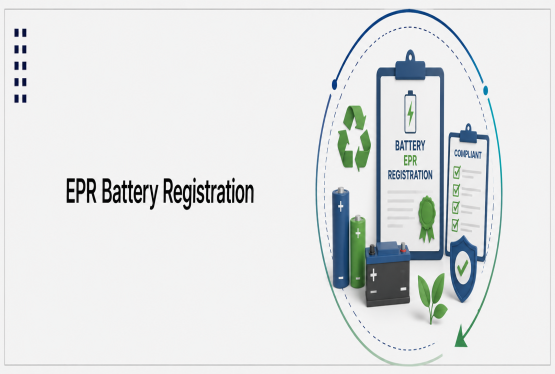
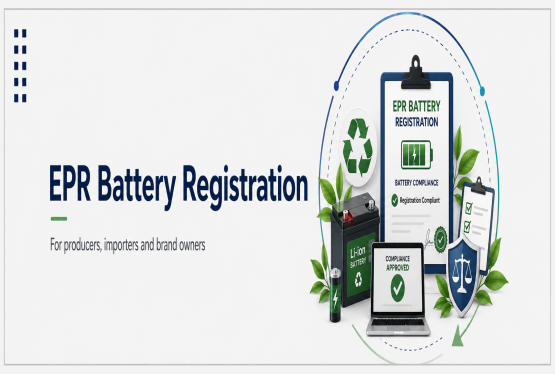
EPR Battery Waste Certificate Online is an important legal registration for businesses that manufacture, import, sell, assemble, refurbish, recycle, or place batteries in the Indian market. EPR means Extended Producer Responsibility, where the producer becomes responsible for the collection, recycling, refurbishment, and environmentally safe management of waste batteries after their useful life is over.
Battery waste is not ordinary waste. It may contain lead, cadmium, lithium, nickel, cobalt, mercury, acid, plastic, and other materials that can harm soil, water, air, human health, and the environment if not handled properly. That is why the Government of India has introduced specific rules for battery waste management. The main law governing this compliance is the Battery Waste Management Rules, 2022, notified by the Ministry of Environment, Forest and Climate Change.
Meaning of EPR Battery Waste Certificate
EPR Battery Waste Certificate is an online registration certificate granted to producers, manufacturers, importers, recyclers, and refurbishers of batteries under the Battery Waste Management Rules, 2022. This certificate allows the registered entity to legally operate in the battery business while meeting its responsibility for waste battery collection, recycling, refurbishment, and reporting.
The certificate is not just a business approval. It is a compliance document that proves that the business has accepted its legal responsibility for the batteries it introduces into the market. Without registration, a covered entity may face regulatory action, environmental compensation, and restrictions on business activity.
Legal Background of EPR Battery Waste Registration
Environment Protection Act, 1986
The Battery Waste Management Rules are issued under the powers given by the Environment Protection Act, 1986. The 2025 amendment notification specifically refers to powers under Section 3, Section 6, Section 8, and Section 25 of the Environment Protection Act, 1986.
These sections allow the Central Government to take steps for environmental protection, regulate handling of hazardous substances, make rules, and prescribe procedures for environmental safety. Therefore, EPR Battery Waste compliance is not optional. It comes from a binding environmental law.
If any entity violates the Battery Waste Management Rules, the penalty provisions of the Environment Protection Act, 1986 may apply. The 2023 amendment format of registration certificate also states that violation of Battery Waste Management Rules, 2022 will attract penal provisions of the Environment Protection Act, 1986.
Battery Waste Management Rules, 2022
The Battery Waste Management Rules, 2022 were notified to ensure environmentally sound management of waste batteries. The Government press release explains that producers, including importers, are responsible for the collection, recycling, or refurbishment of waste batteries and use of recovered materials from waste into new batteries.
The rules cover a wide range of batteries, including portable batteries, automotive batteries, industrial batteries, and electric vehicle batteries. They also prohibit disposal of waste batteries in landfills and incineration. All waste batteries must be collected and sent for recycling or refurbishment.
Important Amendments and Recent Updates
The Battery Waste Management Rules, 2022 have been amended multiple times. A 2026 PIB update lists amendments dated 25 October 2023 and 14 March 2024. It also confirms that Battery Waste Management Rules, 2022 form part of India’s circular economy-linked waste management rules.
The 2025 amendment introduced important changes regarding marking requirements. Producers may print a barcode or QR code containing the EPR registration number on the battery, battery pack, or equipment having a battery or battery pack, subject to written information being provided to CPCB.
The 2025 amendment also clarified that marking of chemical symbol “Cd” or “Pb” is not applicable where cadmium is less than or equal to 0.002% or lead is less than or equal to 0.004% by weight.
Applicability of EPR Battery Waste Certificate
EPR Battery Waste Registration applies to entities involved in the battery life cycle. The rules are not limited only to battery manufacturers. Importers, brand owners, assemblers, recyclers, and refurbishers may also fall under the compliance requirement depending on their business activity.
Entities generally covered include:
- Battery producers
- Battery manufacturers
- Battery importers
- Battery assemblers
- Manufacturers of equipment containing batteries
- Importers of equipment containing batteries
- Battery refurbishers
- Battery recyclers
- Entities placing batteries in the Indian market
- Entities using batteries for self-use in business operations
The 2023 amendment clearly states that every producer must obtain registration from CPCB through the online centralized portal in Form 1(A), and CPCB shall issue the certificate of registration in Form 1(B).
Types of Batteries Covered
The Battery Waste Management Rules cover all types of batteries. It does not matter whether the battery is small, large, portable, rechargeable, non-rechargeable, lithium-based, lead-acid, nickel-based, or used in an electric vehicle.
Common battery categories include:
- Portable batteries
- Automotive batteries
- Industrial batteries
- Electric vehicle batteries
- Lead-acid batteries
- Lithium-ion batteries
- Nickel-cadmium batteries
- Button cells
- Battery packs used in electronic equipment
- Batteries used in inverters, UPS, solar systems, toys, tools, appliances, and mobility devices
This wide coverage is important because batteries are now used in almost every sector, including automobiles, electronics, renewable energy, telecom, medical devices, power backup systems, logistics, and electric mobility.
Who is a Producer Under Battery Waste Rules?
A producer generally includes a person or entity that manufactures and sells batteries, imports batteries, imports equipment containing batteries, manufactures or assembles batteries, or places batteries in the market under its own brand.
The 2023 amendment expanded and clarified the meaning of battery and producer-related activities. It includes import of battery or equipment containing battery, and manufacture or assembling of battery or refurbished battery including in equipment for sale to another producer without its own brand name.
This means even businesses that import equipment containing batteries, such as electronic devices, tools, toys, appliances, EV components, or battery-operated products, should evaluate whether EPR Battery Waste Registration is required.
Main Responsibilities of Producers
Under EPR, producers must take responsibility for batteries introduced into the market and batteries used for their own business use. The obligation covers collection, recycling, refurbishment, and proper disposal of waste batteries.
The 2023 amendment states that every producer has EPR obligation for the batteries introduced in the market and batteries put to self-use, and must ensure recycling or refurbishing obligations as per Schedule II.
Key producer responsibilities include:
- Obtain online EPR registration from CPCB
- Declare battery details and market placement quantity
- Meet collection, recycling, and refurbishment targets
- File annual returns within the prescribed time
- Manage pre-consumer waste battery generated during manufacturing, assembling, or import
- Inform CPCB about any change in registration information
- Ensure sustainable production of battery or battery pack
- Use registered recyclers or refurbishers for fulfilment of obligations
- Avoid landfill or incineration of waste batteries
The 2023 amendment also provides that if a producer stops operations, it must still discharge its EPR obligation for batteries already made available in the market till closure of operations.
Responsibilities of Recyclers and Refurbishers
Recyclers and refurbishers play an important role in battery waste compliance. They process waste batteries and generate EPR certificates based on the quantity of waste battery recycled or refurbished.
The CPCB portal states that producers, recyclers, and refurbishers must register through the online centralized portal. It also says recyclers and refurbishers must register with the concerned SPCB/PCC on the centralized CPCB portal, which helps improve accountability, traceability, and transparency of EPR obligations.
Recycler and refurbisher responsibilities include:
- Register on the CPCB EPR Battery Portal
- Process waste batteries in an environmentally sound manner
- Submit processing details on the portal
- Generate valid EPR certificates
- Avoid dealing with unregistered entities
- Maintain proper records of waste battery received and processed
- Follow CPCB and SPCB/PCC directions
The 2023 amendment states that the recycler shall not deal with any other entity not having registration mandated under the rules.
EPR Battery Waste Certificate Online Process
The registration process is completed through the online CPCB EPR Battery Portal. The portal is used for grant of registration to producers, recyclers, and refurbishers under the Battery Waste Management Rules, 2022.
Step 1: Identify the Applicant Category
The first step is to identify whether the business is a producer, manufacturer, importer, recycler, or refurbisher. Correct classification is important because registration forms, documents, targets, and compliance responsibilities may differ.
For example, a business importing power banks may be treated differently from a recycler processing used lead-acid batteries. Similarly, a company manufacturing electric scooters with battery packs may have EPR obligations for batteries used in its products.
Step 2: Collect Business and Legal Documents
The applicant must keep all business documents ready before filing. The details must match across PAN, GST, incorporation documents, address proof, and authorization documents.
Any mismatch in legal name, address, authorized signatory, product details, or battery data may lead to delay or clarification from the authority.
Step 3: Create Login on CPCB EPR Battery Portal
The applicant has to create login credentials on the online centralized portal. The portal requires details such as business name, contact details, email ID, mobile number, PAN, GST, category of applicant, and other basic information.
Once login is created, the applicant can access the online application form and start filling the registration details.
Step 4: Fill Application Form
The application form requires business details, battery details, quantity of batteries placed in the market, type of battery, brand details, manufacturing or import information, and other compliance-related information.
The producer’s application is filed in Form 1(A). After approval, CPCB issues registration in Form 1(B). The 2023 amendment provides that producer registration is obtained from CPCB through the online centralized portal in Form 1(A), and registration certificate is issued in Form 1(B).
Step 5: Upload Documents
After filling the form, the applicant must upload the required documents. The documents should be clear, valid, and properly signed wherever required.
Common documents include:
- PAN card of business
- GST certificate
- Certificate of Incorporation or business registration proof
- Import Export Code, if applicable
- Factory license or trade license, if applicable
- Consent to Establish or Consent to Operate, if applicable
- Authorized signatory proof
- Board resolution or authorization letter
- Battery product details
- Battery chemistry and category details
- Sales or import data
- Website or product catalogue, if available
- Agreement with recycler or refurbisher, if available
- Undertaking or declaration as required on the portal
Step 6: Submission and Scrutiny
After submission, the application is reviewed by CPCB or the concerned authority. The authority may check legal documents, technical details, category of battery, quantity declared, product details, and compliance responsibility.
If the application is incomplete, the authority may raise a query. The applicant must respond properly and upload corrected documents or clarifications within the given time.
Step 7: Grant of EPR Battery Waste Certificate
After successful scrutiny, the EPR Battery Waste Certificate is issued online. The certificate confirms that the applicant is registered under the Battery Waste Management Rules, 2022.
The 2023 amendment also provides that producer registration is valid until cancelled or withdrawn by CPCB.
EPR Targets and Certificate Mechanism
EPR targets are based on the quantity of batteries placed in the market by the producer. Producers must meet collection, recycling, or refurbishment targets as provided under Schedule II of the rules.
The Government press release explains that the rules provide a centralized online mechanism for exchange of EPR certificates between producers and recyclers/refurbishers to fulfil producer obligations.
Recyclers and refurbishers generate EPR certificates after processing waste batteries. Producers can use these certificates to meet their EPR targets. This creates traceability and helps ensure that waste batteries are actually recycled or refurbished through authorized channels.
Annual Return Filing
After registration, the producer must file annual returns. The 2023 amendment states that the producer must furnish a return regarding batteries manufactured, assembled, or imported in the preceding financial year in Form 1(C) to CPCB on or before 30 June every year.
The producer must also file annual returns for pre-consumer waste battery generated in the preceding financial year. This includes waste generated during manufacturing, assembling, or import of battery or battery pack.
Labelling and Marking Requirements
Battery marking is an important compliance requirement. The rules require producers to properly mark batteries or battery packs with necessary information. The 2023 amendment required producers to ensure that batteries or battery packs are appropriately marked with the EPR registration number on or before 31 March 2025.
The 2025 amendment introduced flexibility by allowing producers to print a barcode or QR code containing the EPR registration number on the battery, battery pack, equipment having battery or battery pack, or packaging, subject to prescribed conditions.
Environmental Compensation and Penalty
Non-compliance with EPR Battery Waste obligations can lead to environmental compensation and legal action. Environmental compensation may apply in cases such as failure to register, failure to meet EPR targets, false reporting, non-filing of returns, or dealing with unregistered entities.
The 2024 amendment states that CPCB shall fix the highest and lowest price for EPR certificates equal to 100% and 30% respectively of the environmental compensation leviable on obligated entities for non-fulfilment of EPR obligations.
This means EPR certificate pricing and environmental compensation are linked to compliance performance. Businesses should not treat EPR registration as a one-time formality. They must maintain continuous records, meet annual targets, and ensure timely reporting.
Important Points to Remember
- EPR Battery Waste Certificate is mandatory for covered producers, importers, recyclers, and refurbishers.
- The rules apply to all types of batteries, including EV, portable, automotive, and industrial batteries.
- Producers must register with CPCB through the online centralized portal.
- Recyclers and refurbishers must also register on the portal.
- Waste batteries cannot be disposed of in landfills or incinerated.
- EPR targets must be fulfilled through recycling or refurbishment.
- Annual returns must be filed on or before 30 June every year.
- Producers must update CPCB if there is any change in registration information.
- EPR certificates help prove fulfilment of waste battery obligations.
- Non-compliance may attract environmental compensation and penal action.
Conclusion
EPR Battery Waste Certificate Online is a key compliance requirement for businesses dealing with batteries in India. The Battery Waste Management Rules, 2022 place direct responsibility on producers, importers, manufacturers, recyclers, and refurbishers to manage waste batteries in an environmentally safe manner.
The legal position is clear. Batteries introduced into the market cannot be ignored after sale. Producers must collect, recycle, refurbish, report, and fulfil EPR targets. Recyclers and refurbishers must register and process waste batteries through authorized channels.
Recent amendments have made the compliance system more traceable through online registration, annual returns, QR code or barcode marking, EPR certificates, and environmental compensation. Therefore, businesses should complete registration on time, maintain accurate records, work with registered recyclers or refurbishers, and file returns within the due date.
Frequently Asked Questions (FAQs)
1. What is an EPR Battery Waste Certificate?
Ans: EPR Battery Waste Certificate is an online registration granted to producers, importers, recyclers, and refurbishers under the Battery Waste Management Rules, 2022. It confirms that the entity is registered for managing waste batteries. It also makes the business responsible for collection, recycling, refurbishment, and reporting.
2. Who needs EPR Battery Waste Registration?
Ans: Battery manufacturers, importers, producers, assemblers, recyclers, and refurbishers may need EPR Battery Waste Registration. Businesses importing equipment containing batteries may also be covered. The requirement depends on the nature of business activity and whether batteries are placed in the Indian market.
3. Which authority issues EPR Battery Waste Certificate?
Ans: The certificate is issued through the CPCB online centralized EPR Battery Portal . Producers register with CPCB, while recyclers and refurbishers are also required to register through the portal with involvement of the concerned SPCB or PCC. The process is online and document-based.
4. Is EPR Battery Waste Registration mandatory for importers?
Ans: Yes, importers are covered if they import batteries or equipment containing batteries. Importers are treated as producers for EPR obligations under the rules. They must register, declare import data, fulfil EPR targets, and comply with annual return filing requirements.
5. What types of batteries are covered?
Ans: The rules cover all types of batteries regardless of chemistry, shape, volume, weight, material composition, and use. This includes portable batteries, automotive batteries, industrial batteries, electric vehicle batteries, lead-acid batteries, and lithium-ion batteries. Even batteries inside equipment may be covered.
6. What is the due date for annual return filing?
Ans: Producers must file annual returns for batteries manufactured, assembled, or imported in the preceding financial year. The return must be filed in Form 1(C) on or before 30 June every year. Delay or non-filing may create legal and financial compliance risk.
7. What is an EPR certificate in battery waste compliance?
Ans: An EPR certificate is generated by registered recyclers or refurbishers based on waste batteries processed or refurbished. Producers use these certificates to fulfil their EPR obligations. It acts as proof that waste batteries have been handled through authorized recycling or refurbishment channels.
8. Can waste batteries be disposed of in landfills?
Ans: No, waste batteries cannot be disposed of in landfills or incinerated. The rules require waste batteries to be collected and sent for recycling or refurbishment. This is done to prevent environmental pollution and recover useful materials from battery waste.
9. What happens if a business does not take EPR Battery Registration?
Ans: A covered business operating without EPR Battery Registration may face notices, environmental compensation, and penal action under environmental laws. Non-compliance may also affect business continuity, imports, sales, and regulatory approvals. Registration should be obtained before placing batteries in the market.
10. Is QR code marking allowed for EPR registration number?
Ans: Yes, the 2025 amendment allows producers to print a barcode or QR code containing the EPR registration number on the battery, battery pack, equipment containing battery, or packaging, subject to prescribed conditions. This update helps businesses comply with marking requirements more practically.


_crop10_thumb.jpg)


_crop10_thumb.jpg)


-Form_crop10_thumb.jpg)

_crop10_thumb.jpg)


_learn_crop10_thumb.jpeg)


_crop10_thumb.jpg)

_crop10_thumb.jpg)


_crop10_thumb.jpg)




_for_Foreign_Directors_learn_crop10_thumb.jpeg)


_Act,_2015_learn_crop10_thumb.jpg)










_learn_crop10_thumb.jpg)




































_crop10_thumb.jpg)

_crop10_thumb.jpg)

_(1)_crop10_thumb.jpg)









_crop10_thumb.png)









_crop10_thumb.jpg)


_crop10_thumb.jpg)






_crop10_thumb.png)

_crop10_thumb.jpg)








_crop10_thumb.png)








_crop10_thumb.jpg)
