


SEBI RIA Registration is an important approval for individuals and entities that want to provide investment advisory services in India. RIA means Registered Investment Adviser, and this registration is granted by the Securities and Exchange Board of India. It is required when a person or business provides paid investment advice related to shares, mutual funds, bonds, ETFs, portfolio planning, asset allocation, retirement planning or other securities-related products.
Investment advice directly affects the financial decisions of investors. Therefore, SEBI regulates investment advisers to protect clients from wrong advice, false promises, hidden commissions and unqualified service providers. SEBI RIA Registration gives legal recognition to the adviser and helps build client trust. For professionals, startups, wealth advisory firms and financial planning businesses, it is an important step before starting paid advisory services in a compliant manner.
Meaning of SEBI RIA Registration
SEBI RIA Registration means approval to act as a Registered Investment Adviser in India. Once registered, the adviser can provide investment advice to clients in accordance with SEBI rules and conditions. An investment adviser is expected to give advice in the best interest of the client. The adviser must understand the client’s financial position, risk profile, investment objective and time horizon before giving advice. The advice should be suitable for the client and should not be based on hidden personal benefit.
In simple words, SEBI RIA Registration allows a qualified person or entity to provide professional investment advisory services legally. It also creates accountability because the adviser has to follow prescribed rules, maintain records, disclose conflicts and handle investor complaints properly.
Why SEBI RIA Registration is Required
SEBI RIA Registration is required because investment advisory is a sensitive financial service. A wrong investment recommendation can lead to financial loss for the client. Many investors do not have deep knowledge of financial products, market risks, asset allocation or long-term planning. They depend on advisers for guidance. Without regulation, anyone could claim to be an expert and start giving paid stock tips or investment calls. This may expose investors to fraud, misleading advice and unrealistic promises.
SEBI RIA Registration helps control this by allowing only eligible and qualified persons or entities to provide investment advice. It also ensures that registered advisers follow proper standards. They must maintain transparency in fees, avoid guaranteed return claims, disclose conflicts of interest and keep proper records of advice given to clients.
Who Should Apply for SEBI RIA Registration?
SEBI RIA Registration is required by persons or entities that provide investment advice for consideration. Consideration means fee, subscription charges, advisory fee, consultation charges or any direct or indirect monetary benefit.
The following persons or entities may need SEBI RIA Registration:
-
Individual Investment Adviser: An individual professional who wants to provide paid investment advice in personal capacity may apply as an individual investment adviser. This may include finance professionals, investment consultants, financial planners and qualified advisers.
-
Partnership Firm or LLP: A partnership firm or LLP providing investment advisory services may also apply for RIA registration. This structure is often used when two or more professionals want to jointly run an advisory business.
-
Company: A private limited company or public limited company planning to provide investment advisory services may apply for registration. This structure is suitable for businesses planning to build a larger advisory brand, hire employees, create online platforms or serve many clients.
-
Online Advisory Platform: Digital platforms that provide paid investment advice, model portfolios, securities recommendations, robo-advisory services or personalised advisory services may require SEBI RIA Registration if their services fall under investment advice.
-
Wealth Advisory Firms: Businesses providing wealth planning, investment planning or portfolio guidance related to securities may need RIA registration if they receive fees for advisory services.
Activities Covered Under Investment Advice
Investment advice may include different types of guidance related to investment products. It may be given orally, in writing, through reports, through calls, through digital platforms, through subscription-based services or through one-on-one consultations. Common activities include advising clients on buying, selling or holding securities, suggesting mutual fund schemes, preparing investment plans, giving asset allocation advice, recommending portfolio changes, providing securities-based financial planning and offering paid model portfolio services.
However, general financial education, basic market awareness or public information may not always be treated as investment advice. The difference depends on whether the advice is client-specific, paid, actionable and related to securities or investment products regulated by SEBI. For example, a general article explaining “What is a mutual fund?” may be educational content. But a paid recommendation telling a client to invest a specific amount in a particular mutual fund scheme based on their profile may become investment advice.
Legal Basis of SEBI RIA Registration
SEBI RIA Registration is governed mainly by the SEBI Investment Advisers Regulations, 2013 and related amendments, circulars and guidelines. These rules define who can act as an investment adviser, eligibility conditions, qualification requirements, certification requirements, registration process, fee rules, code of conduct and ongoing compliance obligations.
The applicant must satisfy SEBI that it is eligible, qualified, financially sound, fit and proper, and capable of providing advisory services in a compliant manner. SEBI may review the applicant’s education, certification, experience, business model, policies, infrastructure, client handling process, grievance redressal system and conflict management process.
Eligibility Standards for SEBI RIA Registration
Before applying for SEBI RIA Registration, the applicant must check the eligibility conditions carefully. If eligibility is not complete, the application may face queries or rejection.
Educational Qualification
The applicant or relevant advisory person should have the required educational background. Generally, SEBI expects qualification in subjects such as finance, accountancy, business management, commerce, economics, capital markets, banking, insurance, actuarial science or similar fields.
For non-individual applicants such as companies or LLPs, the principal officer and persons associated with investment advice must meet the qualification requirements. Educational qualification helps prove that the person giving investment advice has basic knowledge of financial products, market risks, financial planning and investment principles.
NISM Certification
NISM certification is a key requirement for SEBI RIA Registration. The applicant, principal officer and persons associated with investment advice are generally required to hold valid NISM Investment Adviser certifications.
The commonly required certifications are:
-
NISM-Series-X-A: Investment Adviser Level 1
-
NISM-Series-X-B: Investment Adviser Level 2
These certifications are important because they test knowledge of investment advisory, financial planning, securities market, asset allocation, risk profiling, taxation, regulatory rules and ethical conduct. The certification must be valid. If the certificate has expired, it should be renewed before or as required for the application.
Experience Requirement
Experience in financial services, securities market, investment advisory, portfolio management, research, financial planning or related fields may be required. Experience helps show that the applicant is capable of handling investor advisory services.
For an individual applicant, past work experience may be shown through appointment letters, experience certificates, client advisory experience, professional practice details or other supporting records. For a company or LLP, the experience of principal officer and advisory staff becomes important.
Fit and Proper Standards
The applicant must satisfy the fit and proper criteria. This means the applicant should have integrity, honesty, good reputation, financial soundness and no serious regulatory or criminal background. SEBI may examine whether the applicant has been convicted for economic offences, involved in fraud, declared insolvent, debarred by any regulator or found guilty of misconduct. This requirement is important because investment advisers deal with client trust and financial decisions.
Infrastructure Requirement
The applicant should have proper infrastructure to carry out advisory activities. Infrastructure does not only mean office space. It may also include systems, tools, records, client onboarding process, risk profiling process, data storage, communication system, compliance process and grievance handling mechanism. For online advisory businesses, technology infrastructure, website disclosures, data security and digital onboarding process become important.
Deposit or Financial Requirement
The applicant may need to satisfy the applicable financial or deposit requirement as per SEBI rules and current guidelines. This requirement helps ensure that the adviser has a basic financial base and is serious about maintaining regulatory compliance. The exact requirement should be checked based on the latest SEBI provisions applicable at the time of application.
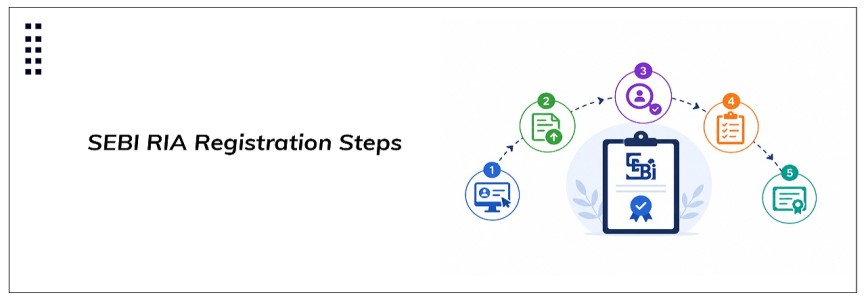
Process to Apply for SEBI RIA Registration
Step 1: Check Whether Your Services Require RIA Registration
The first step is to understand whether the services you want to offer fall under investment advisory activity. If you plan to give paid recommendations related to securities, mutual funds, stocks, bonds, ETFs or portfolio planning, SEBI RIA Registration may be required.
You should review your service model carefully. For example, if you only provide general education videos, blogs or training sessions without giving personalised investment advice, the position may be different. But if you provide paid client-specific investment plans, stock recommendations, mutual fund recommendations or portfolio advice, RIA registration becomes important. This step should not be ignored because many businesses start informally and later face compliance issues when their services become advisory in nature.
Step 2: Choose the Type of Applicant
After confirming the requirement, the next step is to decide the applicant structure. You can apply as an individual, partnership firm, LLP or company depending on your business plan. If you are a single professional starting advisory services, individual registration may be suitable. If you want to build a scalable business, hire a team, offer services through a brand or onboard multiple clients through a digital platform, a company or LLP may be better.
The applicant type affects documents, internal policies, principal officer requirements, compliance structure and fee payment. Therefore, this decision should be taken carefully before filing the application.
Step 3: Check Qualification and Certification
Before filing the application, ensure that the applicant, principal officer and persons associated with investment advice meet the qualification and certification requirements.
If NISM certificates are not available or have expired, the concerned persons should complete or renew the certification. If education or experience documents are not properly available, they should be collected in advance. This step helps avoid queries during application review.
Step 4: Prepare a Clear Business Model
SEBI reviews whether the applicant’s business model is suitable for investment advisory services. Therefore, the applicant should prepare a clear business model note.
The business model should explain:
-
What type of advisory services will be provided
-
Whether advice will be online or offline
-
Whether clients will be individuals, HNIs, companies or other categories
-
How clients will be onboarded
-
How risk profiling will be done
-
How suitability of advice will be checked
-
What fee structure will be followed
-
How conflicts of interest will be handled
-
How client complaints will be resolved
-
How records will be maintained
A strong and clear business model shows that the applicant understands regulatory requirements and has planned the advisory activity properly.
Step 5: Prepare Compliance Policies
Compliance policies are very important for SEBI RIA Registration. These policies explain how the applicant will follow SEBI rules after registration. Important policies may include risk profiling policy, suitability policy, client onboarding policy, fee policy, conflict of interest policy, grievance redressal policy, record maintenance policy, code of conduct, data protection policy and internal compliance policy.
These policies should be practical and should match the actual business model. Generic copied policies may lead to queries because they may not explain how the applicant will actually operate.
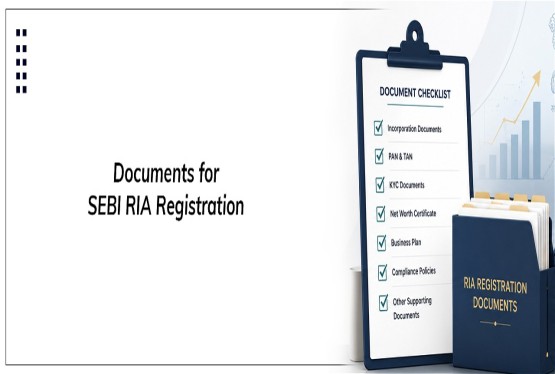
Step 6: Arrange Required Documents
The next step is to collect all required documents. Documentation is a major part of the RIA registration process. Missing, expired or inconsistent documents can delay the application. For individual applicants, documents may include PAN, identity proof, address proof, education certificates, NISM certificates, experience proof, income tax returns, financial proof, business plan and declarations.
For company or LLP applicants, documents may include Certificate of Incorporation, PAN, MOA, AOA, LLP Agreement, board resolution, partner resolution, shareholding pattern, details of directors or partners, principal officer details, financial statements, qualification certificates, NISM certificates, policies and declarations.
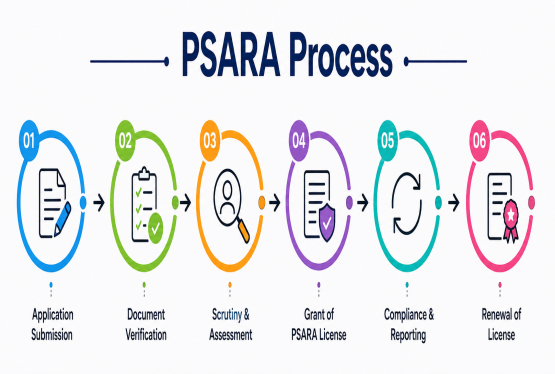
Step 7: Register on SEBI Intermediary Portal
The application is filed online through the SEBI Intermediary Portal. The applicant must create an account and choose the correct category as Investment Adviser. While creating the profile, the applicant should enter correct details such as name, address, PAN, contact details, incorporation details and authorised signatory details.
The information entered on the portal should match the supporting documents. Any mismatch in the portal details and uploaded documents may create problems during scrutiny.
Step 8: Fill Form a Carefully
Form A is the application form for registration as an Investment Adviser. It requires detailed information about the applicant, business activity, education, experience, certification, infrastructure, financial details, disciplinary history and other relevant information.
The applicant should fill Form A carefully and avoid vague answers. If any question needs explanation, a proper annexure may be attached. All information should be truthful, complete and consistent with the supporting documents. A poorly filled Form A may lead to deficiency letters and delay in approval.
Step 9: Upload Supporting Documents
After filling the form, the applicant must upload supporting documents on the portal. The documents should be clear, readable, properly signed and valid. If documents require self-attestation, board approval or authorised signatory signature, it should be done correctly.
For companies and LLPs, board resolutions, partner authorisations and principal officer documents must be properly prepared. The applicant should check every uploaded file before final submission.
Step 10: Pay Application Fee
The applicant must pay the prescribed application fee. The fee may depend on the applicant category. Payment proof should be saved because it may be required during processing. If the wrong fee is paid or payment is not properly reflected, the application may not move forward.
Step 11: Application Review by Authority
After submission, the application is reviewed by SEBI or the relevant supervisory body. The authority examines whether the applicant satisfies eligibility conditions, has proper documents, has a compliant business model and has the ability to act as an investment adviser.
The authority may also review whether the applicant has any conflict of interest, whether the fee model is compliant, whether advisory and distribution activities are properly separated, and whether client protection systems are in place.
Step 12: Respond to Queries or Deficiency Letter
During review, the authority may raise queries or issue a deficiency letter. This is common in registration applications. Queries may relate to education qualification, NISM certification, experience, business plan, fee structure, risk profiling process, client agreement, conflict of interest, website disclosures, deposit proof or compliance policies.
The applicant must respond within the given time. The response should be clear, complete and supported by documents. A weak response may result in repeated queries.
Step 13: Fulfil Final Requirements
If the authority is satisfied with the application and query response, the applicant may be asked to fulfil final requirements. This may include payment of registration fee, submission of final undertakings, deposit-related confirmation or any other condition as applicable. The applicant should complete these requirements carefully and within the given timeline.
Step 14: Grant of SEBI RIA Registration
After all requirements are completed, registration is granted and the applicant receives a SEBI registration number as a Registered Investment Adviser. The registration number should be displayed wherever required, such as website, agreements, client communication, invoices, brochures and other business documents. The adviser can start advisory services only after receiving the registration.
Step 15: Start Operations with Proper Compliance
After receiving registration, the adviser should start operations in a structured manner. Client onboarding should be done properly. Risk profiling should be completed before giving advice. The client agreement should be executed. Fees should be charged as per permitted structure. Advice should be documented and records should be maintained. The adviser should also have a complaint handling system and should avoid misleading advertisements, return guarantees or unrealistic claims.
Documents Required for SEBI RIA Registration
Documents for Individual Applicant
An individual applicant generally needs to submit personal, educational, financial and professional documents. These may include PAN card, Aadhaar card or other identity proof, address proof, passport-size photograph, educational certificates, NISM Investment Adviser certificates, experience proof, income tax returns, financial proof, net worth or deposit proof if applicable, business plan, compliance policies and fit and proper declaration. The applicant may also need to provide details of other business activities, past employment, disciplinary history and proposed advisory services.
Documents for Company Applicant
A company applying for SEBI RIA Registration may need to submit Certificate of Incorporation, PAN, Memorandum of Association, Articles of Association, board resolution, shareholding pattern, details of directors, principal officer details, financial statements, office address proof, business plan, compliance policies, qualification certificates and NISM certificates of relevant persons. The company must also provide details of persons associated with investment advice and their eligibility documents.
Documents for LLP Applicant
An LLP may need to submit Certificate of Incorporation, LLP Agreement, PAN, partner details, designated partner details, resolution or authorisation, principal officer details, qualification and NISM certificates, financial statements, business plan, office address proof, policies and declarations.
Important Compliance Policies
A SEBI RIA applicant should prepare proper internal policies. These policies show that the applicant understands its obligations and has systems to protect client interest.
-
Risk Profiling Policy: This policy explains how the adviser will assess a client’s risk appetite. It may include questions on income, investment objective, age, financial goals, investment experience, liabilities, time horizon and loss tolerance.
-
Suitability Policy: This policy explains how the adviser will ensure that investment advice is suitable for the client. Advice should not be given only because a product is popular. It should match the client’s profile and goals.
-
Client Onboarding Policy: This policy explains how clients will be onboarded, what documents will be collected, how consent will be taken and how client information will be verified.
-
Fee Policy: This policy explains how advisory fees will be charged. It should be clear, transparent and compliant with SEBI rules. Clients should know what they are paying for.
-
Conflict of Interest Policy: This policy explains how the adviser will identify and manage conflicts. For example, if the adviser or related party has any financial interest in a recommended product, it should be disclosed and handled properly.
-
Grievance Redressal Policy: This policy explains how client complaints will be received, recorded, reviewed and resolved. A proper complaint process is important for investor protection.
-
Record Maintenance Policy: This policy explains how client records, risk profiles, advice records, agreements, invoices and communication records will be maintained.
Ongoing Compliance After SEBI RIA Registration
SEBI RIA Registration is not a one-time approval. After getting registered, the adviser must continue to follow SEBI rules and maintain proper systems for client advisory, disclosures, records and grievance handling. Ongoing compliance helps protect investors and keeps the advisory business legally safe.
Client Risk Profiling
Before giving any investment advice, the adviser must understand the client’s financial condition, income level, investment goals, risk capacity and risk appetite. Risk profiling helps the adviser know whether the client can handle low, medium or high-risk investments. Without proper risk profiling, the advice may not be suitable for the client.
Suitability of Advice
The adviser must ensure that the advice given is suitable for the client. For example, a high-risk investment should not be suggested to a conservative investor unless the client clearly understands and accepts the risk. Advice should be based on the client’s profile, financial goals, investment period and risk-bearing capacity.
Transparent Fee Charging
A SEBI Registered Investment Adviser must clearly disclose the fee structure to the client. The client should know how much fee is being charged, when it is payable and what services are covered. There should be no hidden charges, misleading billing practices or unclear fee terms.
Client Agreement
A written agreement should be executed with the client before providing advisory services. The agreement should mention the scope of services, fee structure, risk disclosure, responsibilities of the adviser and client, grievance process and termination terms. A proper agreement helps avoid confusion and protects both parties.
Record Keeping
The adviser must maintain proper records of client details, risk profiles, investment advice, suitability assessment, client communication, fee receipts, complaints and other important documents. Record keeping is important because it helps prove that advice was given after proper assessment and in compliance with SEBI requirements.
No Guaranteed Returns
A Registered Investment Adviser should not promise guaranteed returns, fixed profits or risk-free investment outcomes. Market-linked investments always carry risk, and returns cannot be assured. The adviser must clearly inform clients about market risks and avoid false promises that may mislead investors.
Conflict Disclosure
If there is any conflict of interest, it should be disclosed to the client clearly. The adviser should not give biased advice for personal gain, commission benefit or business interest. Proper disclosure helps maintain transparency and ensures that the client can take an informed decision.
Complaint Handling
Client complaints should be handled in a professional and timely manner. The adviser should maintain complaint records, review the issue properly and provide a suitable response to the client. A proper grievance redressal system helps build trust and reduces the chances of disputes or regulatory issues.
Renewal of Certification
NISM certificates should remain valid for the adviser, principal officer and persons associated with investment advice. If any certificate is close to expiry, it should be renewed within the required time. Expired certification may create compliance problems and affect the adviser’s eligibility to continue advisory services.
Compliance With SEBI Updates
SEBI regulations, circulars and guidelines may change from time to time. A Registered Investment Adviser must keep track of these updates and revise internal policies, client documents, disclosures and operating processes whenever required. Staying updated helps the adviser avoid non-compliance and run the advisory business smoothly.
Common Mistakes in SEBI RIA Registration Application
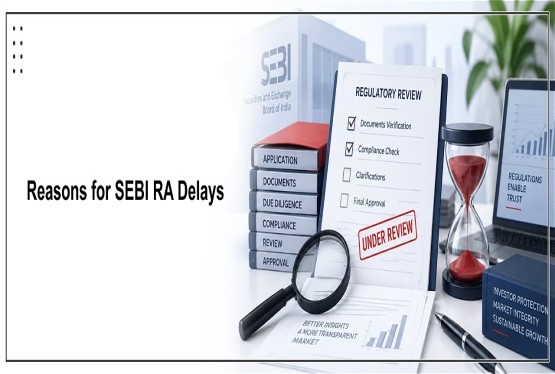
Many SEBI RIA Registration applications get delayed because applicants do not check the requirements properly before filing. RIA registration is not only about submitting Form A. SEBI also checks the applicant’s eligibility, qualifications, certification, business model, policies, disclosures and ability to provide investment advice in a compliant manner.
Starting Without Eligibility Check
One of the most common mistakes is starting the application without checking eligibility. Applicants should first confirm whether they meet the required qualification, NISM certification, experience, financial and fit and proper conditions. If these requirements are not complete, the application may face queries or delays later.
Filing an Incomplete Application
Form A should be filled carefully and all supporting documents should be attached properly. If important details are missing or documents are not uploaded, the authority may issue a deficiency letter. A complete application from the beginning helps reduce unnecessary delay in the registration process.
Expired NISM Certificates
NISM Investment Adviser certificates should be valid at the time of application. Expired certificates may create objections because certification is an important eligibility requirement. Applicants should check the validity of certificates before filing and ensure that certification remains valid during advisory operations also.
Weak Business Plan
A business plan should clearly explain the proposed advisory services, target clients, fee structure, advisory process, risk profiling method, suitability process and compliance system. A vague or incomplete business plan may lead to queries because SEBI needs to understand how the applicant will provide advisory services in a proper manner.
Poorly Drafted Policies
Compliance policies should match the actual business model of the applicant. Generic or copied policies may not explain how the adviser will handle clients, fees, conflicts, records, complaints and disclosures. Well-drafted policies show that the applicant understands SEBI compliance requirements and has a proper internal system.
Mixing Advisory and Distribution
If the applicant is involved in both advisory and distribution activities, proper segregation and disclosure are very important. Advisory services should not be influenced by commissions or distribution benefits. Any conflict of interest must be identified, disclosed and managed properly to avoid regulatory concerns.
Misleading Website Content
If the applicant has a website, it should not contain misleading claims such as guaranteed returns, fixed profit, risk-free advice or assured investment growth. SEBI expects advisers to give fair and balanced communication. Website content should be professional, transparent and aligned with investment advisory rules.
Improper Query Reply
During application review, SEBI or the concerned authority may raise queries. The reply should be clear, complete and supported by documents. Casual, incomplete or unsupported replies may lead to repeated queries and delay the registration process. A proper query response improves the chances of smooth approval.
Benefits of SEBI RIA Registration
SEBI RIA Registration gives legal permission to individuals and entities to provide investment advisory services in India. It helps advisers work in a regulated manner and gives clients confidence that the adviser follows SEBI rules.
Legal Recognition
SEBI RIA Registration gives official recognition to the adviser. It allows the adviser to provide paid investment advice legally and operate under SEBI regulations. This reduces the risk of running advisory services without approval and gives the adviser a recognised identity in the financial advisory market.
Better Client Trust
Clients are more likely to trust a SEBI Registered Investment Adviser because registration shows that the adviser meets SEBI’s eligibility conditions. It also gives clients more confidence while taking paid investment advice, as the adviser is required to follow disclosure, suitability and compliance rules. This helps build long-term client relationships.
Ability to Charge Advisory Fees
SEBI RIA Registration allows advisers to charge fees for investment advisory services in a legal and transparent manner. It helps advisers create a proper fee-based business model and avoid dependency on hidden commissions. A clear fee structure also helps clients understand what they are paying for.
Professional Credibility
Registration improves the professional image of the adviser. It shows that the adviser is serious about compliance and wants to provide services in a regulated manner. This helps create a stronger market reputation and supports branding for individuals, firms, LLPs and companies. It also gives the adviser more confidence while dealing with clients.
Business Scalability
SEBI RIA Registration helps advisers grow their business in a structured way. Registered advisers can serve clients in a more organised manner, while companies and LLPs can build teams for advisory services. Online advisory platforms can also create a compliant business model and expand their services while following proper rules.
Reduced Regulatory Risk
Operating without registration may create legal and regulatory issues. SEBI RIA Registration helps reduce the risk of penalties and protects the adviser from unauthorised advisory concerns. It also helps the business follow proper compliance standards, making the advisory practice safer from a regulatory point of view.
Better Market Reputation
A registered adviser gets better recognition in the financial services sector. SEBI RIA Registration helps attract serious clients, creates a professional brand image and supports trust among investors, partners and institutions. It also gives the business a stronger position in the investment advisory market. For serious investment advisers, SEBI RIA Registration is not only a legal requirement but also a strong business advantage. It helps build trust, improve credibility and run advisory services in a compliant manner.
Conclusion
Applying for SEBI RIA Registration requires proper planning, complete documents and a clear understanding of SEBI rules. The process begins by checking whether the proposed services fall under investment advisory activity. After this, the applicant must choose the right business structure, check eligibility, complete NISM certification, prepare documents, draft compliance policies, register on the SEBI Intermediary Portal, file Form A and respond to any queries raised during review.
A well-prepared application helps reduce delays and improves the chances of smooth approval. SEBI does not treat RIA registration as a simple form-filing process. It checks whether the applicant can provide investment advice in a fair, transparent and compliant manner. After registration, the adviser must follow ongoing rules such as risk profiling, suitability checks, transparent fees, record keeping, complaint handling, conflict disclosure and avoiding guaranteed return claims.
Frequently Asked Questions (FAQs)
Q1. What is SEBI RIA Registration?
Ans. SEBI RIA Registration is approval from SEBI to provide investment advisory services in India. It allows individuals or entities to give paid investment advice legally, subject to SEBI rules, client suitability checks, disclosure requirements and ongoing compliance.
Q2. Who needs SEBI RIA Registration?
Ans. Any person, company, LLP, firm or online platform giving paid investment advice may need SEBI RIA Registration. It applies to advice related to shares, mutual funds, bonds, portfolio planning and other securities-related investment products.
Q3. Can an individual apply for SEBI RIA Registration?
Ans. Yes, an individual can apply if they meet SEBI’s eligibility conditions. The applicant should have the required qualification, valid NISM certification, relevant experience and must satisfy the fit and proper criteria.
Q4. Can a company or LLP apply for SEBI RIA Registration?
Ans. Yes, a company or LLP can apply for SEBI RIA Registration. It must appoint a qualified principal officer and ensure that persons giving investment advice meet certification and compliance requirements.
Q5. Is NISM certification mandatory?
Ans. Yes, NISM Investment Adviser certification is generally required. The applicant, principal officer and persons associated with investment advice should hold valid certification before applying or providing advisory services.
Q6. Which form is used for SEBI RIA Registration?
Ans. Form A is used for SEBI RIA Registration. It includes details of the applicant, qualification, experience, business model, financial position, infrastructure, compliance policies and other required information.
Q7. Where is the application filed?
Ans. The application is filed online through the SEBI Intermediary Portal. The applicant has to create a profile, select the Investment Adviser category, upload documents and pay the applicable fee.
Q8. Can a SEBI RIA guarantee returns?
Ans. No, a SEBI Registered Investment Adviser cannot guarantee returns or assured profits. Investment advice must be based on the client’s risk profile, goals and suitability, not unrealistic promises.
Q9. Is a client agreement required?
Ans. Yes, a client agreement is required before providing advisory services. It should mention the scope of services, fee structure, risk disclosure, responsibilities, complaint process and important terms.
Q10. What happens after filing the application?
Ans. After submission, the application is reviewed by SEBI or the concerned authority. If documents or details are incomplete, queries may be raised. Registration is granted after satisfactory review.


_crop10_thumb.jpg)


_crop10_thumb.jpg)


-Form_crop10_thumb.jpg)

_crop10_thumb.jpg)


_learn_crop10_thumb.jpeg)


_crop10_thumb.jpg)

_crop10_thumb.jpg)


_crop10_thumb.jpg)





_for_Foreign_Directors_learn_crop10_thumb.jpeg)


_Act,_2015_learn_crop10_thumb.jpg)











_learn_crop10_thumb.jpg)











































_crop10_thumb.jpg)


_crop10_thumb.jpg)

_(1)_crop10_thumb.jpg)













_crop10_thumb.png)














_crop10_thumb.jpg)


_crop10_thumb.jpg)








_crop10_thumb.png)

_crop10_thumb.jpg)









_crop10_thumb.png)