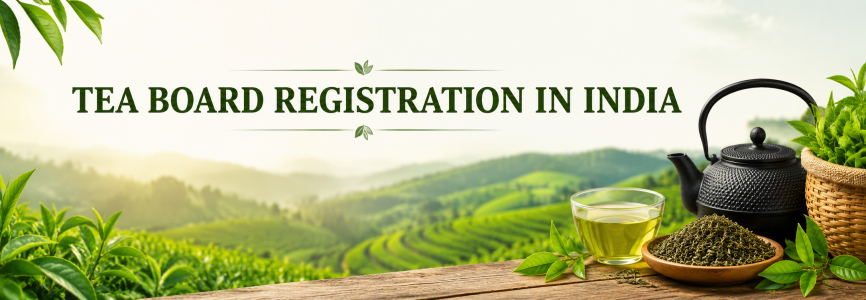



India is one of the largest tea-producing and tea-consuming countries in the world. Indian tea has a strong identity in both domestic and international markets. Assam tea, Darjeeling tea, Nilgiri tea and other regional varieties are known for their taste, quality and commercial value. Because tea is an important agricultural, commercial and export product, the tea business in India is regulated through the Tea Board of India.
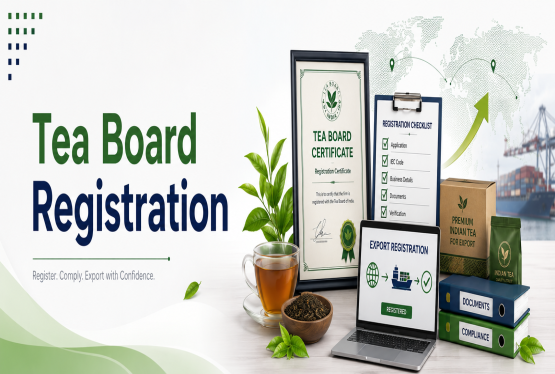
Tea Board Registration is an important compliance requirement for businesses involved in tea manufacturing, trading, exporting, importing, distribution, blending, packaging, warehousing or related tea activities. It helps the government monitor the tea trade, maintain quality standards, regulate export and import activities and protect the reputation of Indian tea in the global market.
The Tea Board of India functions under the Ministry of Commerce and Industry, Government of India. It was established under the Tea Act, 1953 for the development and regulation of the tea industry in India. The Board works for the promotion of Indian tea, improvement of tea quality, support to tea growers, export development and implementation of different regulatory requirements related to the tea sector.
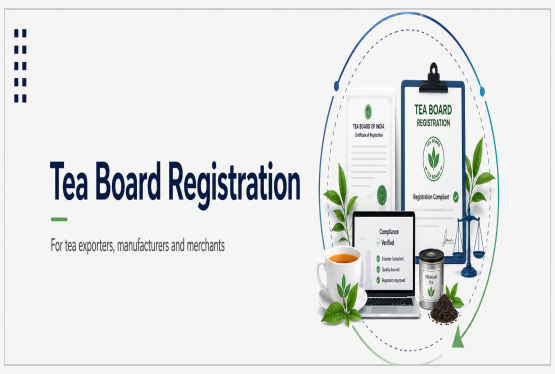
What is Tea Board Registration?
Tea Board Registration means obtaining the required licence, certificate or approval from the Tea Board of India for carrying out tea-related business activities. The type of registration depends on the nature of the business. A tea exporter may need an exporter licence and Registration-Cum-Membership Certificate, also known as RCMC. A tea distributor may need a Tea Distributor Registration Certificate. A business dealing in flavoured tea may need separate registration for flavoured tea.
In simple words, Tea Board Registration gives legal recognition to a business dealing in tea. It confirms that the business is registered with the proper authority and is eligible to carry out the permitted tea activity. This registration is useful not only for legal compliance but also for business credibility, especially where exports, institutional sales or large-scale distribution are involved.
Tea Board Registration should not be treated as a formality only. It is a part of the regulatory system that helps maintain transparency in the tea trade. It also helps buyers, exporters, importers, government authorities and other stakeholders verify that the business is operating under the applicable rules.
Why is Tea Board Registration Important?
Tea is a regulated commodity in India. Any business dealing in tea, especially in export, import, distribution, blending or warehousing, must understand the compliance requirements connected with the Tea Board. Registration helps the Tea Board maintain proper records of businesses operating in the tea sector and ensures that trade activities follow the prescribed rules.
For exporters, Tea Board Registration is especially important because tea exports are monitored by the Tea Board. Exporters may need registration and RCMC for export documentation, customs-related procedures and export benefits. Without proper registration, an exporter may face difficulty in completing shipment documentation or claiming benefits available under export promotion schemes.
For domestic tea businesses, registration improves credibility. A registered tea distributor, packer or blender can deal more confidently with buyers, retailers, wholesalers and institutional customers. It also helps the business maintain proper records and comply with applicable directions issued by the Tea Board from time to time.
Tea Board Registration is also useful for quality monitoring. Tea quality plays a major role in customer trust, brand value and export reputation. The Tea Board works to protect the image of Indian tea, and registration helps bring tea businesses under an organised compliance structure.
Who Needs Tea Board Registration?
Tea Board Registration may be required by different types of tea businesses depending on their activity. A business should first identify its role in the tea supply chain and then apply for the correct registration or licence. Generally, registration may be required for tea exporters, tea importers, tea distributors, tea manufacturers, tea packers, tea blenders, tea warehouse operators, flavoured tea businesses and businesses dealing in tea waste. The exact requirement depends on the activity carried out by the applicant.
For example, if a business is exporting tea from India, it may require an exporter licence and RCMC from the Tea Board. If a company imports flavoured tea, it may need both Tea Distributor Registration and Flavoured Tea Registration. Similarly, a business storing tea for trade, auction or export may need a warehouse-related licence, depending on the nature of activity.
Legal Background of Tea Board Registration
The tea industry in India is mainly governed by the Tea Act, 1953. This Act provides the legal foundation for the regulation and development of the tea industry. The Tea Board of India was established under this Act and is responsible for performing various regulatory and promotional functions.
Apart from the Tea Act, different rules, control orders, notifications and circulars are also relevant for tea businesses. These include rules related to marketing, distribution, export, import, warehousing, quality standards and filing of returns. Businesses dealing in tea must follow the applicable rules based on their activity.
The Tea Board has the authority to issue licences, registrations and certificates for different tea business activities. It may also require businesses to submit returns, maintain records and comply with specific conditions. Therefore, once a business obtains registration, it must continue to follow ongoing compliance requirements.
Main Types of Tea Board Registration
The type of Tea Board Registration depends on the business activity. A single registration may not cover every tea-related activity. Therefore, it is important to choose the correct category before applying.
Exporter Licence
An exporter licence is required by businesses that want to export tea from India. It allows the exporter to carry out tea export activities under the regulatory framework of the Tea Board. This licence is useful for exporters dealing in bulk tea, packaged tea, green tea, black tea, speciality tea, tea bags or other tea products. A tea exporter must ensure that its business documents, IEC, GST details and Tea Board registration details are consistent. Any mismatch in details may create issues during application processing or export documentation.
Registration-Cum-Membership Certificate
Registration-Cum-Membership Certificate, commonly known as RCMC, is an important certificate for tea exporters. It is issued by the Tea Board as the concerned export promotion authority for tea. Exporters may need RCMC for claiming export-related benefits and for fulfilling foreign trade-related documentation requirements.
RCMC is usually linked with the exporter’s IEC and business details. Therefore, exporters should keep their IEC, GST, address and Tea Board records updated. If there is any change in business name, address, constitution or authorised signatory, the same should be updated properly.
Tea Distributor Registration
Tea Distributor Registration is applicable to businesses engaged in tea distribution. A distributor may deal with loose tea, packaged tea, branded tea or bulk tea distribution. This registration helps bring distribution activities under the monitoring framework of the Tea Board. A tea distributor should maintain proper purchase and sale records. This helps in traceability and regulatory compliance. It also supports smooth dealings with suppliers, buyers and government authorities.
Flavoured Tea Registration
Flavoured tea means tea mixed with permitted flavours, herbs, spices, fruits or other approved ingredients. Businesses dealing in flavoured tea may require separate registration from the Tea Board, especially where import or specific regulated activity is involved.
This is important because flavoured tea is different from ordinary tea. It involves additional ingredients and may also attract food safety and labelling requirements. Therefore, businesses dealing in flavoured tea should not assume that a general tea registration will automatically cover all flavoured tea activities.
Tea Warehouse Licence
A tea warehouse licence may be required where tea is stored for trade, export, auction or distribution. Warehousing is an important part of the tea supply chain because tea quality can be affected by moisture, temperature, contamination and storage conditions. A properly registered warehouse helps maintain quality and traceability. It also gives confidence to buyers and exporters that the tea has been stored in suitable conditions.
Tea Waste Licence
Tea waste includes tea fibre, sweepings, fluff or other residues generated during tea manufacturing or processing. Since tea waste may also have commercial value, it is regulated separately. Businesses dealing in tea waste, especially for export, may need specific permission or licence from the Tea Board. This registration helps ensure that tea waste is not misused and that its movement is properly recorded.
Documents Required for Tea Board Registration
The documents required for Tea Board Registration may vary depending on the type of registration and business structure. However, certain basic documents are commonly required in most applications. The applicant may need PAN, GST registration, Import Export Code if export or import is involved, business incorporation proof, address proof of premises, bank details, authorised signatory details and documents showing the nature of tea activity. In case of a company or LLP, a board resolution or authorisation letter may also be required.
For export-related registration, IEC is very important. The applicant may also need to provide details of tea products, export activity, previous returns if applicable and declarations required by the Tea Board. In case of warehouse or manufacturing-related activity, premises details and supporting documents may be required. Businesses dealing in packaged tea should also check whether FSSAI licence is applicable. Tea Board Registration and FSSAI licence are different compliances, but both may apply depending on the business model.
Process of Tea Board Registration
The process of Tea Board Registration is generally carried out through the online portal of the Tea Board. The applicant has to select the correct registration category and submit the required details and documents. The process usually begins with identifying the correct type of registration. This step is very important because applying under the wrong category may lead to delay or rejection. For example, an exporter should apply for export-related registration, while a flavoured tea business should check whether a separate flavoured tea registration is required.
After identifying the correct category, the applicant has to prepare the required documents. The business name, address, PAN, GST and IEC details should match across documents. If there is any mismatch, it should be corrected before filing the application.
The applicant then creates login credentials on the Tea Board online portal and fills out the application form. The form must be filled carefully with correct business details, product details, contact information and activity details. The required documents are then uploaded in the prescribed format.
After submission, the Tea Board examines the application. If any information is missing or unclear, the applicant may receive a query or objection. The applicant must respond within the given time and provide the required clarification or additional documents.
In some cases, inspection or verification may be required. This usually depends on the nature of the licence and the activity involved. If the Tea Board is satisfied with the application and documents, it grants the registration, licence or certificate.
Validity and Renewal
The validity of Tea Board Registration depends on the type of licence or certificate issued. Some registrations may require renewal after a specific period. Businesses should always track the expiry date and apply for renewal on time.
Late renewal can create practical difficulties. It may affect export shipments, buyer documentation, customs clearance, participation in trade activities or continuation of business operations. Therefore, businesses should not wait until the last date.
If there is any change in business name, registered office, ownership, authorised signatory, IEC, GST or activity, the Tea Board records should also be updated wherever required. Updated records help avoid confusion during renewal, inspection, export documentation or regulatory review.
Compliance After Tea Board Registration
Tea Board Registration is not the end of compliance. After registration, the business must follow ongoing requirements. These may include filing returns, maintaining records, following Tea Board directions, renewing the licence on time and updating business details whenever required.
Exporters should be especially careful about export records and monthly return filing, including NIL returns where applicable. If returns are not filed properly, it may affect future renewal, RCMC-related work or export compliance.
A registered tea business should maintain proper purchase records, sale records, stock records, invoices, export documents and product details. Proper documentation helps during inspections, buyer verification, customs checks and compliance review.
Tea Board Registration and FSSAI Licence
Many tea businesses get confused between Tea Board Registration and FSSAI licence. Both are different compliances. Tea Board Registration is related to the regulation of tea trade, export, import, distribution and other tea industry activities. FSSAI licence is related to food safety and standards.
If a business is manufacturing, packing, blending, selling or importing tea as a food product, it may need FSSAI registration or licence depending on turnover and activity. For example, a company selling packaged tea under its own brand may need FSSAI licence along with the applicable Tea Board registration. Therefore, businesses should check both compliances before starting operations. Having one licence does not automatically replace the other.
Tea Board Registration and IEC
IEC stands for Import Export Code. It is issued by DGFT and is required for most import and export activities. If a business wants to export tea from India, IEC is generally required.
However, IEC alone is not enough for tea export compliance. Since tea is regulated by the Tea Board, exporters should also obtain the required Tea Board registration, exporter licence and RCMC where applicable. IEC gives permission to engage in import-export activity, while Tea Board Registration covers the tea-specific regulatory requirement.
Common Mistakes to Avoid
Many applications get delayed because of avoidable mistakes. These mistakes may look small, but they can create repeated queries from the department. Common mistakes include:
- Applying under the wrong registration category
- Mismatch in business name, PAN, GST or IEC
- Uploading unclear or incomplete documents
- Not providing proper authorisation letter
- Using expired address proof
- Not filing previous returns, where applicable
- Assuming that one registration covers all tea activities
- Delaying renewal until the last date
Benefits of Tea Board Registration
Tea Board Registration gives legal recognition to a tea business. It shows that the business is registered with the proper authority and is carrying out tea-related activity under the applicable rules. This improves trust among buyers, exporters, importers, wholesalers and institutional customers.
For exporters, registration is even more useful because it supports export documentation and RCMC-related requirements. It may also help in availing export promotion benefits, subject to applicable rules. A registered exporter can present itself more professionally before foreign buyers and trade authorities.
Tea Board Registration also supports organised business operations. Since the business has to maintain records and follow compliance requirements, it becomes easier to track purchases, sales, stock, exports and returns. This helps in long-term growth and reduces compliance risk.
Risks of Non-Compliance
Operating without the required Tea Board Registration can create problems for tea businesses. Exporters may face shipment delays, documentation issues or difficulty in claiming export benefits. Domestic businesses may face regulatory queries, buyer concerns or difficulties in formal distribution arrangements.
If a business does not renew its registration on time or fails to file required returns, it may face issues during future applications, renewal or regulatory verification. In some cases, the licence or registration may also be suspended or cancelled as per applicable rules.
Non-compliance can also affect brand reputation. Tea buyers, especially foreign buyers, usually expect proper documents, source details, quality records and regulatory approvals. If the business cannot provide these documents, it may lose business opportunities.
Practical Points Before Applying
Before applying for Tea Board Registration, the business should clearly understand its activity. It should check whether it is exporting, importing, distributing, blending, packing, warehousing or dealing in flavoured tea. The correct registration category should be selected accordingly.
The applicant should also ensure that all basic registrations are in place. PAN, GST, IEC, business constitution documents, address proof and authorised signatory documents should be ready before filing. If FSSAI licence is required, the business should apply for that separately.
Another important point is record maintenance. A business should maintain proper invoices, stock records, purchase details, sale details and export documents from the beginning. This makes future compliance easier and reduces the chances of disputes or objections.
Conclusion
Tea Board Registration is an important requirement for businesses dealing in tea in India. Whether the business is involved in tea export, import, distribution, blending, packaging, warehousing or flavoured tea, it must check the applicable registration requirement before starting operations.
The tea industry has strong growth potential, but it is also regulated to protect quality, traceability and the reputation of Indian tea. Proper registration helps a business operate legally, build buyer confidence, complete export documentation smoothly and reduce compliance risk.
For any tea business, the right approach is to identify the correct licence, prepare accurate documents, apply through the proper process, maintain records, file returns on time and renew the registration before expiry. This ensures smooth operations and helps the business grow in a compliant manner.
FAQ’S
Q1. What is Tea Board Registration?
Ans. Tea Board Registration is a licence, certificate or approval issued by the Tea Board of India to businesses involved in tea export, import, distribution, blending, packaging, warehousing or related tea activities.
Q2. Is Tea Board Registration mandatory in India?
Ans. Yes, Tea Board Registration may be mandatory for certain tea businesses, especially exporters, importers, distributors, flavoured tea businesses and warehouse operators, depending on the nature of activity.
Q3. Who needs Tea Board Registration?
Ans. Tea exporters, tea importers, tea distributors, tea blenders, tea packers, warehouse operators and businesses dealing in flavoured tea or tea waste may need Tea Board Registration.
Q4. Is IEC required for Tea Board Registration?
Ans. IEC is generally required if the business is involved in import or export of tea. For domestic tea business activities, IEC may not be required unless import-export activity is involved.
Q5. What is RCMC in Tea Board Registration?
Ans. RCMC means Registration-Cum-Membership Certificate. It is issued by the Tea Board to tea exporters and is useful for export documentation and export promotion benefits.
Q6. Is FSSAI licence also required for tea business?
Ans. Yes, FSSAI licence may be required if the business is manufacturing, packing, blending, selling or importing tea as a food product. Tea Board Registration and FSSAI licence are separate compliances.
Q7. Can I export tea with only IEC?
Ans. No, IEC alone may not be enough. Since tea is a regulated commodity, exporters should also obtain the required Tea Board registration, exporter licence and RCMC, wherever applicable.
Q8. What documents are required for Tea Board Registration?
Ans. Common documents include PAN, GST certificate, IEC if applicable, business registration proof, address proof, bank details, authorised signatory details and documents related to tea business activity.
Q9. How long does Tea Board Registration take?
Ans. The timeline depends on the type of registration, document accuracy and departmental review. If documents are complete and no query is raised, the process is usually faster.
Q10. What happens if Tea Board Registration is not obtained?
Ans. A business may face export delays, regulatory objections, renewal issues, difficulty in claiming export benefits and problems in dealing with buyers or authorities.


_crop10_thumb.jpg)


_crop10_thumb.jpg)


-Form_crop10_thumb.jpg)

_crop10_thumb.jpg)


_learn_crop10_thumb.jpeg)


_crop10_thumb.jpg)

_crop10_thumb.jpg)


_crop10_thumb.jpg)




_for_Foreign_Directors_learn_crop10_thumb.jpeg)


_Act,_2015_learn_crop10_thumb.jpg)









_learn_crop10_thumb.jpg)




























_crop10_thumb.jpg)

_crop10_thumb.jpg)

_(1)_crop10_thumb.jpg)




_crop10_thumb.png)


_crop10_thumb.jpg)

_crop10_thumb.jpg)





_crop10_thumb.png)
_crop10_thumb.jpg)






_crop10_thumb.png)