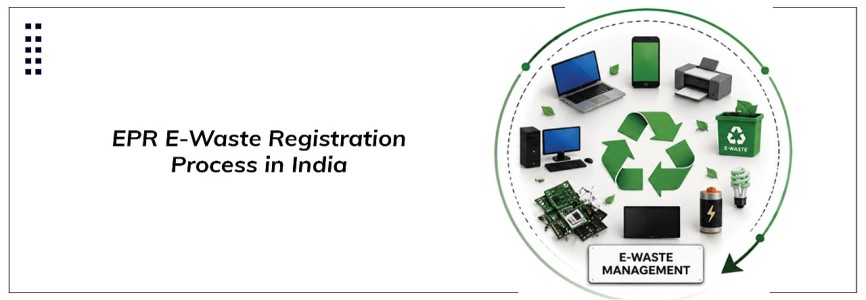



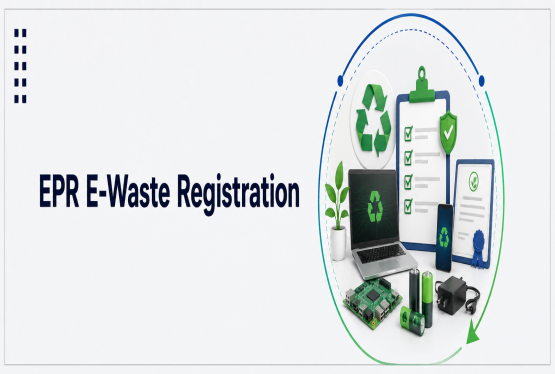
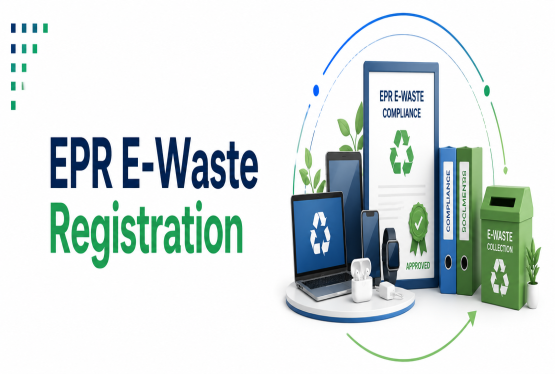
EPR E-Waste Registration has become one of the most important environmental compliances for businesses dealing with electrical and electronic equipment in India. With the rise of electronic products, online sales, imports, consumer appliances, IT equipment and digital devices, electronic waste has also increased rapidly. E-waste is not ordinary waste. It may contain metals, plastics, glass and reusable materials, but it may also contain hazardous substances that can damage soil, water, air and human health if not handled properly.
To regulate this issue, the Ministry of Environment, Forest and Climate Change notified the E-Waste (Management) Rules, 2022. These rules came into force from 1 April 2023 and replaced the earlier 2016 framework. The 2022 Rules introduced a stronger Extended Producer Responsibility system, commonly called EPR, where producers are legally responsible for ensuring that e-waste generated from their products is recycled through registered recyclers. The Central Pollution Control Board has also developed an online EPR E-Waste portal for registration, filing returns, generating EPR certificates and monitoring compliance.
Meaning of EPR E-Waste Registration
EPR E-Waste Registration means registration on the CPCB EPR E-Waste portal by entities covered under the E-Waste (Management) Rules, 2022. Under this framework, manufacturers, producers, refurbishers and recyclers are required to register on the portal before carrying out activities related to notified electrical and electronic equipment or e-waste. If one entity falls under more than one category, separate registration may be required for each applicable category.
The main idea behind EPR is that the responsibility of a producer does not end after selling the product. Once the product reaches its end of life, the producer must ensure that the resulting e-waste is properly recycled. This responsibility is fulfilled by meeting recycling targets and purchasing EPR certificates from registered recyclers through the online portal. The entire system is designed to reduce informal recycling, improve traceability and promote environmentally sound management of e-waste.
Legal Rules Behind EPR E-Waste Registration
The EPR E-Waste Registration system is governed mainly by the Environment (Protection) Act, 1986 and the E-Waste (Management) Rules, 2022. The E-Waste Rules are issued under the powers available to the Central Government under the Environment (Protection) Act. These rules create obligations for producers, manufacturers, refurbishers, recyclers and bulk consumers dealing with electrical and electronic equipment listed under the rules.
The E-Waste (Management) Rules, 2022 were notified on 2 November 2022 and came into force from 1 April 2023. They were later amended in 2023 and 2024. CPCB’s rules page lists the E-Waste (Management) Rules, 2022 along with the First Amendment Rules, 2023, Second Amendment Rules, 2023 and Third Amendment Rules, 2024.
A major recent update is the E-Waste (Management) Second Amendment Rules, 2024, notified on 12 November 2024 through G.S.R. 699(E). This amendment substituted Rule 23 and provided that any person who fails to comply with or contravenes the E-Waste Rules shall be liable to penalty in accordance with Section 15 of the Environment (Protection) Act, 1986.
Applicability of EPR E-Waste Registration
EPR E-Waste Registration applies to entities connected with electrical and electronic equipment covered under Schedule I of the E-Waste Rules. These may include producers, manufacturers, refurbishers and recyclers. The rules also place duties on bulk consumers, although bulk consumers are mainly required to ensure that e-waste generated by them is handed over only to registered producers, refurbishers or recyclers.
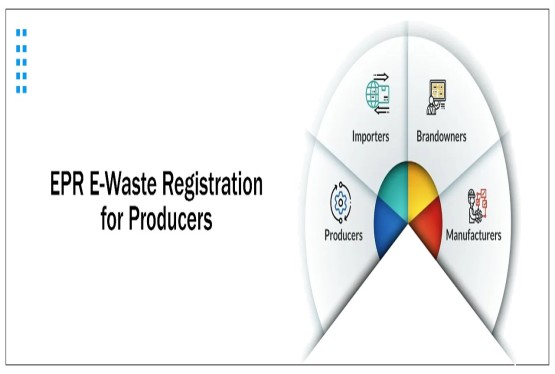
A producer generally includes a person or entity that manufactures and sells electrical and electronic equipment under its own brand, sells assembled equipment under its own brand, imports electrical and electronic equipment, or places such products in the Indian market. Importers, brand owners and businesses selling covered electronic products should carefully check whether they fall within the definition of producer.
A manufacturer is an entity engaged in the manufacture of electrical and electronic equipment. A refurbisher repairs or restores used equipment to extend its useful life. A recycler processes e-waste to recover useful material in an environmentally sound manner. Each of these categories has separate responsibilities under the rules.
Products Covered under E-Waste Rules
The E-Waste Rules apply to electrical and electronic equipment listed in Schedule I. These commonly include information technology equipment, telecommunication equipment, consumer electrical and electronic items, large and small electrical equipment, lighting equipment, electrical tools, toys, leisure and sports equipment, medical devices, laboratory instruments and other notified categories.
Businesses should not assume that only mobile phones and computers are covered. Many appliances, devices, machines, instruments and accessories may fall within the scope of the rules. Therefore, before applying for registration, the applicant must identify the exact product category, product code and applicable schedule entry. Wrong product classification may create issues in target calculation, portal approval and future compliance.
Authorities Involved in EPR E-Waste Registration
The Central Pollution Control Board is the main authority for EPR registration, EPR certificate generation, portal operation, compliance monitoring, verification and audit under the E-Waste Rules. CPCB manages the EPR E-Waste portal and also publishes notices, guidelines, instructions and environmental compensation-related documents on the portal.
State Pollution Control Boards and Pollution Control Committees also play an important role, especially in relation to facilities, inspections, local implementation and pollution control consent requirements. Recyclers and refurbishers may require additional approvals, infrastructure compliance and consent-related permissions depending on their activity and location.
Step-by-Step EPR E-Waste Registration Process in India
The EPR E-Waste Registration process in India is completed through the CPCB EPR E-Waste portal. Before applying, every business should first check whether it falls under the category of producer, manufacturer, refurbisher, recycler or more than one category. This is important because the registration requirements, documents and legal duties are different for each type of applicant.
1. Check Applicability
The first step is to check whether EPR E-Waste Registration is applicable to the business. A business should identify whether it is involved in manufacturing, importing, selling, refurbishing, recycling or handling electrical and electronic equipment covered under the E-Waste Rules. For example, a company importing electronic goods under its own brand may be treated as a producer. On the other hand, a business processing discarded electronic products may be treated as a recycler.
2. Identify the Correct Product Category
After checking applicability, the business must identify the correct product category under Schedule I of the E-Waste Rules. Product classification should be done carefully because EPR targets are linked with the type of product, quantity placed in the market, average product life and waste generation calculation. Wrong product category selection may lead to incorrect EPR obligation, portal mismatch or future compliance issues.
3. Prepare Required Documents
The next step is to collect and prepare the required documents for registration.
For producers, common documents may include company incorporation proof, PAN, GST certificate, IEC in case of importers, authorised signatory details, product details, brand details, sales data, import data, website details, declarations and undertakings.
For recyclers and refurbishers, additional documents may be required, such as facility details, machinery details, recycling capacity, consent documents, process flow, storage details and pollution control compliance records.
4. Create Login on CPCB EPR E-Waste Portal
After the documents are ready, the applicant must create login credentials on the CPCB EPR E-Waste portal. The portal provides registration-related formats, declarations, undertakings and instructions for applicants. The business should ensure that the login details are created using correct official information, email ID and authorised person details.
5. Fill the Online Registration Form
Once the login is created, the applicant must fill the online registration form on the portal. The form generally asks for business details, registered office address, authorised person details, category of registration, product details, past sales or import data, estimated quantities and supporting documents. All declarations must be filled correctly because false or incorrect information may lead to legal action, environmental compensation or cancellation of registration.
6. Submit the Application to CPCB
After completing the form and uploading documents, the application must be submitted online to CPCB. Before submission, the applicant should carefully review all details, product categories, quantities and documents. Any mismatch or incomplete information may result in queries or delay in approval.
7. Reply to CPCB Queries, If Any
After submission, CPCB examines the application. If the authority finds any incomplete information, missing document or unclear detail, it may raise a query or ask for clarification. The applicant must reply within the given time and submit proper supporting documents to avoid rejection or delay.
8. Grant of EPR E-Waste Registration
Once CPCB is satisfied with the application and documents, the registration is approved and issued through the portal. After approval, the entity can carry out its registered activity as per the E-Waste Rules. However, registration is only the starting point. The business must continue to follow all post-registration compliances.
9. Post-Registration Compliance
After getting EPR E-Waste Registration, the registered entity must meet its continuing legal duties. These may include fulfilling EPR targets, purchasing EPR certificates from registered recyclers, filing quarterly and annual returns, maintaining records and working only with registered entities. Failure to follow post-registration compliance may lead to environmental compensation, penalties, cancellation of registration or other legal action.
EPR Obligations and Recycling Targets
EPR obligation means the quantity of e-waste that a producer is required to ensure is recycled through authorised channels. CPCB’s FAQ explains that EPR obligations became effective from 1 April 2023. For FY 2023-24 and FY 2024-25, the obligation is 60% of the quantity of waste generation, followed by 70% for FY 2025-26 and FY 2026-27, and 80% from FY 2027-28 onwards. For producers who started sales recently, separate targets apply under Schedule IV. In the case of import of used electrical and electronic equipment, the assigned target is 100% of the quantity imported.
This target-based system makes EPR a continuing compliance and not just a one-time certificate. A producer must track products placed in the market, calculate EPR liability, purchase valid EPR certificates and file returns as required. Businesses should maintain year-wise sales data, product-wise details and import information because these figures directly affect EPR obligations.
EPR Certificate System
EPR certificates are central to the EPR E-Waste compliance framework. Under Rule 14 of the E-Waste Rules, CPCB generates EPR certificates through the portal in favour of registered recyclers. These certificates are generated based on eligible recycling quantities and may be issued in denominations such as 100 kg, 200 kg, 500 kg and 1000 kg or such other denominations as may be decided by CPCB with approval of the Steering Committee.
A producer fulfils its EPR obligation by purchasing EPR certificates from registered recyclers through the portal. Once the certificate is purchased and submitted, it is adjusted against the producer’s liability. This creates a traceable system where recycling is linked with actual registered recyclers instead of informal or unverified waste handlers.
The rules also recognise refurbishing. E-waste may be allowed for refurbishing, and a registered refurbisher can generate refurbishing certificates based on data provided through the portal. However, refurbishing only extends the life of the product; it does not permanently remove the final recycling responsibility. After the extended life of the refurbished product ends, recycling responsibility must still be fulfilled.
Post-Registration Compliance
After receiving EPR E-Waste Registration, a business must treat compliance as an ongoing responsibility. Producers must meet EPR targets, purchase EPR certificates, submit required data and file returns on the portal. Manufacturers, refurbishers and recyclers must also file information and maintain records as required under the rules.
Return filing is a key post-registration obligation. The E-Waste Rules require registered entities to file quarterly and annual returns as applicable. The purpose of return filing is to help CPCB monitor product flow, e-waste generation, recycling, certificate transactions and target fulfilment. Any mismatch between sales data, recycling certificates and returns may result in queries, audit or compliance action.
Businesses should also ensure that they do not deal with unregistered entities. The framework is based on authorised channels. If a producer works with an unregistered recycler or makes unsupported claims of recycling, the compliance may not be accepted. This can create serious legal and financial risk.
Responsibilities of Producers
Producers have the most important role under the EPR framework. A producer must register on the CPCB portal, provide correct product and sales details, fulfil EPR obligations, purchase EPR certificates from registered recyclers and file returns. Producers must also create consumer awareness about proper e-waste disposal through appropriate communication methods.
A producer should also keep proper records of products placed in the market, e-waste collected, certificates purchased and returns filed. These records may be required during verification or audit. For importers, import data, IEC details and customs-related records should be properly maintained because imported quantities may directly affect EPR obligations.
Responsibilities of Manufacturers
Manufacturers must register on the portal and ensure that e-waste generated during manufacturing is properly collected and sent to registered recyclers. They must not dispose of such waste through informal channels. Manufacturing waste, rejected components, defective electronic goods and process waste must be documented and handled in an environmentally sound manner.
Manufacturers should also maintain records and file returns as required. If a manufacturer is also selling goods under its own brand, it may also fall under producer responsibility. In such cases, it must check whether separate registration and EPR obligations apply.
Responsibilities of Refurbishers
Refurbishers are required to register on the portal and maintain data related to equipment refurbished by them. Waste generated during refurbishing must be handed over to registered recyclers. Refurbishing certificates may be generated through the portal based on the data provided, but the final recycling responsibility is only deferred for the extended life of the refurbished equipment.
Refurbishers must ensure that non-repairable parts, damaged components, batteries, circuit boards and other waste are not sold to informal scrap dealers. They should work only with registered recyclers and maintain proper records of movement and disposal.
Responsibilities of Recyclers
Recyclers are required to register on the portal and operate in accordance with CPCB standards and guidelines. They must have proper facilities, machinery, storage systems, pollution control measures and authorisations as required. Recyclers generate EPR certificates based on eligible recycling done by them, and these certificates are used by producers to fulfil EPR targets.
If a recycler provides false information resulting in excess generation of EPR certificates, the rules provide for revocation of registration and imposition of environmental compensation. Repeat violations may even lead to permanent revocation of registration in addition to environmental compensation.
Responsibilities of Bulk Consumers
Bulk consumers such as companies, offices, government departments, educational institutions, hospitals, banks, IT companies and large organisations must ensure that e-waste generated by them is handed over only to registered producers, refurbishers or recyclers. CPCB’s FAQ confirms that bulk consumers of listed electrical and electronic equipment must follow this responsibility.
This is important because bulk consumers often generate large quantities of computers, printers, servers, monitors, networking devices, batteries and other electronic waste. If such waste is sold to informal scrap channels, it may defeat the purpose of the EPR framework.
Environmental Compensation and Penalties
The E-Waste Rules provide for environmental compensation in cases of non-compliance. CPCB may impose environmental compensation for non-fulfilment of EPR obligations, use of false EPR certificates, incorrect information, violation of rules or non-compliance with guidelines. The rules also state that environmental compensation funds are to be kept in a separate escrow account by CPCB and used for collection, recycling, disposal of historical or orphaned e-waste, research and development, incentives to recyclers and support to local bodies.
The 2024 Second Amendment strengthened the contravention provision by linking failure to comply with penalties under Section 15 of the Environment (Protection) Act, 1986. This means non-compliance is not just a portal issue; it can lead to statutory penalties under environmental law.
Payment of environmental compensation does not automatically close the original obligation. If EPR targets remain unfulfilled, the producer may still have to complete pending obligations. Therefore, businesses should not treat compensation as an alternative to compliance.
Verification and Audit
The E-Waste Rules allow CPCB to verify compliance by itself or through a designated agency. Verification may cover producers, manufacturers, refurbishers, dismantlers and recyclers. The purpose of audit is to check whether registrations, returns, certificates, recycling data, product information and compliance declarations are correct.
Businesses must maintain proper documentation and avoid false reporting. Incorrect information, non-cooperation during audit or use of forged certificates can lead to serious action. A registered entity should keep all invoices, sales data, import records, certificate transactions, recycler agreements, return filings and communication records ready for inspection.
Recent Updates Businesses Should Know
The first major recent development is the implementation of the E-Waste (Management) Rules, 2022 from 1 April 2023. This shifted India’s e-waste compliance system to a more structured EPR certificate-based model through the CPCB portal.
Another important update is the CPCB clarification on EPR targets. As per CPCB’s FAQ, EPR obligations are effective from 1 April 2023, with 60% targets for FY 2023-24 and FY 2024-25, 70% targets for FY 2025-26 and FY 2026-27, and 80% targets from FY 2027-28 onwards.
The most important recent legal update is the E-Waste (Management) Second Amendment Rules, 2024, notified on 12 November 2024. It substituted Rule 23 and provided that contravention of the rules will attract penalty as per Section 15 of the Environment (Protection) Act, 1986.
CPCB’s EPR E-Waste portal also continues to publish notices, guidelines and documents such as environmental compensation guidelines, instructions for login creation, producer undertakings, declarations and notices for recyclers and refurbishers. Businesses should regularly check portal updates because portal procedures and document formats may change from time to time.
Common Mistakes in EPR E-Waste Registration
One common mistake is applying under the wrong category. Some businesses register as manufacturers when they are actually producers, or ignore producer responsibility even though they import or sell products under their brand. This can create future compliance issues and incorrect target calculation.
Another mistake is selecting the wrong product category. Product classification affects EPR obligations. If the category is wrong, the registration may be queried or the EPR target may be incorrectly generated.
Many businesses also treat EPR Registration as a one-time approval. This is incorrect. EPR is a continuing responsibility. After registration, the business must file returns, purchase certificates, maintain records and meet targets.
A serious mistake is dealing with unregistered recyclers or informal scrap dealers. Such transactions may not be recognised for EPR compliance. Businesses should work only with registered entities and maintain proper documentation.
Conclusion
EPR E-Waste Registration in India is a mandatory and continuing legal compliance for covered businesses dealing with electrical and electronic equipment. The E-Waste (Management) Rules, 2022 have created a portal-based system where producers, manufacturers, refurbishers and recyclers must register, report data and ensure proper recycling of e-waste.
For producers and importers, the key responsibility is to fulfil EPR targets through EPR certificates purchased from registered recyclers. For manufacturers, refurbishers and recyclers, the responsibility is to handle e-waste through proper channels, maintain records and comply with CPCB standards. Bulk consumers must also ensure that their e-waste is handed over only to registered entities.
With the 2024 amendment linking contravention to penalty under Section 15 of the Environment (Protection) Act, 1986, businesses should take EPR compliance seriously. Timely registration, correct product classification, accurate data filing, proper return filing and use of registered recyclers can help businesses stay compliant and avoid legal risk.
EPR E-Waste Registration is not only a legal requirement. It is also a responsible business practice that supports formal recycling, environmental protection and sustainable growth in India’s electronics sector.
Frequently Asked Questions (FAQs)
Q1. What is EPR E-Waste Registration?
Ans: EPR E-Waste Registration is a mandatory registration for covered businesses dealing with electrical and electronic equipment in India. It is obtained through the CPCB EPR E-Waste portal. It helps ensure that e-waste is collected, recycled and managed through registered recyclers.
Q2. Who needs EPR E-Waste Registration in India?
Ans: EPR E-Waste Registration is required for producers, manufacturers, refurbishers and recyclers covered under the E-Waste Management Rules. Importers and brand owners selling notified electronic products may also need registration. The requirement depends on the product category and business activity.
Q3. Is EPR Registration mandatory for electronics importers?
Ans: Yes, electronics importers may require EPR Registration if they place covered electrical or electronic equipment in the Indian market. Importers are generally treated as producers under the EPR framework. They must fulfil EPR targets and follow CPCB portal compliance.
Q4. Which authority grants EPR E-Waste Registration?
Ans: The Central Pollution Control Board grants EPR E-Waste Registration through its online portal. CPCB also monitors EPR targets, certificates, returns and compliance. State Pollution Control Boards may also be involved in facility-level approvals for recyclers or refurbishers.
Q5. What documents are required for EPR E-Waste Registration?
Ans: Common documents include business registration proof, PAN, GST certificate, IEC for importers, authorised signatory details, product details, brand details and sales or import data. Recyclers and refurbishers may need additional facility-related documents. The exact list depends on the applicant category.
Q6. How is EPR obligation fulfilled?
Ans: EPR obligation is fulfilled by purchasing EPR certificates from registered recyclers through the CPCB portal. These certificates are generated after eligible e-waste recycling. The certificates are then adjusted against the producer’s EPR liability.
Q7. Is EPR E-Waste Registration a one-time compliance?
Ans: No, EPR E-Waste Registration is not only a one-time compliance. After registration, businesses must file returns, meet EPR targets, maintain records and purchase certificates where applicable. It is a continuing legal responsibility under the E-Waste Rules.
Q8. What happens if a business fails to comply with EPR rules?
Ans: Non-compliance may lead to environmental compensation, penalties, suspension or cancellation of registration and legal action. The 2024 amendment also links contravention of the rules with penalty under Section 15 of the Environment Protection Act, 1986. Pending EPR obligations may still continue even after payment of compensation.
Q9. Can a producer work with any recycler for EPR compliance?
Ans: No, a producer should work only with registered recyclers under the EPR E-Waste framework. Certificates from unregistered or informal recyclers may not be valid for EPR target fulfilment. Using unauthorised channels can create compliance and audit risks.
Q10. Why is EPR E-Waste Registration important for businesses?
Ans: EPR E-Waste Registration helps businesses comply with environmental law and avoid penalties. It also supports proper recycling of electronic waste through authorised channels. For electronics brands, manufacturers and importers, it builds legal safety, trust and responsible business image.


_crop10_thumb.jpg)


_crop10_thumb.jpg)


-Form_crop10_thumb.jpg)

_crop10_thumb.jpg)


_learn_crop10_thumb.jpeg)


_crop10_thumb.jpg)

_crop10_thumb.jpg)


_crop10_thumb.jpg)





_for_Foreign_Directors_learn_crop10_thumb.jpeg)


_Act,_2015_learn_crop10_thumb.jpg)










_learn_crop10_thumb.jpg)





























_crop10_thumb.jpg)

_crop10_thumb.jpg)

_(1)_crop10_thumb.jpg)






_crop10_thumb.png)






_crop10_thumb.jpg)

_crop10_thumb.jpg)






_crop10_thumb.png)
_crop10_thumb.jpg)




_crop10_thumb.png)