



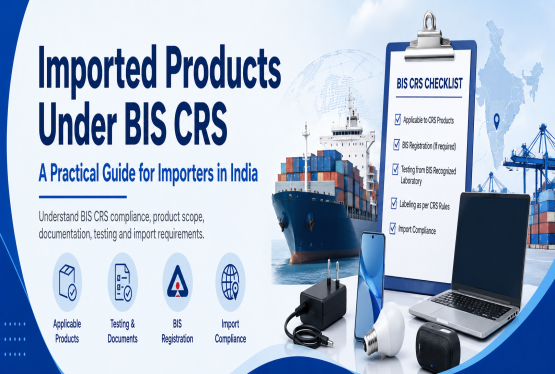
BIS CRS Registration is one of the most important legal approvals for electronic and IT products sold, imported, distributed, or manufactured in India. BIS stands for Bureau of Indian Standards, and CRS stands for Compulsory Registration Scheme. Under this system, notified electronic products cannot be placed in the Indian market unless they conform to the applicable Indian Standard and carry the BIS Standard Mark with a valid registration number. The scheme is especially important for products such as laptops, tablets, mobile phones, printers, power banks, LED products, CCTV cameras, electronic games, amplifiers, smart watches, adapters, audio-video products, and many other electronic goods listed by the government. The official CRS product list includes multiple electronic and IT goods along with their applicable Indian Standards and implementation dates.
The main purpose of BIS CRS Registration is to protect Indian consumers from unsafe, poor-quality, or non-compliant electronic products. Since electronic products involve risks such as electric shock, fire, overheating, battery failure, radiation, and technical defects, the government has made registration compulsory for notified categories. BIS certification in general may be voluntary for many products, but for products notified by the Central Government, compliance with Indian Standards becomes mandatory in public interest, consumer safety, environmental safety, prevention of unfair trade practices, and national security. BIS CRS Registration is granted to the manufacturer, not to the trader, seller, distributor, or importer. This means the actual manufacturing unit must apply for registration. If the manufacturer is located outside India, it must appoint an Authorized Indian Representative, commonly known as AIR, to coordinate with BIS and take legal responsibility in India. Once the registration is granted, the manufacturer can use the BIS Standard Mark along with the unique registration number on the registered product.
Legal Basis of BIS CRS Registration
The legal foundation of BIS CRS Registration comes from the Bureau of Indian Standards Act, 2016, BIS Rules, 2018, BIS Conformity Assessment Regulations, and the relevant Compulsory Registration Orders issued by the concerned ministry. The BIS Act, 2016 was enacted to establish BIS as India’s national standards body for standardisation, conformity assessment, and quality assurance of goods, articles, processes, systems, and services. Under the BIS Act, 2016, BIS has the power to establish Indian Standards, operate conformity assessment schemes, prescribe Standard Marks, grant licences or registrations, inspect, monitor, and take action against misuse of the Standard Mark. Section 13 is important because it deals with licence or certificate of conformity for use of the Standard Mark. Section 14 is also important because it empowers the Central Government to notify goods or articles that must compulsorily conform to Indian Standards. When a product is notified under a compulsory order, no person can manufacture, import, distribute, sell, hire, lease, store for sale, or exhibit such product without BIS compliance.
The Compulsory Registration Scheme is operated under Scheme II of the BIS Conformity Assessment Regulations. The official CRS portal states that BIS registers manufacturers under this registration scheme and permits them to declare that their articles conform to the relevant Indian Standards. After registration, the manufacturer is allowed to put the notified Standard Mark on the product. For electronics and IT products, the key government order is the Electronics and Information Technology Goods Requirement for Compulsory Registration Order. The earlier order of 2012 was later replaced by the 2021 order. The 2021 order applies to notified goods and articles covered in its schedule, while valid registrations under the earlier order continue and are renewed under the 2021 order.
Meaning of BIS CRS Registration for Electronic Products
BIS CRS Registration is a product safety approval based on testing and self-declaration of conformity. In simple words, the manufacturer gets the product tested from a BIS-recognised laboratory as per the applicable Indian Standard. After testing, the manufacturer files an online application with test reports, documents, factory details, brand details, model details, undertaking, and required fees. BIS then verifies the application and, if satisfied, grants registration. This registration does not mean BIS has manufactured or guaranteed the product. It means the manufacturer has declared conformity with the relevant Indian Standard after testing in a BIS-recognised lab and BIS has registered the manufacturer for that product category, brand, and manufacturing location. Therefore, the responsibility for continued compliance remains with the manufacturer throughout the validity of registration.
Products Covered Under BIS CRS Registration
BIS CRS is applicable only to notified products. Not every electronic product automatically requires BIS CRS Registration. The first step is always to check whether the product is listed under the CRS product category. The official BIS CRS list includes products such as amplifiers, automatic data processing machines, electronic clocks, electronic games, electronic musical systems, laptops, tablets, printers, scanners, wireless keyboards, mobile phones, power adapters, LED products, power banks, CCTV cameras, smart watches, solar products, and several other notified categories. Some products are covered under IS 13252 Part 1, some under IS 616, some under IS 16046 for batteries, and several newer electronic products under IS/IEC 62368-1:2023. The applicable Indian Standard depends on the nature, design, use, and technical features of the product. Wrong product classification can lead to rejection, delay, retesting, or wrong registration. Therefore, classification must be done carefully before testing.
Recent Updates in BIS CRS Registration
BIS CRS compliance is continuously evolving because new electronic products, technologies, and standards are being added. As per the official CRS circular list, recent updates include revised provisions for licence validity, renewal, and annual fee payment under CRS dated 27 May 2026. The list also shows a Gazette Notification for Standalone Hard Disk Drives dated 19 May 2026, guidelines for revised standards for LED luminaires dated 20 March 2026, and guidelines for Extended Reality products such as Augmented Reality, Virtual Reality, and Mixed Reality under IS/IEC 62368-1:2023 dated 9 March 2026. Another important update relates to upcoming Quality Control Orders.
BIS has listed Digital Television Receiver for Satellite Broadcast Transmission under MeitY with IS 18112:2022 and an enforcement date of 26 July 2026. Businesses dealing with such products should check implementation dates in advance because once the order becomes enforceable, sale or import without compliance may become restricted. These updates show that manufacturers, importers, and brand owners cannot treat BIS CRS compliance as a one-time activity. Product categories, Indian Standards, renewal conditions, fee requirements, and implementation timelines may change. Therefore, businesses should review BIS and MeitY updates regularly before launching or importing electronic products in India.
Who Needs BIS CRS Registration?
BIS CRS Registration is required by the manufacturer of the notified electronic product. If the product is manufactured in India, the Indian manufacturer must apply. If the product is manufactured outside India, the foreign manufacturer must apply through an Authorized Indian Representative. The importer or brand owner may coordinate the process, but the registration is issued in the name of the manufacturer. A brand owner may need separate registrations if the same product is manufactured at different factory locations. Similarly, one manufacturing unit may need separate registrations for different product categories or Indian Standards. Multiple models may be covered under one registration only when they fall within the same product category, same Indian Standard, same brand, and same manufacturing location, and are technically eligible for series guidelines.
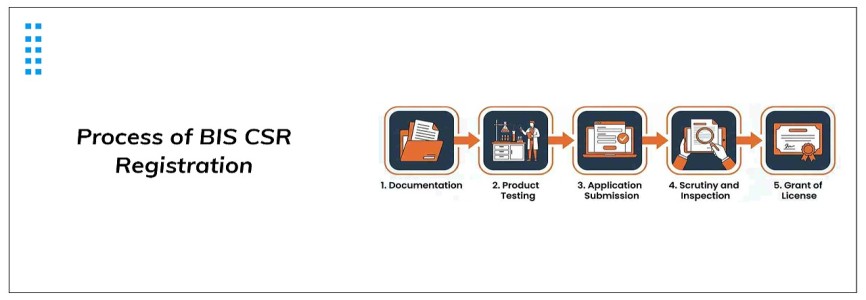
Step by Step Process for BIS CRS Registration
Step 1: Identify Whether the Product Falls Under CRS
The first step is to identify whether the electronic product is covered under the compulsory list. This is done by checking the product name, function, technical use, power rating, input-output specifications, battery type, technology, and applicable Indian Standard. A product may look similar to another product but may fall under a different standard because of its technical features.
For example, a laptop, tablet, mobile phone, power bank, LED light, CCTV camera, smart watch, and adapter may all require BIS CRS, but they do not necessarily follow the same Indian Standard. Therefore, correct product identification is the starting point of the entire process.
Step 2: Check the Applicable Indian Standard
After identifying the product category, the manufacturer must check the applicable Indian Standard. The Indian Standard defines the safety and technical requirements that the product must satisfy. Testing will be conducted according to this standard. This step is very important because testing under the wrong standard may make the test report unusable. If the product is modified, upgraded, or redesigned later, the manufacturer must check whether the existing standard and registration still cover the product.
Step 3: Select a BIS-Recognised Laboratory
The product must be tested only from a BIS-recognised laboratory. A test report from an unrecognised lab may not be accepted for BIS CRS Registration. The lab should be recognised for the relevant Indian Standard and product category. The manufacturer should also ensure that the sample sent for testing represents the actual production model. If the tested sample and production model differ, it can create serious compliance issues during market surveillance or BIS inspection.
Step 4: Prepare Samples and Technical Documents
The manufacturer must prepare product samples and technical documents before testing. The product should be ready in its final marketable condition. Labelling, rating label, user manual, safety instructions, circuit design, PCB details, critical component list, and model details must match the actual product. Important pointers at this stage include proper model number declaration, correct brand name, accurate factory address, consistent technical details, and complete product specifications. Any mismatch between sample, documents, test report, and application can lead to delay or rejection.
Step 5: Product Testing by BIS-Recognised Lab
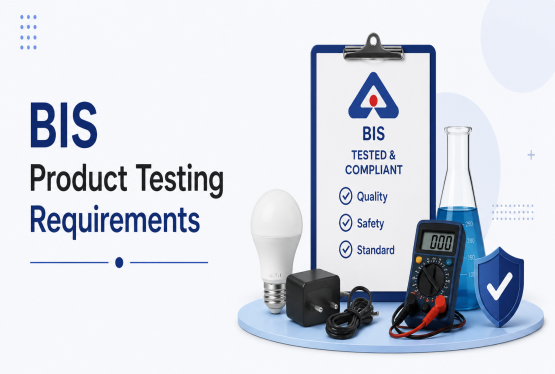
The selected laboratory conducts safety testing as per the applicable Indian Standard. The testing may cover electrical safety, mechanical safety, fire hazard protection, insulation resistance, temperature rise, abnormal operation, marking, construction requirements, battery safety, and other applicable parameters. Once testing is completed successfully, the laboratory issues a test report. The test report is a key document for BIS CRS Registration. It has limited validity for filing, so the application should be submitted within the prescribed time. Delayed filing may require fresh testing.
Step 6: Create Login on BIS CRS Portal
The applicant must create a login on the BIS CRS portal and fill in the manufacturer details, factory details, AIR details if applicable, product details, brand details, model details, and standard details. The application should be filled carefully because the registration certificate is based on the information provided in the application. The details must match the test report, business licence, factory documents, trademark or brand authorization, authorization letters, and undertaking. Any inconsistency may result in BIS raising queries.
Step 7: Upload Required Documents
The applicant must upload all required documents with the online application. Common documents include business licence of the manufacturer, factory address proof, test report, product details, brand authorization, trademark certificate or application where applicable, ISO certificate if available, authorization letter, AIR nomination for foreign manufacturers, undertaking, affidavit, technical documents, and fee payment proof. For foreign manufacturers, AIR documents are very important. The Authorized Indian Representative must be an Indian entity or person who can legally represent the foreign manufacturer before BIS. The AIR is responsible for communication, compliance, and legal obligations in India.
Step 8: Payment of Government Fees
The applicant must pay the required BIS government fees. Fees may include application fee, registration fee, processing fee, annual fee, and other charges as applicable. Since BIS has recently issued revised provisions relating to licence validity, renewal, and annual fee payment under CRS, applicants should check the latest fee and renewal requirements before filing. Fee errors, short payment, or wrong payment category may delay the application. Therefore, payment should be made after verifying the correct product category, number of models, and applicable charges.
Step 9: BIS Scrutiny of Application
After submission, BIS reviews the application, test report, documents, and declarations. If BIS finds any deficiency, it may raise a query. The applicant must reply within the prescribed time with proper clarification and supporting documents. Common reasons for queries include mismatch in model numbers, incomplete factory address, unclear brand authorization, expired test report, missing AIR documents, wrong product category, wrong Indian Standard, incomplete undertaking, or inconsistency between rating label and test report.
Step 10: Grant of BIS CRS Registration
If BIS is satisfied with the application, it grants CRS Registration. The registration certificate contains the registration number, product category, Indian Standard, brand, manufacturing location, and other relevant details. After grant, the manufacturer can use the BIS Standard Mark along with the registration number on the product. The Standard Mark must be used only on registered products and only as per BIS marking guidelines. It cannot be used on unregistered models, different brands, different manufacturing locations, or products outside the scope of registration.
Documents Required for BIS CRS Registration
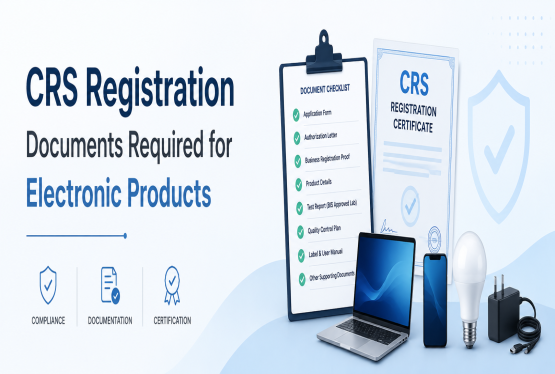
The documents required may vary based on the product, manufacturer, brand, and country of manufacture. However, the common documents include the manufacturer’s business licence, factory address proof, manufacturing process details, product specifications, test report from BIS-recognised lab, brand authorization letter, trademark certificate or brand ownership proof, model list, rating label, user manual, PCB layout, critical component list, authorization letter, undertaking, affidavit, and fee payment proof. For foreign manufacturers, additional documents include AIR nomination letter, AIR identity and address proof, AIR company documents, authorization from the foreign manufacturer, and undertaking from the AIR. These documents help BIS identify who will be legally responsible in India for compliance, communication, and corrective action.
Validity and Renewal of BIS CRS Registration
BIS CRS Registration is granted for a specific validity period and must be renewed before expiry. The renewal process generally requires filing a renewal application, payment of applicable fees, confirmation of continued production, declaration of compliance, and submission of required documents. If renewal is not filed on time, the registration may expire, and the manufacturer may lose the right to use the BIS Standard Mark. The recent CRS circular list shows revised provisions for licence validity, renewal, and annual fee payment under CRS dated 27 May 2026. Therefore, businesses should not rely on old renewal assumptions and should verify the latest provisions before renewal filing.
Post-Registration Compliance
After obtaining BIS CRS Registration, the manufacturer must continue to maintain product quality and conformity with the applicable Indian Standard. The manufacturer must ensure that only registered models are marked with BIS details. Any change in product design, component, factory address, brand, model series, or standard may require intimation, endorsement, or fresh registration depending on the nature of change. Post-registration compliance also includes maintaining records, cooperating with BIS surveillance, responding to notices, using the Standard Mark correctly, renewing registration on time, and ensuring that imported or sold products match the tested and registered version. Market surveillance is an important part of CRS compliance. Authorities may draw samples from the market to verify whether the product continues to conform to the Indian Standard. If the product fails testing or if misuse is found, BIS may take action against the manufacturer or responsible person.
Penalties for Non-Compliance
Selling, importing, distributing, or storing notified electronic products without BIS CRS Registration may lead to legal consequences. Misuse of the BIS Standard Mark, false declaration, use of registration number on unregistered products, and sale of non-conforming products may attract penalties under the BIS Act, 2016. The BIS Act contains provisions for action against improper use of the Standard Mark, violation of compulsory certification requirements, and misleading claims. Goods may be seized, sale may be restricted, registration may be suspended or cancelled, and monetary penalties may be imposed. In serious cases, prosecution may also be initiated. For importers, non-compliance may also create customs clearance issues. If a notified electronic product reaches Indian ports without valid BIS registration, clearance may be delayed or denied. This can result in demurrage, storage cost, shipment loss, and business disruption.
Common Mistakes in BIS CRS Registration
Many businesses face delay because they start testing before confirming the correct product category. Some applicants select the wrong Indian Standard, submit incomplete documents, use inconsistent model numbers, or file the application after test report validity is affected. Another common mistake is assuming that importer registration is enough, whereas CRS registration is granted to the manufacturer. Foreign manufacturers sometimes appoint an AIR without proper documentation. This creates delays during scrutiny. Brand owners also make mistakes by using the BIS registration number for products manufactured at a different factory. This is not allowed unless the registration specifically covers that manufacturing location. Another major issue is incorrect labelling. The product label, packaging, user manual, and test report must be consistent. Incorrect voltage, frequency, model number, country of origin, brand name, or manufacturer address can create compliance risk.
Importance of BIS CRS for Importers and Brand Owners
Even though registration is granted to the manufacturer, importers and brand owners are directly affected by CRS compliance. If they import or sell notified electronic products without valid BIS registration, their goods may be stopped, their market operations may be affected, and they may face legal risk. Therefore, importers should verify the BIS registration number before placing orders. They should check whether the registration covers the exact product category, brand, model, and manufacturing location. They should also ensure that the product carries proper BIS marking before shipment. Brand owners should also keep control over manufacturing partners. If the product is manufactured by multiple factories, each factory may require separate registration. If the brand changes the model design or components, compliance should be reviewed before sale.
Conclusion
BIS CRS Registration is a mandatory legal requirement for notified electronic and IT products in India. It is not just a certificate for market entry; it is a continuing compliance responsibility for manufacturers, importers, and brand owners. The process starts with product classification, selection of the correct Indian Standard, testing from a BIS-recognised lab, online application filing, document submission, fee payment, BIS scrutiny, and grant of registration. The legal basis comes from the BIS Act, BIS Rules, BIS Conformity Assessment Regulations, and the relevant compulsory registration orders issued for electronic and IT goods. Recent updates in 2026, including changes relating to renewal, annual fee payment, standalone hard disk drives, LED luminaires, and extended reality products, show that businesses must regularly monitor BIS and MeitY notifications.
For a smooth approval, companies should prepare documents carefully, ensure accurate testing, avoid mismatch in model details, appoint a proper AIR for foreign manufacturers, and maintain post-registration compliance. Non-compliance can lead to penalties, seizure, customs delays, suspension, cancellation, and loss of market access. Therefore, BIS CRS Registration should be treated as a core legal requirement before launching any notified electronic product in India. Compliance Calendar LLP can assist manufacturers, importers, and brand owners in product classification, document preparation, BIS lab coordination, AIR support, application filing, query reply, renewal, and post-registration compliance.
FAQs
Q1. What is BIS CRS Registration?
Ans. BIS CRS Registration is a mandatory registration issued by the Bureau of Indian Standards for notified electronic and IT products. It allows the manufacturer to use the BIS Standard Mark with a unique registration number after the product is tested as per the applicable Indian Standard.
Q2. Is BIS CRS Registration mandatory for all electronic products?
Ans. No, BIS CRS Registration is mandatory only for products notified under the Compulsory Registration Scheme. Businesses must check the official product list and applicable Indian Standard before manufacturing, importing, or selling electronic products in India.
Q3. Who can apply for BIS CRS Registration?
Ans. Only the manufacturer can apply for BIS CRS Registration. Importers, traders, and sellers cannot obtain registration in their own name unless they are also the actual manufacturer of the product.
Q4. Can a foreign manufacturer apply for BIS CRS Registration?
Ans. Yes, a foreign manufacturer can apply for BIS CRS Registration. However, it must appoint an Authorized Indian Representative in India to communicate with BIS and take responsibility for compliance obligations.
Q5. Is product testing compulsory for BIS CRS Registration?
Ans. Yes, product testing from a BIS-recognised laboratory is compulsory. The test report must be issued as per the applicable Indian Standard and must be submitted with the BIS CRS application.
Q6. What happens if electronic products are sold without BIS CRS Registration?
Ans. If a notified product is sold, imported, stored, or distributed without valid BIS CRS Registration, legal action may be taken. The product may face seizure, customs delay, penalty, suspension of business activity, or prosecution depending on the violation.
Q7. Can one BIS registration cover multiple models?
Ans. Yes, multiple models may be covered under one registration if they fall under the same product category, same Indian Standard, same brand, same manufacturing location, and qualify under the applicable series guidelines. Otherwise, separate registration may be required.
Q8. Is BIS CRS Registration required for import?
Ans. Yes, if the imported electronic product is covered under the CRS list, BIS registration is required before import and sale in India. Customs may check BIS compliance for notified products.
Q9. What is the role of AIR in BIS CRS Registration?
Ans. AIR stands for Authorized Indian Representative. It is required for foreign manufacturers. The AIR represents the foreign manufacturer before BIS and handles legal communication, compliance support, and responsibility in India.
Q10. Does BIS CRS Registration need renewal?
Ans. Yes, BIS CRS Registration must be renewed before expiry. The manufacturer should track the validity period and comply with the latest BIS renewal and annual fee requirements to avoid expiry or suspension.


_crop10_thumb.jpg)


_crop10_thumb.jpg)


-Form_crop10_thumb.jpg)

_crop10_thumb.jpg)


_learn_crop10_thumb.jpeg)


_crop10_thumb.jpg)

_crop10_thumb.jpg)


_crop10_thumb.jpg)




_for_Foreign_Directors_learn_crop10_thumb.jpeg)


_Act,_2015_learn_crop10_thumb.jpg)










_learn_crop10_thumb.jpg)









































_crop10_thumb.jpg)

_crop10_thumb.jpg)
_(1)_crop10_thumb.jpg)









_crop10_thumb.png)








_crop10_thumb.jpg)

_crop10_thumb.jpg)








_crop10_thumb.png)

_crop10_thumb.jpg)







_crop10_thumb.png)









_crop10_thumb.jpg)
