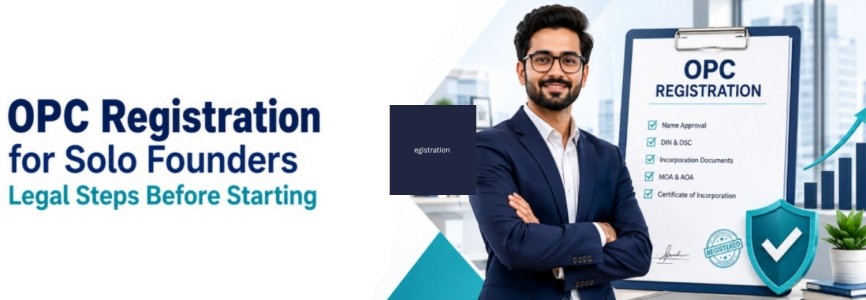



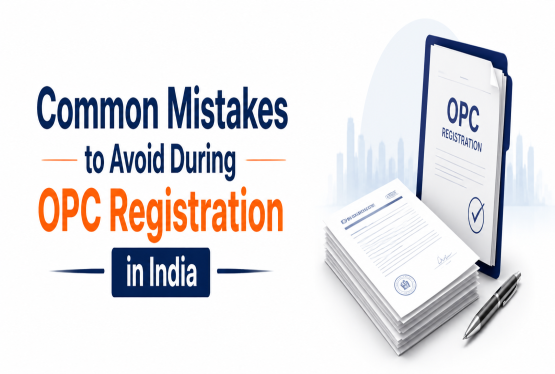
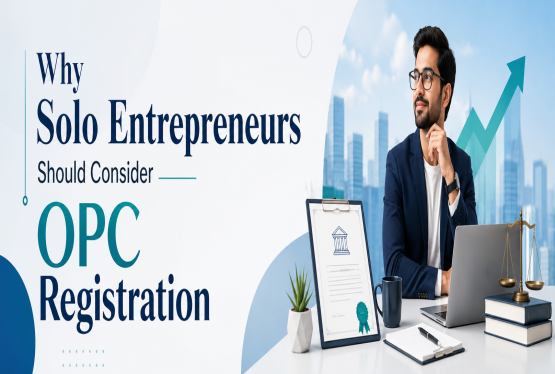
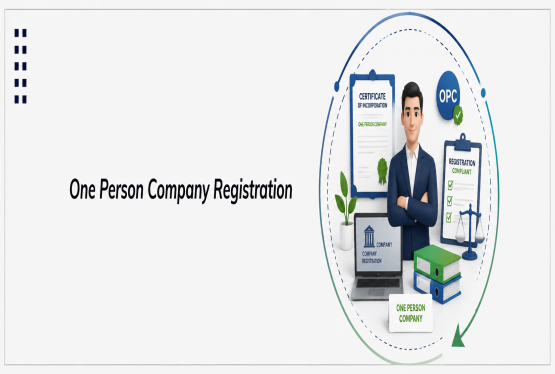
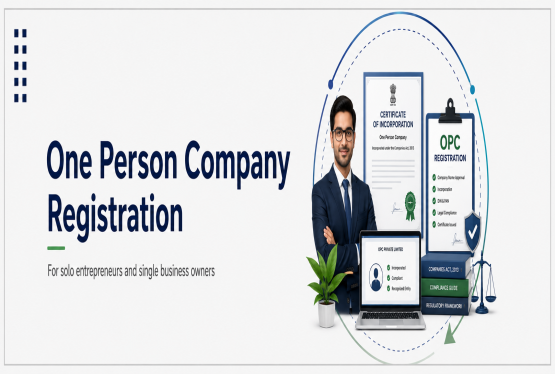
Starting a business alone does not mean you have to run it without a proper legal structure. Many solo founders begin with a strong idea, limited resources, and full control over decision-making. However, before taking payments, signing client contracts, hiring people, opening a current account, or raising funds, it is important to give the business a proper legal identity. This is where OPC Registration becomes useful for solo entrepreneurs.
A One Person Company allows a single founder to operate a business in a corporate format while enjoying limited liability protection and a separate legal identity. It gives the founder the benefit of ownership control along with the recognition of a registered company. For consultants, freelancers, service providers, tech founders, small manufacturers, online sellers, and professional entrepreneurs, OPC can be a practical first step before scaling into a larger private limited company. This article explains the legal steps that solo founders should understand before starting an OPC. It focuses on practical planning, documentation, registration process, post-incorporation compliance, and common mistakes that should be avoided.
Why Solo Founders Should Think Legally Before Starting?
Many founders first focus on business name, logo, website, clients, product design, or marketing. These are important, but legal planning is equally important. Without proper registration, the founder may face issues while opening a bank account, receiving business payments, issuing invoices, protecting the brand name, applying for licenses, or entering into contracts. OPC Registration helps a solo founder separate personal identity from business identity. Once the company is incorporated, the business gets its own legal status.
This means the company can own assets, enter into agreements, raise invoices, open a bank account, and continue its business in its own name. For a founder working alone, this structure builds credibility. Clients, vendors, banks, government departments, and investors usually prefer dealing with a registered business rather than an informal setup. This becomes more important when the founder is planning to work with corporate clients, government tenders, online platforms, export buyers, or regulated industries.
Understanding OPC as a Legal Business Structure
An OPC is a company registered under the Companies Act, 2013. It is designed for a single person who wants to start a company without adding another shareholder only for legal formality. Unlike a proprietorship, an OPC has a separate legal existence from its owner. Unlike a partnership, it does not require two or more partners. The biggest advantage is limited liability. In normal circumstances, the personal assets of the founder are protected from business liabilities. The liability of the member is generally limited to the unpaid amount on shares held by the member. This protection is one of the key reasons why solo founders choose OPC instead of running a business as a sole proprietor.
However, OPC is still a company. It has legal duties, statutory filings, board-level records, accounting requirements, and annual compliance obligations. A founder should not choose OPC only because it looks professional. It should be selected after understanding the responsibilities that come with company registration.
Legal Steps Before OPC Registration
Before filing the incorporation application, a solo founder should complete basic legal preparation. This avoids delays, resubmission, and rejection at the MCA portal.
Decide the Business Activity Clearly
The first step is to identify the main business activity. This is important because the object clause in the Memorandum of Association should correctly reflect what the company will do. A vague or unrelated object clause can create issues later while applying for licenses, opening a bank account, or entering into business agreements.
For example, if the founder wants to provide IT consulting, the object clause should mention software development, IT services, digital solutions, consulting, or related activities. If the founder wants to start an e-commerce brand, the object clause should cover trading, online sale, distribution, and related commercial activities. A clear business activity also helps in selecting the correct NIC code, GST applicability, industry-specific licenses, and future compliance needs.
Choose a Suitable Company Name
The name of the OPC should be unique, meaningful, and legally acceptable. It should not be identical or too similar to an existing company name or registered trademark. It should also not contain prohibited or restricted words without approval.
A good company name should be:
- Easy to read and remember
- Related to the business activity
- Available on the MCA database
- Not conflicting with existing trademarks
- Suitable for long-term brand building
Arrange Digital Signature Certificate
The incorporation forms are filed online. Therefore, the proposed director needs a Digital Signature Certificate. DSC is used to digitally sign incorporation forms and other MCA documents.
The founder should ensure that the name, PAN, Aadhaar, mobile number, and email details are consistent across documents. Mismatch in spelling, address, or identity details may cause verification issues during the process.
Select the Nominee Carefully
One important feature of OPC is nominee appointment. Since the company has only one member, the founder has to nominate another person who can become the member in case of death or incapacity of the original member.
The nominee’s consent is required before incorporation. This is not just a formal requirement. The nominee should understand the responsibility and should be willing to act if such a situation arises. The nominee should be selected carefully. The founder should choose a trusted person who can handle the company’s ownership transition in an emergency. A nominee can be changed later, but it requires filing the prescribed form with the Registrar.
Decide the Registered Office Address
Every OPC must have a registered office address. This is the official address where government notices, legal communication, and statutory documents may be sent. The registered office may be owned or rented. If it is rented, the founder should arrange a rent agreement or NOC from the owner along with utility bill proof. If it is owned, ownership proof and utility bill may be required.
The address proof should be recent and should clearly show the address. Many incorporation applications face resubmission because of incomplete, old, unclear, or mismatched address proof.
Documents Required for OPC Registration
The exact documents may vary depending on the case, but generally the following documents are required for OPC incorporation:
For the Proposed Director and Member
- PAN card
- Aadhaar card
- Passport size photograph
- Mobile number and email ID
- Identity proof
- Address proof
- Digital Signature Certificate
- Director consent and declaration
For the Nominee
- PAN card
- Aadhaar card
- Identity proof
- Address proof
- Nominee consent
- Photograph
For Registered Office
- Electricity bill, water bill, gas bill, or property tax receipt
- Rent agreement, if rented
- No Objection Certificate from owner
- Ownership document, if owned
- Complete address details
Step-by-Step OPC Registration Process
OPC Registration is completed through the MCA portal using the integrated incorporation forms. The process is mostly online, but it requires careful drafting and verification.
Step 1: Name Reservation
The proposed name can be applied through the MCA portal. The founder should keep at least two name options ready. The name should match the business activity and should not violate naming rules. A strong name search reduces the chances of rejection.
Before applying, it is advisable to check:
- MCA company name database
- Trademark availability
- Domain availability
- Similar brand names in the same industry
- Restricted words under company name rules
Step 2: Preparation of Incorporation Documents
After name approval or while proceeding through the integrated incorporation form, the incorporation documents are prepared. These include Memorandum of Association, Articles of Association, declarations, nominee consent, director consent, identity proof, address proof, and registered office documents.
The MOA should clearly define the business object. The AOA should contain internal rules for company management. For an OPC, these documents should be drafted carefully because the company has a single member structure.
Step 3: Filing SPICe+ Form
The incorporation application is filed through SPICe+. It is an integrated web form used for company incorporation and linked services. Details of the proposed company, director, subscriber, registered office, capital structure, and other information are filled in the form.
Linked forms may include eMOA, eAOA, AGILE-PRO-S, INC-9, and other applicable documents. Through the integrated process, the company may also get PAN, TAN, and bank account-related facilities.
Step 4: Payment of Government Fees
After preparing and signing the forms, the application is uploaded and fees are paid. Government fees may depend on authorized capital, stamp duty, state of registered office, and other applicable charges.
The founder should not only consider incorporation cost but also post-registration compliance cost. OPC is affordable compared to larger company structures, but it still requires annual filings, accounting, and professional support.
Step 5: Certificate of Incorporation
If the Registrar is satisfied with the application, the Certificate of Incorporation is issued. The certificate contains the Corporate Identification Number. PAN and TAN are also generated as part of the incorporation process.
Once the certificate is issued, the OPC legally comes into existence. From this stage, the founder can start operating in the company’s name, subject to applicable licenses and compliance requirements.
Important Legal Points Solo Founders Should Not Ignore
OPC Registration is not only about getting a certificate. A founder should understand the legal responsibilities from day one.
Separate Legal Entity
After incorporation, the company is separate from the founder. The company’s income, bank account, contracts, invoices, and expenses should be maintained separately. Personal and business transactions should not be mixed.
Limited Liability Has Limits
Limited liability protection is available, but it does not protect fraudulent conduct, personal guarantees, tax defaults, or illegal activities. If the founder gives a personal guarantee for a loan, personal liability may arise under that guarantee.
Proper Books of Accounts
The OPC must maintain proper books of accounts. Every sale, expense, asset, liability, loan, and bank transaction should be recorded. Clean accounting helps during tax filing, annual filing, audits, and business valuation.
Statutory Registers and Records
Even though OPC has only one member, it must maintain company records. Board meeting records, resolutions, statutory registers, share certificates, and other corporate documents should be properly maintained.
Annual Filing
OPC must file annual returns and financial statements with the Registrar of Companies. Delay in ROC filing can lead to additional fees and penalties. Many founders ignore compliance in the first year and later face heavy additional fees.
GST Registration, If Applicable
GST registration is not automatically required for every OPC. It depends on turnover, nature of business, inter-state supply, e-commerce operations, and other GST provisions. However, if the business falls under mandatory GST registration criteria, the founder should apply for GST registration before starting taxable supplies.
Shops and Establishment Registration
Depending on the state and nature of office or commercial establishment, Shops and Establishment registration may be required. This is especially relevant if the OPC has an office, employees, or commercial place of business.
Tax Planning for OPC
An OPC is taxed as a company. The founder should understand the tax impact before choosing this structure. Proper accounting, invoicing, TDS compliance, GST compliance, and income tax filing should be planned from the beginning.
The founder should also decide how money will be withdrawn from the company. Since the company is a separate legal entity, the founder should not treat company funds as personal money. Payments may be made through salary, director remuneration, reimbursement, dividend, or other legally valid methods, depending on the facts and tax advice. Good tax planning helps avoid disputes, cash flow issues, and compliance defaults.
Brand Protection Before Launch
Many solo founders register the company name and assume the brand is fully protected. This is not correct. Company registration and trademark registration are different. MCA approval gives the right to register the company name, but trademark registration protects the brand name, logo, tagline, or product name in the market.
If the founder plans to build a long-term brand, trademark search and trademark filing should be considered before launch. This is especially important for online businesses, coaching brands, consumer products, SaaS platforms, fashion labels, food brands, consulting firms, and digital service providers.
Common Mistakes Founders Should Avoid
Solo founders often make simple mistakes that create legal issues later. Some common mistakes include:
- Selecting a company name without trademark search
- Using personal bank account for business receipts
- Not maintaining books of accounts from day one
- Ignoring ROC annual filing
- Not filing commencement of business declaration
- Choosing nominee without proper consent
- Using incomplete registered office documents
- Starting regulated business without license
- Mixing personal and company expenses
- Not issuing proper invoices
- Ignoring GST applicability
- Not keeping signed agreements with clients and vendors
OPC vs Proprietorship for Solo Founders
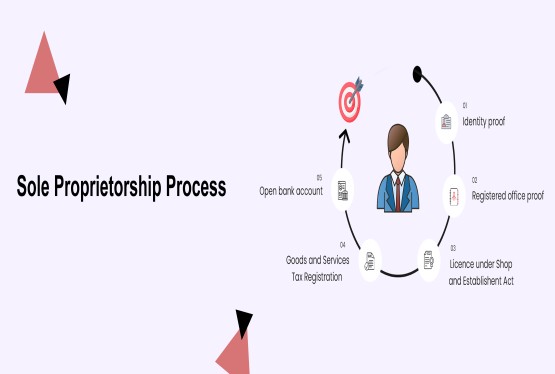
A proprietorship is easier to start, but it does not create a separate legal identity. The owner and the business are treated as the same. This means personal liability risk is higher. OPC is more structured. It gives separate legal identity, limited liability, better credibility, and better corporate recognition. However, it also involves more compliance than a proprietorship.
A founder should choose OPC if the business needs corporate identity, limited liability protection, professional image, client trust, scalability, and proper legal structure. A proprietorship may be suitable for very small, low-risk, local, or informal activities, but it may not be ideal for founders planning long-term growth.
Can OPC Be Converted Later?
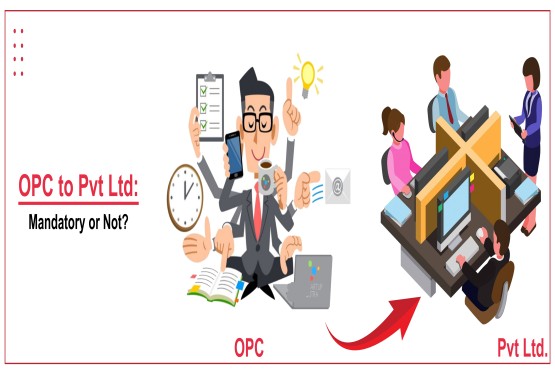
Yes, an OPC can be converted into a private limited company, subject to legal procedure. This is useful when the founder wants to add co-founders, bring investors, issue shares to more members, or expand the ownership structure. Earlier, OPC conversion rules were more restrictive, but now OPC has become more flexible for growing businesses. Still, conversion requires proper documentation, board and member approvals, alteration of MOA and AOA, and filing with the Registrar.
A founder planning future investment should discuss the structure in advance. If immediate fundraising or multiple shareholders are expected, private limited company may be more suitable from the beginning.
Practical Checklist Before Starting OPC
Before applying for OPC Registration, a founder should keep this checklist ready:
- Final business activity
- Proposed company name options
- Trademark search status
- DSC of proposed director
- PAN and Aadhaar details
- Nominee details and consent
- Registered office proof
- MOA object clause
- Capital structure
- Email ID and mobile number
- GST requirement check
- License requirement check
- Basic tax and compliance plan
Conclusion
OPC Registration is a strong legal option for solo founders who want to start a business with proper identity, limited liability, and professional credibility. It allows a single person to build a registered company without adding unnecessary partners or shareholders.
However, OPC should not be treated as a one-time registration task. It requires proper planning, correct documents, annual compliance, accounting discipline, tax planning, and activity-based licenses. A founder who completes these legal steps before starting can avoid future disputes, penalties, and operational delays. For solo entrepreneurs, the right beginning matters. A well-registered OPC gives the business a clean legal foundation and helps the founder focus on growth with more confidence.
FAQ’S
Q1. Can a single person register an OPC?
Ans. Yes, one person can register an OPC as the sole member and director.
Q2. Is nominee required in OPC Registration?
Ans. Yes, nominee consent is mandatory for OPC incorporation.
Q3. Can OPC have employees?
Ans. Yes, an OPC can hire employees after incorporation.
Q4. Is GST mandatory for OPC?
GST is required only if the OPC meets GST applicability rules.
Q5. Can OPC open a current bank account?
Ans. Yes, after incorporation, OPC can open a current account in its own name.
Q6. Can OPC be converted into Private Limited Company?
Ans. Yes, OPC can be converted as per Companies Act rules.
Q7. Is audit mandatory for OPC?
Ans. Yes, OPC needs proper accounting and statutory audit compliance.
Q8. Can OPC raise funding?
Ans. OPC has limitations for investors, so conversion may be needed for equity funding.
Q9. Is trademark registration required for OPC?
Ans. It is not mandatory but recommended for brand protection.
Q10. Is OPC better than proprietorship?
Ans. OPC is better when the founder wants limited liability and corporate identity.


_crop10_thumb.jpg)


_crop10_thumb.jpg)


-Form_crop10_thumb.jpg)

_crop10_thumb.jpg)


_learn_crop10_thumb.jpeg)


_crop10_thumb.jpg)

_crop10_thumb.jpg)


_crop10_thumb.jpg)




_for_Foreign_Directors_learn_crop10_thumb.jpeg)


_Act,_2015_learn_crop10_thumb.jpg)









_learn_crop10_thumb.jpg)





























_crop10_thumb.jpg)

_crop10_thumb.jpg)

_(1)_crop10_thumb.jpg)






_crop10_thumb.png)





_crop10_thumb.jpg)

_crop10_thumb.jpg)






_crop10_thumb.png)
_crop10_thumb.jpg)




_crop10_thumb.png)