
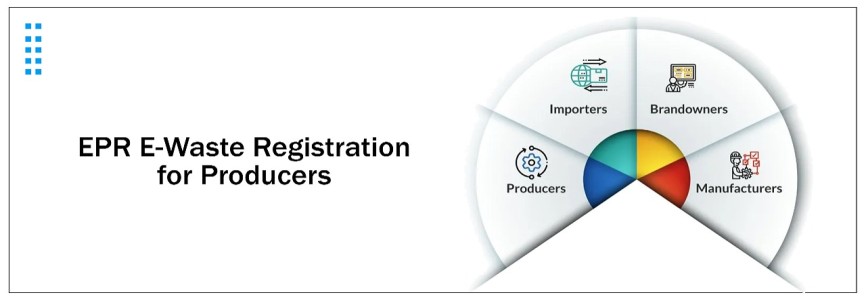



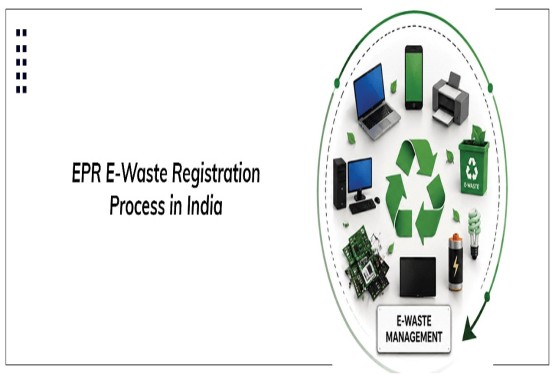
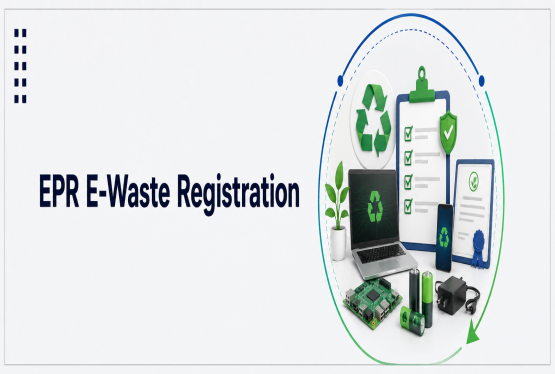
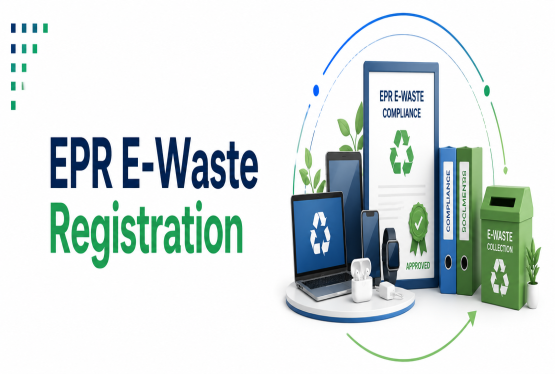
EPR E-Waste Registration is one of the most important environmental compliances for businesses dealing in electrical and electronic equipment in India. EPR means Extended Producer Responsibility, where the producer is made responsible for the proper collection, recycling and disposal of e-waste generated from products placed in the market. In simple words, if a business manufactures, imports, sells or offers electrical and electronic equipment in India, it may be legally required to obtain EPR E-Waste Registration from the Central Pollution Control Board, commonly known as CPCB.
The legal procedure for e-waste management in India is mainly governed by the Environment Protection Act, 1986 and the E-Waste (Management) Rules, 2022. These rules came into force from 1st April 2023 and replaced the earlier E-Waste (Management) Rules, 2016. The 2022 Rules introduced a more structured online EPR system where producers, manufacturers, recyclers and refurbishers are required to register on the centralised CPCB EPR portal. The objective is to ensure that e-waste is not handled by informal or unsafe channels and is instead collected, channelised and recycled through registered entities. The CPCB E-Waste portal itself describes the system as being under the E-Waste (Management) Rules, 2022.
What is E-Waste?
E-waste refers to discarded electrical and electronic equipment, including their components, consumables, parts and spares. It may include computers, laptops, mobile phones, tablets, printers, televisions, refrigerators, washing machines, air conditioners, electronic tools, medical devices, monitoring instruments, lighting equipment and several other notified electrical and electronic products. These products may contain useful materials such as copper, aluminium, gold, silver, plastic and glass, but they may also contain hazardous substances such as lead, mercury, cadmium and chromium.
Improper disposal of e-waste can cause serious environmental and health risks. When electronic waste is dumped in landfills, burned openly or processed through informal recycling methods, toxic substances may enter soil, water and air. This is why the law places responsibility on producers to ensure scientific recycling and environmentally sound disposal of end-of-life products.
Meaning of Producer under E-Waste Rules
For EPR E-Waste Registration, the term “producer” has a specific legal meaning. A producer may include a person or entity that manufactures and sells electrical and electronic equipment under its own brand, sells assembled products under its own brand, sells imported electrical and electronic equipment, or imports used electrical and electronic equipment. The CPCB SOP for producer registration also clarifies that producers of notified electrical and electronic equipment are required to register on the portal and obtain EPR targets through the portal.
This means EPR registration is not limited only to large manufacturers. Importers, brand owners, online sellers and businesses placing covered electrical and electronic equipment in the Indian market may also fall under the producer category. For example, a company importing LED televisions, laptops, mobile accessories, IT equipment or electronic appliances for sale in India may require EPR E-Waste Registration if the products fall under Schedule I of the Rules.
Legal Procedure for Governing EPR E-Waste Registration
The main legal basis for EPR E-Waste Registration is the E-Waste (Management) Rules, 2022, notified under the Environment Protection Act, 1986. The 2024 amendment notification states that the Central Government issued amendments by exercising powers under Sections 6, 8 and 25 of the Environment Protection Act, 1986, read with Rule 5 of the Environment Protection Rules, 1986.
The E-Waste Rules are divided into several chapters covering responsibilities of manufacturers, producers, refurbishers, recyclers, bulk consumers, state governments, storage, solar photovoltaic modules, EPR regime, EPR certificate generation, hazardous substance reduction, authorities, environmental compensation, prosecution, audit and appeal. For producers, the most important provisions are Rule 6, Rule 13, Rule 14, Rule 15, Rule 16, Rule 21, Rule 22, Rule 23 and Rule 24.
Applicability of EPR Registration for Producers
EPR E-Waste Registration is applicable to producers of electrical and electronic equipment listed in Schedule I of the E-Waste (Management) Rules, 2022. Schedule I covers various categories of EEE, including information technology equipment, telecommunication equipment, consumer electricals, consumer electronics, medical devices, laboratory instruments, electrical tools, lighting equipment, monitoring instruments and other notified products.
The CPCB SOP states that producers under the ambit of the E-Waste Rules, 2022 are required to register themselves on the portal. It also clarifies that producers who had already been granted EPR authorisation under the earlier 2016 Rules, whether offline or online, are also required to migrate and register under the new portal-based system.
Therefore, a producer should first check whether its product is covered under Schedule I. If covered, the producer must obtain EPR registration before placing such products in the Indian market. Selling covered electrical and electronic equipment without valid EPR registration may lead to environmental compensation, penalties, prosecution and regulatory action.
Responsibilities of Producers under Rule 6
Rule 6 of the E-Waste (Management) Rules, 2022 specifically deals with responsibilities of producers. Under this rule, every producer of electrical and electronic equipment listed in Schedule I is responsible for registration on the portal, obtaining and implementing EPR targets as per Schedule III and Schedule IV, creating awareness through media, publications, advertisements, posters or other communication methods, and filing annual and quarterly returns on the portal.
This provision makes it clear that EPR is not just a one-time registration. It is an ongoing compliance obligation. Once a producer obtains EPR registration, it must continue to comply with EPR targets, purchase valid EPR certificates from registered recyclers, file returns, maintain proper sales data, create consumer awareness and respond to CPCB queries or audits.
EPR Targets and Producer Responsibility
The main purpose of EPR registration is to assign recycling responsibility to producers based on the quantity of electrical and electronic equipment placed in the market. Rule 13 provides that all producers must fulfil their EPR obligation as per Schedule III and Schedule IV. Producers may take help from third-party organisations such as producer responsibility organisations, collection centres and dealers, but the final EPR responsibility remains entirely on the producer.
This is an important legal point. Even if a producer appoints a consultant, collection partner, recycler or PRO, the producer cannot transfer its statutory responsibility completely. If the EPR target is not fulfilled, the producer remains liable under the Rules.
For newer producers whose number of years of sales operations is less than the average life of their products, Schedule IV provides phased targets. For example, the Rules specify recycling targets of 15% of the sales figure of FY 2021-22 for 2023-24, 20% of the sales figure of FY 2022-23 for 2024-25, and 20% of the sales figure of the financial year two years back from 2025-26 onwards.
Online EPR Certificate Mechanism
Under the 2022 Rules, producers fulfil EPR obligations mainly through purchase of EPR certificates from registered recyclers. Rule 13 states that producers must fulfil EPR through online purchase of EPR certificates from registered recyclers only and submit the same online while filing quarterly returns. The portal cross-checks details provided by the producer and recycler, and if there is any difference, the lower figure is considered for fulfilment of the producer’s EPR obligation.
Rule 14 deals with EPR certificate generation. CPCB generates EPR certificates through the portal in favour of registered recyclers. The quantity eligible for certificate generation is calculated based on the end product and conversion factor. The certificate is valid for two years from the end of the financial year in which it is generated. Each certificate has a unique number and is issued in specified denominations.
For producers, this means EPR compliance should be planned properly. They must purchase genuine EPR certificates only from registered recyclers and ensure that the certificate quantity is sufficient to meet their yearly and quarterly obligations.
Registration Process for Producers
EPR E-Waste Registration is done online through the CPCB EPR portal. The SOP clearly states that physical applications in hard copy are not accepted and all applications for registration have to be made online through the designated portal. The validity of producer registration is five years from the date of issue of the EPR Registration Certificate, and renewal must be applied for 120 days before expiry.
The application is broadly divided into Part A and Part B. Part A contains basic information such as trade name, legal name, mobile number, official email ID, CIN or incorporation certificate, GST, IEC if applicable, company PAN, PAN of authorised person, postal address, authorised person details and list of electrical and electronic equipment along with product codes. Part B relates to EPR targets and obligations, including sales data of electrical and electronic equipment placed in the market in terms of weight.
The producer must provide sales data financial year-wise depending on the average life of the product. For example, if the product has an average life of five years and the application is being filed in FY 2023-24, sales data may be required from FY 2018-19. This makes historical sales data very important for correct target calculation.
Documents Required for EPR E-Waste Registration
- CA certificate certifying the quantity of EEE placed in the market or imported in terms of weight
- RoHS self-declaration
- Enclosure A
- Declaration regarding availability of technical documents
- Awareness plan for e-waste collection and consumer awareness
- Any other document required by CPCB during application scrutiny
Timeline for Approval
As per the SOP, CPCB shall issue registration within 30 working days from the date of receipt of a completed application on the portal. In case of incomplete applications, CPCB may respond with a digital checklist of shortcomings within 25 working days. The applicant can view the shortcomings by logging into the portal. CPCB may grant registration and issue the EPR Registration Certificate along with EPR targets and obligations based on the information and documents submitted.
This timeline depends on the correctness of documents and data. If the sales figures, product categories, declarations, CA certificate or authorised signatory details are incomplete, the application may be delayed. Producers should therefore avoid filing applications with estimated or unsupported data.
RoHS Compliance under Rule 16
Rule 16 deals with reduction in the use of hazardous substances in electrical and electronic equipment. Every producer must ensure that new electrical and electronic equipment and their components do not contain lead, mercury, cadmium, hexavalent chromium, polybrominated biphenyls and polybrominated diphenyl ethers beyond prescribed concentration limits. The limit is 0.1% by weight in homogeneous materials for lead, mercury, hexavalent chromium, PBB and PBDE, and 0.01% by weight for cadmium.
Producers must also provide declaration of conformity in product user documentation. Imports or placement in the market of new electrical and electronic equipment are permitted only if they comply with RoHS provisions. CPCB may conduct random sampling and testing of products placed in the market, and the cost of sampling and testing is to be borne by the producer. If a product does not comply, the producer must take corrective measures and may be required to withdraw or recall the product.
Storage and Handling of E-Waste
Rule 11 allows manufacturers, producers, refurbishers and recyclers to store e-waste for a period not exceeding 180 days. They must maintain records of sale, transfer and storage of e-waste and make such records available for inspection. CPCB may extend the storage period up to 365 days where e-waste needs to be specifically stored for development of a process for recycling or reuse.
This provision is important for producers that run take-back programmes, collection drives or service centres. E-waste should not be stored indefinitely or in unsafe conditions. Proper storage records, handover documents and recycler details should be maintained.
Returns and Ongoing Compliance
After registration, producers must file quarterly and annual returns on the portal. Rule 6 requires producers to file returns on or before the end of the month succeeding the quarter or year to which the return relates.
The 2024 amendment inserted Rule 9A, allowing the Central Government to relax the period within which any return or report is to be filed by a manufacturer, producer, refurbisher or recycler for a further period not exceeding nine months, if required in public interest or for effective implementation of the Rules.
This update is important because it gives the Government flexibility to extend filing timelines in genuine cases. However, producers should not treat this as an automatic extension. Unless a relaxation order is issued, normal return filing timelines should be followed.
Environmental Compensation and Penalties
Rule 22 provides for environmental compensation. CPCB may impose and collect environmental compensation for violation of the Rules, non-fulfilment of EPR obligations, transaction or use of false EPR certificates, or operating as an unregistered producer, manufacturer, refurbisher, recycler or any entity aiding violation. Payment of environmental compensation does not absolve the producer from EPR responsibility. Unfulfilled EPR obligations may be carried forward for up to three years.
The Rules also provide partial refund mechanisms where shortfall is addressed later. If the EPR shortfall is addressed after one year, 85% of environmental compensation may be returned; after two years, 60% may be returned; after three years, 30% may be returned; and after that, no compensation is returned.
Rule 23 originally dealt with prosecution, but the Second Amendment Rules, 2024 substituted it with “Action for contravention,” stating that any person who fails to comply with or contravenes the Rules shall be liable to penalty in accordance with Section 15 of the Environment Protection Act.
Revocation and Appeal
Registration may be revoked if a registered entity furnishes false information, conceals information, submits incorrect returns or reports, or is found involved in irregularity. The SOP states that registration may be revoked by CPCB for up to three years after giving an opportunity of being heard, and environmental compensation may also be levied.
Rule 21 provides an appeal mechanism. Any person aggrieved by an order of suspension, cancellation, refusal of registration or refusal of renewal may file an appeal within 30 days before the Additional Secretary or Joint Secretary of the Ministry of Environment, Forest and Climate Change nominated by the Central Government.
Verification, Audit and Inspection
Rule 24 empowers CPCB, either by itself or through a designated agency, to verify compliance by producers, manufacturers, refurbishers, dismantlers and recyclers through random inspection and periodic audit. If violations are found, action may be taken under Rule 22.
This means producers must maintain proper records even after registration. Important records include sales data, import data, product weight calculation, invoices, EPR certificate purchase records, recycler agreements, quarterly returns, annual returns, RoHS declarations, awareness programme evidence and communication with CPCB.
Recent Legal Updates
The E-Waste (Management) Amendment Rules, 2024 made important changes. It revised the definition of dismantler and inserted Rule 9A for relaxation of timelines for filing returns and reports by up to nine months.
The E-Waste (Management) Second Amendment Rules, 2024 substituted Rule 23 and linked contravention with penalty under Section 15 of the Environment Protection Act.
These updates show that the Government is moving towards a stricter but more system-based compliance model. Producers must now treat EPR not as a formality but as a continuing environmental responsibility linked with registration, return filing, certificate purchase, RoHS compliance and audit readiness.
Conclusion
EPR E-Waste Registration for Producers is mandatory for businesses placing notified electrical and electronic equipment in the Indian market. The compliance is governed by the E-Waste (Management) Rules, 2022, along with amendments issued in 2024. Producers must register on the CPCB portal, obtain EPR targets, purchase EPR certificates from registered recyclers, file returns, comply with RoHS norms, maintain records and create awareness among consumers.
The legal responsibility remains with the producer even if third-party agencies, recyclers or consultants are engaged. Non-compliance can result in environmental compensation, revocation of registration, penalties, prosecution and audit action. Therefore, every manufacturer, importer, brand owner or seller dealing in covered electronic products should obtain EPR E-Waste Registration on time and maintain strong ongoing compliance.
For professional support in EPR E-Waste Registration for Producers, documentation, CPCB portal filing, EPR target calculation and compliance management, businesses may contact Compliance Calendar LLP.
Frequently Asked Questions (FAQs)
1. What is EPR E-Waste Registration?
EPR E-Waste Registration is an approval required from CPCB for producers of notified electrical and electronic equipment. It makes the producer responsible for collection, recycling and proper disposal of e-waste generated from their products after end use.
2. Who needs EPR E-Waste Registration?
Manufacturers, importers, brand owners, assemblers and sellers of covered electrical and electronic equipment may need EPR E-Waste Registration. If the business places notified electronic products in the Indian market, it should check applicability under the E-Waste (Management) Rules, 2022.
3. Is EPR E-Waste Registration mandatory for importers?
Yes, importers of covered electrical and electronic equipment are treated as producers under the E-Waste Rules. Therefore, they must obtain EPR E-Waste Registration before importing or selling such products in India.
4. Which authority grants EPR E-Waste Registration?
EPR E-Waste Registration is granted by the Central Pollution Control Board (CPCB) through its online EPR E-Waste portal. The application, scrutiny, registration and return filing process is managed digitally.
5. What is the validity of EPR E-Waste Registration?
Generally, EPR E-Waste Registration for producers is valid for five years from the date of issue. Renewal should be applied before expiry as per CPCB requirements, preferably well in advance to avoid compliance issues.
6. What documents are required for EPR E-Waste Registration?
Common documents include Certificate of Incorporation, GST certificate, PAN, IEC if applicable, authorised person details, product details, sales or import data, CA certificate, RoHS declaration, awareness plan and other declarations required by CPCB.
7. What are EPR targets?
EPR targets are the recycling obligations assigned to producers based on the quantity of electrical and electronic equipment placed in the market. Producers must fulfil these targets by purchasing valid EPR certificates from registered recyclers.
8. Can a producer fulfil EPR through any recycler?
No. A producer should fulfil EPR obligations only through CPCB-registered recyclers. EPR certificates purchased from unregistered or unauthorised sources may not be accepted and may lead to compliance risk.
9. Is filing returns mandatory after registration?
Yes. After obtaining EPR E-Waste Registration, producers must file quarterly and annual returns on the CPCB portal. Return filing helps CPCB track sales data, EPR certificates, recycling obligations and compliance status.
10. What happens if a producer does not obtain EPR Registration?
If a producer sells, imports or places covered electronic products in the market without EPR registration, CPCB may impose environmental compensation, take regulatory action, suspend business permissions, or initiate proceedings under environmental law.


_crop10_thumb.jpg)


_crop10_thumb.jpg)


-Form_crop10_thumb.jpg)

_crop10_thumb.jpg)


_learn_crop10_thumb.jpeg)


_crop10_thumb.jpg)

_crop10_thumb.jpg)


_crop10_thumb.jpg)




_for_Foreign_Directors_learn_crop10_thumb.jpeg)


_Act,_2015_learn_crop10_thumb.jpg)










_learn_crop10_thumb.jpg)




























_crop10_thumb.jpg)

_crop10_thumb.jpg)

_(1)_crop10_thumb.jpg)







_crop10_thumb.png)






_crop10_thumb.jpg)

_crop10_thumb.jpg)






_crop10_thumb.png)

_crop10_thumb.jpg)




_crop10_thumb.png)







_crop10_thumb.jpg)
