
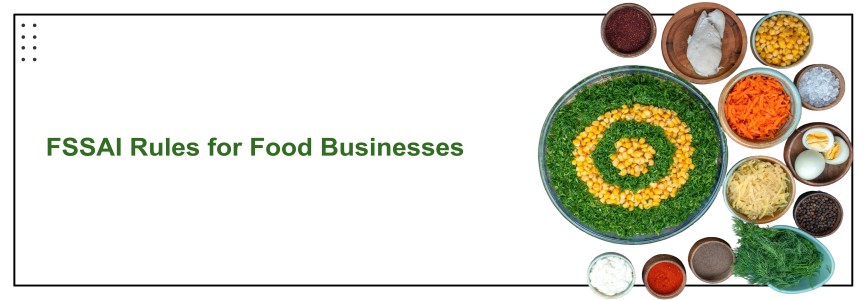



Food safety law in India operates as a continuous and preventive legal framework that places public health above business convenience. It regulates every stage of the food supply chain, including manufacturing, processing, storage, transportation, sale, and service of food. Compliance is not limited to obtaining licences or facing inspections; food businesses are legally required to follow hygiene standards, safety practices, and quality controls on an ongoing basis. The law makes food business operators directly responsible for ensuring that food is safe, hygienic, and suitable for consumption at all times.
The Food Safety and Standards Authority of India (FSSAI) is the central body entrusted with enforcing this framework. It prescribes food standards, grants registrations and licences, and authorises inspections and enforcement actions. Through uniform regulations and oversight, FSSAI ensures consistency in food safety across the country. For businesses, adherence to food safety law is both a legal obligation and a practical necessity, as non-compliance can lead to penalties, suspension of operations, and reputational harm.
Legal Objective of Food Safety Regulation
The primary objective of food safety law is to ensure that food available to consumers is safe, wholesome, and correctly represented. Unlike commercial laws that focus on business facilitation, food safety law is preventive in nature. It seeks to eliminate risks before they cause harm rather than addressing issues only after damage has occurred. This preventive approach explains why the law imposes strict obligations on food businesses, even if no actual harm has yet taken place.
Food safety regulation also aims to create uniform standards across the country. Whether a food product is manufactured in a small town or a metropolitan city, the same basic safety and quality standards apply. This uniformity protects consumers and promotes fair competition among food businesses.
Role of FSSAI in Regulating Food Businesses
FSSAI functions as the central authority responsible for setting food standards and overseeing compliance. Its role is regulatory rather than commercial. It frames rules, prescribes standards, issues licences and registrations, and empowers enforcement authorities to ensure compliance.
The authority also acts as a bridge between scientific research and legal enforcement. Food standards are developed based on scientific assessment of risks related to ingredients, additives, contaminants, and processing methods. Once these standards are notified, they become legally binding on food businesses.
Who Is Regulated Under Food Safety Law
Food safety law adopts a wide definition of food business operations. Any person or entity involved in the manufacture, processing, packaging, storage, distribution, transport, sale, or service of food is brought within the regulatory framework. This includes traditional manufacturers, restaurants, cloud kitchens, catering units, bakeries, food transporters, warehouses, wholesalers, retailers, and online food sellers.
The law focuses on the activity rather than the size or profit motive of the business. Even charitable organisations, educational institutions, or religious bodies are regulated if they handle food in an organised manner. This ensures that food safety standards apply uniformly wherever food is handled.
Registration and Licensing as Regulatory Control
One of the most visible regulatory tools under food safety law is the requirement of registration or licensing. Registration and licensing are not mere permissions but legal instruments used to classify food businesses based on risk, scale, and complexity.
Small food operators are brought under basic registration, while larger or higher-risk businesses are required to obtain licences. The classification determines the level of regulatory oversight, documentation, and inspection frequency. Operating without the appropriate registration or licence is treated as a direct violation of law, regardless of whether the food is actually unsafe.
Conditions of Operation and Legal Obligations
Every registration or licence is issued with specific conditions that must be followed throughout the business’s operations. These conditions relate to hygiene, cleanliness, sanitation, water quality, pest control, waste management, food storage, and maintenance of equipment.
Food safety law treats these conditions as enforceable obligations. Non-compliance with licence conditions can attract penalties even if no consumer complaint has been received. This reflects the preventive nature of the law, where risk control is prioritised over reactive enforcement.
Food Safety Management Systems and Preventive Control
Food businesses are legally expected to identify potential food safety risks and implement preventive controls suitable to their operations. This expectation applies across all categories of food businesses, though the complexity of systems may vary.
Authorities assessing compliance often look beyond surface cleanliness and examine whether the business has systems in place to prevent contamination, spoilage, or misrepresentation. Absence of documented or implemented safety practices can weaken a business’s legal position during inspections or enforcement proceedings.
Regulation of Food Standards and Composition
Food safety law prescribes detailed standards governing the composition, quality, and safety of food products. These standards regulate permitted ingredients, additives, contaminants, and processing methods.
Food businesses must ensure that their products strictly conform to these standards. Selling food that does not meet prescribed specifications is considered a legal offence, irrespective of intent. The law places the burden of compliance squarely on the food business operator.
Labelling, Disclosure, and Consumer Protection
Labelling requirements form a critical part of food safety regulation. The law mandates that packaged food must carry accurate and complete information to enable consumers to make informed choices. This includes ingredient lists, nutritional information, allergen disclosures, and business identification details.
Misleading labels, false claims, or incomplete disclosures are treated as serious violations. The legal consequences may include penalties, product seizure, recall, or suspension of permission to operate. For food service establishments, display obligations also apply, reinforcing transparency at the point of sale.
Inspections, Sampling, and Enforcement Powers
Food safety law grants enforcement authorities extensive powers to ensure compliance. Food Safety Officers are authorised to inspect premises, examine records, and collect food samples for laboratory testing. These powers are preventive as well as corrective.
If violations are detected, authorities may issue improvement notices directing the business to rectify deficiencies within a specified time. Serious or repeated violations can result in penalties, suspension or cancellation of registration or licence, and even criminal proceedings in extreme cases.
Penalties and Legal Consequences of Non-Compliance
The penalty structure under food safety law is designed to be proportionate to the severity of the violation. Minor procedural lapses may attract monetary penalties, while serious offences involving unsafe or adulterated food can lead to heavy fines and imprisonment.
Operating without registration, continuing business after licence expiry, or ignoring improvement directions are treated as aggravated violations. These consequences underline the importance of ongoing compliance rather than one-time approval.
Renewal, Modification, and Continuous Compliance
Food safety regulation recognises that businesses evolve over time. Any significant change in operations such as change in location, expansion of capacity, addition of new food categories, or change in ownership must be formally reported and approved through modification procedures.
Similarly, registrations and licences must be renewed within prescribed timelines. An expired licence is legally equivalent to operating without permission, exposing the business to enforcement action.
Emerging Regulatory Focus in Food Safety
Recent regulatory trends indicate increased attention on modern food business models such as cloud kitchens, central kitchens, online food delivery systems, and large storage facilities. Authorities are focusing more on traceability, hygiene consistency, and supply chain transparency.
This shift reflects a move toward data-driven and preventive regulation, where compliance is monitored continuously rather than only during inspections.
Conclusion
Food safety law regulates food businesses in India through a complete and preventive legal framework. FSSAI plays a central role in setting standards, enforcing compliance, and ensuring that food businesses operate responsibly. Regulation extends far beyond obtaining a registration or licence; it governs daily operations, hygiene practices, product quality, labelling accuracy, and consumer protection.
Food businesses that understand and respect this legal framework are better equipped to manage risk, avoid penalties, and build consumer trust. Treating food safety compliance as an ongoing legal responsibility rather than a one-time requirement is essential for sustainable and lawful operation in India’s food sector.
Frequently Asked Questions (FAQs)
Q1. Is FSSAI registration mandatory for every food-related activity?
Ans. Yes. Any organised activity involving the manufacture, storage, transport, distribution, sale, or service of food requires FSSAI registration or licence. The law focuses on food handling, not on business size or profit motive.
Q2. What happens if a food business operates without FSSAI registration?
Ans. Operating without FSSAI registration or licence is a direct legal violation. Authorities may impose penalties, issue closure directions, seize food products, or initiate legal proceedings depending on the severity of non-compliance.
Q3. Is FSSAI compliance a one-time requirement?
Ans. No. FSSAI compliance is continuous. Obtaining registration or licence is only the starting point. Food businesses must follow hygiene standards, licence conditions, labelling rules, and renewal timelines throughout their operations.
Q4. Who is legally responsible for food safety in a business?
Ans. The food business operator is legally responsible for ensuring food safety. Compliance responsibility cannot be transferred to employees, vendors, or third parties, even if certain activities are outsourced.
Q5. Can a business expand operations using the same FSSAI registration?
Ans. Not always. If expansion involves increased capacity, new food categories, additional premises, or interstate operations, the business must apply for modification or upgrade its registration or licence. Operating beyond approved scope is treated as non-compliance.
Q6. Are home-based food businesses required to register under FSSAI?
Ans. Yes. Home-based food businesses are covered under food safety law if they prepare or sell food in an organised manner. Such businesses typically fall under basic registration but must still comply with hygiene and safety norms.
Q7. Do charitable trusts and non-profit organisations need FSSAI registration?
Ans. Yes. If a trust, society, or non-profit organisation prepares or distributes food regularly such as through canteens, kitchens, or food distribution programs it is required to obtain FSSAI registration or licence.
Q8. What role do inspections play in food safety regulation?
Ans. Inspections are a core enforcement mechanism. Food Safety Officers may inspect premises, review records, and collect food samples. Compliance is assessed based on actual practices, not just documentation.
Q9. Is incorrect food labelling treated as a serious offence?
Ans. Yes. Incorrect, incomplete, or misleading food labelling is considered a serious violation. It can result in penalties, seizure of products, recall orders, or suspension of licence, even if the food itself is safe.
Q10. What is a Food Safety Management System and why is it important?
Ans. A Food Safety Management System involves identifying food safety risks and implementing preventive controls. While the complexity varies by business size, having basic safety procedures is a legal expectation and strengthens compliance during inspections.


_crop10_thumb.jpg)


_crop10_thumb.jpg)


-Form_crop10_thumb.jpg)

_crop10_thumb.jpg)


_learn_crop10_thumb.jpeg)


_crop10_thumb.jpg)

_crop10_thumb.jpg)


_crop10_thumb.jpg)




_for_Foreign_Directors_learn_crop10_thumb.jpeg)


_Act,_2015_learn_crop10_thumb.jpg)









_learn_crop10_thumb.jpg)





















_crop10_thumb.jpg)

_crop10_thumb.jpg)
_(1)_crop10_thumb.jpg)




_crop10_thumb.png)



_crop10_thumb.jpg)

_crop10_thumb.jpg)




_crop10_thumb.png)
_crop10_thumb.jpg)







_crop10_thumb.png)






_crop10_thumb.jpg)
