



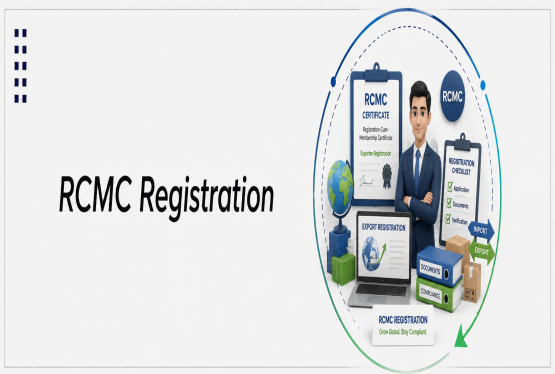
RCMC Registration, formally known as the Registration-cum-Membership Certificate, is a key compliance requirement under India’s foreign trade ecosystem. It serves as official proof that an exporter (and in limited situations, an importer) is registered with a recognised Export Promotion Council (EPC), Commodity Board, or Development Authority authorised by the Government of India. RCMC acts as a bridge between businesses engaged in international trade and the policy framework that governs exports and imports from India.
For businesses involved in cross-border trade, RCMC is far more than a procedural certificate. It is a gateway to export incentives, policy benefits, government support schemes, and industry-level representation. Any exporter aiming for long-term growth, regulatory clarity, and access to government-backed advantages must understand the importance and functioning of RCMC registration in detail.
Meaning of RCMC
RCMC, or Registration-cum-Membership Certificate, signifies that an exporter is formally recognised by the Government of India as belonging to a specific export sector. This recognition is not symbolic; it allows regulatory authorities and export promotion bodies to clearly identify the exporter’s product category, nature of trade activity, and sectoral alignment. By doing so, the government can distinguish between different types of exporters and apply sector-specific rules, quality standards, and policy benefits in a precise and organised manner.
From a practical perspective, RCMC functions as official proof of membership with a recognised Export Promotion Council or Commodity Board. This proof is essential for implementing export policies, facilitating trade-related approvals, and distributing incentives or concessions. Without RCMC, exporters remain outside the formal export promotion framework, limiting their ability to access structured support and policy-driven advantages.
Purpose of RCMC
The primary purpose of RCMC is to organise exporters on a sector-wise basis and bring them under a unified trade promotion and regulatory structure. This organisation enables the government to design targeted export incentives, monitor export trends and performance more effectively, and ensure compliance with domestic and international trade obligations. It also helps maintain transparency and accountability in the export ecosystem.
For exporters, RCMC serves as a gateway to structured growth and institutional support. It provides access to export incentives, trade promotion programs, market intelligence, and government-backed platforms such as trade fairs and buyer-seller meets. In essence, RCMC transforms an exporter from an independent trader into a recognised participant in India’s global trade framework, supporting long-term growth and regulatory confidence.
Legal structure Governing RCMC Registration
RCMC registration operates under India’s Foreign Trade Policy, which regulates export and import activities in the country. This structure legally recognises exporters by linking them to authorised Export Promotion Councils or Commodity Boards.
The policy defines both the benefits available to exporters, such as incentives and promotional support, and their obligations, including compliance with quality standards and reporting requirements. By doing so, the framework ensures transparency, accountability, and proper use of export benefits, while aligning export activities with national trade objectives.
Role of the Regulating Authority
The Director General of Foreign Trade (DGFT) is the central regulatory authority responsible for implementing and administering India’s Foreign Trade Policy. DGFT plays a supervisory role by authorising Export Promotion Councils, Commodity Boards, and Development Authorities to issue RCMC certificates to eligible exporters. This delegation ensures that exporters are registered with sector-specific bodies that understand the regulatory, quality, and market requirements of their respective industries.
Beyond authorisation, DGFT monitors compliance by RCMC holders. It ensures that exporters follow policy conditions, adhere to sector-specific norms, and meet reporting and documentation requirements. Through this oversight, DGFT maintains discipline, transparency, and accountability within the export ecosystem, helping prevent irregularities and ensuring orderly trade practices.
Policy Objective
The legal objective behind RCMC registration is to create traceability and accountability in export activities. By linking exporters to recognised councils or boards, the government can accurately track export performance, verify eligibility for incentives, and prevent misuse of policy benefits. This structured linkage also helps ensure that export incentives reach genuine and compliant exporters.
Additionally, RCMC supports sector-specific export development by enabling focused policy formulation. Export Promotion Councils act as intermediaries between industry and policymakers, sharing ground-level insights and challenges. This creates a feedback loop where government policies are shaped by industry realities, leading to more effective export promotion and sustainable growth.
Why RCMC Registration is Important
RCMC registration is important because most export benefits, incentives, and promotional schemes are routed only through recognised exporters registered with councils or boards.
Importance for Export Incentives
RCMC is mandatory for claiming benefits under export incentive and remission schemes. Without RCMC, exporters are generally excluded from policy-based financial advantages, regardless of their export volume. This ensures that incentives reach only compliant and recognised exporters.
Importance for Trade Promotion
RCMC allows exporters to participate in government-supported trade fairs, buyer-seller meets, exhibitions, and international marketing programs. These platforms help exporters expand globally and connect with overseas buyers.
Who Needs RCMC Registration?
RCMC registration is mainly required for businesses involved in export activities, as it forms a key part of India’s export promotion and compliance framework. It helps the government identify and support genuine exporters while ensuring that trade benefits are extended only to compliant entities. Although exporters are the primary focus, importers may also require RCMC in specific regulatory situations, depending on the nature of goods and applicable trade controls.
Exporters Requiring RCMC
Any exporter who plans to claim benefits or incentives under the Foreign Trade Policy must obtain RCMC. It is also necessary for exporters who wish to participate in government-supported trade fairs, exhibitions, buyer–seller meets, and export promotion programs. For businesses aiming for long-term presence in global markets, RCMC provides credibility, structured support, and access to policy-driven advantages. Even new exporters, who may not yet have export turnover, benefit from early RCMC registration as it prepares them for future incentives and compliance requirements.
Importers in Special Cases
While RCMC is not generally mandatory for all importers, it may be required for those dealing in restricted, sensitive, or regulated goods. In such cases, RCMC helps establish the importer’s sectoral affiliation with a recognised council or authority and ensures compliance with specific regulatory conditions. This requirement supports better monitoring of sensitive imports and ensures adherence to trade controls and policy objectives.
Relationship Between IEC and RCMC
IEC (Import Export Code) and RCMC (Registration-cum-Membership Certificate) function as interconnected pillars of India’s foreign trade compliance framework. Together, they ensure that businesses engaged in international trade are properly identified, regulated, and monitored. While IEC establishes the legal identity of an importer or exporter, RCMC links that identity to a specific export sector and promotional authority.
IEC as a Prerequisite
Import Export Code is a mandatory requirement before applying for RCMC registration. IEC serves as the unique identification number for every importer and exporter registered with the DGFT. It enables the government to track cross-border trade activities, monitor compliance, and maintain a centralised trade database. Since RCMC is issued based on IEC details, an exporter cannot obtain RCMC without first securing a valid IEC.
Compliance Significance of the IEC–RCMC Linkage
The linkage between IEC and RCMC allows regulatory authorities to accurately track export activity, compliance history, and eligibility for incentives. It ensures that export benefits are granted only to verified and recognised entities. This integrated system improves transparency, prevents misuse of policy benefits, and strengthens accountability across the export ecosystem.
Authorities Issuing RCMC Certificates
RCMC certificates are issued by different authorities based on the nature of goods or services exported. This sector-based approach ensures that exporters are registered with bodies that have specialised knowledge of their industry, applicable regulations, quality standards, and global market requirements. The issuing authority plays an important role not only in granting RCMC but also in guiding exporters and representing their interests.
Export Promotion Councils (EPCs)
Export Promotion Councils issue RCMC for broad industry sectors such as engineering goods, pharmaceuticals, textiles, handicrafts, leather, chemicals, and services. These councils function as industry representatives and work closely with the government to promote exports. They support exporters by organising trade fairs, buyer–seller meets, and international exhibitions, while also providing updates on policy changes, market trends, and compliance requirements.
Commodity Boards
Commodity Boards issue RCMC for specific commodities like tea, coffee, spices, rubber, tobacco, and similar products. These boards focus on maintaining quality standards, regulating production and exports, and promoting Indian commodities in global markets. Registration with a Commodity Board ensures that exporters comply with product-specific norms and benefit from targeted promotion initiatives.
DGFT Regional Offices
When no specific Export Promotion Council or Commodity Board exists for a particular product or service, exporters can obtain RCMC directly from the regional offices of the Director General of Foreign Trade. This ensures that all exporters, regardless of sector, can be formally registered within the foreign trade framework and remain eligible for policy benefits and regulatory support.
Eligibility for RCMC Registration
The eligibility for RCMC registration are designed to be inclusive and forward-looking. Instead of focusing on export turnover or past export performance, the emphasis is placed on the legal existence of the business and its genuine intent to engage in international trade. This approach allows both new and existing exporters to become part of India’s formal export promotion framework.
Basic Eligibility
To apply for RCMC, the applicant must be a legally recognised Indian business entity. This includes proprietorships, partnership firms, LLPs, private limited companies, public limited companies, and other recognised organisations. A valid Import Export Code (IEC) is mandatory, as it serves as the primary identification number for the exporter within the DGFT system. Without IEC, RCMC registration cannot be initiated.
Product or Service Alignment
Exporters must accurately classify their products or services and apply to the Export Promotion Council, Commodity Board, or authority that corresponds to their export activity. Correct alignment is essential to ensure eligibility for sector-specific incentives, benefits, and promotional support. Applying to the wrong authority can lead to rejection of benefits, delays in approvals, or future compliance issues, making proper classification a critical step in the RCMC registration process.
Documents Required for RCMC Registration
The documentation required for RCMC registration plays an important role in establishing the legal identity, financial credibility, and sectoral classification of the exporter. These documents help the issuing authority verify that the applicant is a genuine business entity, holds a valid trade identity, and is correctly aligned with the relevant export sector. Proper and accurate documentation also ensures smooth processing and reduces the chances of delays or rejections.
Core Documents
Core documents are essential to confirm the legal existence and identity of the applicant. These typically include the Import Export Code (IEC) certificate, which serves as the primary trade identification number, the PAN card of the entity, incorporation or registration documents of the business, and address proof of the registered office or principal place of business. Together, these documents establish that the applicant is legally recognised and authorised to engage in export activities.
Supporting Documents
Supporting documents help verify the financial and operational authenticity of the exporter. These usually include a bank certificate or cancelled cheque to confirm banking details and product or service details to ensure correct sectoral classification. Such documents assist the issuing authority in assessing the exporter’s trade profile and confirming eligibility for sector-specific benefits and compliance requirements.
RCMC Registration Process
The RCMC registration process is designed to be transparent, digital, and well-structured, making it easier for exporters to complete compliance without unnecessary procedural complexity. The online system ensures uniformity, traceability, and faster processing while reducing manual errors. Each step of the process focuses on accurate verification of the exporter’s identity, sectoral alignment, and eligibility.
Application Stage
At the application stage, the exporter logs into the DGFT portal using their Import Export Code (IEC) credentials. After logging in, the exporter selects the appropriate Export Promotion Council, Commodity Board, or authority based on the nature of goods or services exported. The required documents are uploaded in the prescribed format, and the applicable membership or registration fee is paid online. Accurate selection of the council and proper document submission is important to avoid delays or rejections.
Verification and Issuance
Once the application is submitted, the issuing authority verifies the documents and details provided by the exporter. If any clarification or additional information is required, the authority may seek it during this stage. After successful verification, the RCMC certificate is issued electronically. The digital issuance ensures quick access, easy record-keeping, and seamless integration with other trade compliance processes.
Validity and Renewal of RCMC
RCMC is not a permanent registration and is issued for a limited period. To continue availing export-related benefits and remain compliant under the Foreign Trade Policy, exporters must keep track of the validity of their RCMC and ensure timely renewal. Ignoring validity timelines can lead to interruptions in incentives and regulatory difficulties.
Validity Period
An RCMC certificate is typically valid for up to five years, generally aligned with the duration of the prevailing Foreign Trade Policy or the rules prescribed by the issuing Export Promotion Council or Commodity Board. During this validity period, exporters are recognised as active members of the relevant export body and are eligible to participate in export promotion activities and claim applicable benefits.
Renewal Requirement
RCMC must be renewed before its expiry to avoid any break in compliance. Failure to renew on time may result in denial of export incentives, rejection of scheme applications, and delays in regulatory approvals. Timely renewal ensures uninterrupted access to policy benefits and maintains the exporter’s standing within the formal export promotion.
Benefits of RCMC Registration
RCMC registration offers a combination of compliance-related benefits and long-term strategic advantages for exporters. It formally integrates businesses into India’s export promotion structure, enabling them to operate with regulatory clarity while also supporting growth, visibility, and competitiveness in global markets.
Financial and Policy Benefits
One of the key benefits of RCMC registration is eligibility to claim export incentives and policy-driven benefits under the Foreign Trade Policy. Exporters with a valid RCMC can access duty remission schemes, concessions, and other government support measures designed to reduce costs and encourage exports. Without RCMC, exporters are generally excluded from these financial benefits, even if they meet other scheme conditions.
Business Growth Benefits
RCMC also supports long-term business growth by enhancing an exporter’s credibility with overseas buyers, banks, and regulatory authorities. Registered exporters gain access to market intelligence, sector-specific updates, and trade promotion programs organised by Export Promotion Councils. Additionally, RCMC enables representation of exporter interests at policy forums, ensuring that industry concerns are considered in trade-related decision-making.
Consequences of Not Having RCMC
Not having a valid RCMC can significantly limit an exporter’s ability to operate effectively within India’s foreign trade framework. While exports may still be technically possible, the absence of RCMC restricts access to the structured support, incentives, and promotional mechanisms provided by the government, placing the exporter at a clear disadvantage.
Compliance Impact
Exporters without RCMC are generally not eligible to claim export incentives, duty remission benefits, or policy-linked concessions under the Foreign Trade Policy. Applications for government schemes, subsidies, or trade facilitation programs are often rejected if RCMC is not in place. This can lead to missed financial benefits and compliance gaps during audits or regulatory checks.
Business Impact
From a business perspective, lack of RCMC can restrict growth opportunities and reduce global competitiveness. Exporters may miss out on trade fairs, buyer–seller meets, and market intelligence programs organised by Export Promotion Councils. Over time, this limits market expansion, weakens credibility with international buyers, and reduces the exporter’s ability to compete effectively in global markets.
Best Practices for RCMC Compliance
RCMC compliance is not a one-time activity but a process that requires continuous monitoring and proper management. Exporters who actively maintain their RCMC in line with regulatory requirements are better positioned to access benefits smoothly and avoid unnecessary compliance issues. Adopting best practices helps ensure uninterrupted eligibility under the Foreign Trade Policy.
Correct Authority Selection
Selecting the appropriate Export Promotion Council, Commodity Board, or authority at the time of RCMC registration is important. The issuing authority should align with the exporter’s primary product or service category. Choosing the wrong authority can lead to disputes, denial of incentives, or complications during policy audits. Proper classification ensures smooth access to sector-specific benefits and regulatory support.
Ongoing Compliance
Exporters should regularly monitor the validity of their RCMC, ensure timely renewal before expiry, and promptly update any changes in business details, product categories, or contact information. Maintaining accurate and up-to-date records helps avoid compliance disruptions, benefit rejections, and regulatory scrutiny, ensuring long-term continuity in export operations.
Conclusion
RCMC Registration serves as a foundational element of India’s export promotion and regulatory system by formally recognising exporters within a structured framework. It connects businesses with authorised Export Promotion Councils or Commodity Boards, allowing them to access incentives, policy support, and trade facilitation measures. Through this structured linkage, RCMC ensures regulatory discipline, sector-wise compliance, and transparency in export activities, helping align individual exporters with national and international trade objectives.
For importers and exporters aiming to build sustainable global operations, RCMC is far more than a statutory requirement. It enhances business credibility, supports scalability, and enables access to institutional guidance and market opportunities. By combining compliance with strategic advantages, RCMC functions as a vital trade compliance tool that supports long-term growth, reliability, and competitiveness in international markets.
Frequently Asked Questions (FAQs)
Q1. What does RCMC stand for and what is its full form?
Ans. RCMC stands for Registration-cum-Membership Certificate. It is a certificate issued to exporters by government-recognised Export Promotion Councils, Commodity Boards, or Development Authorities. The certificate confirms that the exporter is officially registered with a specific export body relevant to the goods or services they export and is eligible to participate in the government’s export promotion framework.
Q2. Is RCMC registration mandatory for all exporters?
Ans. RCMC registration is mandatory for exporters who wish to claim benefits, incentives, or concessions under India’s Foreign Trade Policy. While exports may technically be carried out without RCMC, exporters without a valid RCMC are generally not eligible for export incentives, duty remission schemes, or government-supported trade promotion programs. Therefore, for practical and financial reasons, RCMC is essential for serious exporters.
Q3. Who issues the RCMC certificate in India?
Ans. RCMC certificates are issued by Export Promotion Councils, Commodity Boards, or Development Authorities authorised by the Director General of Foreign Trade. The issuing authority depends on the nature of the goods or services exported. If no specific council exists for a product, RCMC can be obtained from the DGFT regional office.
Q4. Can a new exporter apply for RCMC without export turnover?
Ans. Yes, RCMC can be obtained even by new exporters with zero export turnover. There is no minimum export requirement for applying for RCMC. The registration is forward-looking and allows new exporters to become eligible for future benefits and trade promotion activities as soon as they begin exporting.
Q5. Is Import Export Code (IEC) compulsory for RCMC registration?
Ans. Yes, a valid Import Export Code (IEC) is mandatory before applying for RCMC. IEC acts as the primary identification number for importers and exporters in India. RCMC cannot be issued unless the applicant already holds an IEC, as both registrations are interlinked under the foreign trade compliance framework.
Q6. Can importers also require RCMC registration?
Ans. In general, RCMC is required for exporters. However, importers may also need RCMC in specific cases, such as when dealing with restricted or regulated commodities or when participating in sector-specific trade programs where council membership is mandated. The requirement depends on the nature of goods and applicable trade regulations.
Q7. How do I choose the correct Export Promotion Council for RCMC?
Ans. The correct council should be selected based on the primary product or service being exported. Each Export Promotion Council or Commodity Board covers specific sectors or commodities. Selecting the wrong council can lead to rejection of benefits or future compliance issues, so exporters must carefully match their export activity with the appropriate issuing authority.
Q8. What documents are required for RCMC registration?
Ans. Common documents required include the IEC certificate, PAN card of the entity, business incorporation or registration proof, address proof of the business premises, bank certificate or cancelled cheque, and details of the products or services intended for export. Some councils may also request additional declarations or export performance details depending on sector requirements.
Q9. What is the validity period of an RCMC certificate?
Ans. RCMC certificates are generally valid for a fixed period, usually up to five years, depending on the Foreign Trade Policy cycle or council-specific rules. Exporters must track the validity period carefully to ensure uninterrupted access to benefits.
Q10. Is renewal of RCMC mandatory?
Ans. Yes, renewal of RCMC is mandatory upon expiry. If RCMC is not renewed on time, exporters may lose eligibility for incentives, face rejection of scheme applications, and encounter compliance issues during audits or verifications. Timely renewal is an important compliance responsibility.


_crop10_thumb.jpg)


_crop10_thumb.jpg)


-Form_crop10_thumb.jpg)

_crop10_thumb.jpg)


_learn_crop10_thumb.jpeg)


_crop10_thumb.jpg)

_crop10_thumb.jpg)


_crop10_thumb.jpg)





_for_Foreign_Directors_learn_crop10_thumb.jpeg)


_Act,_2015_learn_crop10_thumb.jpg)










_learn_crop10_thumb.jpg)












































_crop10_thumb.jpg)


_crop10_thumb.jpg)


_(1)_crop10_thumb.jpg)












_crop10_thumb.png)













_crop10_thumb.jpg)


_crop10_thumb.jpg)







_crop10_thumb.png)

_crop10_thumb.jpg)








_crop10_thumb.png)