_(1)_crop6_thumb.jpg)



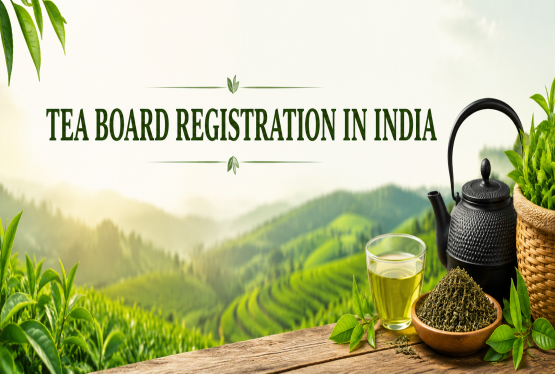
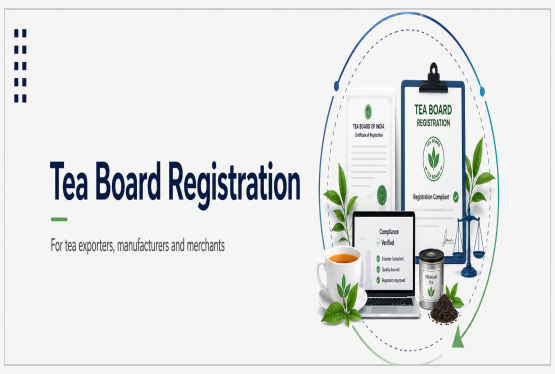
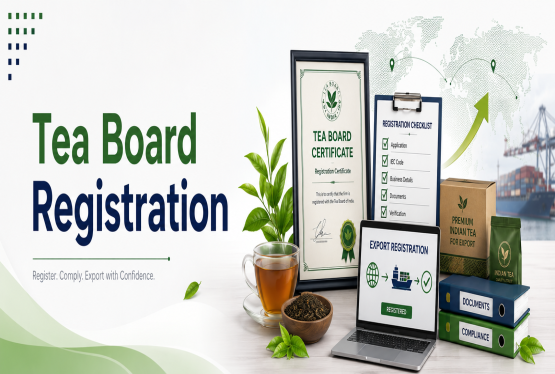
Tea is not just a beverage in India. It is a major agricultural product, export commodity, employment generator and part of India’s global trade identity. From Assam and Darjeeling to Nilgiri and Kangra, Indian tea has a strong market presence in both domestic and international markets. Because of this commercial and economic importance, tea business activities in India are regulated through the Tea Board of India.
If you are planning to grow, manufacture, blend, pack, distribute, trade, import or export tea, you may need Tea Board registration depending on the nature of your business. Many entrepreneurs think Tea Board registration is required only for exporters, but that is not correct. Different types of tea businesses may require different permissions, registrations, licences or certificates from the Tea Board.
Tea Board registration helps the government regulate the tea industry, maintain quality standards, monitor production and trade, and support genuine tea businesses. It also gives credibility to the business and helps in smooth dealings with buyers, exporters, importers, auction platforms and authorities.
Legal Background of Tea Board license in India
Tea Board license is mainly governed by the Tea Act, 1953 and the rules, control orders, notifications and guidelines issued under it. The Tea Board of India was established under Section 4 of the Tea Act, 1953. The purpose of the Board is to promote and regulate the tea industry under the control of the Central Government.
Section 10 of the Tea Act explains the functions of the Tea Board. These functions include promoting development of the tea industry, regulating production and cultivation, improving quality, regulating sale and export, training, marketing, collection of statistics and licensing or registration of manufacturers, brokers, tea waste dealers and persons engaged in blending tea.
This means Tea Board registration is not only a business formality. It is linked with statutory control, quality monitoring, export regulation, marketing discipline and trade transparency. If your business activity falls within regulated tea activities, registration or licence should be checked before starting operations.
When Do You Need Tea Board Registration?
You need Tea Board registration when your business activity is connected with regulated tea operations in India. The requirement depends on what you do in the tea value chain. A tea grower may need garden registration, a manufacturer may need manufacturing unit registration, a trader may need distributor or buyer registration, an exporter may need exporter licence or RCMC, and a brand selling flavoured tea may need flavoured tea registration.
For example, a person only selling tea as a retailer in loose or packaged form may have different requirements compared to a manufacturer or exporter. Similarly, a company importing flavoured tea may need both distributor registration and flavoured tea registration, depending on the activity. Therefore, the first step is to identify the exact role of the business in the tea trade.
Tea Board registration becomes important when the business is not merely consuming tea but commercially dealing with tea as a product. If tea is being produced, processed, blended, packed, warehoused, auctioned, imported, exported or marketed under a brand, the applicable Tea Board requirement should be reviewed.
Tea Board Registration for Tea Growers and Tea Gardens
Tea growers and tea estate owners may need registration with the Tea Board for tea cultivation and garden-related activities. Tea cultivation is not treated like an ordinary agricultural activity because tea is a regulated commodity under the Tea Act. The Tea Board monitors tea areas, production data and development of the tea industry.
If a person owns or operates a tea garden, registration helps establish the legal identity of the tea-growing unit. It may also be required for availing benefits, participating in schemes, maintaining official production records and complying with regulatory expectations. Tea Board also collects information and statistics from growers and other industry participants.
For new tea plantations, expansion or changes in ownership, permission and registration requirements should be checked carefully. The legal framework gives the Board powers relating to tea cultivation and regulation of the industry. Therefore, tea garden owners should not ignore Tea Board registration simply because they are operating at the farming level.
Tea Board Registration for Tea Manufacturing Units
Tea manufacturing units are one of the most important categories where Tea Board registration becomes necessary. A manufacturing unit processes green tea leaves into finished tea. Since manufacturing directly affects tea quality, traceability and market supply, it is regulated by the Tea Board.
A tea factory may require registration or licence depending on the type and scale of operations. The applicant generally needs to provide business documents, factory details, machinery details, layout, address proof, ownership or lease documents and other supporting information. The Tea Board may also verify whether the unit is suitable for manufacturing tea.
Manufacturers should also comply with food safety requirements, labour laws, pollution-related requirements, factory laws and local licences, wherever applicable. Tea Board registration does not replace these approvals. It works along with other legal compliances required for a lawful tea manufacturing business.
Tea Board Registration for Mini Tea Factories
Mini tea factories may also require registration or approval from the Tea Board. A mini tea factory generally operates on a smaller scale but still processes tea. Even if the business is small, it may still be part of the regulated tea supply chain.
Small tea growers and local manufacturers often use mini tea factories for processing. Since the product enters the market for sale and consumption, the authority may require details of the manufacturing location, machinery, source of raw material and production capacity. Proper registration also helps avoid future disputes during sale, distribution or export.
Entrepreneurs should not assume that small-scale operations are automatically exempt. If the activity involves processing or manufacturing tea, the applicable Tea Board requirement should be checked before starting commercial operations.
Tea Board Registration for Tea Exporters
Tea exporters need Tea Board registration because export of tea is specifically regulated under the Tea Act. Section 17 states that tea cannot be exported unless it is covered by a licence issued by or on behalf of the Tea Board. This makes Tea Board compliance highly important for exporters.
Exporters may require exporter licence and Registration-cum-Membership Certificate, commonly known as RCMC. RCMC helps exporters establish their registration with the concerned export promotion authority for tea. It may also be needed for export benefits, customs processes, buyer confidence and export documentation.
Before applying, exporters should generally have IEC from DGFT, PAN, GST details if applicable, business registration documents, bank details and product information. Exporters should also ensure that the tea being exported complies with quality and food safety standards. If the tea is blended, flavoured or re-exported after import, additional compliance may apply.
Tea Board Registration for Importers of Tea
Importers of tea must pay close attention to Tea Board compliance because imported tea is subject to quality monitoring and regulatory checks. Recent developments show that quality testing of imported tea consignments has become a stronger compliance area. Imported tea must meet applicable food safety and quality parameters.
A business importing tea may need distributor registration, importer-related documentation and, in some cases, flavoured tea registration if the product is flavoured tea. Tea Board’s FAQ clarifies that a company having Tea Distributor Registration Certificate still needs flavoured tea registration separately for import of flavoured tea.
From a legal point of view, importers should also comply with Customs, DGFT, FSSAI, Legal Metrology and labelling requirements. Importing tea without checking these requirements may lead to detention of goods, testing delays, rejection, penalties or business loss.
Tea Board Registration for Tea Distributors
Tea distributors involved in buying, selling or distributing tea may need Tea Board distributor registration. This is relevant when the business is engaged in commercial distribution of tea in India. The purpose is to regulate movement of tea in the market and maintain records of legitimate trade participants.
Distributor registration helps in establishing business credibility. It may be needed while dealing with manufacturers, packers, importers, wholesalers or large buyers. It also helps the authorities track the flow of tea products in the domestic market.
Businesses dealing in tea distribution should also check GST registration, FSSAI licence, packaging rules and Legal Metrology compliance if they sell packaged tea. Tea Board registration may be one part of the total compliance structure.
Tea Board Registration for Tea Buyers
Tea buyers who participate in tea auctions or purchase tea in bulk may need buyer registration. Tea auctions are an organized part of tea trade, and buyers dealing through auction systems may be required to register with the Tea Board.
Buyer registration helps ensure that only genuine and verified participants enter the auction or bulk tea trade system. This supports price transparency, traceability and discipline in the tea market. It also helps the Tea Board collect trade data and monitor tea movement.
A buyer should maintain proper records of purchase, stock, sale and distribution. Failure to maintain records or submit returns may attract issues under the applicable legal framework, especially where the business is operating in a regulated tea trade channel.
Tea Board Registration for Tea Brokers and Auction Participants
Tea brokers and auction organisers are also covered under Tea Board’s regulatory framework. Brokers play a key role in connecting sellers and buyers in the tea market. Since they influence tea sale and market movement, their registration or licence may be required.
The Tea Act empowers the Board to regulate sale and export of tea and to license or register brokers. Auction organisers may also need separate permissions or registration, depending on the system and Tea Board requirements. This ensures that auction-related activities are conducted transparently.
Businesses planning to operate as tea brokers or auction organisers should not begin operations without checking Tea Board norms. Documentation, financial details, business credentials and operational capacity may be reviewed during the registration process.
Tea Board Registration for Tea Warehouses
Tea warehouses are used for storing tea before sale, auction, distribution or export. Since storage affects quality, safety and traceability, Tea Board warehouse licence may be required for businesses operating tea warehouses.
A tea warehouse must maintain suitable storage conditions to prevent contamination, moisture damage, mixing or quality deterioration. The authority may require documents related to premises, ownership or lease, storage capacity, business registration and safety arrangements.
Warehouse operators should also maintain stock records and movement details. Where tea is stored for export or auction, accurate documentation becomes even more important. Poor storage compliance can affect both quality and legal acceptability of tea.
Tea Board Registration for Tea Waste Dealers
Tea waste is also regulated because it can be misused or diverted into improper channels. Tea waste may be used for extraction, caffeine manufacturing, bio-fertilizer or other permitted purposes. For this reason, tea waste dealers or users may need a specific tea waste licence.
The Tea Act gives powers to regulate tea waste, including its production, storage, transport and distribution. A business dealing with tea waste should maintain proper records and follow the conditions of the licence.
Any unauthorized dealing in tea waste may create legal issues. Businesses should clearly state the purpose of using tea waste and obtain the appropriate licence before beginning such operations.
Tea Board Registration for Flavoured Tea
Flavoured tea is a special category and requires careful compliance. Tea Board issues flavoured tea registration certificates to manufacturers of flavoured tea in line with FSSAI standards. The marketing company under whose brand name flavoured tea is sold generally applies for registration as manufacturer of flavoured tea.
The manufacturing unit where blending and packaging are carried out should be mentioned as an authorized premises in the FSSAI licence of the applicant. The addresses of the marketing company and manufacturing unit should also be mentioned properly on the packet as per packaging and labelling requirements.
Tea Board guidance also makes it clear that only certain categories such as Black or Oolong Tea, Kangra Tea, Green Tea and Instant Tea in solid form are allowed for flavoured tea registration, subject to applicable FSSAI parameters. Premix tea, ready-to-drink tea and similar ready-prepared tea products are not covered for flavoured tea registration in the same way.
Tea Board Registration for Tea Packers and Brand Owners
Tea packers and brand owners may need Tea Board-related compliance depending on their activity. If the brand is simply buying finished tea and selling packaged tea, it must check FSSAI, Legal Metrology, GST and trademark compliance. However, if it is involved in blending, flavoured tea, import, export or manufacturing, Tea Board registration may become necessary.
A brand owner selling flavoured tea under its own brand should be particularly careful. Tea Board guidance states that the marketing company under whose brand the flavoured tea will be marketed should apply for flavoured tea registration. This means outsourcing manufacturing does not always remove compliance responsibility.
Brand owners should also ensure correct labelling, source details, food category, ingredient declaration and quality compliance. Tea is a food product, so misleading claims, incorrect origin description or improper labelling can create issues under food safety and consumer protection laws.
Tea Board RCMC for Export Benefits
RCMC is important for exporters because it connects the exporter with the concerned export promotion body for the product. In the case of tea, Tea Board is the relevant authority for RCMC. Exporters dealing in tea should obtain RCMC if they want to operate properly in the export system and claim applicable benefits.
RCMC may be required while dealing with government export incentives, export documentation, customs-related processes and international buyer requirements. It also shows that the exporter is recognized by the Tea Board as part of the tea export ecosystem.
An exporter should apply with correct IEC, business documents, bank details, GST details if applicable and product details. Wrong classification or incomplete documents may delay approval or lead to queries.
Documents Generally Required for Tea Board Registration
The documents required for Tea Board Registration vary depending on the type of business activity. However, certain basic documents are commonly needed to verify the applicant, business operations, premises, and product details. Applicants should always check the latest requirements on the Tea Board portal, as incomplete or incorrect documents may lead to delays or rejection.
Common Documents Required
- PAN Card
Used for identity and tax verification.
Mandatory for all applicants. - Business Registration Proof
Includes company, LLP, partnership, or proprietorship documents.
Confirms legal existence of the business. - IEC Certificate
Required for import or export activities.
Issued by DGFT. - GST Registration
Applicable based on turnover and activity.
Ensures tax compliance. - FSSAI Licence
Needed for food-related operations.
Required for manufacturing, blending, or packing. - Address Proof
Verifies business location.
Includes utility bills or registration proof. - Bank Proof
Cancelled cheque or bank certificate.
Used to confirm bank details. - Authorization Letter
Required if applying through a representative.
Authorizes a third party. - Partner or Director Details
Includes KYC of key persons.
Needed for verification. - Premises Proof
Ownership, rent agreement, or NOC.
Confirms business premises. - Layout and Machinery Details
Required for manufacturing units.
Shows operational setup. - Product Details
Information about tea products.
Defines business category. - Declarations
Specific to registration type.
Ensures compliance with rules.
Process of Tea Board Registration
The Tea Board registration process is usually completed online through the Tea Board online application portal. The applicant first identifies the correct category of registration. This is important because applying under the wrong category can lead to rejection.
After selecting the category, the applicant creates login credentials, fills the application form, uploads documents and pays the applicable fee. The application may then be reviewed by the licensing authority. In some cases, inspection, clarification or document correction may be required before approval.
Once approved, the registration certificate, licence or RCMC is issued. The applicant should follow all conditions mentioned in the certificate and renew it where required. Businesses should also maintain proper records and submit returns wherever applicable.
Key Steps in Tea Board Registration
- Select Registration Category
The applicant must choose the correct registration category based on the business activity.
This may include exporter, manufacturer, distributor, buyer, warehouse, broker, garden owner, or flavoured tea business.
Selecting the wrong category may lead to delay or rejection. - Create Online Login
The applicant needs to create login credentials on the Tea Board online portal.
This login is used to access the application form and upload documents.
All future communication and application tracking may also be done through the portal. - Fill Application Form
The application form must be filled with correct business and applicant details.
Details such as business name, address, activity, product category, and authorized person should be entered carefully.
Any mismatch in details may result in clarification or correction. - Upload Documents
The required documents must be uploaded in the prescribed format.
Documents should be clear, valid, and matching with the application details.
Incomplete or incorrect documents may delay the approval process. - Pay Applicable Fee
After filling the form and uploading documents, the applicant must pay the prescribed fee online.
The fee may vary depending on the type of registration or licence applied for.
Payment confirmation should be saved for future reference. - Application Review
The Tea Board authority reviews the submitted application and documents.
They check whether the applicant is eligible for the selected registration category.
If everything is proper, the application moves to the next stage. - Clarification or Inspection
In some cases, the authority may ask for clarification or additional documents.
Inspection of premises may also be required for manufacturing, warehouse, or similar activities.
The applicant should respond quickly to avoid delay. - Approval and Certificate Issue
Once the application is approved, the Tea Board issues the registration certificate, licence, or RCMC.
The certificate confirms that the applicant is registered for the approved activity.
The business should keep a copy of the certificate for records and official use. - Post-Registration Compliance
After registration, the business must follow all conditions mentioned in the certificate.
It should maintain records, submit returns where applicable, and renew the registration on time.
Non-compliance may lead to penalties, cancellation, or business restrictions.
Legal Consequences of Not Taking Tea Board Registration
Not obtaining Tea Board registration where required can lead to serious business and legal issues. A business may face rejection of export consignments, inability to participate in auctions, difficulty in dealing with buyers, non-recognition by authorities or problems during inspection.
Under the Tea Act, export of tea without the required licence is restricted. The Act also provides penalties for illicit export, false returns, obstruction of officers and illicit cultivation. Therefore, businesses should not treat registration as optional where their activity is regulated.
Apart from Tea Board action, non-compliance may also affect GST, FSSAI, Customs, Legal Metrology and consumer law compliance. For exporters and importers, it can also damage buyer trust and delay shipments.
Recent Updates and Compliance Trends
Tea compliance in India is becoming more quality-focused. Recent updates show that imported tea consignments are being subject to stronger testing requirements to ensure that tea meets FSSAI parameters. This is important because imported tea may be blended or re-exported, and authorities want better transparency.
Another important development is the introduction of Tea Mark as a voluntary quality certification and assurance identifier. Tea Mark is intended to promote quality, consumption and marketing of tea. Since it is voluntary, it does not restrict trade, but it may help genuine brands build trust in the market.
These updates show that the tea sector is moving toward better traceability, testing, labelling and quality assurance. Businesses dealing in tea should keep checking Tea Board circulars, FSSAI standards and export-import directions to stay compliant.
Other Registrations Along with Tea Board Registration
Tea Board registration may not be the only registration needed for a tea business. Since tea is a food product, FSSAI licence is usually important for manufacturing, packing, storing, distributing or selling tea. GST registration may be required depending on turnover and business activity.
Exporters need IEC from DGFT. Packaged tea sellers must check Legal Metrology rules for declarations on packages. Brand owners should also consider trademark registration to protect their brand name, logo and packaging identity.
Factory licence, pollution consent, labour law registration, shop and establishment registration and local trade licence may also apply depending on the business model and location. A complete compliance check should be done before starting operations.
Practical Examples: When Registration May Be Required
If you are starting a tea export business, Tea Board registration and RCMC should be checked before taking export orders. If you are setting up a tea processing factory, manufacturing unit registration is important. If you are importing flavoured tea, distributor registration and flavoured tea registration may both be relevant.
If you are only running a small café and serving prepared tea to customers, Tea Board registration may not be the main requirement, but FSSAI registration or licence may apply. If you are launching a packaged tea brand and outsourcing packing, you must check whether you are involved in blending, flavoured tea, manufacturing or distribution because that may trigger Tea Board compliance.
If you are buying tea in bulk through auctions, buyer registration may be needed. If you are storing tea commercially for others, warehouse licence may apply. The requirement always depends on the exact activity.
Conclusion
Tea Board registration in India is required when a business is involved in regulated tea activities such as growing, manufacturing, blending, flavoured tea marketing, distribution, buying, auction participation, warehousing, tea waste handling, import or export. The legal basis comes from the Tea Act, 1953 and the regulatory powers of the Tea Board of India.
For exporters, Tea Board compliance is especially important because tea export is controlled and exporters may need licence and RCMC. For manufacturers, registration supports quality control and legal recognition. For importers and flavoured tea brands, recent quality testing and FSSAI-linked requirements make compliance even more important.
Before starting any tea business, the safest approach is to identify your business activity, check the correct Tea Board category, prepare documents and apply through the online portal. Proper registration not only avoids legal problems but also builds market credibility and supports long-term growth in the tea industry.
Frequently Asked Questions (FAQs)
Q1. What is Tea Board registration?
Ans: Tea Board registration is a regulatory registration or licence issued by the Tea Board of India for tea-related business activities. It applies to different categories such as exporters, manufacturers, distributors, buyers, warehouses, tea waste dealers and flavoured tea businesses. The exact requirement depends on the nature of the tea activity.
Q2. Is Tea Board registration mandatory for exporters?
Ans: Yes, tea exporters generally need Tea Board compliance because export of tea is regulated under the Tea Act. Exporters may require exporter licence and RCMC from the Tea Board. Without proper registration, export documentation and shipment clearance may become difficult.
Q3. Do tea manufacturers need Tea Board registration?
Ans: Yes, tea manufacturing units generally need registration or approval from the Tea Board. Manufacturing affects tea quality, production records and market supply. The business may also need FSSAI, factory and local approvals depending on its operations.
Q4. Is Tea Board registration required for flavoured tea?
Ans: Yes, flavoured tea requires specific Tea Board registration. The marketing company under whose brand the flavoured tea is marketed generally applies for registration. The product must also comply with applicable FSSAI parameters and Tea Board guidelines.
Q5. Do tea retailers need Tea Board registration?
Ans: A small retailer only selling tea may not always need Tea Board registration. However, if the retailer is also packing, blending, importing, exporting or distributing tea at a commercial level, Tea Board compliance should be checked. FSSAI and Legal Metrology rules may still apply.
Q6. What is Tea Board RCMC?
Ans: Tea Board RCMC means Registration-cum-Membership Certificate issued to tea exporters. It helps exporters get recognized under the tea export promotion framework. It may also support export documentation and benefits.
Q7. Is IEC required for Tea Board registration?
Ans: IEC is generally required for exporters applying for Tea Board export-related registration or RCMC. IEC is issued by DGFT and is mandatory for import-export activities. Non-export businesses may not need IEC unless they are involved in import or export.
Q8. Can a company import flavoured tea with only distributor registration?
Ans: No, Tea Board guidance states that a company having Tea Distributor Registration Certificate needs flavoured tea registration separately for import of flavoured tea. Both requirements should be checked before import. This avoids clearance and compliance issues.
Q9. What happens if tea is exported without proper licence?
Ans: Exporting tea without proper licence can create legal consequences under the Tea Act. The Act controls export of tea and provides penalties for illicit export. Exporters should obtain proper registration before shipment.
Q10. What is the recent update related to tea imports?
Ans: Recent compliance focus is on quality testing of imported tea consignments to ensure conformity with FSSAI parameters. This step is intended to control poor-quality imports and protect the reputation of Indian tea. Importers should check Tea Board directions before placing import orders.


_crop10_thumb.jpg)


_crop10_thumb.jpg)


-Form_crop10_thumb.jpg)

_crop10_thumb.jpg)


_learn_crop10_thumb.jpeg)


_crop10_thumb.jpg)

_crop10_thumb.jpg)


_crop10_thumb.jpg)




_for_Foreign_Directors_learn_crop10_thumb.jpeg)


_Act,_2015_learn_crop10_thumb.jpg)










_learn_crop10_thumb.jpg)




























_crop10_thumb.jpg)
_crop10_thumb.jpg)




_crop10_thumb.png)


_crop10_thumb.jpg)

_crop10_thumb.jpg)





_crop10_thumb.png)
_crop10_thumb.jpg)






_crop10_thumb.png)