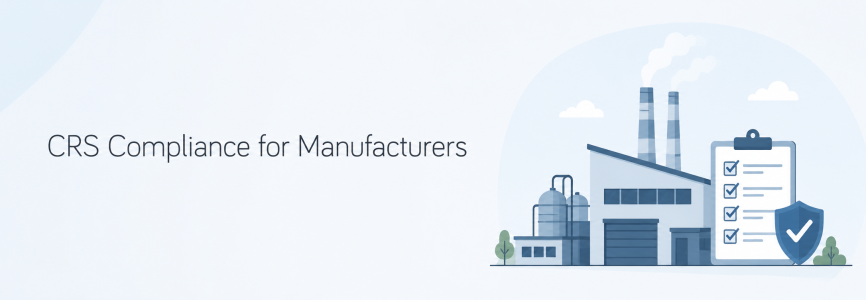



CRS Compliance, commonly known as BIS Compulsory Registration Scheme compliance, is one of the most important legal requirements for manufacturers dealing in notified electronic, IT, solar photovoltaic and other specified products in India. The purpose of CRS is to ensure that products sold in the Indian market meet the prescribed safety and quality standards before they reach consumers. For manufacturers, CRS compliance is not just a certificate requirement. It directly affects manufacturing, import, sale, distribution, warehousing, customs clearance, product labelling, brand reputation and market access.
If a product is covered under the CRS list, the manufacturer must obtain BIS registration before selling or supplying that product in India. The scheme mainly applies to product categories notified by the Government of India through different Quality Control Orders and compulsory registration orders. Under CRS, the responsibility is primarily on the manufacturer, whether the manufacturer is based in India or outside India. Importers, brand owners and sellers may support the process, but BIS registration is granted in the name of the actual manufacturer.
What is CRS Compliance?
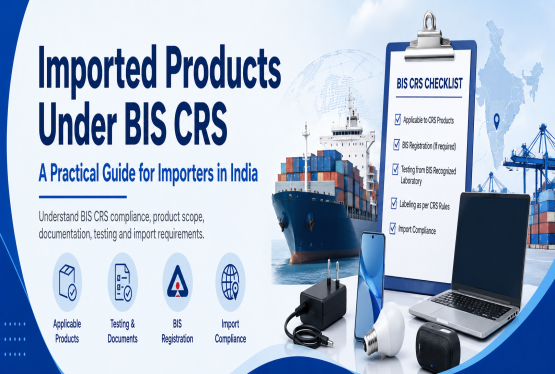
CRS stands for Compulsory Registration Scheme. It is a product conformity registration system operated by the Bureau of Indian Standards. Under this scheme, notified products must be tested from a BIS-recognised laboratory and then registered with BIS before being manufactured, imported, stored, sold or distributed in India. The CRS scheme is based on self-declaration of conformity. This means the manufacturer declares that the product conforms to the applicable Indian Standard after getting the product tested from a BIS-recognised laboratory. Once registration is granted, the manufacturer is allowed to use the BIS Standard Mark with the registration number on the product and packaging.
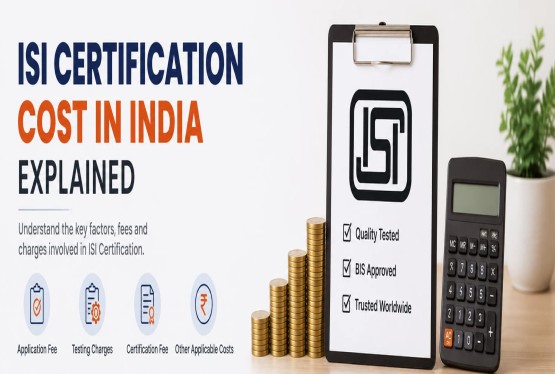
CRS is different from regular ISI certification. In many ISI certification cases, factory inspection and ongoing product surveillance may be involved before grant of licence. In CRS, the process is mainly based on product testing, online application, document verification and registration. However, this does not make CRS less serious. Wrong declaration, misuse of the Standard Mark, sale of non-compliant goods or failure to renew registration can lead to legal action.
Legal Framework of CRS Compliance
CRS compliance is governed by a combination of laws, rules, regulations and product-specific orders. Manufacturers should understand the legal framework before starting the registration process.
Bureau of Indian Standards Act, 2016
The BIS Act, 2016 is the main law under which BIS operates as the national standards body of India. It gives legal authority to BIS to frame standards, operate conformity assessment schemes, grant licences and take enforcement action.
Section 16 of the BIS Act empowers the Central Government to direct compulsory use of the Standard Mark for specified goods, articles, processes, systems or services. This means the Government can make BIS compliance mandatory for certain products in public interest, consumer safety, environmental safety, prevention of unfair trade practices or national security.
Section 17 prohibits manufacturing, importing, distributing, selling, hiring, leasing, storing or exhibiting notified goods without a valid Standard Mark and licence. It also prohibits making public claims that a product conforms to an Indian Standard unless the manufacturer has valid conformity approval.
Section 18 deals with obligations of licence holders, sellers and other persons. Manufacturers must ensure that products continue to conform to applicable standards and that the Standard Mark is used only as permitted.
BIS Rules, 2018
The BIS Rules, 2018 support the BIS Act by providing procedural rules for operation of BIS, certification, use of marks, fees, inspection, search, seizure and related matters. These rules provide the administrative structure for implementation of the BIS Act.
BIS Conformity Assessment Regulations, 2018
The BIS Conformity Assessment Regulations, 2018 provide different schemes for conformity assessment. CRS is operated under Scheme-II of Schedule-II of these regulations. Scheme-II is a registration scheme based on self-declaration of conformity. Under this scheme, the manufacturer gets the product tested from a BIS-recognised laboratory, submits the application, provides documents and makes a declaration that the goods conform to the relevant Indian Standard. After approval, BIS grants registration for the product and manufacturing location.
Electronics and Information Technology Goods Order, 2021
The Electronics and Information Technology Goods (Requirement of Compulsory Registration) Order, 2021 is one of the key orders for CRS compliance. It replaced the earlier 2012 order for covered electronics and IT products. The order requires notified goods to conform to the relevant Indian Standard and bear the Standard Mark under BIS registration. The order also provides that goods manufactured for export, which conform to the specification required by the foreign buyer, may be outside the scope of the order. It also provides for exemption in specific cases such as certain Highly Specialized Equipment, subject to conditions.
Product-Specific Notifications and Quality Control Orders
Apart from electronics and IT goods, CRS may also apply to solar photovoltaic products and other product categories notified by the concerned ministry. Manufacturers must check the exact product category, Indian Standard number, date of implementation and current notification before starting production or import.
Products Covered under CRS
CRS generally covers various categories of electronic and IT products, such as:
- Laptops, notebooks and tablets
- Mobile phones
- Power banks
- LED lamps and LED luminaires
- UPS and inverters of specified rating
- Printers, scanners and plotters
- Set top boxes
- Smart card readers
- Cash registers
- Microwave ovens
- Television sets
- Wireless keyboards
- Power adaptors
- Secondary cells and batteries
- Electronic games
- Audio/video equipment
- Solar photovoltaic modules and related products
- Extended Reality products, subject to applicable notification
The exact list keeps changing through notifications, amendments and implementation guidelines. Therefore, manufacturers should not rely only on old lists. Before launching any product, they should verify whether the product falls under CRS and whether any revised Indian Standard has become applicable.
Why CRS Compliance is Important for Manufacturers
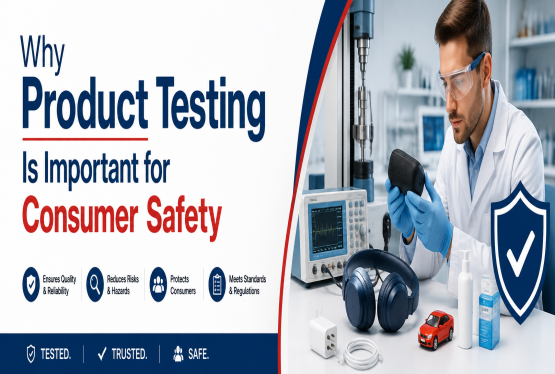
CRS compliance is important because it is a legal condition for market entry. If a product is notified under CRS, the manufacturer cannot legally sell it in India without BIS registration. It also helps in consumer protection. Many electronic and IT products involve safety risks such as electric shock, overheating, fire hazard, battery failure and performance issues. CRS ensures that such products meet minimum safety standards before reaching the market. For manufacturers, CRS registration improves credibility. Dealers, importers, e-commerce platforms, corporate buyers and government buyers often require valid BIS registration before accepting the product. Non-compliance may result in customs hold, product seizure, cancellation of orders, penalties and reputational damage.
Who Needs CRS Registration?
CRS registration is required by the manufacturer of the notified product. The applicant can be:
- Indian manufacturer producing notified goods in India
- Foreign manufacturer producing goods for sale in India
- OEM manufacturer manufacturing products under its own or another brand
- Factory producing notified products for import into India
- Manufacturer producing different models under a covered product category
Importers and brand owners should note that BIS registration is generally granted to the manufacturer, not to the trader or importer. If goods are manufactured outside India, the foreign manufacturer must appoint an Authorized Indian Representative to coordinate with BIS.
Eligibility for CRS Registration
Manufacturers must satisfy the following eligibility conditions:
- The applicant must be the actual manufacturer of the product.
- The product must fall under a notified CRS product category.
- The product must comply with the applicable Indian Standard.
- The product must be tested by a BIS-recognised laboratory.
- The test report must be valid and issued in the name of the manufacturer.
- The manufacturing location must be clearly identified.
- Each separate manufacturing location may require separate registration.
- The manufacturer must have proper testing, quality control and production records.
- Foreign manufacturers must appoint an Authorized Indian Representative in India.
- The brand name, model number and product details must match the test report and application.
- The applicant must be able to give a self-declaration of conformity.
- The manufacturer must agree to follow BIS marking and post-registration compliance requirements.
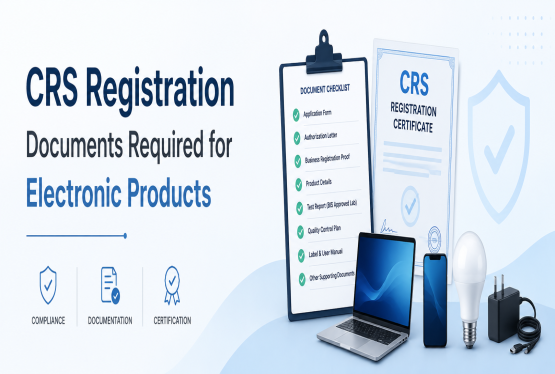
Documents Required for CRS Registration
The documents may vary depending on the product, manufacturer type and BIS requirements. Generally, the following documents are required:
- Application form filed through the BIS/CRS portal
- Business registration certificate of the manufacturer
- Factory licence or manufacturing unit proof, if applicable
- Address proof of manufacturing premises
- Name and address of the manufacturing unit
- Product details and model numbers
- Brand name details
- Trademark registration certificate or brand authorization, if applicable
- Test report from BIS-recognised laboratory
- Product technical specification sheet
- Critical component list
- Circuit diagram, layout or design details, where applicable
- User manual or product catalogue
- Label artwork showing BIS Standard Mark placement
- Undertaking and affidavit as prescribed by BIS
- Authorization letter in favour of signatory
- ID and address proof of authorised signatory
- ISO certificate, if available
- Quality control process details
- Factory organization chart, if required
- AIR agreement for foreign manufacturer
- Authorized Indian Representative KYC documents
- Nomination letter for Indian representative
- Fee payment proof
- Existing BIS registration details, in case of inclusion or renewal
- Declaration of conformity by manufacturer
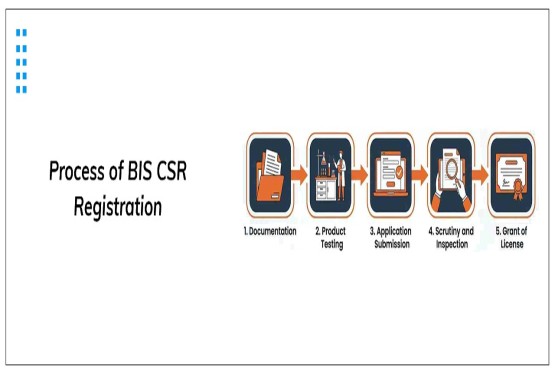
Step-by-Step CRS Registration Process
Product Identification
The first step is to identify whether the product is covered under CRS. This requires checking the product description, technical features, intended use, Indian Standard and applicable notification. Wrong classification can delay the application or lead to rejection.
Selection of Indian Standard
Once the product category is identified, the applicable Indian Standard must be selected. For example, many IT products have historically been covered under IS 13252 Part 1, while many audio/video products were covered under IS 616. However, migration to revised standards such as IS/IEC 62368-1:2023 is important for many product categories. Manufacturers must verify the current standard before testing.
Testing from BIS-Recognised Laboratory
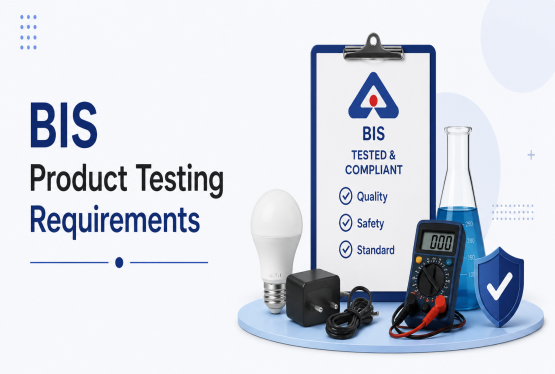
The product sample must be submitted to a BIS-recognised laboratory for testing. The lab tests the product according to the relevant Indian Standard. If the product passes the test, the lab issues a test report. The test report is one of the most important documents in the CRS application.
Preparation of Application
After receiving the test report, the manufacturer prepares the online application. All details must match the test report, including manufacturer name, address, product name, brand, model number and standard number. Any mismatch may lead to queries.
Filing on BIS Portal
The application is filed through the BIS/CRS portal with all required documents and fees. For foreign manufacturers, the Authorized Indian Representative usually coordinates the filing process.
Scrutiny by BIS
BIS reviews the application, test report, documents and declarations. If BIS finds any deficiency, it may raise a query. The manufacturer must respond within the prescribed time with proper clarification or corrected documents.
Grant of Registration
If BIS is satisfied, it grants CRS registration. After registration, the manufacturer can use the Standard Mark along with the registration number on the registered product and packaging.
Marking and Labelling Compliance
After approval, the product must carry the BIS Standard Mark in the prescribed manner. The registration number must be displayed properly. The manufacturer should ensure that only registered models and products bear the mark.
Renewal and Continued Compliance
CRS registration is not a one-time compliance. It must be renewed before expiry. Manufacturers must also comply with annual fee payment, updated standards, model inclusion requirements, change requests and other ongoing obligations.
Model Inclusion under CRS
If a manufacturer wants to add new models under an existing registration, it may apply for model inclusion. This is useful when the new model falls under the same product category, same Indian Standard and same manufacturing location. The manufacturer may need to submit additional test reports, model details, product specifications and declarations. Model inclusion helps manufacturers expand their product range without applying for completely fresh registration every time, provided the conditions are satisfied.
Validity and Renewal of CRS Registration
CRS registration is granted for a prescribed period and must be renewed before expiry. If renewal is not filed on time, the registration may become invalid, deferred or expired as per applicable BIS rules and circulars. Once registration expires, the manufacturer should not continue using the BIS Standard Mark unless renewal is approved or permitted under applicable provisions. Manufacturers should maintain a compliance calendar for renewal dates, fee payment dates, standard revision dates and product inclusion timelines. Missing renewal may disrupt sales, imports and supply contracts.
Recent Updates in CRS Compliance
Manufacturers should actively track BIS circulars and notifications because CRS requirements change frequently. Recent updates include revised provisions relating to licence validity, renewal and annual fee payment under CRS. BIS has also issued updates relating to standalone hard disk drives, revised standards for LED luminaires, implementation of Extended Reality products and migration to IS/IEC 62368-1:2023. The migration to revised standards is especially important because products earlier tested under old standards may need transition to newer standards within specified timelines. Manufacturers dealing in laptops, tablets, audio/video equipment, IT equipment, display products, gaming products, XR devices, LED products, batteries and power-related devices should review the latest applicable standard before testing and filing.
Exemptions under CRS
Certain exemptions may apply in limited cases. Goods manufactured only for export, and made according to the foreign buyer’s specifications, may not be covered in the same manner as goods sold in India. The 2021 order also provides an exemption framework for Highly Specialized Equipment, subject to conditions such as limited units per model per year and technical parameters. However, exemptions should not be assumed casually. The manufacturer should obtain proper legal and technical review before claiming exemption. If the product is sold in India and falls under a notified category, CRS compliance is generally mandatory.
Penalties for Non-Compliance
Non-compliance with CRS can lead to serious consequences. If a notified product is manufactured, imported, sold, distributed, stored or displayed without valid BIS registration and Standard Mark, it may amount to violation of the BIS Act and applicable order.
Possible consequences may include:
- Seizure of goods
- Blocking of import clearance
- Product recall
- Prosecution under BIS Act
- Monetary penalty
- Imprisonment in serious cases
- Cancellation or suspension of registration
- Restriction on use of Standard Mark
- Loss of market reputation
- E-commerce listing removal
- Dealer and distributor disputes
Manufacturers should also avoid false claims such as “BIS approved”, “BIS certified” or “conforms to Indian Standard” unless valid registration exists for that product and model.
Common Mistakes Manufacturers Should Avoid
Many CRS applications are delayed because of avoidable mistakes. Common errors include wrong product classification, expired test reports, mismatch in factory address, wrong model number, incorrect brand authorization, incomplete AIR documents, missing label details and using old Indian Standards after revision. Manufacturers should also avoid selling products immediately after testing. Testing alone is not enough. BIS registration must be granted before the product can legally carry the Standard Mark and be sold in India. Another common mistake is assuming that one registration covers all factories. CRS registration is linked to the manufacturer, product, brand, model and manufacturing location. If production shifts to another factory, a separate application or change request may be required.
Practical Compliance Checklist for Manufacturers
Manufacturers should follow this checklist before launching any notified product in India:
- Check whether the product is covered under CRS.
- Identify the applicable Indian Standard.
- Check latest BIS circulars and implementation dates.
- Confirm whether the product is manufactured for India or export only.
- Arrange product sample testing from BIS-recognised laboratory.
- Prepare technical documents and product specifications.
- Ensure brand authorization is available, if brand owner is different.
- Appoint Authorized Indian Representative, if manufacturer is foreign.
- File CRS application with correct details.
- Respond to BIS queries on time.
- Use BIS Standard Mark only after approval.
- Track renewal and annual fee deadlines.
- Apply for model inclusion before launching new models.
- Maintain test reports, invoices, production records and quality documents.
- Monitor standard revision and migration timelines.
Conclusion
CRS Compliance for manufacturers is a mandatory legal requirement for notified products in India. It is not only a registration formality but a complete compliance responsibility covering product testing, documentation, registration, marking, renewal and continued conformity. Manufacturers dealing in electronics, IT goods, LED products, batteries, solar products, power devices, audio/video equipment and other notified categories should verify CRS applicability before production, import or sale. Non-compliance can result in seizure, penalties, prosecution and business disruption.
A well-planned CRS compliance process helps manufacturers avoid delays, protect market access and build consumer trust. The safest approach is to identify the applicable standard early, complete testing from a BIS-recognised laboratory, file the application accurately and maintain a proper compliance calendar for renewal, model inclusion and standard updates.
FAQs
Q1: What is CRS compliance?
Ans. CRS compliance means obtaining BIS registration under the Compulsory Registration Scheme for notified products. It ensures that the product conforms to the applicable Indian Standard before being manufactured, imported, sold or distributed in India.
Q2: Is CRS registration mandatory for manufacturers?
Ans. Yes, CRS registration is mandatory if the product falls under a notified CRS category. Without valid BIS registration, the manufacturer cannot legally sell or distribute the product in India.
Q3: Who should apply for CRS registration?
Ans. The actual manufacturer should apply for CRS registration. Importers and brand owners may assist, but BIS registration is granted in the name of the manufacturer.
Q4: Is CRS applicable to foreign manufacturers?
Ans. Yes, foreign manufacturers must obtain CRS registration if their notified products are sold in India. They must appoint an Authorized Indian Representative to coordinate with BIS.
Q5: Is product testing compulsory for CRS registration?
Ans. Yes, testing from a BIS-recognised laboratory is compulsory. The test report is required before filing the CRS application.
Q6: Can a manufacturer sell products after testing but before BIS approval?
Ans. No, testing alone is not sufficient. The manufacturer can use the BIS Standard Mark and sell the notified product only after BIS registration is granted.
Q7: Is one CRS registration valid for all models?
Ans. Not always. Registration is linked to product category, standard, brand, model and manufacturing location. New models may require model inclusion or separate registration depending on the case.
Q8: What happens if CRS registration expires?
Ans. If registration expires, the manufacturer should not continue using the Standard Mark or selling the product under that registration. Renewal should be filed before expiry.
Q9: What are the penalties for non-compliance?
Ans. Non-compliance may lead to seizure of goods, import clearance issues, penalty, prosecution, cancellation of registration and restriction on sale of the product.
Q10: How can manufacturers stay compliant after registration?
Ans. Manufacturers should track renewal dates, annual fee requirements, standard revisions, model inclusion needs, labelling rules and BIS circulars. A compliance calendar should be maintained for timely action.


_crop10_thumb.jpg)


_crop10_thumb.jpg)


-Form_crop10_thumb.jpg)

_crop10_thumb.jpg)


_learn_crop10_thumb.jpeg)


_crop10_thumb.jpg)

_crop10_thumb.jpg)


_crop10_thumb.jpg)




_for_Foreign_Directors_learn_crop10_thumb.jpeg)


_Act,_2015_learn_crop10_thumb.jpg)










_learn_crop10_thumb.jpg)
































_crop10_thumb.jpg)

_crop10_thumb.jpg)
_(1)_crop10_thumb.jpg)







_crop10_thumb.png)





_crop10_thumb.jpg)

_crop10_thumb.jpg)




_crop10_thumb.png)
_crop10_thumb.jpg)