
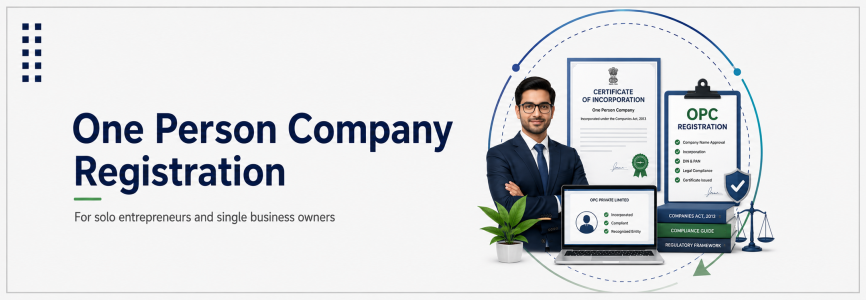



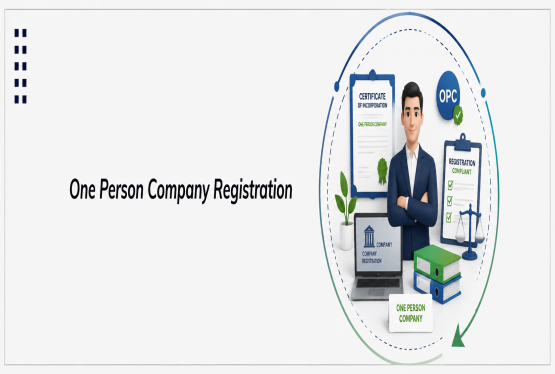
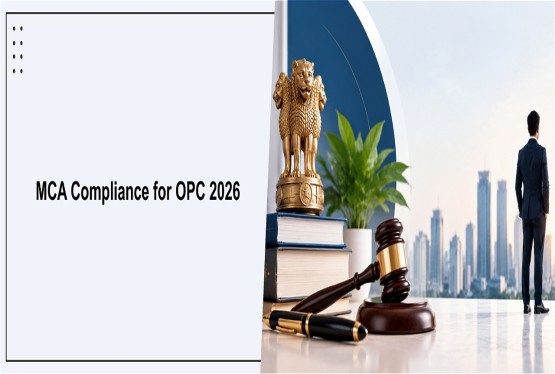
A One Person Company allows a single entrepreneur to establish a legally recognised company without adding another person merely to satisfy the minimum membership requirement. It gives an individual promoter the advantages of separate legal identity, limited liability, perpetual succession and corporate credibility while retaining substantial control over business decisions. For consultants, professionals, technology founders, online sellers, service providers and small manufacturers, an OPC can serve as a bridge between a sole proprietorship and a conventional private limited company.
Meaning of a One Person Company
Section 2(62) of the Companies Act, 2013 defines a One Person Company as a company having only one person as its member. Section 3(1)(c) permits one person to form an OPC for any lawful purpose by subscribing their name to the memorandum and complying with the registration requirements of the Act. Legally, an OPC is treated as a private company, although it receives several specific exemptions and procedural relaxations.
The sole member may also act as the only director of the company. Section 149(1) specifically permits an OPC to have a minimum of one director, unlike an ordinary private company, which must have at least two directors. An OPC may appoint additional directors when required, subject to the maximum number and other conditions prescribed under the Companies Act.
Separate Legal Identity
One of the most significant benefits of OPC registration is that the company becomes a legal person separate from its member. Section 9 of the Companies Act provides that, from the date stated in the certificate of incorporation, the company becomes a body corporate capable of exercising the functions of an incorporated company.
The OPC can acquire and hold movable or immovable property, enter into contracts, open bank accounts, employ individuals, borrow funds and initiate or defend legal proceedings in its own name. The property of the OPC belongs to the company and not directly to its sole member. Similarly, contracts entered into by the company are ordinarily enforceable against the company rather than automatically against the individual promoter.
This separation is particularly valuable for entrepreneurs who want to maintain a clear distinction between personal assets and business assets. It also makes bookkeeping, ownership of intellectual property, contractual rights and business liabilities easier to identify and document.
Limited Liability Protection
An OPC is commonly incorporated as a company limited by shares. Under Section 2(22), the liability of a member of a company limited by shares is restricted to the amount remaining unpaid on the shares held by that member. If the shares are fully paid, the member is generally not required to contribute further merely because the company has incurred commercial losses or unpaid debts.
Limited liability provides an important layer of protection to the entrepreneur’s personal property. In a sole proprietorship, there is no legal distinction between the proprietor and the business, and the proprietor may be personally liable for business obligations. An OPC, on the other hand, normally bears its liabilities in its own corporate capacity.
The protection is not absolute. Personal liability may arise where the member gives a personal guarantee, commits fraud, diverts company funds, makes false declarations, conducts business with an intent to defraud creditors or fails to maintain the company as a genuinely separate legal entity. Limited liability should therefore be supported by proper accounting, documentation, separate banking and lawful corporate conduct.
Complete Ownership and Decision-Making Control
An OPC enables the entrepreneur to retain complete ownership of the company. There is no requirement to allocate shares to a second person, negotiate voting rights with a co-founder or obtain another shareholder’s consent for routine ownership decisions.
This structure is useful where a founder wants to retain control over the business model, intellectual property, pricing, expansion plans and use of profits. The sole member can make decisions that would ordinarily require shareholder approval by recording the appropriate resolution in the company’s minutes book.
Section 122 provides a simplified procedure for decisions that would otherwise be transacted at a general meeting. A resolution communicated by the sole member to the company and entered, signed and dated in the minutes book is treated as a valid company resolution. Where an OPC has only one director, a board decision may similarly be recorded in the minutes book and signed and dated by that director.
Perpetual Succession Through a Nominee
The existence of an OPC is not intended to end automatically with the death or incapacity of its sole member. Section 3 requires the memorandum of an OPC to identify another individual, with prior written consent, who will become the member if the original subscriber dies or becomes incapable of entering into a contract.
The nominee’s consent is filed during incorporation. The member may subsequently change the nominee by following the prescribed procedure, and the nominee may also withdraw consent. The change of nominee is not treated as an alteration of the memorandum.
This nomination framework gives the business continuity and reduces uncertainty about who will control the shares after the member’s death or incapacity. However, the nominee mechanism does not replace a comprehensive succession plan, will, family arrangement or estate-planning exercise, particularly where there are multiple legal heirs or substantial personal and business assets.
No Requirement to Hold an Annual General Meeting
Section 96 requires companies to conduct annual general meetings but expressly excludes OPCs from the requirement. An OPC is therefore not required to organise an AGM, issue an AGM notice, establish shareholder quorum or arrange the physical or electronic attendance of members.
The exemption is practical because an OPC has only one member. Matters ordinarily considered at an AGM, including adoption of financial statements and appointment of an auditor, can be approved through written resolutions entered in the minutes book.
Section 122 further states that Section 98 and Sections 100 to 111 do not apply to an OPC. These provisions broadly deal with matters such as extraordinary general meetings, notices, explanatory statements, quorum, proxies, voting and postal ballots. The exemption significantly reduces procedural formality while preserving a written record of the sole member’s decisions.
Relaxation in Board Meeting Requirements
An ordinary company is generally required to hold a prescribed minimum number of board meetings. Section 173(5), however, provides a relaxed framework for OPCs, small companies and dormant companies.
Where an OPC has more than one director, it is treated as having complied with the board-meeting requirement if at least one meeting is held in each half of the calendar year and the gap between the two meetings is not less than 90 days. Where the OPC has only one director, the board meeting and quorum provisions under Sections 173 and 174 do not apply. The sole director can record the required decision in the minutes book under Section 122(4).
The relaxation reduces the administrative burden of arranging frequent meetings solely for procedural compliance. Nevertheless, important decisions concerning borrowing, contracts, related-party transactions, share capital, appointment of officers and approval of accounts should still be documented through properly drafted resolutions.
Simplified Financial Statement Requirements
The Companies Act provides certain financial reporting relaxations to OPCs. Under Section 2(40), the financial statements of an OPC may exclude the cash flow statement. The company must still prepare a balance sheet, statement of profit and loss, explanatory notes and other applicable statements in accordance with the Act and accounting standards.
Section 134 allows the financial statements of an OPC to be signed by only one director before being submitted to the statutory auditor. The Board’s report may also be signed by the director where the company has only one director. The Board’s report applicable to an OPC is comparatively limited and principally contains explanations or comments on qualifications, reservations, adverse remarks or disclaimers made by the auditor.
These concessions reduce paperwork, but they do not eliminate the obligation to maintain proper books of account or prepare true and fair financial statements.
Extended Time for Filing Financial Statements
Under Section 137, an OPC must file its duly adopted financial statements and the prescribed attachments with the Registrar within 180 days from the closure of the financial year. This is different from the general rule linking the filing period of other companies to the date of their annual general meeting.
For a financial year ending on March 31, the normal statutory period for an OPC consequently extends to 180 days from that date, subject to the MCA system, applicable rules and any officially notified extension. The filing is generally completed through the prescribed financial-statement e-form.
The extended period is beneficial, but late filing can still attract additional fees and penalties. An OPC should therefore complete its bookkeeping, statutory audit, financial statement approval and filing well before the deadline.
Abridged Annual Return
Section 92 permits an OPC’s annual return to be signed by its company secretary or, where no company secretary has been appointed, by the director of the company. OPCs and small companies have also been permitted to file an abridged annual return in Form MGT-7A from the financial year 2020–21 onwards.
The abridged annual return reduces the volume of information and certification requirements applicable to smaller corporate entities. It generally contains particulars relating to the registered office, principal business activities, share capital, member, directors, meetings, remuneration and statutory compliance.
The annual return must ordinarily be filed within 60 days of the date on which the annual general meeting would have been held. Although an OPC does not conduct an AGM, the applicable due date is calculated with reference to the statutory framework governing annual returns.
Greater Business Credibility
Registration as an OPC can improve the business’s credibility before customers, vendors, banks, government departments and commercial partners. The certificate of incorporation, Corporate Identity Number, memorandum, articles, PAN and statutory records provide formal evidence of the entity’s legal existence and ownership.
A company structure may be preferred where clients require vendor registration, audited financial statements, formal agreements, invoices in a corporate name or documentary evidence of authorised signatories. It can also be useful when participating in tenders, entering long-term service agreements, licensing technology or registering intellectual property in the business’s name.
Corporate registration does not guarantee financing or business success, but it creates a more formal legal and governance framework than an unregistered individual business.
Integrated Online Incorporation Through SPICe+
An OPC is incorporated through the MCA’s integrated SPICe+ system. SPICe+ Part A deals with name reservation, while Part B covers incorporation and connected registrations.
The integrated system facilitates company incorporation, allotment of Director Identification Number, PAN, TAN, EPFO registration, ESIC registration, professional tax registration where applicable, opening of a bank account and optional GST registration through linked forms. Electronic memorandum and articles are also filed as part of the incorporation process in eligible cases.
This single-window mechanism reduces the need to submit completely separate applications to several authorities. However, the applicant must still provide accurate subscriber, director, nominee, registered office, capital and business-object details.
No Compulsory Conversion Based on Capital or Turnover
A major reform was introduced through the Companies (Incorporation) Second Amendment Rules, 2021, effective from April 1, 2021. Earlier, an OPC could be required to convert when its paid-up capital or turnover crossed specified thresholds. Those compulsory conversion restrictions were removed.
An OPC can now continue as an OPC even when its paid-up capital or turnover increases. It may voluntarily convert into a private or public company at any time, subject to increasing the required number of members and directors, altering its memorandum and articles and complying with Section 18 and the applicable incorporation rules.
This reform allows an individual entrepreneur to grow the business without facing automatic conversion merely because the company has become commercially successful.
Wider Eligibility for NRIs
The 2021 reforms also widened eligibility by allowing an Indian citizen, whether resident in India or otherwise, to form an OPC. The period used for determining residence for this purpose was reduced from 182 days to 120 days during the immediately preceding financial year.
The change makes OPC registration more accessible to non-resident Indian citizens who want to establish a closely held corporate entity in India. The eligibility is based on Indian citizenship; a foreign citizen does not become eligible merely because the person resides in India.
The director-residency requirement under Section 149 must also be considered separately. Every company must have at least one director who satisfies the prescribed stay requirement in India, applied proportionately in the case of a newly incorporated company.
Benefit of Small Company Status
An OPC may also fall within the definition of a small company where it satisfies the applicable capital and turnover criteria and is not covered by an excluded category. With effect from December 1, 2025, the small-company thresholds were increased to paid-up capital of up to ?10 crore and turnover of up to ?100 crore.
Small companies receive several compliance concessions, including simplified reporting, abridged annual returns, relaxed board-meeting requirements and lesser penalties for specified defaults. Many of these benefits are independently available to an OPC, but qualifying as a small company may provide additional protection under provisions that specifically prescribe lesser penalties or exemptions for small companies.
Easier Future Conversion
An OPC offers flexibility to begin with one member and later convert when the business requires additional shareholders or investors. Conversion may become commercially necessary when a co-founder is admitted, equity investment is proposed, employee equity is planned or institutional investors demand a conventional private company structure.
The conversion does not ordinarily destroy the company’s legal existence. Under Section 18, an existing company may convert from one class to another by altering its memorandum and articles and satisfying the prescribed conditions. Its existing debts, liabilities, contractual obligations and legal proceedings continue after conversion. The 2021 rules removed the earlier waiting period and compulsory threshold-based framework for OPC conversion.
This makes the OPC suitable for founders who want to start independently but expect the ownership structure to evolve.
Statutory Audit and Corporate Discipline
Although OPCs receive compliance relaxations, statutory audit is still generally mandatory under the Companies Act irrespective of turnover. The company must appoint a qualified statutory auditor, maintain books of account, prepare financial statements, file annual returns and comply with applicable tax laws.
This legal discipline can be advantageous. Audited financial statements provide an independent examination of the company’s accounts and may improve the reliability of financial information presented to lenders, customers and business partners.
At the same time, an entrepreneur should not select an OPC under the assumption that it has no annual compliance obligations. The cost of accounting, audit, ROC filing, digital signatures, registered office maintenance and professional support should be considered before incorporation.
Legal Continuity in Business Contracts
Because the OPC is a separate corporate person, contracts entered into in its name can continue despite changes affecting the sole member. The nominee mechanism, perpetual succession and separate ownership of assets help maintain continuity in customer agreements, leases, licences and intellectual property rights.
Section 193 specifically regulates contracts between an OPC and its sole member where the member is also the director. Unless the contract is in writing or is entered into in the ordinary course of business, its terms must be recorded in a memorandum or in the minutes of the next board meeting. The company must inform the Registrar of such a recorded contract within 15 days of board approval.
This provision protects transparency where the same person acts on both sides of a transaction.
Important Restrictions on an OPC
An OPC can be incorporated only by an eligible natural person. A person cannot simultaneously be a member of more than one OPC or act as nominee in more than one OPC beyond the adjustment period permitted under the rules.
A minor cannot become the member or nominee of an OPC or hold shares with beneficial interest in it. An OPC cannot be incorporated or converted into a Section 8 company, and the incorporation rules restrict it from carrying on non-banking financial investment activities, including investment in the securities of body corporates as its principal regulated activity.
These restrictions make an OPC unsuitable for charitable ventures, pooled investment structures and businesses requiring several equity owners from the beginning.
Commencement of Business and Registered Office Compliance
Registration alone does not complete all post-incorporation obligations. Under Section 10A, a company having share capital cannot commence business or exercise borrowing powers until a director files the prescribed declaration that the subscriber has paid the value of the shares agreed to be taken. The declaration must be filed within 180 days of incorporation, and the registered office verification must also be completed.
Section 12 requires every company to maintain a registered office capable of receiving and acknowledging official communications. Verification of the registered office must be furnished to the Registrar within 30 days of incorporation.
Failure to comply may result in penalties and, in appropriate cases, action for removal of the company’s name from the register.
Tax Treatment of an OPC
An OPC is taxed as a domestic company and not as a sole proprietorship. Its profits are taxed in the company’s hands under the applicable provisions of the Income-tax Act. Money withdrawn by the member must be properly characterised as salary, reimbursement, rent, interest, loan repayment or dividend, as applicable.
OPC registration does not automatically produce a lower tax burden. The overall tax outcome depends on the company’s profits, eligible deductions, remuneration structure, chosen corporate tax regime and distribution of profits. A tax comparison between an OPC, sole proprietorship and LLP should therefore be undertaken before selecting the structure.
When Is OPC Registration Most Beneficial?
An OPC is particularly useful for an individual who wants full ownership but also requires limited liability, corporate identity and business continuity. It may suit independent consultants, software developers, designers, digital agencies, e-commerce operators, manufacturers, trainers and other entrepreneurs who do not require immediate equity participation from a second person.
It may not be the best structure where multiple founders are involved, equity fundraising is expected immediately, a Section 8 entity is required or the business involves restricted financial investment activity. A conventional private limited company or LLP may be more suitable in those situations.
Conclusion
One Person Company registration gives an individual entrepreneur the opportunity to conduct business through a formal corporate entity without surrendering ownership or adding a nominal shareholder. Its major advantages include separate legal identity, limited liability, perpetual succession, complete control, simplified resolutions, exemption from annual general meetings, relaxed board-meeting requirements and reduced financial reporting formalities.
The 2021 amendments made the structure more practical by permitting eligible non-resident Indian citizens to incorporate OPCs, reducing the residency period to 120 days, removing compulsory conversion thresholds and allowing voluntary conversion at any time. The increase in small-company thresholds to ?10 crore of paid-up capital and ?100 crore of turnover from December 1, 2025, has further expanded the compliance-relief framework available to qualifying companies.
However, an OPC remains a company governed by the Companies Act, 2013. It must maintain a registered office, appoint an auditor, keep proper accounts, file annual statutory forms and comply with tax, labour, sectoral and regulatory laws. Entrepreneurs should therefore evaluate not only the benefits of OPC registration but also the continuing cost and responsibility of operating a corporate entity.
Frequently Asked Questions (FAQs)
Q1. What is a One Person Company?
Ans: A One Person Company is a company that has only one shareholder or member.
It is incorporated under Section 2(62) of the Companies Act, 2013.
It provides corporate status while allowing the promoter to retain full ownership.
Q2. Who can register an OPC in India?
Ans: Only an Indian citizen, whether resident in India or otherwise, can incorporate an OPC.
The promoter must be a natural person and not a company, LLP or other body corporate.
A minor cannot become a member or nominee of an OPC.
Q3. What is the main benefit of OPC registration?
Ans: The main benefit is limited liability protection for the sole shareholder.
Business liabilities generally remain restricted to the company’s assets.
The promoter’s personal assets are ordinarily protected from business debts.
Q4. Is a nominee mandatory for OPC registration?
Ans: Yes, the sole member must nominate another eligible person during incorporation.
The nominee becomes the member if the original member dies or becomes incapable of contracting.
Prior written consent of the nominee must be obtained and filed with the Registrar.
Q5. Can an OPC have more than one director?
Ans: Yes, an OPC can appoint more than one director if required.
However, it must have at least one director at all times.
The maximum number of directors is generally fifteen unless increased by a special resolution.
Q6. Is an annual general meeting required for an OPC?
Ans: No, an OPC is exempt from holding an annual general meeting.
Decisions requiring shareholder approval can be recorded in the company’s minutes book.
The resolution must be signed and dated by the sole member.
Q7. Is statutory audit mandatory for an OPC?
Ans: Yes, statutory audit is generally mandatory regardless of turnover or business activity.
The OPC must appoint a qualified Chartered Accountant as its statutory auditor.
Audited financial statements must be prepared and filed with the Registrar every year.
Q8. Can an OPC be converted into a private limited company?
Ans: Yes, an OPC can voluntarily convert into a private or public company.
It must increase the required number of members and directors before conversion.
The memorandum, articles and prescribed MCA forms must also be amended and filed.
Q9. Can an OPC continue after crossing turnover limits?
Ans: Yes, an OPC is no longer required to convert merely because its turnover or capital increases.
The compulsory conversion thresholds were removed through the 2021 amendments.
It can continue as an OPC until the member voluntarily decides to convert it.
Q10. What annual filings are required for an OPC?
Ans: An OPC must file its financial statements and annual return with the Registrar.
Financial statements are generally filed within 180 days from the end of the financial year.
The annual return may be filed in the abridged Form MGT-7A where applicable.


_crop10_thumb.jpg)


_crop10_thumb.jpg)


-Form_crop10_thumb.jpg)

_crop10_thumb.jpg)


_learn_crop10_thumb.jpeg)


_crop10_thumb.jpg)

_crop10_thumb.jpg)


_crop10_thumb.jpg)





_for_Foreign_Directors_learn_crop10_thumb.jpeg)


_Act,_2015_learn_crop10_thumb.jpg)










_learn_crop10_thumb.jpg)












































_crop10_thumb.jpg)


_crop10_thumb.jpg)


_(1)_crop10_thumb.jpg)









_crop10_thumb.png)











_crop10_thumb.jpg)


_crop10_thumb.jpg)






_crop10_thumb.png)
_crop10_thumb.jpg)






_crop10_thumb.png)









_crop10_thumb.jpg)
