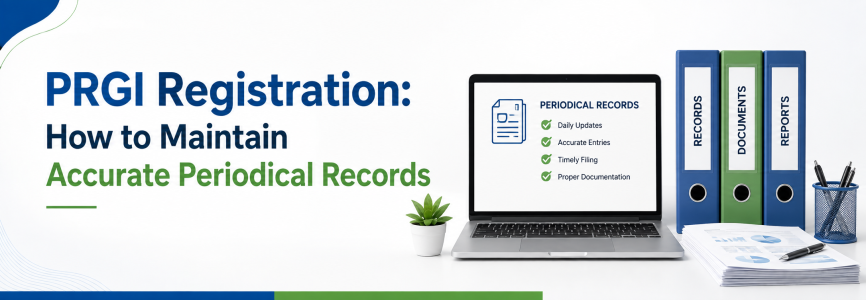



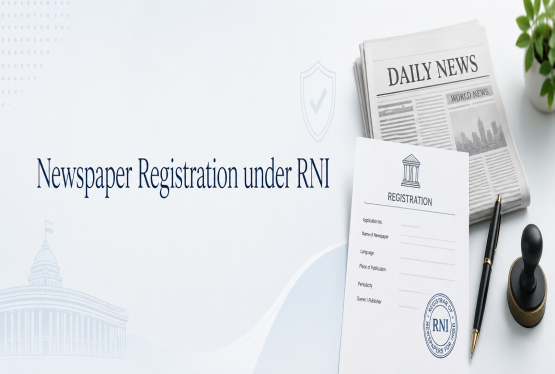
Registration with the Press Registrar General of India (PRGI) gives a newspaper or other eligible periodical legal recognition for publication in India. However, obtaining the Certificate of Registration is only the beginning of the compliance process. Once a periodical starts publishing, the publisher must ensure that information relating to publication, circulation, printing, ownership, publisher details and other registered particulars remains accurate and can be supported by proper records.
The regulatory framework for periodicals changed significantly when the Press and Registration of Periodicals Act, 2023 (PRP Act) and the Press and Registration of Periodicals Rules, 2024 came into force on 1 March 2024. The earlier Press and Registration of Books Act, 1867 was repealed, the Registrar of Newspapers for India (RNI) framework transitioned to PRGI, and several important processes became digital through the Press Sewa Portal. For publishers, this means that maintaining accurate periodical records is now closely connected with online filings, annual statements, circulation verification, submission of publication copies and timely updating of registration particulars. Incorrect or inconsistent records may lead to queries, penalties, suspension proceedings or difficulties when the publisher seeks changes in registration particulars. This article explains how publishers can maintain reliable records after PRGI Registration and establish an effective internal compliance system.
Understanding PRGI Registration
The PRGI functions under the Ministry of Information and Broadcasting, Government of India and administers registration and regulatory functions relating to periodicals under the PRP Act, 2023. A periodical generally refers to a publication, including a newspaper, that is printed and published at regular intervals and contains public news or comments on public news. Scientific, technical and academic books or journals are excluded from the statutory definition applicable under the PRP Act.
A publisher must obtain a Certificate of Registration before publishing a periodical in India in accordance with the Act. The registration process is carried out through the Press Sewa Portal, where the owner, publisher and printer can create profiles and complete the relevant statutory processes. Registration information may include details such as the title, language, periodicity, place of publication, publisher, editor and printing press. These details should not be treated merely as information submitted during registration. They should correspond with the actual manner in which the periodical operates.
Why Accurate Periodical Records Matter
Accurate records are important because information about a publication may subsequently be required for annual statements, circulation verification, revision of registration particulars or other PRGI compliance.
For example, a publication claiming a particular circulation in its annual statement should have internal documents capable of supporting that number. Similarly, if a printing press, publisher, editor or place of publication changes, the actual operations of the newspaper should not remain inconsistent with the details appearing in the PRGI registration records. The PRGI may verify circulation figures through a desk audit and, where appropriate, through physical inspection of documents, information and records maintained at the publisher's business premises and printing press. Therefore, publishers should develop a record-maintenance system from the first issue rather than trying to reconstruct circulation and printing data at the end of the financial year.
Maintain a Master PRGI Registration File
Every registered publication should maintain a permanent compliance file containing all important documents connected with its registration. The file should include the Certificate of Registration, application acknowledgements, Applicant Reference Number or other portal references, owner authorisations, publisher details, printing press information, payment receipts and important communications received from PRGI. Where any application for revised registration, ownership transfer, new edition or discontinuation is made, copies of the application and acknowledgement should also be preserved. Electronic copies should ideally be maintained along with the physical documents. Files should be organised year-wise so that information can be retrieved easily if PRGI raises any query.
Maintain an Issue-Wise Publication Register
One of the most useful records for a newspaper or periodical is an issue-wise publication register. For every issue, the publisher should record the date of publication, issue number, volume number, periodicity, number of copies printed, number distributed or sold, complimentary copies and unsold or returned copies wherever applicable.
For example, a weekly publication should be able to identify each scheduled issue during the year and demonstrate whether that issue was actually published. This becomes particularly important because continuous publication has regulatory significance. Under the PRP Act, publishing less than half of the issues required according to the declared periodicity in a calendar year may be treated as failure to publish continuously, which can become a ground for suspension of registration. An organised publication register therefore helps demonstrate both regularity and actual circulation.
Preserve Copies of Every Published Issue
Publishers should maintain a properly indexed archive of every published issue. The archive may contain both physical copies and high-quality scanned digital copies. Digital copies should be named systematically using the publication title, issue date and issue number. This is particularly important because the PRP Rules require the publisher to upload a scanned copy of a printed periodical on the Press Sewa Portal within 48 hours of publication.
The publisher should maintain a separate electronic-copy submission log showing:
- Date of publication;
- Issue number;
- Date and time of upload;
- Portal acknowledgement or reference, wherever generated; and
- Name of the employee responsible for submission.
Such a record makes it easier to identify missing uploads before they become repeated compliance failures.
Maintain Records of Physical Copy Submission
Publishers of newspapers must also pay attention to requirements relating to delivery of physical copies. PRGI's current guidance states that every publisher of a newspaper should deliver physical copies covering issues published during the preceding month to the relevant Press Information Bureau office in the State or Union Territory by the fifth day of every month. Special submission arrangements apply to publications from the NCT of Delhi. Publishers should preserve postal receipts, courier acknowledgements, receiving stamps or other evidence demonstrating that copies were submitted. A simple monthly register recording the month, issues covered, date of dispatch, receiving office and acknowledgement number can significantly improve compliance control.
Maintain Accurate Printing Records
The records of the printing press and the publisher should correspond with each other. Publishers should retain printing invoices, printing instructions, print orders, press bills and records showing the number of copies printed for each issue. Where the printing press is owned by the publisher, an internal print-production register should be maintained. Supporting records may include paper purchase invoices, paper consumption records and machine or production information where relevant. These documents may become particularly useful where circulation figures are subjected to verification. The printer also has independent compliance responsibilities. A printer of a periodical must intimate commencement of a printing press through the Press Sewa Portal within the prescribed period, and changes in relevant particulars are also required to be communicated. Therefore, publishers should periodically confirm that their registered printing press details remain current.
Maintain Reliable Circulation Records
Circulation figures are one of the most sensitive areas of periodical record keeping. Publishers should avoid estimating circulation numbers without supporting documents. Instead, an issue-wise circulation reconciliation should be prepared.
A basic circulation calculation may include:
Total copies printed
Less: waste or damaged copies
Less: unsold/returned copies
Equals: distributed circulation
The distributed copies may then be separated into paid subscriptions, newsstand or agent sales, institutional subscriptions, complimentary copies and other permitted categories. The circulation register should be supported by documents such as distributor statements, subscription records, sales invoices, delivery challans, agent accounts, collection records and return statements. PRGI may undertake circulation verification through desk audit based on information submitted in the latest annual statement and may seek additional documents electronically. Physical verification of records may also be undertaken where required. Therefore, circulation figures should always be traceable to supporting evidence.
Reconcile Circulation With Financial Records
Circulation records should also be reasonably consistent with the publisher's accounting records. For paid newspapers or magazines, subscription receipts, distributor collections and sales income should correspond with the number of paid copies reported. Publishers should therefore preserve relevant invoices, bank records, subscription receipts, agent statements and accounting ledgers. This does not mean every accounting document automatically becomes a specific statutory PRGI register. Rather, these records provide evidence supporting the publication and circulation information reported by the publisher. Where substantial differences exist between printed copies, claimed circulation and recorded revenue, the publisher should investigate and document the reason before filing the annual statement.
Maintain Subscription and Distribution Records
A separate subscription database should be maintained where the publication is distributed to subscribers. It should ordinarily record the subscriber name or customer identification, subscription period, mode of delivery, amount received, receipt number and commencement and expiry dates. Similarly, distributor and newspaper-agent records should contain the name of the distributor, geographical area, number of copies supplied, copies returned and payments collected. Publishers operating in multiple cities should reconcile circulation data region-wise before consolidating annual figures. Proper distribution records make circulation figures much easier to verify and reduce dependency on estimates.
Keep Registered Particulars Updated
The details appearing on the PRGI Certificate of Registration should correspond with actual publication operations. Changes involving the editor, printing press, place of publication within the same State or Union Territory, periodicity and certain other registration particulars may require a Revised Registration Application through the Press Sewa Portal. PRGI guidance currently provides for an application for revision of registration particulars along with supporting documents and the prescribed fee. Changes to the publisher are also dealt with through the revised registration mechanism. Publishers should therefore conduct a periodic comparison between their Certificate of Registration and current operations. A change should not simply be recorded internally while leaving outdated information on the PRGI database.
Maintain Records for the Annual Statement
Under Section 12(1) of the PRP Act, 2023 read with Rule 9 of the PRP Rules, 2024, registered publishers are required to furnish an annual statement relating to the preceding financial year through the Press Sewa Portal. The statutory framework provides for filing by 31 May of the relevant calendar year, subject to extensions or specific advisories issued by PRGI. The publisher should not wait until May to begin calculating annual data. Instead, monthly records should be consolidated throughout the year. The annual compliance file should contain supporting calculations for circulation, publication frequency and any other particulars required by the portal. PRGI has continued to issue advisories relating to annual-statement filing, extensions, penalties and correction facilities. In 2026, it issued advisories concerning filing for FY 2025-26 as well as online correction of annual statements. Publishers should therefore check the latest PRGI advisory before every annual filing rather than relying only on the previous year's procedure.
Chartered Accountant Certification Where Applicable
Publishers should also check whether Chartered Accountant certification is required for their annual statement based on applicable PRGI instructions for the relevant filing year. PRGI's annual-statement advisories have prescribed CA certification for publications crossing the specified circulation threshold. For example, its FY 2024-25 advisory required qualifying publications with the specified circulation level to obtain certification from a registered Chartered Accountant using the Press Sewa Portal. Because portal instructions and annual advisories may be updated, publishers should confirm the applicable threshold and certification requirements before each year's filing. Where certification applies, supporting circulation documents should be provided to the CA sufficiently in advance.
Avoid False or Unsupported Annual Statement Data
Annual statements should receive management-level review before submission. Giving false particulars in an annual statement can have serious consequences. Under Section 11 of the PRP Act, furnishing false particulars in the annual statement is one of the grounds on which the Press Registrar General may suspend the Certificate of Registration. Failure to furnish the annual statement within two years from the end of the relevant financial year is also a statutory ground for suspension. In addition, the PRP Act contains monetary penalty provisions for failure to furnish the annual statement within the prescribed statutory framework. Publishers should therefore treat the annual statement as a statutory declaration supported by records rather than a routine data-entry exercise.
Create a Monthly PRGI Compliance Process
The most effective way to maintain accurate records is to make compliance a monthly activity. At the end of every month, the publisher should reconcile issues published, copies printed, circulation, returns, subscriptions, digital uploads and submission of physical copies. Any change in publisher, editor, printing press, periodicity or publication location should also be reviewed. Responsibility should be assigned to a specific employee or compliance professional. Larger publications may maintain separate editorial, circulation, printing and compliance records, but the information should ultimately be reconciled before statutory filing.
Preserve Portal Acknowledgements and Communications
Digital compliance creates its own record-keeping requirements. Publishers should preserve screenshots or downloaded acknowledgements of important filings, e-sign confirmations, payment receipts, deficiency communications, responses and final approvals. Important emails and portal notices should be archived rather than being stored only in the inbox of an individual employee. A compliance tracker containing the filing date, service requested, ARN or acknowledgement number, status and final outcome can make future PRGI applications significantly easier.
Periodically Conduct an Internal PRGI Audit
An internal compliance review at least once a year can help identify discrepancies before annual filing. The review should compare the Certificate of Registration with actual publication details, issue registers with archived copies, printing quantities with circulation numbers and circulation figures with supporting sales and distribution records. The reviewer should also check whether all required digital copies were uploaded and whether physical submission records are available. Any inconsistency should be corrected through the appropriate legal or portal process rather than simply altering internal records to match previous filings.
Common Mistakes in Maintaining Periodical Records
One common mistake is maintaining circulation numbers only in spreadsheets without source documents. Another is failing to preserve unsold-copy or distributor-return records, which can result in circulation being overstated. Publishers sometimes change their printing press, editor or place of publication operationally but fail to update the registration particulars. Another frequent risk is missing digital copy uploads because responsibility is not assigned to a particular employee. Using different circulation figures in PRGI filings, accounting records, advertisement proposals and internal reports can also create unnecessary regulatory questions. Most of these problems can be avoided through monthly reconciliation and a central compliance file.
Consequences of Poor Record Maintenance
Poor records do not necessarily create a violation merely because a particular internal spreadsheet or register has not been maintained. However, the inability to support statutory information can lead to significant regulatory difficulties. Incorrect annual-statement particulars may expose a publisher to suspension proceedings. Persistent non-filing can lead to penalties and may ultimately affect registration. PRGI's official annual-statement guidance specifically warns that penalties may be imposed for failure to file and that registration may be suspended for false particulars or continued non-filing. Accurate documentation is therefore both a compliance safeguard and an important part of responsible publication management.
Conclusion
PRGI Registration should be viewed as an ongoing compliance responsibility rather than a one-time registration exercise. A publisher must ensure that the title is published according to its registered particulars and that reliable records exist to support publication frequency, printing quantities, circulation and statutory filings. An effective record-management system should include the Certificate of Registration, issue-wise publication records, copies of each issue, printing records, circulation reconciliations, distributor and subscription data, proof of electronic uploads, physical-copy submission records, annual-statement working papers and PRGI correspondence.
The increasing use of the Press Sewa Portal has made periodical compliance more transparent and data-driven. Publishers that maintain their records continuously throughout the year are better placed to file accurate annual statements, respond to circulation verification, update registration particulars and avoid unnecessary regulatory disputes. Because PRGI periodically issues new advisories, filing extensions, portal instructions and compliance directions, publishers should also monitor the latest official updates and review their internal processes accordingly. Good record keeping ultimately helps a publication demonstrate not only legal compliance but also professionalism, credibility and responsible management.
FAQs
Q1. What records should be maintained after obtaining PRGI Registration?
Ans. A publisher should maintain the Certificate of Registration, application acknowledgements, publication records, copies of every issue, printing documents, circulation records, distributor statements, subscription data, portal submission acknowledgements and annual-statement supporting documents. Records relating to changes in publisher, editor, press or place of publication should also be preserved.
Q2. Is filing an annual statement mandatory for PRGI-registered periodicals?
Ans. Yes. Section 12(1) of the PRP Act, 2023 requires the publisher of a registered periodical to furnish an annual statement. Rule 9 provides for filing through the Press Sewa Portal in respect of the preceding financial year. Publishers should also follow the latest PRGI advisory regarding the applicable filing window.
Q3. What is the normal due date for filing the PRGI annual statement?
Ans. Under the PRP Rules, the annual statement is ordinarily required by 31 May in respect of the preceding financial year. However, PRGI may issue specific advisories or extensions. Therefore, publishers should verify the latest notification on the PRGI website and Press Sewa Portal each year.
Q4. Should a publisher maintain copies of every published issue?
Ans. Yes. Maintaining indexed physical and digital copies of each issue is strongly advisable. In addition, the PRP Rules require scanned copies of periodicals to be uploaded on the Press Sewa Portal within the prescribed period, which PRGI currently states as within 48 hours of publication.
Q5. How should circulation records be maintained?
Ans. Circulation should ideally be maintained issue-wise and supported by copies printed, subscriptions, distributor supplies, agent sales, returns, complimentary copies and other relevant records. The figures reported in the annual statement should be capable of reconciliation with supporting documents and, where relevant, financial records.
Q6. Can PRGI verify the circulation claimed by a publication?
Ans. Yes. PRGI may verify circulation figures through mechanisms including desk audit, and it may seek supporting documents electronically. In appropriate cases, physical inspection of records maintained at the publisher's premises or printing press may also be undertaken.
Q7. What should be done if the publisher or printing press changes?
Ans. The change should not merely be recorded internally. The publisher should use the appropriate facility on the Press Sewa Portal for revision of registration particulars and submit the required information and supporting documents. The exact application depends on the nature of the change.
Q8. What happens if incorrect circulation information is provided in the annual statement?
Ans. False particulars in an annual statement can become a ground for suspension of the Certificate of Registration under the PRP Act. Publishers should therefore verify circulation calculations against printing, sales, subscription, distribution and return records before submitting the annual statement.
Q9. Is Chartered Accountant certification required for every periodical?
Ans. Not necessarily. PRGI may prescribe CA certification based on circulation or other conditions in the instructions applicable to the particular annual-statement filing year. Publishers should verify the current PRGI advisory and Press Sewa Portal requirements before filing rather than relying on an earlier year's threshold.
Q10. How can publishers simplify PRGI record compliance?
Ans. Publishers should maintain a monthly compliance system rather than preparing records only at year-end. Keeping an issue register, circulation reconciliation, digital-copy upload tracker, physical-copy dispatch register, registration-change tracker and annual-statement working file can substantially reduce errors and make PRGI compliance easier.


_crop10_thumb.jpg)


_crop10_thumb.jpg)


-Form_crop10_thumb.jpg)

_crop10_thumb.jpg)


_learn_crop10_thumb.jpeg)


_crop10_thumb.jpg)

_crop10_thumb.jpg)


_crop10_thumb.jpg)





_for_Foreign_Directors_learn_crop10_thumb.jpeg)


_Act,_2015_learn_crop10_thumb.jpg)










_learn_crop10_thumb.jpg)









































_crop10_thumb.jpg)

_crop10_thumb.jpg)

_(1)_crop10_thumb.jpg)









_crop10_thumb.png)












_crop10_thumb.jpg)


_crop10_thumb.jpg)







_crop10_thumb.png)

_crop10_thumb.jpg)









_crop10_thumb.png)