



Setting up a Wholly Owned Subsidiary (WOS) allows a business to expand into new markets, separate business activities, manage risks, enter India through a foreign parent company, or create a dedicated entity for a particular business vertical. However, incorporating the subsidiary is only the beginning. Once established, the company becomes a separate legal entity and must independently comply with applicable corporate, accounting, tax and regulatory requirements.
For businesses operating in India, Wholly Owned Subsidiary compliance generally involves requirements under the Companies Act, 2013, Income-tax laws, GST regulations and, where foreign investment is involved, the Foreign Exchange Management Act (FEMA) and RBI reporting framework. This article explains the compliance roadmap businesses should understand while operating a wholly owned subsidiary in India.
What is a Wholly Owned Subsidiary?
A wholly owned subsidiary is a company whose entire share capital is beneficially owned by another company, known as the holding or parent company. Although the parent controls the subsidiary, the subsidiary continues to have its own separate legal identity. It can maintain its own bank accounts, enter contracts, employ workers, own assets and incur liabilities in its own name. This distinction is important from a compliance perspective. A WOS cannot simply rely on the compliance completed by its parent company. It must maintain its own corporate records and fulfil applicable statutory obligations.
1. Maintaining Proper Corporate Records
One of the first responsibilities of a wholly owned subsidiary is maintaining proper statutory and corporate records.
These may include:
- Register of members
- Register of directors and key managerial personnel
- Register of loans, guarantees and investments, where applicable
- Register of contracts and related-party arrangements
- Minutes of Board Meetings and General Meetings
- Share certificates and related records
- Memorandum and Articles of Association
- Books of account and supporting financial documents
Under the Companies Act, every company is required to maintain proper books of account and relevant records reflecting a true and fair view of its affairs. The books are generally required to be maintained for at least eight financial years, subject to applicable provisions. Good recordkeeping is particularly important in a WOS because transactions between the subsidiary and parent company may receive additional scrutiny from auditors, tax authorities and regulators.
2. Conducting Board Meetings
A wholly owned subsidiary must conduct Board Meetings as required under the Companies Act, 2013. For companies covered by the general rule, at least four Board Meetings are ordinarily required every year, with the prescribed maximum gap between two consecutive meetings. Certain categories such as small companies, dormant companies and One Person Companies receive relaxed requirements under the Act.
The Board may review matters such as:
- Financial performance
- Contracts with the parent company
- Borrowings and investments
- Appointment of authorised signatories
- Opening and operation of bank accounts
- Related-party transactions
- Statutory filings
- Auditor-related matters
- Business plans and capital requirements
Minutes of every Board Meeting should be properly prepared and maintained.
3. Annual General Meeting
Subject to applicable exemptions and the nature of the company, the subsidiary must hold its Annual General Meeting (AGM) within the period prescribed under the Companies Act. The AGM typically deals with matters such as adoption of financial statements, auditor-related matters and other shareholder approvals. Since ownership of a wholly owned subsidiary is concentrated with the holding company, conducting the meeting may appear procedural. However, proper documentation remains important for maintaining the legal distinction between the parent and subsidiary.
4. Preparation and Audit of Financial Statements
A wholly owned subsidiary must prepare its own financial statements for every financial year.
These generally include:
- Balance Sheet
- Statement of Profit and Loss
- Cash Flow Statement, where applicable
- Notes to Accounts
- Other prescribed disclosures and statements
Financial statements must provide a true and fair view and comply with applicable accounting standards and Schedule III requirements. Companies are generally also subject to statutory audit requirements under the Companies Act. Where an Indian holding company has a subsidiary, consolidated financial statements may also be required in addition to standalone financial statements. Section 129 of the Companies Act forms the principal statutory framework for consolidated financial reporting.
5. Filing Financial Statements with the ROC
After approval and adoption of financial statements, the company must file the prescribed financial statements with the Registrar of Companies. Form AOC-4 is commonly used for filing financial statements and associated documents, subject to the category of company and applicable filing requirements. Under Section 137 of the Companies Act, financial statements are generally required to be filed with the Registrar within 30 days of the AGM. Businesses should avoid treating ROC filing as a year-end administrative formality. Incorrect or delayed filings may lead to additional fees and compliance consequences.
6. Filing the Annual Return
A wholly owned subsidiary must also file its annual return with the Registrar of Companies in the applicable prescribed form. Depending upon the company category, Form MGT-7 or MGT-7A may apply.
The annual return broadly contains information concerning:
- Registered office
- Principal business activities
- Shareholding
- Holding and subsidiary relationships
- Directors and key managerial personnel
- Meetings
- Remuneration
- Changes in securities
- Other statutory particulars
The annual return is generally required to be filed within the prescribed period from the date of the AGM.
7. Related-Party Transactions with the Parent Company
Transactions between a wholly owned subsidiary and its holding company require careful attention because the companies are related parties.
Examples may include:
- Management services
- Loans and advances
- Purchase or sale of goods
- Leasing of property
- Technology licensing
- Reimbursement of expenses
- Shared employees
- Corporate guarantees
- Use of intellectual property
Applicable related-party transaction provisions, Board approvals, shareholder approvals and disclosures should therefore be examined before entering significant transactions. The Companies (Meetings of Board and its Powers) Rules also contain specific provisions relevant to transactions between a holding company and its wholly owned subsidiary. Even where an exemption is available, businesses should maintain agreements, invoices, Board documentation and adequate supporting records.
8. Income Tax Compliance
A wholly owned subsidiary incorporated in India is generally treated as a separate taxpayer.
Key tax compliances may include:
- Obtaining PAN and TAN
- Maintaining accounting records
- Advance tax payment
- TDS deduction and deposit
- Filing TDS returns
- Filing income-tax returns
- Tax audit, where applicable
- Transfer pricing compliance, where applicable
Transactions between related entities should be appropriately documented. Where an Indian subsidiary deals with a foreign holding company or another foreign associated enterprise, India's transfer pricing provisions may become especially important. The company should be able to demonstrate that relevant international transactions comply with the arm's-length principle and maintain prescribed documentation where applicable.
9. GST Compliance
Where the subsidiary is registered under GST, it must independently comply with GST requirements.
These may include:
- Issuing proper tax invoices
- Filing applicable GST returns
- Paying GST liability
- Reconciling input tax credit
- Maintaining GST records
- E-invoicing, where applicable
- E-way bill compliance
- Annual reconciliation and other applicable reporting
Transactions between related entities can also have specific implications under GST valuation provisions.
10. FEMA and RBI Compliance for Foreign-Owned Subsidiaries
If an Indian wholly owned subsidiary is owned by a foreign company, FEMA and RBI reporting become particularly important.
Foreign investment must comply with applicable:
- Sectoral caps
- Entry routes
- Pricing guidelines
- Prohibited sector restrictions
- Reporting requirements
- Beneficial ownership requirements
- Government approval requirements, where applicable
When an Indian company issues equity instruments to a person resident outside India and the investment qualifies as FDI, Form FC-GPR is generally required to be reported within 30 days from the date of issue of the equity instruments. Businesses should therefore coordinate the receipt of foreign investment, share allotment, valuation, banking documentation and FEMA reporting carefully.
11. Annual FLA Return
An Indian company that has received foreign direct investment and continues to meet the applicable reporting conditions may be required to file the Annual Return on Foreign Liabilities and Assets (FLA Return) with the Reserve Bank of India. The RBI states that qualifying entities are required to submit the FLA Return by July 15 every year, based on audited or unaudited accounts as applicable. The return provides information regarding foreign liabilities and foreign assets appearing in the company's financial position. Missing the FLA filing simply because the financial statements have not yet been audited may not be appropriate; RBI guidance permits reporting based on unaudited figures with subsequent revision in applicable cases.
12. Compliance for an Indian Parent Having an Overseas WOS
The compliance roadmap works in the opposite direction as well. Where an Indian company establishes or acquires a wholly owned subsidiary outside India, the investment may constitute Overseas Direct Investment (ODI) and become subject to India's overseas investment framework.
Depending on the transaction and structure, compliance can involve:
- Reporting the overseas investment
- Obtaining a Unique Identification Number where applicable
- Reporting financial commitments
- Filing Annual Performance Reports
- Reporting changes in the overseas entity
- Reporting step-down subsidiaries
- Filing FLA Return where applicable
RBI's overseas investment framework specifically contains annual reporting requirements relating to foreign entities in which Indian residents have made ODI.
13. Other Event-Based Compliance
A WOS should also monitor compliance triggered by specific corporate events.
Examples include:
- Appointment or resignation of directors
- Change in registered office
- Increase in authorised share capital
- Fresh issue or allotment of shares
- Transfer of shares
- Borrowings
- Creation or satisfaction of charges
- Change in auditor
- Alteration of Memorandum or Articles
- Loans and guarantees
- Significant beneficial ownership changes
- Change in objects or name of the company
These events may require Board approval, shareholder approval and filing of prescribed ROC forms within specific timelines.
14. Labour and Employment Compliance
Once the subsidiary begins hiring employees, additional responsibilities may arise under applicable employment laws.
Depending on employee strength, wages, location and nature of operations, these may include compliance relating to:
- EPF
- ESI
- Professional Tax
- Labour Welfare Fund
- Shops and Establishments legislation
- Gratuity
- Maternity benefits
- Payroll and TDS
- Prevention of Sexual Harassment (POSH)
Employment compliance should therefore be incorporated into the subsidiary's compliance calendar from the beginning.
15. Sector-Specific Licences and Registrations
Incorporation of a subsidiary does not automatically authorise it to undertake every business activity.
Depending on the sector, the company may require registrations or approvals such as:
- FSSAI Registration or Licence
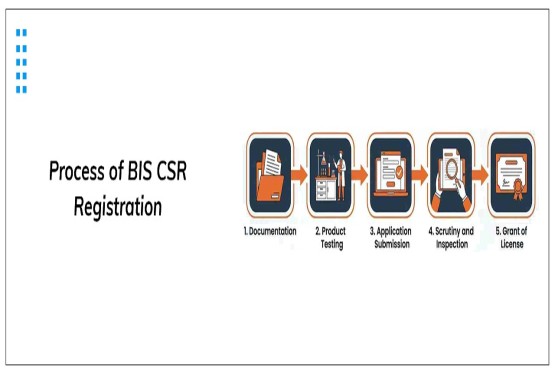
- BIS Registration
- Import Export Code (IEC)
- RCMC Registration
- RBI registration
- SEBI registration
- Insurance-related approvals
- Environmental approvals
- Factory licence
- Legal Metrology registration
- Trademark registration
- Other industry-specific licences
Businesses should map these requirements before commencing regulated activities.
Creating a Practical WOS Compliance Calendar
A well-managed wholly owned subsidiary should maintain a compliance calendar dividing responsibilities into:
Monthly compliance: GST, TDS, payroll and other recurring obligations.
Quarterly compliance: Tax payments, Board Meetings and applicable regulatory reporting.
Half-yearly compliance: Certain MSME, corporate and employment-related requirements where applicable.
Annual compliance: Financial statements, statutory audit, AGM, ROC annual filings, income-tax return, FLA reporting and other applicable annual returns.
Event-based compliance: Director changes, share allotments, borrowings, related-party transactions and changes in corporate structure. Assigning responsibility to directors, the finance team, Company Secretary, Chartered Accountant and other professionals can significantly reduce the chances of missed deadlines.
Conclusion
A wholly owned subsidiary gives a parent company considerable control over its operations, but complete ownership does not eliminate the subsidiary's independent compliance responsibilities. From ROC annual filing and statutory audit to related-party transactions, taxation, FEMA reporting and FLA filing, businesses must treat compliance as an ongoing process rather than a once-a-year exercise. This becomes even more important in cross-border structures where the Companies Act, FEMA, tax regulations and transfer pricing rules can operate simultaneously. Creating a structured Wholly Owned Subsidiary compliance roadmap from the date of incorporation can help businesses maintain proper governance, avoid unnecessary penalties and build a legally sustainable corporate structure.
FAQs
Q1. What is a wholly owned subsidiary?
Ans. A wholly owned subsidiary is a company whose entire share capital is beneficially owned or controlled by another company, known as its holding or parent company. Despite common ownership, the subsidiary remains a separate legal entity with independent compliance responsibilities.
Q2. Does a wholly owned subsidiary need to file annual ROC returns?
Ans. Yes. An Indian wholly owned subsidiary must comply with applicable Companies Act requirements, including filing its financial statements and annual return with the Registrar of Companies in the prescribed forms and within the applicable timelines.
Q3. Is statutory audit compulsory for a wholly owned subsidiary?
Ans. Companies incorporated under the Companies Act are generally subject to statutory audit requirements irrespective of whether the entity is wholly owned by another company. Applicability of additional audits may depend on turnover, activities and other statutory thresholds.
Q4. Does a WOS need to hold Board Meetings?
Ans. Yes. A wholly owned subsidiary must comply with applicable Board Meeting requirements under the Companies Act. The exact frequency can vary depending on whether the company falls within a category eligible for relaxed requirements.
Q5. Are transactions between a holding company and WOS related-party transactions?
Ans. Generally, the holding company and subsidiary fall within the related-party framework. Consequently, transactions between them should be reviewed for applicable approvals, disclosures, accounting treatment, transfer pricing and other compliance requirements.
Q6. What FEMA compliance applies to a foreign-owned Indian subsidiary?
Ans. Where an Indian company receives investment from a foreign parent, applicable FEMA requirements may include compliance with sectoral conditions, pricing rules and foreign investment reporting. Issue of equity instruments to a foreign investor may require FC-GPR reporting within the prescribed period.
Q7. Is the FLA Return compulsory for every wholly owned subsidiary?
Ans. No. The FLA Return is linked to foreign investment rather than WOS status alone. Indian entities having qualifying foreign liabilities or assets, including those that have received FDI or made overseas investment, may be required to file it. The prescribed annual deadline is generally July 15.
Q8. Can a wholly owned subsidiary enter into agreements with its parent company?
Ans. Yes. A subsidiary can enter into commercial agreements with its parent company. However, related-party transaction requirements, Board or shareholder approvals, tax implications, transfer pricing and appropriate documentation should be examined before executing the transaction.
Q9. Does a foreign-owned WOS need GST and income-tax registration in India?
Ans. An Indian subsidiary is treated as a separate entity for Indian tax purposes. It generally requires PAN and may require TAN, GST registration and other registrations depending on its transactions, turnover, employees and business activities.
Q10. What are the major annual compliances for a wholly owned subsidiary?
Ans. Major annual requirements commonly include preparation and audit of financial statements, AGM-related compliance, filing of financial statements and annual return with the ROC, income-tax filing and other applicable tax filings. Foreign-owned subsidiaries may additionally have FEMA and FLA reporting obligations, while sector-specific companies can have further regulatory requirements.


_crop10_thumb.jpg)


_crop10_thumb.jpg)


-Form_crop10_thumb.jpg)

_crop10_thumb.jpg)


_learn_crop10_thumb.jpeg)


_crop10_thumb.jpg)

_crop10_thumb.jpg)


_crop10_thumb.jpg)




_for_Foreign_Directors_learn_crop10_thumb.jpeg)


_Act,_2015_learn_crop10_thumb.jpg)









_learn_crop10_thumb.jpg)





















_crop10_thumb.jpg)

_crop10_thumb.jpg)
_(1)_crop10_thumb.jpg)





_crop10_thumb.png)



_crop10_thumb.jpg)

_crop10_thumb.jpg)




_crop10_thumb.png)
_crop10_thumb.jpg)





_crop10_thumb.png)