
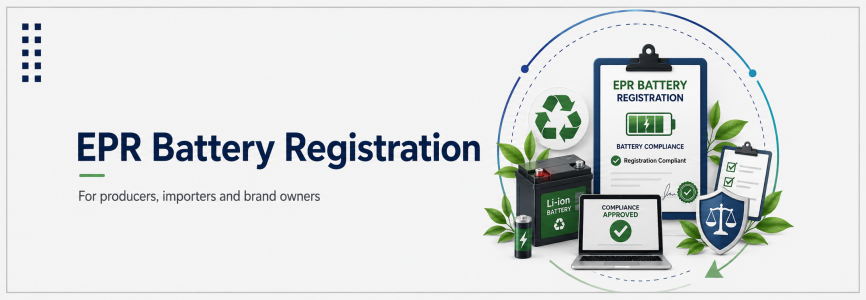



India’s battery market is expanding rapidly due to the increasing use of electric vehicles, consumer electronics, renewable-energy storage systems, industrial equipment, telecommunications infrastructure and portable devices. However, every battery introduced into the market eventually reaches the end of its useful life. If discarded or processed improperly, waste batteries can release hazardous substances, cause fires, contaminate natural resources and result in the loss of recoverable materials such as lithium, lead, cobalt, nickel, aluminium and graphite.
For this reason, battery waste is no longer treated merely as a disposal issue. Indian environmental law places responsibility on the businesses that manufacture, assemble, sell or import batteries. Under the Extended Producer Responsibility framework, commonly known as EPR, producers must ensure that batteries introduced into the market are collected and channelled for authorised refurbishment or recycling after they become waste.
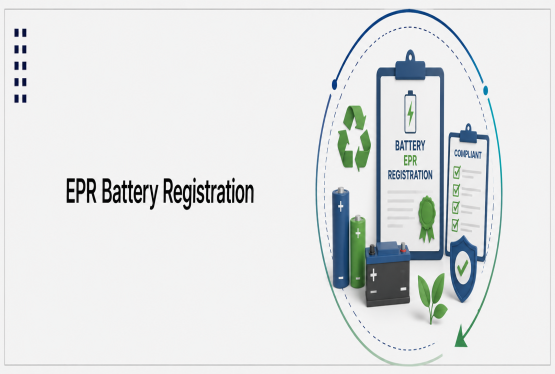
EPR Battery Registration is therefore not simply a certificate that a business obtains to complete a regulatory formality. It is the legal entry point into India’s battery-waste compliance system. Without registration, a producer or importer may be unable to lawfully discharge its EPR obligations, obtain or transfer EPR certificates, file returns or demonstrate compliance before the Central Pollution Control Board.
Legal Provisions for Battery Waste Management in India
The principal legislation is the Battery Waste Management Rules, 2022, notified by the Ministry of Environment, Forest and Climate Change under the Environment (Protection) Act, 1986. The rules were issued using powers available under Sections 3, 6, 8 and 25 of the Environment (Protection) Act, among other enabling provisions. They replaced the earlier Batteries (Management and Handling) Rules, 2001 and introduced a comprehensive EPR-based regulatory system.
The Battery Waste Management Rules apply to producers, dealers, consumers, collection entities, refurbishers, recyclers and other persons involved in the segregation, transportation or handling of waste batteries. They cover all types of batteries regardless of chemistry, shape, volume, weight, material composition or intended use. This includes portable batteries, automotive batteries, industrial batteries and electric-vehicle batteries. Batteries used in equipment connected with essential security interests, arms, ammunition, war material and equipment designed to be sent into space are excluded from the general application of the rules.
The rules have subsequently been amended in October 2023, March 2024, June 2024, December 2024 and February 2025. As of July 22, 2026, the official MoEFCC rules page lists the February 24, 2025 amendment as the latest notified amendment to the Battery Waste Management Rules.
Who Is Considered a Producer?
The word “producer” has a much wider meaning under the Battery Waste Management Rules than it may have in ordinary business language. It does not refer only to a company physically manufacturing battery cells in its own factory.
A person or entity can be treated as a producer when it manufactures and sells batteries under its own brand. The definition also covers batteries, including refurbished batteries, that are contained in equipment sold under the producer’s brand. Therefore, a business selling products such as power banks, laptops, electronic devices, electric vehicles, inverters, toys, medical devices or industrial equipment with batteries may fall within the producer definition.
A business may also be a producer when it sells batteries under its own brand even though the batteries are manufactured by another entity. Private-label arrangements, contract manufacturing and outsourced production do not necessarily transfer the EPR obligation away from the brand owner.
Most importantly for international businesses, a person importing batteries or importing equipment containing batteries is included within the producer definition. An importer cannot avoid EPR registration merely because batteries are not sold separately or because the battery is already installed inside the imported product.
This makes the rules highly relevant to automobile importers, electronics importers, equipment distributors, renewable-energy businesses, industrial machinery suppliers and businesses importing battery-operated products for sale or self-use.
Meaning of Extended Producer Responsibility
Extended Producer Responsibility means that the producer remains responsible for the environmentally sound management of batteries even after they have been sold and used. The obligation extends beyond the point of sale and continues until the resulting waste batteries have been properly collected, refurbished or recycled.
Rule 4 of the Battery Waste Management Rules places EPR obligations on producers for the batteries they introduce into the market. The producer must meet the collection, recycling and refurbishment targets specified under Schedule II. The 2023 amendment clarified that the obligation also covers batteries retained or introduced for the producer’s own use.
The rules prohibit producers from sending collected waste batteries to landfills or for incineration. Waste batteries must be directed to registered recyclers or refurbishers so that valuable materials can be recovered and hazardous components can be handled safely.
EPR therefore follows the principle that the business introducing a product into the economy should also bear responsibility for the environmental consequences arising at the product’s end of life.
Why EPR Battery Registration Is Mandatory
Rule 4 requires every producer to register through the centralised online portal developed by the Central Pollution Control Board. The application is submitted in the prescribed Form 1(A), and the registration certificate is issued in Form 1(B). The CPCB portal expressly identifies producers as manufacturers and importers and serves as the central system for registration, reporting and EPR compliance.
Registration is important because the complete EPR mechanism operates through the CPCB portal. A registered producer can report the quantity and category of batteries introduced into the market, determine its EPR liability, procure EPR certificates from eligible recyclers or refurbishers and submit the required annual information.
The centralised portal also creates accountability and traceability. It allows authorities to compare quantities declared by producers with the waste processed by recyclers and the EPR certificates generated or transferred. According to CPCB, the portal acts as a single data repository and is intended to improve transparency in fulfilling EPR obligations.
Registration also gives regulators an identifiable entity against which obligations can be assessed. Without a valid registration, an importer or manufacturer may not be able to establish that it has lawfully participated in India’s battery-waste management system.
Registration Requirements for Producers and Importers
The CPCB’s standard operating procedure divides the producer-registration application into several sections. These include general business information, details of battery categories, sales or import information, battery-material details, supporting documents and payment of the applicable registration fee.
Typical corporate documents include the entity’s PAN, GST registration and Certificate of Incorporation or Corporate Identity Number, where applicable. An importer is also expected to provide its Import Export Code. A producer operating a manufacturing facility may need to provide applicable consents under the Water and Air pollution-control laws and authorisation under hazardous-waste regulations.
The CPCB SOP presently provides registration-fee slabs based on annual turnover. The fee is stated as ?10,000 for an entity with turnover below ?5 crore, ?20,000 for turnover between ?5 crore and ?50 crore, and ?40,000 for turnover exceeding ?50 crore. Businesses should verify the applicable fee and portal requirements at the time of filing because procedural requirements may be updated administratively.
The 2023 amendment provides that a registration certificate remains valid until it is cancelled or withdrawn. This replaced the need to treat registration as a routine short-term approval requiring periodic renewal under the earlier procedural understanding. However, continuing validity does not excuse the producer from annual reporting or EPR fulfilment.
False information, concealment of material facts, forged documents or continued non-compliance can result in suspension or cancellation in addition to financial and penal consequences.
EPR Targets Under Schedule II
Schedule II of the Battery Waste Management Rules sets category-specific EPR targets. The framework considers the type of battery, its chemistry, expected life and the quantity previously introduced into the market. Producers must therefore maintain reliable records of batteries manufactured, assembled, sold, imported or used.
The target is not satisfied merely by collecting batteries. The applicable quantity must ultimately be refurbished or recycled through entities registered under the rules. The rules operate separately across categories such as portable, automotive, industrial and electric-vehicle batteries, and also recognise different chemistries such as lead-acid, lithium-ion, nickel-cadmium and zinc-based batteries.
The mandatory material-recovery targets become progressively stricter. For portable and electric-vehicle batteries, the prescribed recovery level was 70% for 2024–25, rises to 80% for 2025–26 and reaches 90% from 2026–27 onwards. For automotive and industrial batteries, the corresponding recovery targets are 55%, 60% and 60%. These percentages relate to the recovery of materials from the dry weight of the battery processed, subject to the applicable rules and methodology.
The year 2026–27 is therefore particularly significant for businesses dealing in portable and electric-vehicle batteries because the prescribed material-recovery target has now reached 90%.
Role of EPR Certificates
A producer generally fulfils its EPR obligation by obtaining valid EPR certificates generated through the portal by registered recyclers or refurbishers. The certificates represent eligible quantities of waste batteries that have been processed in accordance with the regulatory.
A producer cannot treat an informal collection receipt, transport invoice or payment to a scrap dealer as an EPR certificate. Certificates must be generated and transferred through the authorised portal, subject to category, quantity and eligibility controls.
The CPCB has advised producers to engage registered battery-waste recyclers and procure EPR credits through the portal to fulfil their obligations. The portal currently states that the transfer of EPR certificates has resumed and is operational. It has also introduced Single Sign-On through the common EPR portal.
The certificate system is important because it separates physical waste-management operations from regulatory proof. A producer may engage collection agencies, dealers, logistics providers or professional organisations, but the producer remains responsible for meeting the final EPR target. Outsourcing operational work does not transfer the statutory liability.
The rules also restrict businesses from dealing with entities that are required to be registered but have not obtained registration. Producers should therefore conduct due diligence on recyclers, refurbishers and other regulated service providers before entering into commercial arrangements.
Importers Have the Same Responsibility as Domestic Manufacturers
An importer may assume that the overseas manufacturer remains responsible for the battery after import. That assumption is generally incorrect under the Indian EPR framework. The entity importing batteries or equipment containing batteries into India is treated as a producer and must comply with the Indian rules.
The CPCB’s official FAQ confirms that importers must obtain registration to carry out import activities relating to batteries. The importer should therefore identify battery weights, chemistry, category and quantities before or during product onboarding rather than waiting until the annual return becomes due.
Importers should obtain accurate battery declarations from foreign suppliers. Purchase invoices showing only the number of finished products may be insufficient for calculating EPR obligations when the portal requires battery weight or category data.
An importer bringing waste batteries into India as recycling feedstock must also examine the Hazardous and Other Wastes (Management and Transboundary Movement) Rules, 2016 and obtain the permissions required under that separate framework. The 2023 Battery Waste Management amendment clarified that EPR certificates cannot be generated for imported waste batteries covered by the hazardous-waste import framework. This prevents imported waste from being used to discharge obligations arising from batteries placed in the Indian market.
Annual Statements and Return Filing
Registration is the beginning of compliance, not the end. A producer must maintain records of batteries manufactured, assembled, imported, sold and introduced for self-use.
Under the amended Rule 4 framework, a producer is required to submit the prescribed statement in Form 1(C) by June 30 regarding batteries manufactured, assembled or imported during the preceding financial year. Producers must also file the applicable annual return in Form 3 by the prescribed due date and report the manner in which their EPR obligations have been fulfilled.
The statutory default deadline is June 30 following the relevant financial year unless the government or CPCB issues a specific relaxation. For example, the deadline for filing producer annual returns for FY 2024–25 was extended to September 30, 2025. That extension was a year-specific administrative relaxation and should not be treated as a permanent alteration of the normal deadline.
Data integrity is critical. Quantities reported on the EPR portal should reconcile with customs records, purchase registers, GST data, inventory records, bills of material, production data and audited financial information. An unexplained difference can lead to queries, revision requirements, environmental compensation or allegations of false reporting.
Pre-Consumer Battery Waste Is Also Covered
Battery waste does not arise only after a customer uses a product. Manufacturing, assembly and import operations may generate damaged cells, rejected battery packs, expired inventory, off-specification products and other pre-consumer waste.
The 2023 amendment expressly brought pre-consumer waste arising from battery or battery-pack manufacturing, assembly or import within the producer’s compliance responsibilities. Producers must ensure that such waste is managed through authorised channels and reported in the annual return.
A business cannot simply sell rejected batteries to an unregistered scrap dealer or discard expired inventory as ordinary commercial waste. Internal waste-disposal procedures should require verification of the recipient’s registration and preservation of weight records, invoices, manifests and certificates.
Minimum Use of Recycled Materials
The regulatory framework does not stop at collecting and recycling waste. It also aims to create demand for materials recovered from waste batteries.
The Battery Waste Management Second Amendment Rules, 2024 revised the minimum recycled-material requirements. From FY 2027–28, portable and electric-vehicle batteries are required to contain at least 5% recycled material. The percentage increases to 10% in 2028–29, 15% in 2029–30 and 20% from 2030–31 onwards.
For automotive and industrial batteries, the minimum recycled-material requirement is 35% in 2027–28 and 2028–29 and 40% from 2029–30 onwards.
These requirements mean that producers and importers should begin supply-chain planning before the targets formally become applicable. Contracts with battery manufacturers may need declarations regarding recycled content, traceability of secondary raw materials and rights to inspect supporting records.
For importers, this may require coordination with overseas manufacturers because the Indian importer remains responsible for demonstrating compliance even where the battery was manufactured outside India.
Labelling and EPR Registration Number
Schedule I contains restrictions and labelling obligations for batteries. The rules require prescribed waste-management symbols and regulate the presence of certain hazardous substances.
The 2023 amendment introduced a requirement to display the producer’s EPR registration number. The 2025 amendment subsequently made the compliance mechanism more flexible. After giving written information to CPCB, a producer may provide a barcode or QR code containing the registration number on the battery, battery pack, equipment containing the battery, battery packaging, equipment packaging or specified bulk packaging. The number may also be given in the product information brochure in the circumstances permitted by the amended rules.
The amendment also provides that the cadmium or lead chemical symbols need not be displayed where the battery does not exceed the prescribed concentration limits of 0.002% cadmium and 0.004% lead.
Businesses should not treat labelling as a design-stage issue to be addressed after goods arrive in India. Importers should incorporate Indian EPR marking requirements into packaging, product artwork and supplier instructions before shipment.
Environmental Compensation and Penalties
Non-compliance can attract environmental compensation under Rule 13. Environmental compensation may be imposed for operating without registration, providing false information, wilfully concealing material facts, submitting forged or manipulated documents, mishandling waste batteries or failing to meet EPR targets.
Payment of environmental compensation does not extinguish the underlying EPR liability. A producer that pays compensation for a shortfall must still fulfil the outstanding obligation. The unfulfilled quantity may be carried forward for the period permitted under the rules. Where the shortfall is later fulfilled within the prescribed period, a portion of the compensation may be returned according to the statutory formula; unresolved obligations may ultimately result in forfeiture.
The March 2024 amendment introduced a regulated price range for EPR certificate transactions. The floor price is 30% and the ceiling price is 100% of the environmental compensation applicable for failure to meet the corresponding EPR obligation. This is intended to reduce arbitrary certificate pricing and connect the certificate market with the cost of non-compliance.
The December 2024 amendment aligned violations of the Battery Waste Management Rules with Section 15 of the Environment (Protection) Act. Under the present statutory framework, a person may face a penalty ranging from ?10,000 to ?15 lakh for a contravention where no separate penalty is provided, along with an additional ?10,000 for each day of continuing contravention. A company may face a penalty ranging from ?1 lakh to ?15 lakh for each contravention and an additional penalty of ?1 lakh per day for a continuing violation under Section 15A.
These penalties can operate in addition to environmental compensation, cancellation of registration, enforcement directions and other liabilities under environmental or sector-specific laws.
Practical Importance for Business Operations
EPR registration directly affects regulatory continuity, customs planning, supply-chain contracts and brand reputation. A registered and compliant producer is better positioned to respond to customer audits, investor due diligence, public procurement conditions and environmental, social and governance reviews.
For importers, compliance should begin during product classification and supplier onboarding. The importer should determine whether the product contains a battery, identify its category and chemistry, calculate its weight and ensure that the information is supported by the supplier.
For domestic manufacturers, production and sales systems should separately capture battery types and quantities. Operations, finance, legal, procurement and sustainability teams must work with the same data because EPR liabilities are calculated from actual market introduction rather than estimates prepared only at year-end.
A producer should also maintain written agreements with collection agencies, recyclers and refurbishers. The agreements should cover registration validity, waste category, record sharing, invoice requirements, EPR certificate transfer, rejection of ineligible quantities, audit rights and responsibility for inaccurate portal data.
Recent Legal and Portal Developments
The compliance framework has evolved significantly since 2022. The 2023 amendment expanded responsibility to self-use and pre-consumer waste, refined reporting requirements, introduced sustainable-production duties and clarified the continuing validity of registration.
The amendments issued during 2024 addressed EPR-certificate pricing, environmental-compensation guidelines, minimum recycled-material requirements and the penalty framework. The February 2025 amendment introduced more flexible methods for displaying the EPR registration number and modified the heavy-metal labelling requirements.
On the implementation side, CPCB has made the EPR certificate-transfer facility operational again and introduced a common Single Sign-On system for EPR portals. CPCB also advises regulated entities to use the dedicated email address and mobile number of an authorised company representative rather than the contact details of a consultant or agent.
These developments show that battery EPR is becoming increasingly data-driven. Registration, sales declarations, waste processing, certificate generation, certificate transfers and annual reporting are being connected through the centralised portal.
Conclusion
EPR Battery Registration is important because it establishes the legal identity of the entity responsible for batteries introduced into the Indian market. It enables the CPCB to calculate obligations, monitor waste processing and verify whether producers and importers have complied with the collection, recycling, recycled-content, labelling and reporting requirements prescribed by law.
For producers, registration protects business continuity by creating a structured method for meeting environmental obligations. For importers, it is especially important because the law treats the Indian importer as the producer even when the battery was manufactured abroad or supplied inside another product.
Businesses should not view EPR registration as a one-time certificate or a year-end filing exercise. Effective compliance requires accurate product data, authorised waste-management partners, timely EPR certificate procurement, proper product marking, annual returns and regular monitoring of amendments and CPCB portal communications.
As battery consumption continues to grow, enforcement is likely to focus increasingly on traceability, recovery performance and the accuracy of information submitted through the portal. Producers and importers that establish a reliable compliance system early will be better equipped to manage legal risk, avoid penalties and support India’s transition towards a circular battery economy.
Frequently Asked Questions (FAQs)
Q1. What is EPR Battery Registration?
Ans: EPR Battery Registration is a mandatory CPCB registration under the Battery Waste Management Rules, 2022.
It identifies the producer responsible for managing batteries introduced into the Indian market.
The registration process is completed through the centralised EPR Battery Portal.
Q2. Who is required to obtain EPR Battery Registration?
Ans: Manufacturers, brand owners and importers introducing batteries into the Indian market must obtain registration.
The requirement also covers businesses importing or selling equipment containing batteries.
The obligation may apply even when batteries are not sold separately.
Q3. Is EPR registration mandatory for battery importers?
Ans: Yes, importers are treated as producers under the Battery Waste Management Rules, 2022.
They must obtain a fresh CPCB registration before carrying out applicable battery import activities.
Registration held by an overseas manufacturer does not replace the Indian importer’s obligation.
Q4. Does EPR apply to products containing built-in batteries?
Ans: Yes, the requirement can apply to equipment imported or sold with an incorporated battery.
Examples include laptops, power banks, electric vehicles, toys, appliances and medical equipment.
Businesses must identify the battery’s category, chemistry, weight and quantity for compliance.
Q5. What responsibilities arise after registration?
Ans: The producer must meet the applicable collection, refurbishment and recycling targets under Schedule II.
It must procure eligible EPR certificates and submit prescribed information through the CPCB portal.
Registration alone does not complete the producer’s annual EPR obligations.
Q6. Can producers fulfil EPR obligations through recyclers?
Ans: Yes, producers can engage recyclers and refurbishers registered on the CPCB portal.
Eligible EPR certificates generated by such entities can be transferred to producers through the portal.
Informal recycling receipts or transactions with unregistered scrap dealers are not sufficient.
Q7. Are annual returns mandatory for registered producers?
Ans: Yes, registered producers must submit the prescribed annual information and returns on the EPR portal.
Reported quantities should reconcile with manufacturing, import, sales and inventory records.
Businesses must follow the statutory deadline or any specific extension officially announced by CPCB.
Q8. What happens if a producer fails to obtain registration?
Ans: Operating without registration may lead to regulatory action, environmental compensation and business disruption.
False information, forged documents or failure to meet EPR targets may attract additional liability.
The registration may also be suspended or cancelled for serious or continuing non-compliance.
Q9. Does paying environmental compensation remove EPR liability?
Ans: No, payment of environmental compensation does not automatically extinguish the outstanding EPR obligation.
The producer may still be required to fulfil the uncompleted recycling or refurbishment target.
Continued non-compliance can lead to further compensation, penalties and enforcement proceedings.
Q10. What is the latest amendment to the battery-waste rules?
Ans: The Battery Waste Management Rules have been amended several times after their notification in 2022.
The latest amendment currently listed by MoEFCC is the Battery Waste Management Amendment Rules, 2025.
Businesses should regularly monitor MoEFCC notifications and CPCB portal notices for procedural updates.


_crop10_thumb.jpg)


_crop10_thumb.jpg)


-Form_crop10_thumb.jpg)

_crop10_thumb.jpg)


_learn_crop10_thumb.jpeg)


_crop10_thumb.jpg)

_crop10_thumb.jpg)


_crop10_thumb.jpg)





_for_Foreign_Directors_learn_crop10_thumb.jpeg)


_Act,_2015_learn_crop10_thumb.jpg)










_learn_crop10_thumb.jpg)


































_crop10_thumb.jpg)

_crop10_thumb.jpg)

_(1)_crop10_thumb.jpg)








_crop10_thumb.png)








_crop10_thumb.jpg)


_crop10_thumb.jpg)






_crop10_thumb.png)

_crop10_thumb.jpg)





_crop10_thumb.png)







_crop10_thumb.jpg)
