


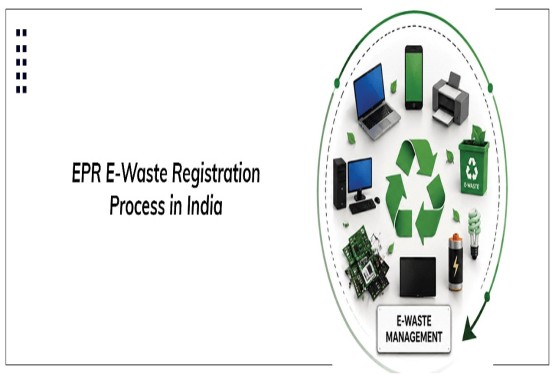
India’s electronics market is expanding rapidly, but every new electronic product eventually reaches the end of its useful life. Computers, mobile phones, televisions, refrigerators, air conditioners, medical devices, electrical tools and many other products can create environmental and health risks when discarded without proper recycling.
To address this challenge, Indian law places responsibility on the businesses that introduce electrical and electronic equipment into the market. A brand cannot simply sell an electronic product and forget about it after the warranty period. It must also account for the waste that the product is expected to generate at the end of its life.
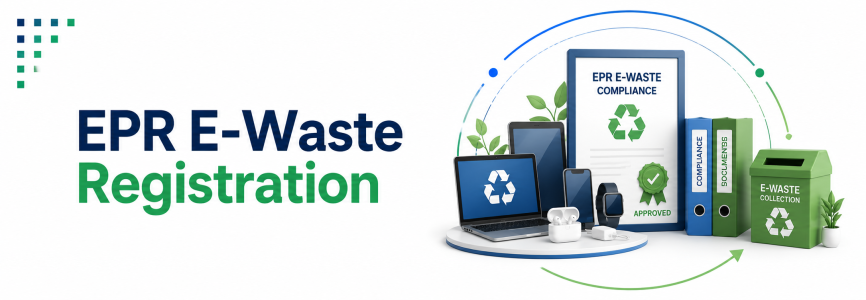
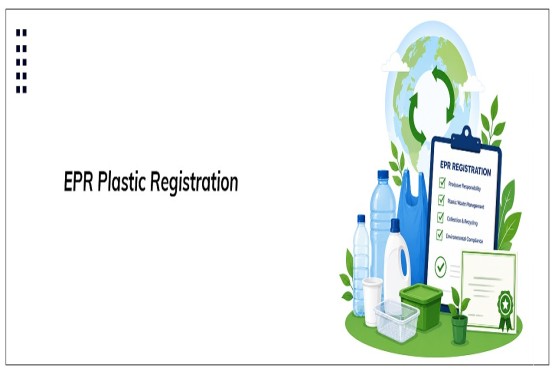
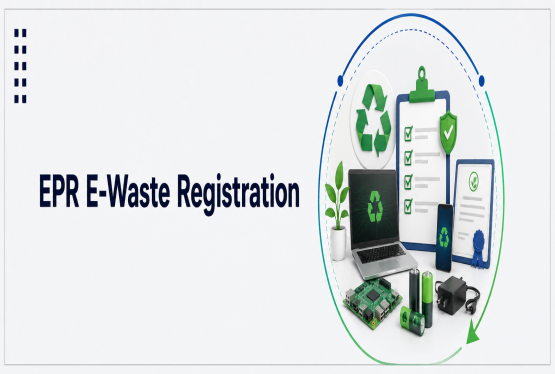
This responsibility is known as Extended Producer Responsibility, commonly called EPR. Producers covered by the law must obtain EPR E-Waste Registration from the Central Pollution Control Board, disclose their historical sales, receive recycling obligations, purchase valid EPR certificates from registered recyclers and submit periodic returns through the CPCB portal.
What Is EPR E-Waste Registration?
EPR E-Waste Registration is a statutory registration granted by the Central Pollution Control Board to producers of notified electrical and electronic equipment. It identifies the producer, records the products placed in the Indian market and determines the quantity of e-waste that the producer must ensure is recycled.
Registration itself is not the final compliance. It is the beginning of an ongoing system involving recycling targets, EPR certificates, quarterly returns, annual returns, consumer-awareness measures, Reduction of Hazardous Substances compliance and maintenance of supporting records.
Under Rule 3, Extended Producer Responsibility means the responsibility of a producer of electrical or electronic equipment listed in Schedule I to meet the recycling targets specified in Schedules III and IV through registered e-waste recyclers.
Legal Requirements Governing E-Waste EPR
The principal law governing this area is the Environment (Protection) Act, 1986. The Central Government issued the E-Waste (Management) Rules, 2022 by exercising its powers under Sections 6, 8 and 25 of that Act.
The Rules were notified through G.S.R. 801(E) dated 2 November 2022 and came into force on 1 April 2023. They replaced the earlier E-Waste (Management) Rules, 2016, except in relation to actions already taken or omitted under the previous framework.
The present compliance framework must be read with the E-Waste (Management) Amendment Rules, 2023, the E-Waste (Management) Second Amendment Rules, 2023, the March 2024 amendment and the November 2024 amendment concerning action for contravention. The official MoEFCC rules page reviewed in August 2026 lists the principal Rules and amendments issued through 2024.
To Whom Do the Rules Apply?
Rule 2 applies to manufacturers, producers, refurbishers, dismantlers and recyclers involved in the manufacture, sale, transfer, purchase, refurbishment, dismantling, recycling or processing of e-waste and electrical and electronic equipment listed in Schedule I.
The coverage extends not only to complete products but also to components, consumables, parts and spares that make the products operational. Therefore, a business dealing with notified electronic components may also need to examine whether it falls within the producer definition.
The Rules do not apply to waste batteries covered by the Battery Waste Management Rules, 2022, plastic packaging covered by the Plastic Waste Management Rules, 2016, service-sector micro enterprises as defined under the MSME Development Act, 2006, and radioactive waste covered by the Atomic Energy Act, 1962. The exclusion of a product from one waste stream does not necessarily exempt the complete equipment from other applicable waste-management obligations.
Who Is Treated as a Producer?
The legal definition of “producer” is wider than an ordinary manufacturer. A business may be treated as a producer even when it does not operate a manufacturing factory in India.
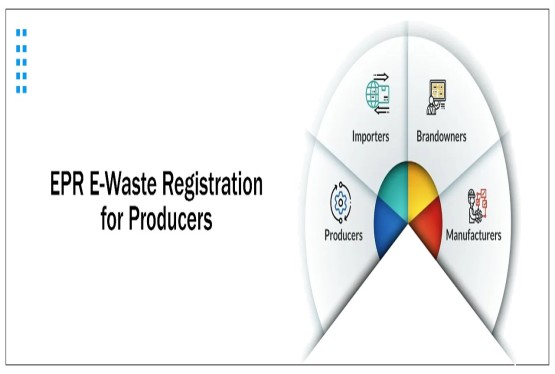
A person or entity is a producer where it manufactures and offers electrical or electronic equipment under its own brand. The definition also includes a brand owner that sells equipment assembled or manufactured by another supplier under the brand owner’s name.
An importer that offers imported electrical and electronic equipment, components, consumables, parts or spares for sale in India is also treated as a producer. A person importing used electrical or electronic equipment is similarly covered.
The definition applies irrespective of the selling technique. Therefore, sales through dealers, retail stores, e-commerce platforms, social media, websites or other electronic networks may fall within the Rules.
Private-Label and Contract-Manufactured Products
A business cannot avoid EPR merely because a third-party factory manufactures the products. When the business sells those products under its own brand, it may become the producer for EPR purposes. The agreement between the brand owner and contract manufacturer should clearly identify their respective environmental-compliance duties. However, a private contract cannot remove a legal obligation that the Rules directly place on the producer.
Importers and Foreign Brands
An Indian importer selling notified electronic equipment generally becomes the producer responsible for registration. The foreign manufacturer’s compliance in another country does not replace the Indian importer’s duties under the Indian Rules.
Foreign brands operating through an Indian subsidiary, importer or authorised entity should determine which Indian legal person places the products in the domestic market. The registration, sales declarations, invoices and import documents should consistently identify the responsible entity.
Products Covered Under Schedule I
Schedule I contains notified categories and individual product codes. Major categories include information technology and telecommunication equipment, consumer electrical and electronic equipment, photovoltaic panels, large and small electrical equipment, electrical and electronic tools, toys and sports equipment, medical devices other than implanted or infected products, and laboratory instruments.
The Schedule includes products such as computers, laptops, printers, cartridges, mobile phones, routers, televisions, refrigerators, air conditioners, washing machines, electric fans, lamps, electrical tools, medical equipment and laboratory instruments. A producer should identify the exact product and EEE code instead of relying only on a general product description.
Registration is normally product-code specific. When a registered producer introduces an additional covered product, it should update or amend its registration rather than assuming that the existing certificate automatically covers every electronic item sold under the brand.
Mandatory Registration Under Rule 4
Rule 4 requires manufacturers, producers, refurbishers and recyclers to register on the centralised portal. An entity falling under more than one category must obtain separate registration for each applicable category.
For example, a company that manufactures equipment and also sells imported products under its brand may need to examine both its manufacturer and producer obligations. Similarly, a registered recycler undertaking refurbishment may require separate registration for the relevant activity.
No covered entity is permitted to conduct business without registration. Registered entities are also prohibited from dealing with unregistered manufacturers, producers, recyclers or refurbishers. This creates a compliance chain in which every important participant must be traceable through the portal.
Where a registered entity submits false information, intentionally conceals material information or commits another irregularity, CPCB may revoke the registration for up to three years after providing an opportunity of being heard. Environmental compensation may also be imposed.
Responsibilities of a Producer Under Rule 6
Rule 6 requires a producer to register on the portal and obtain and implement its EPR targets under Schedules III and IV. The producer must fulfil these obligations through the digital EPR system.
The producer must also create public awareness through media, advertisements, publications, posters or other communication methods. Awareness activities should guide customers on safe disposal, available collection arrangements and responsible recycling.
Annual and quarterly returns must be filed in the format prescribed on the portal. Under the principal Rules, the return is to be submitted by the end of the month following the relevant quarter or year, subject to any valid extension or relaxation issued by the Government.
Information and Documents Required for Registration
The CPCB producer-registration SOP divides the application into basic business information and information used to calculate EPR obligations.
The applicant generally provides its trade name, legal name, mobile number, official email address, incorporation details, GST registration, Importer Exporter Code where applicable, company PAN and PAN of the authorised person. It must also provide the corporate-office address from which pan-India sales are managed.
The authorised person’s name, address, official contact information and PAN are required. Businesses should provide the contact details of a responsible internal representative because CPCB communications and portal deficiencies are addressed to the authorised person.
The producer must select each notified electrical or electronic product and its applicable EEE code. Importers should select the products they import, while businesses that have not yet started sales should select the products proposed to be introduced after registration.
Historical Sales Data
The most important part of the application is the quantity of electrical and electronic equipment placed in the market. Sales must be reported financial-year-wise by weight, usually in metric tonnes.
A producer that has operated for a period equal to or longer than the average life of its product must submit historical sales data for the corresponding average-life period. Where the producer has operated for fewer years, it provides data from the date its sales began.
The sales figures should cover the quantity placed in the Indian market and should correspond with invoices, import records and financial documents. Reporting only the number of units without converting them into weight is insufficient under the CPCB SOP.
CA Certificate and Declarations
A certificate from the statutory auditor or an independent Chartered Accountant is required to confirm the quantity of EEE sold or imported, financial-year-wise, in metric tonnes.
The producer also submits a covering letter and undertaking confirming that the information is correct, a company self-declaration, a RoHS compliance declaration, prescribed product details and a declaration confirming that technical RoHS documents are available for inspection.
An awareness plan describing the proposed consumer-education and collection-awareness activities must also be uploaded. The CPCB SOP emphasises that the addresses shown in GST, IEC, incorporation and supporting documents should match the address entered in the portal application.
CPCB Registration Process
The producer should begin by identifying every applicable Schedule I product and code. Incorrect product classification can affect the registration certificate as well as future recycling targets.
The applicant then creates an account through the official CPCB EPR system and enters the business, authorised-person and product information. In 2026, CPCB provides a Common EPR Portal for access to its EPR systems, so applicants should enter through official CPCB sources and avoid relying on similarly named private websites.
Historical sales data must be entered for each relevant product code, after which the covering letter, CA certificate, self-declarations, RoHS documents and awareness plan are uploaded. The applicant then pays the applicable portal fee and submits the application.
CPCB examines the application and may issue a digital checklist identifying deficiencies. According to the published April 2023 SOP, shortcomings may be communicated within 25 working days, and the producer is expected to respond within seven working days. A complete application is intended to be processed within 30 working days, although the actual timeline depends on document accuracy, portal functionality and regulatory scrutiny.
Validity, Renewal and Fees
The CPCB producer SOP states that registration is valid for five years from the date of issue. Renewal should be applied for through the portal at least 120 days before expiry.
The published SOP links the processing fee to the producer’s annual recycling target. The stated slabs range from ?2,500 for a target below 50 metric tonnes to ?15 lakh for a target above 5,000 metric tonnes. It also states a ?10,000 processing fee for producers whose sales have just started, ?10,000 for specified amendments and ?5,000 as annual maintenance charges.
Because fee structures and portal functionality can be revised through CPCB directions, the amount displayed on the live official portal should be treated as the payable amount at the time of filing.
EPR Recycling Targets
A mature producer’s target under Schedule III is based on the quantity of EEE placed in the market in year Y–X, where Y is the compliance year and X is the CPCB-prescribed average life of the product.
The target was 60% for 2023–24 and 2024–25, increased to 70% for 2025–26 and remains 70% for FY 2026–27. It will rise to 80% for 2027–28 and remain 80% from 2028–29 onward, unless revised after review.
Importers of used electrical and electronic equipment have a 100% EPR obligation for that imported material after the end of its life where it is not re-exported. Solar photovoltaic waste is presently excluded from the ordinary Schedule III recycling-target percentages.
For recent producers whose period of sales is shorter than the average life of their products, Schedule IV applies. From 2025–26 onward, the target is 20% of the sales figure from the financial year two years earlier. Once the producer’s years of operation equal the average life of the product, the obligation shifts to Schedule III.
How EPR Obligations Are Fulfilled
Rule 13 permits producers to obtain assistance from producer responsibility organisations, collection centres, dealers or other third parties. However, the legal responsibility remains entirely with the producer. The present framework is certificate-based. A producer fulfils its recycling obligation by purchasing EPR certificates online from registered recyclers and reporting the transaction through the quarterly return.
The information submitted by the producer and recycler is cross-checked on the portal. Where there is a difference, the lower verified quantity is counted toward the producer’s obligation. Certificates are also subject to environmental audit by CPCB or its designated agency.
EPR certificates generated in favour of registered recyclers are generally valid for two years from the end of the financial year in which they are generated. A producer may purchase certificates up to its current-year liability, previous shortfall and an additional five per cent of the current-year liability.
The obligation must be addressed proportionately on a quarterly basis. Purchasing a certificate automatically adjusts it against the producer’s liability, with earlier obligations receiving priority.
Refurbishing Certificates
Refurbishing can extend the useful life of electronic products and postpone the point at which recycling becomes necessary. Registered refurbishers may generate refurbishing certificates through the portal. When a producer purchases a refurbishing certificate, the corresponding EPR quantity is deferred for the period determined by CPCB. After the extended life ends, 75% of the deferred quantity is added back to the producer’s recycling obligation.
A refurbishing certificate therefore postpones the recycling responsibility; it does not permanently extinguish it. Final discharge occurs only through end-of-life recycling by a registered recycler and the corresponding recycling certificate.
Reduction of Hazardous Substances Compliance
EPR registration is connected with product-level environmental compliance. Rule 16 restricts hazardous substances in notified electrical and electronic equipment.
The maximum concentration in homogeneous materials is generally 0.1% by weight for lead, mercury, hexavalent chromium, polybrominated biphenyls and polybrominated diphenyl ethers. The limit for cadmium is 0.01%, subject to the exemptions and transitional provisions in Schedule II.
Producers must maintain declarations and technical documentation demonstrating compliance. CPCB may conduct random sampling, and the producer must bear the sampling and testing costs. A non-compliant product may have to be corrected, withdrawn or recalled from the market.
Storage, Transportation and Accident Reporting
Manufacturers, producers, refurbishers and recyclers may ordinarily store e-waste for up to 180 days. They must maintain records of storage, sale and transfer and make them available for inspection.
CPCB may extend the storage period to 365 days where waste must be stored specifically for developing a recycling or reuse process. The storage conditions must comply with applicable rules and CPCB guidelines.
Waste transported for final disposal to a treatment, storage and disposal facility must follow the Hazardous and Other Wastes (Management and Transboundary Movement) Rules, 2016. An accident occurring during transportation or at an e-waste processing facility must be reported immediately to the concerned State Pollution Control Board by telephone and email.
Special Rules for Solar PV and Refrigerants
Manufacturers and producers of solar photovoltaic modules, panels and cells must register on the portal, maintain a distinct inventory and comply with CPCB procedures. Under Rule 12, waste generated up to 2034–35 must be stored in accordance with CPCB guidelines, with annual reporting as prescribed.
Although ordinary Schedule III and IV recycling targets do not presently apply to solar PV waste, registration, inventory, storage and reporting obligations still remain. Recyclers must recover materials according to CPCB requirements.
The Second Amendment Rules, 2023 introduced specific responsibilities for the secure, accountable and sustainable management of refrigerants generated from refrigeration and air-conditioning equipment. Manufacturers, refurbishers and recyclers must use approved destruction technologies in accordance with CPCB guidelines.
Environmental Compensation and Penalties
Rule 22 authorises CPCB to impose environmental compensation for violations, failure to meet EPR obligations and the use or transfer of false EPR certificates. Compensation may also be imposed on unregistered producers, manufacturers, refurbishers and recyclers, as well as entities that aid or abet violations.
Payment of environmental compensation does not eliminate the underlying EPR obligation. The shortfall may be carried forward for up to three years. Where the shortfall is corrected after one year, 85% of the compensation may be returned; after two years, 60% may be returned; and after three years, 30% may be returned.
The November 2024 amendment replaced Rule 23 and provides that any person failing to comply with or contravening the Rules is liable to penalty under Section 15 of the Environment (Protection) Act.
Section 15 currently provides a penalty of not less than ?10,000 and up to ?15 lakh for each contravention where no separate penalty is provided. A continuing contravention can attract an additional ?10,000 for every day during which it continues.
An aggrieved person may appeal against suspension, cancellation, refusal of registration or refusal of renewal within 30 days to the nominated Additional Secretary or Joint Secretary of MoEFCC. A delayed appeal may be considered where sufficient cause is established.
Important Recent Amendments
The January 2023 amendment revised the manner in which producers provide constituent and RoHS information and added specific hazardous-substance exemptions for solar products and medical devices.
The July 2023 amendment introduced refrigerant-management responsibilities, provisions for multiple recycling end products and detailed RoHS transitional exemptions for specified equipment.
The March 2024 amendment inserted Rule 9A, enabling the Central Government to relax return or report deadlines by up to nine months in the public interest or for effective implementation. It also authorised the establishment of platforms for exchanging EPR certificates and empowered CPCB to prescribe upper and lower certificate-price limits linked to environmental compensation.
The November 2024 amendment aligned Rule 23 with the revised penalty framework under the Environment (Protection) Act. As of 5 August 2026, the official MoEFCC rules listing reviewed for this article shows the 2022 Rules and the amendments through 2024; businesses should nevertheless check the live CPCB portal for new notices, filing extensions, technical guidelines and portal instructions before taking action.
Common Compliance Mistakes
A frequent mistake is assuming that only the physical manufacturer needs EPR Registration. Importers, brand owners, private-label businesses, e-commerce sellers and businesses importing used equipment may also qualify as producers.
Other common errors include selecting the wrong EEE code, reporting sales in units rather than weight, excluding imported components, submitting inconsistent addresses, failing to obtain a proper CA certificate and purchasing certificates from entities that are not validly registered.
Some producers obtain registration but do not monitor quarterly obligations. Registration without certificate purchase, return filing, awareness activities and RoHS documentation does not amount to complete compliance.
Conclusion
EPR E-Waste Registration under the CPCB framework is not merely an environmental certificate required at the time of starting a business. It creates a continuing legal responsibility for every notified electronic product placed in the Indian market.
Manufacturers, importers and brand owners must first determine whether they fall within the producer definition. They must identify the correct Schedule I product codes, compile historical sales data by weight, prepare a CA certificate, submit RoHS declarations and obtain registration through the official CPCB system.
After registration, the producer must monitor its annual target, purchase valid certificates from registered recyclers, submit quarterly and annual returns and retain complete supporting records. For FY 2026–27, the normal Schedule III recycling target is 70% of the relevant quantity calculated using the prescribed average-life formula.
Businesses should treat EPR compliance as part of their product strategy rather than as an afterthought. A strong compliance system protects the environment, strengthens supply-chain accountability and reduces the risk of environmental compensation, registration revocation and statutory penalties.
Frequently Asked Questions (FAQs)
Q1. Who needs EPR E-Waste Registration?
Ans: Manufacturers, importers and brand owners of covered electronic products may need registration.
Private-label sellers and importers of used electronic equipment may also qualify as producers.
Applicability depends on the product categories listed in Schedule I.
Q2. Which authority grants EPR E-Waste Registration?
Ans: The Central Pollution Control Board grants EPR registration to producers.
Applications are submitted online through the official CPCB EPR portal.
The registration records the producer’s products and recycling obligations.
Q3. Is EPR Registration mandatory for electronics importers?
Ans: Yes, importers selling covered electrical or electronic equipment in India are treated as producers.
They must obtain registration before placing notified products in the Indian market.
Compliance may also apply to imported components, parts and used equipment.
Q4. What documents are required for EPR Registration?
Ans: Applicants generally need PAN, GST, IEC, incorporation proof and authorised-person details.
Historical sales data, a CA certificate and product-wise information are also required.
RoHS declarations and a consumer-awareness plan must be submitted.
Q5. What is the EPR recycling target for FY 2026–27?
Ans: The normal Schedule III recycling target for FY 2026–27 is 70%.
It is calculated using product sales and the prescribed average product life.
Different rules may apply to new producers and used-equipment importers.
Q6. How can a producer fulfil its EPR obligation?
Ans: The producer purchases valid EPR certificates from CPCB-registered recyclers.
The certificates are adjusted against the producer’s recycling liability on the portal.
The producer must also report the transactions through prescribed returns.
Q7. How long is EPR Registration valid?
Ans: CPCB producer registration is generally valid for five years from issuance.
The renewal application should be filed before the registration expires.
Current portal instructions should be checked for the applicable timeline and fee.
Q8. Are quarterly and annual returns mandatory?
Ans: Yes, registered producers must file quarterly and annual returns on the portal.
The returns disclose sales, recycling obligations and EPR certificate transactions.
Delayed or incorrect filing may result in regulatory action.
Q9. What happens if a producer fails to meet its target?
Ans: CPCB may impose environmental compensation for an EPR shortfall.
The unpaid recycling obligation may also be carried forward to later years.
Paying compensation does not permanently remove the original obligation.
Q10. What are the penalties for violating E-Waste Rules?
Ans: Violations may result in registration suspension, cancellation or environmental compensation.
Statutory penalties may also apply under the Environment (Protection) Act, 1986.
False certificates and dealings with unregistered entities can attract serious action.


_crop10_thumb.jpg)


_crop10_thumb.jpg)


-Form_crop10_thumb.jpg)

_crop10_thumb.jpg)


_learn_crop10_thumb.jpeg)


_crop10_thumb.jpg)

_crop10_thumb.jpg)


_crop10_thumb.jpg)





_for_Foreign_Directors_learn_crop10_thumb.jpeg)


_Act,_2015_learn_crop10_thumb.jpg)










_learn_crop10_thumb.jpg)































_crop10_thumb.jpg)

_crop10_thumb.jpg)

_(1)_crop10_thumb.jpg)







_crop10_thumb.png)




_crop10_thumb.jpg)

_crop10_thumb.jpg)






_crop10_thumb.png)

_crop10_thumb.jpg)




_crop10_thumb.png)