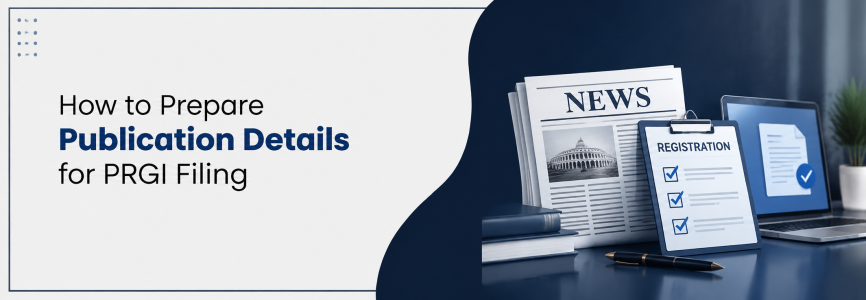



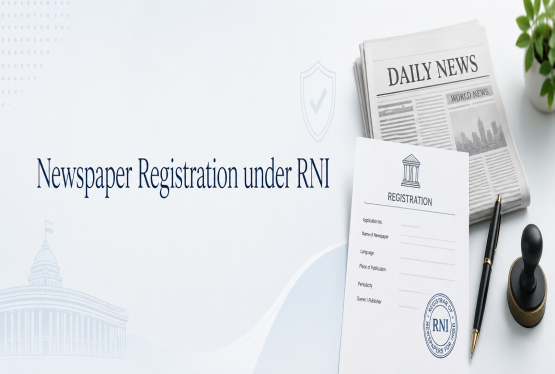
Starting a newspaper, magazine, journal, or periodical publication in India requires compliance with the registration framework administered by the Press Registrar General of India (PRGI). One of the most important stages in the registration process is preparing accurate publication details. These details form the foundation of the PRGI application and help the authority verify the identity, ownership, language, periodicity, place of publication, and other essential aspects of the proposed publication.
Many applications face delays because applicants provide incomplete information, inconsistent details, incorrect title information, or documents that do not match the publication details entered in the application. Proper preparation before filing can significantly reduce errors and improve the chances of smooth processing. Publication details are not merely a formality; they represent the official identity of the publication. Any mismatch between the application, publisher details, printing details, and supporting documents may lead to queries or rejection. This article explains the complete process of preparing publication details for PRGI filing, important information required, common mistakes, and frequently asked questions.
Understanding PRGI Registration
The Press Registrar General of India (PRGI) is the statutory authority responsible for registration of newspapers and periodicals in India under the applicable legal framework. Registration provides legal recognition to publications and ensures that details regarding publishers, printers, owners, titles, and periodicity are maintained in official records.
A publication may include:
- Daily newspapers
- Weekly newspapers
- Fortnightly publications
- Monthly magazines
- Journals
- Periodicals
- Special interest publications
Before applying for registration, applicants must carefully prepare the publication profile and supporting information.
Importance of Accurate Publication Details in PRGI Filing
Publication details serve multiple purposes during the registration process:
1. Establishes Publication Identity
The publication title, language, periodicity, and category help identify the newspaper or periodical in the PRGI database.
For example:
- Publication Name: Business Today India
- Language: English
- Periodicity: Weekly
- Category: News Magazine
Each detail contributes to creating a unique identity.
2. Prevents Application Delays
Incorrect information may result in:
- Clarification requests
- Correction requirements
- Additional document submissions
- Delayed approval
Applicants should ensure that all information is verified before submission.
3. Ensures Compliance With Legal Requirements
Publication details must comply with applicable rules relating to:
- Publisher information
- Printing location
- Ownership details
- Declaration requirements
- Periodicity selection
Incorrect declaration of details may create compliance issues in the future.
Key Publication Details Required for PRGI Filing
1. Publication Title
The publication title is the most important element of PRGI registration.
Applicants must provide:
- Proposed publication name
- Approved title details
- Language of publication
- Nature of publication
The title should be unique and should not create confusion with existing registered publications.
Before proceeding, applicants should verify:
- Availability of the title
- Similar existing titles
- Correct spelling
- Language representation
Common Mistakes:
- Using a title different from the approved title
- Changing spelling after approval
- Adding words without updating records
- Using trademarks or names without proper rights
2. Language of Publication
The language selected during filing should accurately represent the language in which the publication will be printed.
Examples:
- English
- Hindi
- Marathi
- Tamil
- Telugu
- Bengali
- Kannada
- Malayalam
- Gujarati
- Punjabi
If a publication contains multiple languages, the applicant should provide appropriate details as required.
Incorrect language selection can create problems during verification.
3. Periodicity of Publication
Periodicity refers to how frequently the publication will be released.
Common categories include:
Daily
Published every day.
Weekly
Published once every week.
Fortnightly
Published once every two weeks.
Monthly
Published once every month.
Quarterly
Published once every three months.
The selected periodicity should match the actual publication plan.
For example, selecting "daily" but publishing occasionally may create compliance concerns.
4. Category of Publication
Applicants should clearly mention the nature of the publication.
Examples:
- General News
- Business
- Education
- Technology
- Lifestyle
- Entertainment
- Agriculture
- Legal Affairs
- Healthcare
- Industry Specific Publications
The category helps describe the purpose and content focus of the publication.
5. Publisher Details
The publisher is responsible for publishing the newspaper or periodical.
Required details generally include:
- Full name of publisher
- Residential address
- Contact details
- Email ID
- Mobile number
- Identity documents
The publisher's details should remain consistent across:
- PRGI application
- Declaration documents
- Identity proof
- Other supporting documents
6. Owner Details
Ownership details must accurately represent the person or entity owning the publication.
The owner may be:
- Individual
- Company
- LLP
- Trust
- Society
- Other legal entity
Details may include:
- Name of owner
- Registered address
- Entity details
- Supporting documents
If the owner is a company, ensure that:
- Company name is correctly mentioned
- Registered office details match official records
- Authorized person details are accurate
7. Printer Details
The printer is responsible for printing the publication.
Printer details generally include:
- Name of printing press
- Printing address
- Contact information
- Printing facility details
Applicants should verify that the printer information is complete and accurate.
Common errors include:
- Mentioning only the press name without address
- Providing incomplete printing location
- Using outdated printer information
8. Printing Location
The printing location refers to the place where the publication will physically be printed.
Important details include:
- Building number
- Street/locality
- City
- District
- State
- PIN code
The printing location should correspond with supporting documents.
9. Publishing Location
The publishing place refers to the location from where the publication is issued.
It may differ from the printing location.
For example:
Printing Location:
Delhi Printing Press, Delhi
Publishing Location:
Mumbai Office
Both locations should be clearly mentioned.
10. Owner and Publisher Relationship
Applicants should clearly understand the difference between:
Owner
The person/entity holding ownership rights over the publication.
Publisher
The person responsible for publishing and managing publication activities. In some cases, the owner and publisher may be the same person. In other cases, separate persons may hold these roles. Incorrectly entering these details can create confusion during filing.
Documents Required for Preparing Publication Details
Although document requirements may vary depending on the application, commonly required documents include:
Identity Documents
- PAN Card
- Aadhaar Card
- Passport
- Other government identity proof
Address Proof
- Electricity bill
- Rent agreement
- Property documents
- Utility bills
Entity Documents (If Applicable)
For companies:
- Certificate of Incorporation
- PAN
- MOA and AOA
- Board authorization documents
For LLP:
- LLP Incorporation Certificate
- LLP Agreement
For Trust/Society:
- Registration certificate
- Trust deed or society documents
Step-by-Step Process to Prepare Publication Details
Step 1: Finalize Publication Concept
Before filing, decide:
- Publication name
- Language
- Periodicity
- Subject category
- Target audience
A clear publication concept avoids future modifications.
Step 2: Verify Title Details
Check whether the selected title is suitable and available.
Ensure:
- Correct spelling
- Correct language
- No unnecessary variations
Step 3: Collect Publisher and Owner Information
Prepare complete details of:
- Publisher
- Owner
- Printer
- Printing press
Verify that names and addresses match official documents.
Step 4: Confirm Printing and Publishing Locations
Prepare accurate location details.
Avoid using incomplete addresses.
Step 5: Review Supporting Documents
Cross-check:
- Names
- Addresses
- Dates
- Entity information
Any mismatch should be corrected before filing.
Step 6: Submit PRGI Application
After verifying all details, submit the application through the prescribed process.
Maintain copies of:
- Application details
- Uploaded documents
- Acknowledgement records
Common Mistakes While Preparing Publication Details
1. Incorrect Publication Name
Using a name different from the approved title can create complications.
2. Wrong Periodicity Selection
Applicants sometimes select a periodicity without considering their actual publishing schedule.
3. Address Mismatch
Differences between application details and documents are among the most common issues.
4. Incorrect Publisher Information
Incomplete publisher details may delay verification.
5. Ignoring Future Compliance Requirements
Applicants should maintain consistency in publication details even after registration. Any major change may require updating records.
Tips for Smooth PRGI Filing
Maintain Accuracy
Every field should be checked before submission.
Keep Documents Updated
Use valid and current documents.
Maintain Consistency
The same details should appear across all records.
Plan Publication Operations
Choose realistic periodicity and printing arrangements.
Take Professional Assistance
Expert guidance can help avoid procedural errors and ensure proper filing.
Role of Professional Assistance in PRGI Filing
Professional assistance can help applicants with:
- Title verification
- Document review
- Application preparation
- Publication detail drafting
- Filing support
- Query resolution
- Compliance guidance
A structured approach ensures that the application accurately represents the proposed publication.
Conclusion
Preparing publication details for PRGI filing requires careful planning, accuracy, and proper documentation. The information submitted during registration becomes the official identity of the publication and must correctly represent the title, owner, publisher, printer, language, periodicity, and locations involved.
Errors in publication details can delay registration and create compliance difficulties later. Therefore, applicants should thoroughly verify every detail before filing and maintain consistency throughout the publication lifecycle. A well-prepared PRGI application helps establish a strong foundation for launching and operating a legally recognized newspaper or periodical in India.
FAQs
Q1. What are publication details in PRGI filing?
Ans. Publication details include information about the newspaper or periodical such as title, language, periodicity, category, publisher, owner, printer, and publication locations.
Q2. Why are publication details important for PRGI registration?
Ans. Publication details help PRGI identify and verify the publication. Accurate information reduces chances of queries, delays, and compliance issues.
Q3. Can the publisher and owner be different persons?
Ans. Yes, the owner and publisher may be different individuals or entities depending on the ownership and management structure of the publication.
Q4. What details are required for the publication title?
Ans. Applicants need to provide the approved title, correct spelling, language, and related publication information.
Q5. Can publication details be changed after PRGI registration?
Ans. Yes, certain changes may require updating records through the prescribed process.
Q6. What is periodicity in PRGI registration?
Ans. Periodicity refers to how frequently the publication will be released, such as daily, weekly, fortnightly, or monthly.
Q7. Is the printing location different from the publishing location?
Ans. Yes, the place where printing takes place may differ from the location from where the publication is issued.
Q8. What happens if incorrect information is submitted in PRGI filing?
Ans. Incorrect details may result in clarification requests, delays, or the need for corrections before approval.
Q9. Can a company apply for PRGI registration?
Ans. Yes, companies and other eligible entities can apply for registration of publications by providing appropriate ownership and authorization documents.
Q10. How can professional assistance help in PRGI filing?
Ans. Professional assistance helps with preparing publication details, reviewing documents, completing filing requirements, and handling procedural requirements efficiently.


_crop10_thumb.jpg)


_crop10_thumb.jpg)


-Form_crop10_thumb.jpg)

_crop10_thumb.jpg)


_learn_crop10_thumb.jpeg)


_crop10_thumb.jpg)

_crop10_thumb.jpg)


_crop10_thumb.jpg)




_for_Foreign_Directors_learn_crop10_thumb.jpeg)


_Act,_2015_learn_crop10_thumb.jpg)









_learn_crop10_thumb.jpg)




























_crop10_thumb.jpg)
_crop10_thumb.jpg)
_(1)_crop10_thumb.jpg)








_crop10_thumb.png)




_crop10_thumb.jpg)


_crop10_thumb.jpg)






_crop10_thumb.png)
_crop10_thumb.jpg)