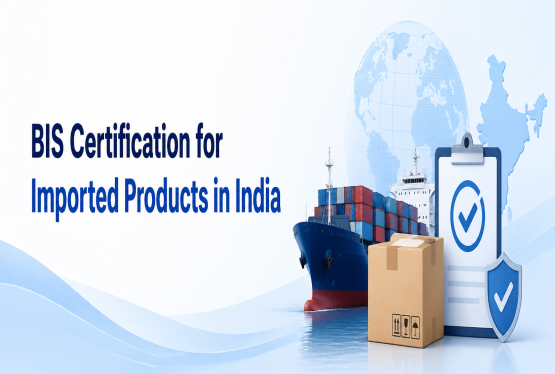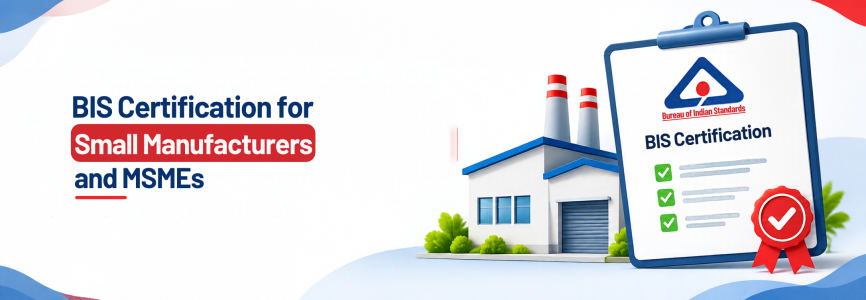



India has thousands of small manufacturers and Micro, Small and Medium Enterprises (MSMEs) that produce goods used in our daily lives. From electrical appliances and household products to industrial equipment and construction materials, these businesses play an important role in India's economy. However, making a good product is not always enough. Manufacturers must also make sure their products meet the safety and quality standards required by the government.
This is where BIS Certification for Small Manufacturers and MSMEs becomes important. The Bureau of Indian Standards (BIS) is India's national standards body. It develops Indian Standards and operates certification schemes to check whether products meet the required quality and safety conditions. For certain products, BIS certification is compulsory before they can be manufactured or sold in India. Many small manufacturers believe that BIS certification is only meant for large companies. This is not true. Micro and small businesses may also need BIS certification, depending on the products they manufacture. The good news is that BIS provides certain fee concessions and testing-related facilities to help eligible smaller businesses.
What is BIS Certification?
BIS Certification is an official process through which the Bureau of Indian Standards checks whether a product meets the applicable Indian Standard. These standards describe the quality, safety, performance and testing requirements that a product must satisfy.
For example, if a small factory manufactures an electrical product covered by a compulsory certification requirement, it must follow the relevant Indian Standard and obtain the required BIS approval before supplying that product to the market. BIS certification helps manufacturers show that their products meet recognised requirements. It also helps customers identify products that have been assessed under an applicable certification scheme. BIS operates different certification schemes. The most suitable scheme depends on the type of product and the government requirements applicable to it.
Is BIS Certification Mandatory for Small Manufacturers and MSMEs?
BIS certification is not mandatory for every MSME. It becomes compulsory when the product is covered by a relevant government notification, such as a Quality Control Order (QCO), or another legal requirement. A Quality Control Order makes compliance with specified Indian Standards compulsory for certain products. Once the order becomes applicable, manufacturers must follow its requirements unless they qualify for a stated exemption.
For example, a small manufacturer producing a regulated electrical appliance may need BIS certification. However, another MSME manufacturing a product that is not covered by compulsory certification may be able to choose voluntary certification.
Importantly, MSME registration or a small production capacity does not automatically exempt a manufacturer from BIS requirements. Any special exemption, relaxation or extended deadline must be checked under the relevant product notification. Manufacturers can check the official BIS list of products under compulsory certification to understand whether their products are covered.
Types of BIS Certification Available for MSMEs
BIS offers different certification schemes based on product category, manufacturing conditions and applicable regulations. Small manufacturers should identify the correct scheme before submitting their application.
1. ISI Mark Certification (Scheme I)
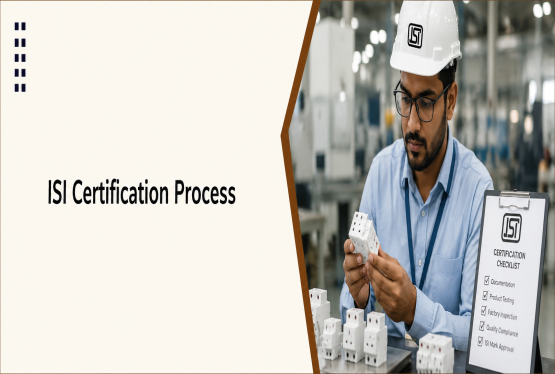
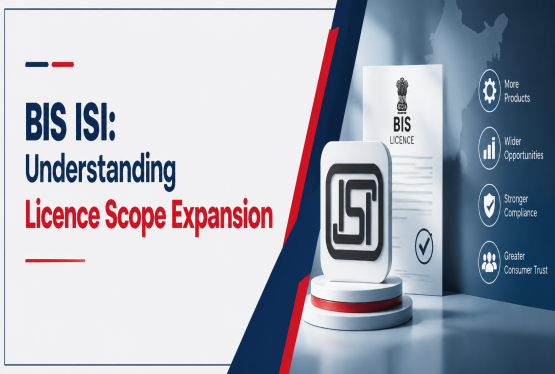
ISI Mark Certification is one of the best-known BIS product certification schemes in India. It applies to many industrial, electrical, mechanical and consumer products. Under this scheme, BIS checks the manufacturer's production facilities, quality control arrangements and product conformity. Once approval is granted, the manufacturer can use the ISI Mark on products covered by the licence.
2. BIS Compulsory Registration Scheme (CRS)
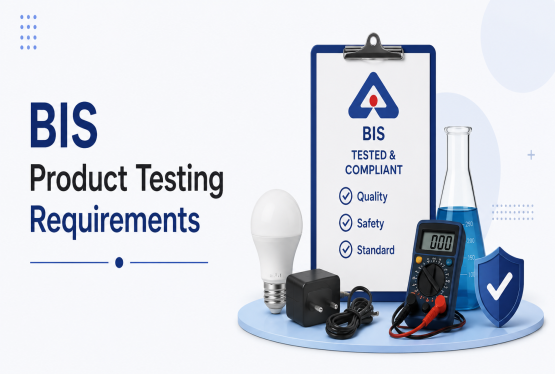
BIS CRS applies to specified electronics, IT equipment and other notified products. Manufacturers must generally get their products tested at BIS-recognised laboratories before applying for registration. The CRS procedure differs from the normal ISI Mark licensing process. Applicants must follow the relevant product standards and the conditions of Scheme II.
3. BIS Scheme X Certification
Scheme X covers certain products notified under the applicable conformity assessment requirements. It can involve detailed technical files, factory assessment, testing and other procedures. Manufacturers should not assume that every industrial or electrical product follows Scheme I. The applicable QCO determines the required certification route.
Comparison of BIS certification schemes
|
Scheme |
Main purpose |
General requirement |
|
Scheme I – ISI Mark |
Product quality and conformity |
Product testing and factory assessment |
|
Scheme II – CRS |
Specified electronic and other notified goods |
Recognised laboratory testing and registration |
|
Scheme X |
Certain notified products and equipment |
Technical documentation, testing and applicable assessment |
Who Can Apply for BIS Certification Under MSME Category?
Small manufacturers operating legally in India can apply for BIS certification if they manufacture products covered by an applicable Indian Standard and meet the requirements of the relevant scheme. Manufacturers may operate as sole proprietorships, partnerships, LLPs, private limited companies or other legally recognised business entities.
The business should have suitable production arrangements, quality control procedures and access to the testing facilities required for its products. Certain MSMEs may be allowed to use shared or external testing facilities instead of maintaining every testing arrangement within their own premises.
Basic eligibility requirements
- The applicant must be the eligible manufacturer of the product.
- The manufacturing unit must have the required machinery and production arrangements.
- The product must meet the applicable Indian Standard.
- Required quality control and testing arrangements must be available.
- The manufacturer must provide accurate business and factory details.
- The applicant must follow the relevant BIS application and certification requirements.
Having an Udyam Registration Certificate can help establish MSME status when claiming applicable concessions. However, Udyam registration does not replace BIS product certification.
Documents Required for BIS Certification for MSMEs
Preparing the correct documents before applying can make the BIS certification process easier. Requirements differ according to the scheme, product and manufacturing unit.
The following documents are commonly relevant:
|
Document |
Purpose |
|
Business registration documents |
Establish the business's legal identity |
|
Udyam Registration Certificate |
Supports MSME classification and concession claims |
|
PAN and applicable GST details |
Provides business identification |
|
Factory address proof |
Confirms manufacturing location |
|
Manufacturing process flowchart |
Explains how the product is manufactured |
|
Machinery and equipment details |
Shows the factory's production capabilities |
|
Product specifications |
Identifies the product and relevant standard |
|
Testing equipment details |
Explains available quality control arrangements |
|
Laboratory test reports |
Provides evidence of product conformity |
|
Quality control records |
Shows how product quality is maintained |
|
Authorisation letter |
Identifies the authorised applicant or representative |
|
Other applicable declarations |
Meets scheme-specific BIS requirements |
A small manufacturer should check the relevant BIS product manual before preparing the final application. Product manuals explain the tests, equipment, inspection requirements and other technical details for specific Indian Standards.
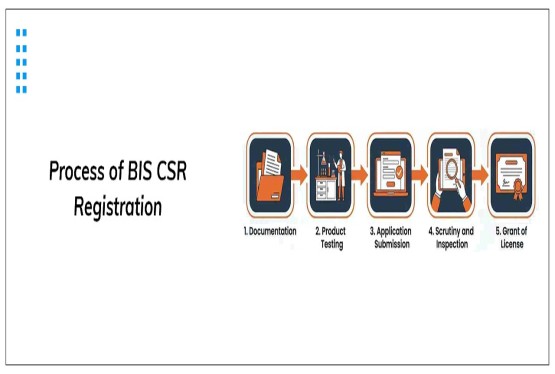
Step-by-Step BIS Certification Process for Small Manufacturers
The BIS certification process may appear difficult to first-time applicants. However, it becomes easier when the manufacturer understands the main steps.
-
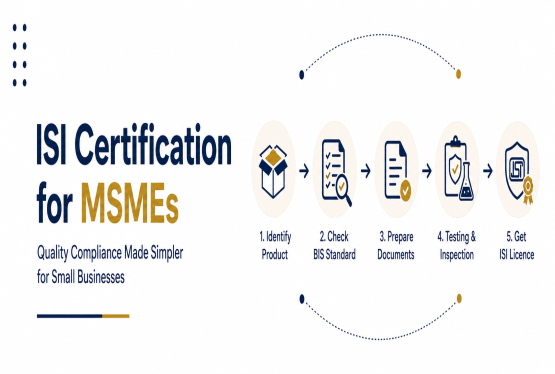
Identify the product and Indian Standard. Check whether the product falls under compulsory BIS certification and identify the correct Indian Standard and certification scheme.
-
Prepare the manufacturing unit. Make sure the factory has the necessary machinery, process controls, technical records and quality testing arrangements.
-
Arrange product testing. Submit product samples for testing as required by the applicable scheme. Use BIS-recognised laboratories wherever prescribed.
-
Collect the required documents. Prepare business registration details, factory information, technical records, test reports and MSME eligibility documents.
-
Submit the online application. For Scheme I, manufacturers generally apply through Manak Online. For CRS, use the BIS CRS Portal.
-
Complete the BIS assessment. Under schemes requiring factory inspection, BIS examines the manufacturing facilities, testing arrangements and applicable documents.
-
Respond to observations. If BIS raises queries or identifies technical issues, the manufacturer must provide explanations, corrective actions or additional documents.
-
Receive the licence or registration. Once all requirements are met, BIS grants the applicable approval. The manufacturer may then use the relevant Standard Mark according to the approved scope.
These steps mainly describe the typical process. Actual requirements may differ between Scheme I, CRS and Scheme X.
BIS Certification Fee Concessions for MSMEs in 2026
One important benefit for small manufacturers is the availability of fee concessions under certain BIS certification schemes. These concessions can reduce the financial burden on eligible businesses. Under a notification issued on March 17, 2026, BIS extended the following concessions on the annual minimum marking fee under Scheme I until May 31, 2029.
|
Enterprise category |
Concession |
|
Micro enterprises |
80% |
|
Small enterprises |
50% |
|
Eligible startups |
80% |
|
Eligible women entrepreneur enterprises |
Additional 10% on the applicable scale-based fee |
For example, if the annual minimum marking fee applicable to a large manufacturer is Rs 50,000, an eligible micro enterprise receiving an 80% concession would pay Rs 10,000 towards that particular fee.
These concessions are not discounts on every BIS-related expense. Testing charges, application fees, inspection fees and other expenses are governed by their respective rules. The separate additional concession for eligible women entrepreneur enterprises should also be calculated according to BIS's notification, rather than automatically adding percentages together.
Can MSMEs use shared testing facilities?
Yes. BIS has issued guidelines allowing eligible MSMEs to use Cluster Based Test Facilities (CBTFs) under specified conditions. A shared testing facility allows multiple manufacturers to access testing equipment without each business having to purchase every machine separately. This can be particularly useful for micro enterprises that have limited space and financial resources. However, the use of shared or external testing facilities depends on the requirements of the applicable product manual and certification scheme. Every manufacturer must still ensure that the finished product meets the relevant Indian Standard.
BIS Certification Fees for Small Manufacturers
The total cost of BIS certification is not the same for every MSME. It depends on the product, certification scheme, laboratory requirements, inspection needs and available concessions.
For the ordinary Scheme I product certification process, the BIS FAQ lists the following basic charges:
|
Fee type |
Amount |
|
Application fee |
Rs 1,000 |
|
Preliminary inspection fee |
Rs 7,000 per man-day |
|
Annual licence fee |
Rs 1,000 |
|
Marking fee |
Depends on the applicable product standard |
|
Product testing charges |
Depends on the laboratory and required tests |
These are published base figures for the Scheme I process, not a complete 2026 quotation. Applicable concessions, amendments, taxes and other charges should be checked before payment. Manufacturers should also consider the cost of product samples, testing equipment, technical documentation and professional assistance. In some cases, a product may fail its first test and require improvements or retesting, which can increase the overall expense.
How Long Does BIS Certification Take for MSMEs?
The time required to obtain BIS certification depends on the type of product and the certification process. For the ordinary Scheme I process, BIS has published indicative timelines of approximately one month under Option 2 and four months under Option 1 after receiving a complete application. These are general estimates, not guaranteed approval periods. Other schemes, such as CRS or Scheme X, follow different procedures and timelines. Product testing, inspection scheduling, incomplete documents and responses to BIS observations can also affect processing time. Small manufacturers should begin planning well before a compulsory certification deadline. Waiting until the last date can create difficulties if testing facilities are busy or the product does not pass its first assessment.
Benefits of BIS Certification for Small Manufacturers and MSMEs
BIS certification can provide several benefits beyond meeting legal requirements. It helps small businesses improve their manufacturing practices and demonstrate their commitment to product quality.
-
Better customer confidence : Customers may feel more confident purchasing products that display a valid BIS Standard Mark. It indicates that the manufacturer has met the requirements of the applicable certification scheme.
-
Access to regulated markets : For products covered by compulsory BIS certification, obtaining the required approval enables manufacturers to enter the market legally. Without certification, a business may be unable to supply those products.
-
Improved product quality : Preparing for BIS certification encourages manufacturers to review their raw materials, testing methods, machinery and production processes. These improvements can help reduce avoidable product defects.
-
Better business opportunities : Some distributors, institutional buyers and government procurement processes may require products to meet specified Indian Standards or hold valid certification. Meeting these requirements can help small manufacturers compete for relevant business opportunities.
-
Stronger business reputation : Certified products can help manufacturers demonstrate that their goods meet recognised standards. This can be useful when working with new customers, distributors or business partners.
-
Reduced compliance risks : Following the applicable certification requirements helps businesses avoid problems associated with selling regulated products without the required approval. Certification does not guarantee that a product will never develop a defect, but it establishes a system for checking and maintaining conformity.
Common Challenges Faced by MSMEs During BIS Certification
Small manufacturers sometimes find BIS certification difficult because they have fewer technical and financial resources than larger companies. One common challenge is identifying the correct Indian Standard. A business may manufacture several products that appear similar but fall under different standards or certification requirements. Another difficulty is preparing the factory for quality testing. Some manufacturers need to upgrade testing equipment, arrange additional records or improve their production controls before applying.
Product testing can also create unexpected expenses. When a sample does not meet the applicable standard, the manufacturer may need to identify the problem, improve the product and arrange another test. Documentation is another area where small businesses face difficulties. Incorrect product details, missing records and differences between application documents can result in additional queries. The most practical solution is to study the product requirements before submitting an application. Manufacturers should understand their testing responsibilities, prepare their records and arrange suitable technical support where needed.
Common Mistakes to Avoid During BIS Certification
Manufacturers can reduce unnecessary delays by avoiding these mistakes:
-
Applying under the wrong certification scheme or Indian Standard.
-
Assuming that Udyam Registration provides an exemption from BIS requirements.
-
Submitting incomplete or outdated laboratory reports.
-
Claiming MSME concessions without adequate eligibility documents.
-
Using the BIS Standard Mark before receiving valid approval.
-
Manufacturing products outside the approved licence scope.
-
Failing to maintain required testing and production records.
-
Missing licence renewal deadlines or changes to applicable standards.
A BIS licence is generally linked to the approved manufacturer, manufacturing location, product standard and scope. A manufacturer should not assume that one certificate automatically covers every product or factory location.
BIS Certification Requirements After Approval
Receiving BIS certification does not mean that the manufacturer's responsibilities are finished. The business must continue to ensure that its products meet the applicable Indian Standard. Manufacturers should maintain testing records, operate the required quality control arrangements and cooperate with BIS surveillance activities. The relevant Standard Mark and licence details must be used according to the applicable marking rules.
Businesses should also monitor changes in standards, product specifications and manufacturing arrangements. A material change may require an update, extension of scope or additional approval. Under the ordinary Scheme I process, manufacturers can apply for renewal for a period of one to five years, subject to the applicable requirements and fees. Other schemes may have different validity and renewal provisions.
Important BIS Rules and Updates for MSMEs in 2026
The following developments are particularly relevant to small manufacturers:
-
Extended Scheme I fee concessions: In March 2026, BIS extended eligible annual minimum marking fee concessions until May 31, 2029. This provides longer-term relief for eligible micro enterprises, small enterprises, startups and women entrepreneur enterprises.
-
Product-specific QCO changes: The government continues to issue, revise and amend Quality Control Orders. Manufacturers must check the current effective date of the order covering their products. Some orders provide different implementation dates or exemptions for certain categories of businesses.
-
Changes to CRS requirements: BIS issued revised provisions concerning CRS licence validity, renewal and annual fee payment on May 27, 2026. Manufacturers operating under CRS should review these provisions instead of relying only on older renewal guidance.
-
Updated technical standards: BIS also published several product-specific guidance documents and standard-related updates during 2026. Manufacturers must follow the standards applicable to their products and the transition periods notified by BIS.
These changes make it important for MSMEs to check current BIS notifications rather than rely on an old certification checklist.
Conclusion
BIS Certification for Small Manufacturers and MSMEs is an important part of product quality and regulatory compliance in India. It helps businesses understand the standards their products must meet and provides a recognised certification route for eligible goods. For products covered by compulsory certification requirements, obtaining the necessary approval is essential before manufacturing or selling them in the regulated market. Small manufacturers should identify the correct Indian Standard, arrange product testing, prepare their documents and understand the applicable BIS procedure before submitting an application.
The availability of MSME fee concessions and shared testing facilities can make compliance more affordable for eligible businesses. However, every manufacturer must continue to maintain product quality and follow the conditions of its certification. Compliance Calendar LLP assists small manufacturers and MSMEs with BIS certification documentation, application support and related compliance services.
Frequently Asked Questions
Q1. Is BIS certification compulsory for all MSMEs?Ans. No. BIS certification is compulsory only for products covered by applicable government orders or other mandatory certification requirements. MSMEs manufacturing products outside these requirements may choose voluntary certification where available.
Q2. Can a small manufacturer apply for BIS certification online?Ans. Yes. Small manufacturers can apply online through the relevant BIS portal. For Scheme I, applications are generally submitted through Manak Online. CRS applications are submitted through the BIS CRS portal.
Q3. Is Udyam Registration mandatory for BIS certification?Ans. Udyam Registration is not a universal requirement for obtaining BIS product certification. However, it can help establish MSME status when claiming applicable concessions. Manufacturers should check the documents required under their certification scheme.
Q4. How much does BIS certification cost for an MSME?Ans. The cost depends on the product, certification scheme, testing requirements and applicable concessions. It may include application fees, testing charges, inspection costs, licence fees and marking fees. There is no single fixed cost for every manufacturer.
Q5. Can micro enterprises get an 80% discount on BIS fees?Ans. Yes. Eligible micro enterprises can receive an 80% concession on the annual minimum marking fee under Scheme I, as provided in the March 2026 notification. This concession does not automatically apply to every certification expense.
Q6. Can a manufacturer apply for BIS certification without having a factory?Ans. BIS product certification is generally granted to manufacturers with identifiable manufacturing arrangements and responsibility for product conformity. A trader without manufacturing operations cannot normally obtain a manufacturer's licence simply to sell another company's products.
Q7. How long is BIS certification valid for small manufacturers?Ans. Validity depends on the certification scheme. Under Scheme I, a licence may initially be granted for up to two years and renewed for up to five years, subject to applicable conditions. Other schemes have separate provisions.
Q8. Can one BIS certificate cover different products?Ans. Not automatically. A BIS licence covers the products, varieties and Indian Standards included in its approved scope. Manufacturers may need separate applications or an extension of scope for additional products, depending on the applicable scheme.
Q9. What happens if an MSME sells products without mandatory BIS certification?Ans. Selling products covered by compulsory BIS requirements without the necessary approval may lead to enforcement action and penalties under the applicable law. Manufacturers should confirm the product's requirements before supplying it to the market.
Q10. Can MSMEs use external laboratories for BIS testing?Ans. Yes, where the relevant scheme and product requirements allow it. Some MSMEs can use BIS-recognised laboratories or approved shared testing facilities. However, manufacturers must still maintain the required quality controls and ensure product conformity.
Article last updated on : 03 Nov 2026.