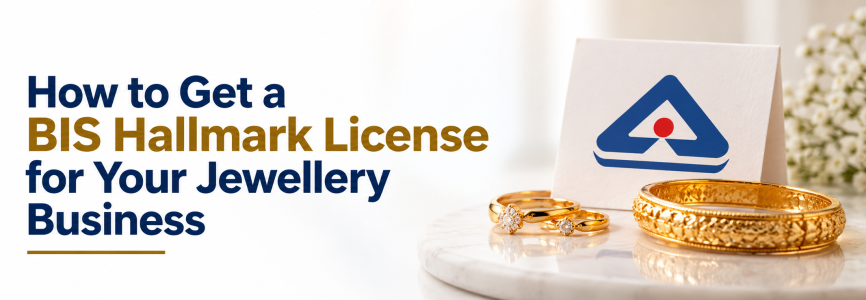



For a jewellery business, customer trust depends heavily on purity, transparency and compliance. Buyers purchasing gold or silver jewellery expect assurance that the precious metal content matches the purity being claimed. This is where the Bureau of Indian Standards (BIS) hallmarking becomes important. BIS hallmarking is the official system used in India to verify and record the purity or fineness of precious metal articles. According to BIS, hallmarking aims to protect consumers against adulteration and ensure that manufacturers and sellers maintain prescribed standards of fineness. At present, gold and silver are covered under the BIS hallmarking framework.
For jewellery businesses, the commonly used expression “BIS Hallmark License” generally refers to the BIS Certificate of Registration for Jewellers that permits a registered jeweller to sell hallmarked gold and silver jewellery or artefacts. The registration process has now been simplified considerably, and eligible jewellers can apply online.
What is BIS Hallmarking?
Hallmarking is the process through which the purity or fineness of a precious metal article is officially determined and recorded. A hallmark gives customers a recognised indication that the jewellery has been tested according to the applicable standards.BIS operates the hallmarking system in India under the BIS Act, 2016 and the BIS (Hallmarking) Regulations, 2018, as amended from time to time. The regulations cover matters including registration of jewellers, recognition of Assaying and Hallmarking Centres and licensing of refineries or mints. For a jewellery business, BIS registration is important not merely as a regulatory formality. It also helps create confidence among customers because hallmarked jewellery provides a recognised purity reference.
Who Needs BIS Registration for Selling Hallmarked Jewellery?
BIS states that manufacturers, wholesalers, distributors and retailers engaged in selling hallmarked precious-metal articles are generally required to obtain BIS registration. However, there are specific exceptions. For example, artisans or manufacturers carrying out jewellery manufacturing purely on a job-work basis for jewellers, without themselves making sales in the distribution chain, may be exempt subject to supporting documentation. BIS also states that jewellers having annual turnover up to ?40 lakh fall outside the purview of mandatory hallmarking, although they may voluntarily obtain registration if they wish to sell hallmarked jewellery. Because applicability can depend on the nature of the business, turnover and the manner in which jewellery is sold, a jeweller should verify the current BIS requirements before commencing operations.
Is BIS Hallmark Registration the Same as Hallmarking the Jewellery?
No. These are related but separate steps.
First, the jewellery business obtains a Certificate of Registration from BIS. Thereafter, jewellery requiring hallmarking is submitted to a BIS-recognised Assaying and Hallmarking Centre for testing and marking. BIS explains that only BIS-registered jewellers can approach an Assaying and Hallmarking Centre for hallmarking their jewellery. Therefore, getting the jeweller registration is generally the first compliance step for a business intending to sell hallmarked jewellery.
How to Apply for BIS Hallmark Registration
The application procedure is now primarily online. BIS states that jewellers seeking registration for selling hallmarked gold or silver jewellery and artefacts can apply through the National Single Window System (NSWS). The NSWS portal can also be accessed through the BIS Manakonline system.
Step 1: Prepare Your Business Information
Before beginning the application, the jeweller should keep its basic business information ready. This generally includes details such as:
-
Name of the jewellery business
-
Constitution of the business
-
Address of the jewellery premises
-
Contact details
-
PAN and GST-related information, where applicable
-
Nature of jewellery business
-
Details of authorised person or proprietor
The details submitted should be consistent with the business's statutory registrations.
Step 2: Access the BIS Hallmarking Registration Facility
The applicant should access the BIS jeweller-registration facility through NSWS or the BIS Manakonline portal. The BIS procedure currently directs applicants to the NSWS platform for jeweller registration. The applicant should create or use the required login and select the relevant BIS hallmarking or jeweller-registration service.
Step 3: Fill in the Application
The applicant must provide the requested business and establishment details accurately. The business name, ownership status and address should correspond with the supporting statutory records wherever applicable. Errors in the legal name, premises or constitution of the entity can create difficulties in future compliance and record maintenance.
Step 4: Submit the Application
Once all details have been entered and verified, the application can be submitted electronically. Under the current BIS system, registration for jewellers has been significantly simplified. BIS states that the certificate of registration is granted instantly and that no registration fee is charged to jewellers.
Step 5: Receive the BIS Registration Number
After successful registration, the jeweller receives a registration number. BIS guidelines state that the applicant can receive the registration details through electronic communication and download the certificate using the registration number. The certificate should be retained as part of the jewellery business's compliance records.
Documents Required for BIS Hallmark Registration
The current BIS hallmarking overview states that jeweller registration is granted instantly without uploading documents or paying fees.
However, jewellery businesses should still maintain documents supporting the information submitted in their application. Depending on the constitution and circumstances of the business, these may include:
-
PAN of the entity or proprietor
-
GST Registration Certificate, if applicable
-
Business registration certificate
-
Partnership deed for a partnership firm
-
Certificate of Incorporation for a company
-
LLP incorporation records, where applicable
-
Proof of jewellery shop or business premises
-
Trade licence or other local registration, where applicable
-
Identity and authorisation details of the responsible person
Older BIS procedures required documentary proof of the legal constitution and address of the firm, including documents such as incorporation certificates, partnership deeds, GST registrations, rent agreements and sale or lease deeds. Even though the online process has become easier, maintaining updated supporting records remains important for inspections, verification and future regulatory requirements.
BIS Hallmark Registration Fee
At present, BIS does not charge a fee for granting jeweller registration or certification.
This registration fee should not be confused with hallmarking charges payable when individual jewellery articles are sent to an Assaying and Hallmarking Centre. Hallmarking charges are applicable per article rather than according to the weight of the jewellery.
Validity of BIS Jeweller Registration
BIS states that the Certificate of Registration granted to jewellers is valid for lifetime. This makes the present system different from older arrangements under which renewal requirements could apply. However, lifetime registration does not mean that compliance obligations end after the certificate is issued. A jewellery business must continue to follow applicable BIS hallmarking requirements and ensure that its registration details remain correct.
What Happens After BIS Registration?
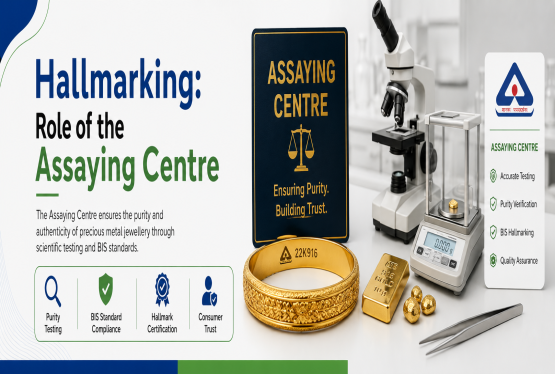
Once registration is obtained, the jewellery business can arrange for eligible gold or silver articles to be hallmarked through BIS-recognised Assaying and Hallmarking Centres. The hallmarking process generally involves submitting jewellery to an authorised centre, where the article is tested for purity and marked in accordance with the applicable BIS system. Jewellers should deal only with recognised Assaying and Hallmarking Centres and maintain proper records of jewellery sent for hallmarking.
Who is Responsible for Getting Jewellery Hallmarked?
According to BIS, within the chain consisting of manufacturers, wholesalers, distributors and retailers, responsibility for getting the article hallmarked falls on the entity making the first point of sale. BIS defines the point of sale by reference to factors such as transfer of ownership, issuance of a compliant tax invoice and physical delivery of the article. Therefore, hallmarking is generally required once in the supply chain rather than repeatedly at every subsequent transaction.
Compliance Requirements After Registration
Registration is only the beginning of compliance. A registered jewellery business should ensure that hallmarked articles are sourced, sold and documented in accordance with applicable BIS requirements. The business should maintain proper invoices and records, ensure the correct purity description is communicated to customers, use recognised Assaying and Hallmarking Centres and avoid any misleading representation involving BIS marks. The jeweller should also ensure that changes in business details are updated wherever required. BIS guidelines specifically address the operation, surveillance and cancellation of a jeweller's Certificate of Registration.
Can BIS Registration Be Cancelled?
Yes. Violation of the applicable terms and conditions can result in cancellation of a jeweller's registration or certification. BIS expressly states that non-compliance with registration conditions may lead to cancellation. This makes continuing compliance important even though the certificate itself has lifetime validity.
Benefits of BIS Hallmark Registration for Jewellery Businesses
BIS registration can offer several practical advantages. It allows a jewellery business to participate in India's recognised hallmarking framework and sell properly hallmarked jewellery. It also supports customer confidence by providing recognised assurance regarding purity. For established jewellery businesses, hallmark compliance can also help standardise procurement, testing, invoicing and customer communication. Most importantly, it reduces uncertainty for customers purchasing high-value precious-metal articles.
Common Mistakes Jewellery Businesses Should Avoid
Jewellers should avoid applying using inconsistent business names or addresses, dealing with unrecognised hallmarking centres, selling jewellery with incorrect purity descriptions or assuming that BIS registration alone automatically means every article in stock is hallmarked. Another common mistake is confusing jeweller registration with recognition of an Assaying and Hallmarking Centre. A jewellery retailer normally requires jeweller registration, whereas an organisation intending to operate an Assaying and Hallmarking Centre follows a separate recognition process. Businesses should also avoid using BIS-related marks or representations in a manner that could mislead consumers.
Conclusion
Getting BIS hallmark registration for a jewellery business has become relatively straightforward. Eligible manufacturers, wholesalers, distributors and retailers can apply electronically through the prescribed BIS/NSWS system, and BIS currently provides jeweller registration without a registration fee. The certificate is granted instantly under the current process and remains valid for lifetime.
However, jewellery businesses should view registration as part of a broader compliance framework. Proper hallmarking through recognised centres, accurate invoices, correct purity representation and continued adherence to BIS regulations remain essential. A properly registered and compliant jewellery business can therefore combine regulatory compliance with stronger customer confidence in the purity and authenticity of the jewellery it sells.
FAQs
Q1. What is a BIS Hallmark License for jewellers?
Ans. It generally refers to the BIS Certificate of Registration issued to jewellers for selling hallmarked gold or silver jewellery and artefacts.
Q2. Is BIS registration mandatory for every jewellery shop?
Ans. Manufacturers, wholesalers, distributors and retailers selling hallmarked precious-metal articles generally require BIS registration. BIS states that jewellers with annual turnover up to ?40 lakh fall outside mandatory hallmarking, although voluntary registration is permitted.
Q3. How can I apply for BIS Hallmark registration?
Ans. Jewellers can apply online through the National Single Window System, accessible directly or through the BIS Manakonline system.
Q4. What is the government fee for BIS jeweller registration?
Ans. BIS currently charges no fee for granting registration or certification to jewellers.
Q5. How long does it take to obtain BIS registration?
Ans. Under the current BIS system, the registration is granted instantly after successful online application.
Q6. What is the validity of BIS jeweller registration?
Ans. BIS states that the jeweller's Certificate of Registration is valid for lifetime.
Q7. Can an unregistered jeweller send jewellery directly for hallmarking?
Ans. BIS states that only BIS-registered jewellers can approach recognised Assaying and Hallmarking Centres for hallmarking jewellery.
Q8. Is jewellery hallmarked according to its weight?
Ans. No. BIS states that hallmarking charges are applied per article rather than on the basis of jewellery weight.
Q9. Who is responsible for getting jewellery hallmarked in the supply chain?
Ans. The entity making the first point of sale is responsible for getting the article hallmarked. Depending on the transaction, this could be the manufacturer, wholesaler, distributor or retailer.
Q10. Can BIS cancel a jeweller's registration?
Ans. Yes. Violation of applicable terms and conditions may result in cancellation of the jeweller's registration or certification.


_crop10_thumb.jpg)


_crop10_thumb.jpg)


-Form_crop10_thumb.jpg)

_crop10_thumb.jpg)


_learn_crop10_thumb.jpeg)


_crop10_thumb.jpg)

_crop10_thumb.jpg)


_crop10_thumb.jpg)




_for_Foreign_Directors_learn_crop10_thumb.jpeg)


_Act,_2015_learn_crop10_thumb.jpg)











_learn_crop10_thumb.jpg)

































_crop10_thumb.jpg)

_crop10_thumb.jpg)
_(1)_crop10_thumb.jpg)







_crop10_thumb.png)







_crop10_thumb.jpg)

_crop10_thumb.jpg)







_crop10_thumb.png)
_crop10_thumb.jpg)









_crop10_thumb.png)