


Chain pipe wrenches are commonly used in plumbing, construction, oil and gas industries, and heavy machinery maintenance. These tools help workers grip, tighten and loosen large pipes where ordinary wrenches may not provide enough grip. But what happens if the chain breaks while tightening a pipe or the wrench handle bends under pressure? Such problems can damage equipment and even cause workplace accidents.
To improve the quality and safety of these tools, the Bureau of Indian Standards (BIS) has prescribed specific requirements for chain pipe wrenches under Indian Standard IS 4123. Important 2026 Update: The earlier standard IS 4123:1982 has been revised to IS 4123:2024, including Amendment No. 1. Manufacturers should follow the revised requirements rather than relying only on the old standard.
What is BIS ISI Certification for Chain Pipe Wrenches?
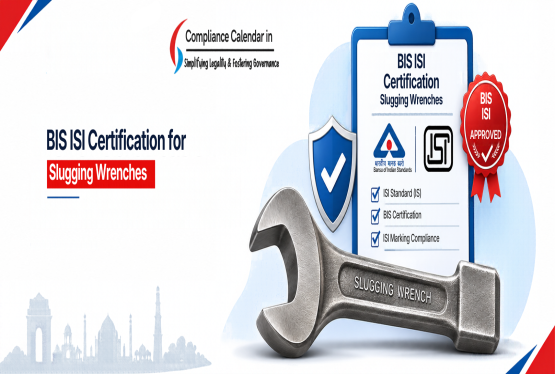
BIS ISI Certification is a product certification process that confirms whether a chain pipe wrench meets the applicable Indian Standard. Chain pipe wrenches use a metal chain and gripping jaws to hold pipes securely. Since these tools often handle heavy loads, their materials, construction, hardness and strength must meet specified requirements. Under the BIS Scheme-I certification process, manufacturers can obtain a licence to use the ISI Mark on conforming products.
For example, suppose a manufacturer produces chain pipe wrenches for industrial maintenance. Before obtaining certification, the manufacturer must demonstrate that the products satisfy the required dimensions, material specifications and performance tests. Once BIS grants the licence, the manufacturer can apply the ISI Mark to products covered by its approved scope.
Latest BIS Updates and Amendments for Chain Pipe Wrenches in 2026
Several important changes have been introduced to IS 4123 and the mandatory certification requirements.
-
Revision from IS 4123:1982 to IS 4123:2024
BIS revised the older standard to update technical specifications and introduce additional nominal sizes. The revised standard includes 350 mm, 400 mm, 450 mm, 600 mm, 900 mm and 1200 mm sizes.
-
Amendment No. 1 to IS 4123:2024
Amendment No. 1 introduced the test-load requirements for larger wrench sizes. These requirements help determine whether the wrench can withstand the specified torque during testing. The amendment also forms part of the revised standard's implementation requirements.
-
BIS Implementation Guidelines
On 30 September 2025, BIS issued implementation guidelines for IS 4123:2024 incorporating Amendment No. 1. The guidelines required existing licence holders to implement the revised requirements by 20 February 2026. After that date, BIS stated that licences should not be granted without considering the revised standard.
-
Hand Tools (Quality Control) Order, 2026
The Government of India issued the Hand Tools (Quality Control) Order, 2026, through notification S.O. 5561(E), dated 9 October 2026. The order covers chain pipe wrenches under IS 4123:2024 and establishes revised mandatory compliance dates. It replaces the previous 2025 order, subject to the provisions concerning earlier actions or omissions.
BIS Certification Mandatory Dates for Chain Pipe Wrenches
Under the Hand Tools (Quality Control) Order, 2026, the implementation dates are:
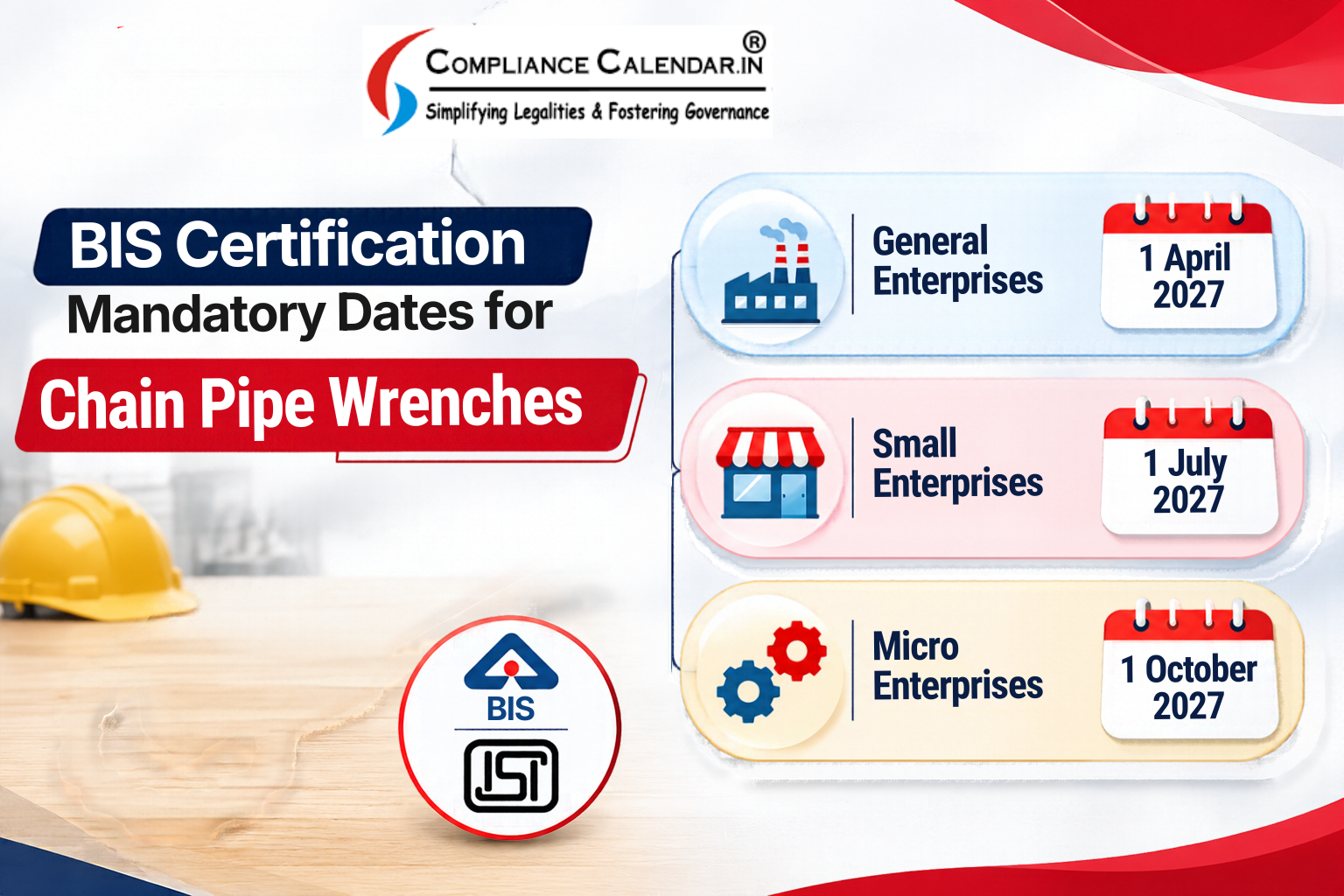
These dates relate to the mandatory application of the Quality Control Order. They should not be confused with the earlier 20 February 2026 deadline, which concerned implementation of the revised technical standard by BIS licensees. Manufacturers should prepare their testing facilities and documentation before the applicable deadline.
Who Needs BIS Certification for Chain Pipe Wrenches?
BIS ISI Certification is relevant to Indian manufacturers producing chain pipe wrenches covered by the Quality Control Order. Foreign manufacturers exporting covered products to India must also meet the applicable certification requirements. Importers and distributors should ensure that the products they handle comply with Indian regulations. The 2026 order provides certain exemptions, including domestically manufactured goods intended for export and limited quantities of imported research-and-development samples, subject to specified conditions.
Technical Requirements Under IS 4123:2024
Chain pipe wrenches must satisfy several quality and performance requirements before certification.
|
Requirement |
What BIS checks |
|
Material quality |
Suitable materials for handles, jaws and chains |
|
Dimensions |
Required dimensions for different wrench sizes |
|
Hardness |
Hardness of relevant components |
|
Chain strength |
Strength and construction of the chain |
|
Torque test |
Ability to withstand the prescribed test load |
|
Workmanship |
Construction quality and surface finish |
The revised standard updated material designations and introduced Rockwell hardness as an additional testing option alongside Vickers hardness. Manufacturers who wish to use Rockwell hardness testing must satisfy the applicable equipment, calibration and conformity requirements. For additional nominal sizes, manufacturers may also need supporting test reports and approval for changes to their licence scope.
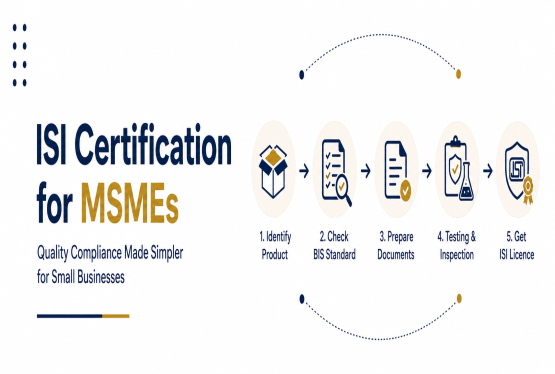
BIS ISI Certification Process for Chain Pipe Wrenches
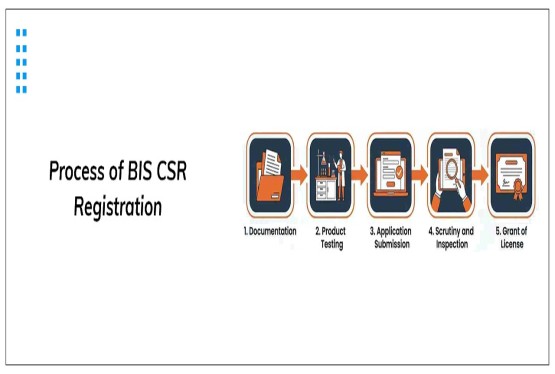
Manufacturers can follow these steps to obtain BIS certification:
-
Identify the applicable standard: Check the latest applicable version of IS 4123 and its amendments.
-
Prepare the manufacturing facility: Ensure suitable machinery, quality-control arrangements and testing equipment are available.
-
Submit the BIS application: Apply through the BIS Manak Online portal with the required documents.
-
Product testing: Chain pipe wrenches are tested for applicable dimensions, hardness, strength and torque requirements.
-
Factory inspection: BIS assesses manufacturing facilities, testing arrangements and quality-control practices.
-
Obtain the BIS licence: After satisfactory assessment, BIS grants the licence allowing use of the ISI Mark within the approved scope.
After obtaining certification, manufacturers must maintain product quality and comply with applicable BIS surveillance and licence conditions.
Documents Required for BIS Certification
Manufacturers generally need the following documents:
- Business registration and factory address proof.
- Manufacturing process flow chart.
- List of manufacturing machinery.
- Details of testing equipment.
- Product specifications and drawings.
- Raw material details.
- Quality-control personnel information.
- Laboratory test reports, where applicable.
- Authorisation documents and required declarations.
Additional documentation may be required depending on the manufacturer and BIS assessment.
BIS Certification Fees and Timeline
The cost of BIS ISI Certification for chain pipe wrenches depends on application fees, inspection charges, laboratory testing, annual licence fees and product-specific marking fees. There is no single fixed total cost for every manufacturer because charges depend on the certification requirements and testing arrangements. The certification timeline also varies according to the completeness of documentation, product testing and factory inspection. Manufacturers should confirm the applicable charges and expected processing requirements through BIS before applying.
Benefits of BIS ISI Certification for Chain Pipe Wrenches
BIS certification helps manufacturers demonstrate that their products meet specified Indian quality standards. It can improve customer confidence, support compliance with regulatory requirements and reduce the risk of supplying substandard products. For manufacturers supplying industrial customers, certification can also strengthen product credibility. However, having a BIS licence does not remove the responsibility to maintain quality during regular production.
How Compliance Calendar LLP Can Help
Compliance Calendar LLP assists manufacturers with BIS ISI Certification for Chain Pipe Wrenches, including applicable-standard identification, documentation, application preparation, testing coordination and compliance-related support. Manufacturers can also seek assistance with understanding revised BIS requirements, factory inspection preparation and maintaining certification records.
Frequently Asked Questions (FAQs)
Q1. What is BIS ISI Certification for Chain Pipe Wrenches?Ans. It is a product certification process confirming that chain pipe wrenches meet applicable Indian Standards prescribed by BIS.
Q2. What is the applicable Indian Standard for chain pipe wrenches?Ans. The Hand Tools (Quality Control) Order, 2026 references IS 4123:2024, which revised the earlier IS 4123:1982.
Q3. Is BIS Certification mandatory for chain pipe wrenches?Ans. Yes, for covered products from the applicable implementation dates under the Hand Tools (Quality Control) Order, 2026.
Q4. What is the latest amendment to IS 4123:2024?Ans. Amendment No. 1 introduced test-load requirements for additional nominal sizes above 300 mm.
Q5. What is the BIS Certification deadline for chain pipe wrenches?Ans. The deadlines are 1 April 2027 for general enterprises, 1 July 2027 for small enterprises and 1 October 2027 for micro enterprises.
Q6. Who can apply for BIS ISI Certification?Ans. Indian and foreign manufacturers of covered chain pipe wrenches can apply through the applicable BIS certification procedure.
Q7. What tests are required for chain pipe wrenches?Ans. Applicable tests include dimensional checks, hardness, chain strength, construction, workmanship and torque testing.
Q8. How much does BIS Certification for chain pipe wrenches cost?Ans. The total cost depends on application fees, inspection charges, laboratory testing, marking fees and other applicable requirements.
Q9. Can imported chain pipe wrenches be sold in India without BIS Certification?Ans. Once mandatory requirements apply, covered imported products must comply with the QCO unless a specific exemption is available.
Q10. How can manufacturers apply for BIS Certification online?Ans. Manufacturers can submit their applications through the BIS Manak Online portal with the prescribed documents and product details.
Article last updated on : 05 Nov 2026.