


Imagine receiving your first international seafood order. A buyer in Japan wants frozen shrimp from India, the price has been negotiated, and a seafood processing facility is ready to handle the consignment. Everything appears to be moving in the right direction. But then the buyer asks for your export registration details. You have an Import Export Code (IEC), a GST registration and a registered business.
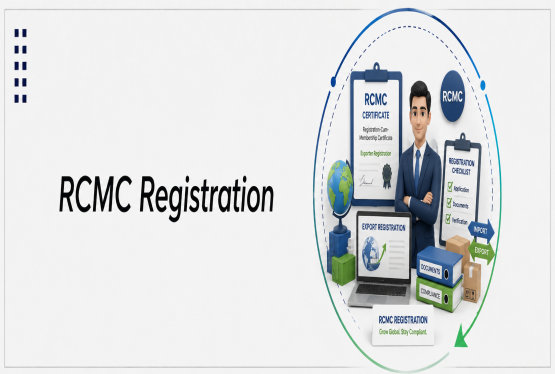
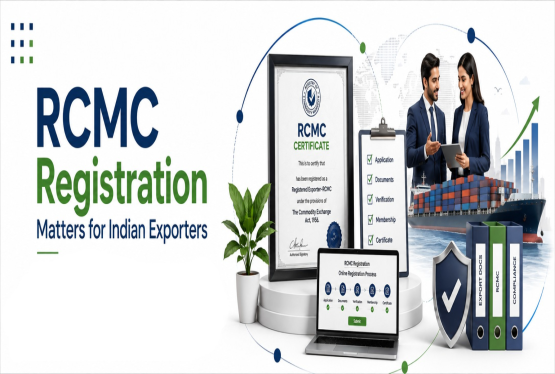
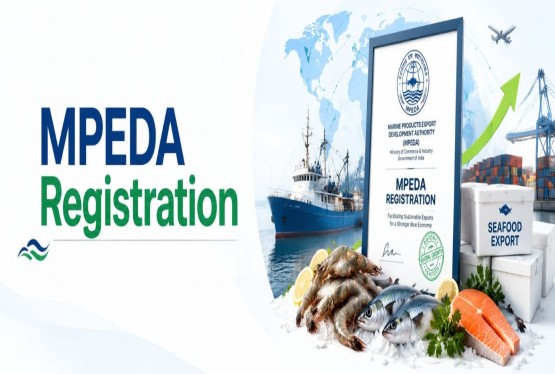
Is that enough to export seafood? Do you also need MPEDA Registration? What about the Registration-cum-Membership Certificate (RCMC Registration) These are questions many first-time seafood exporters face. RCMC for Seafood Exporters in India is an important part of the country's foreign trade registration system.
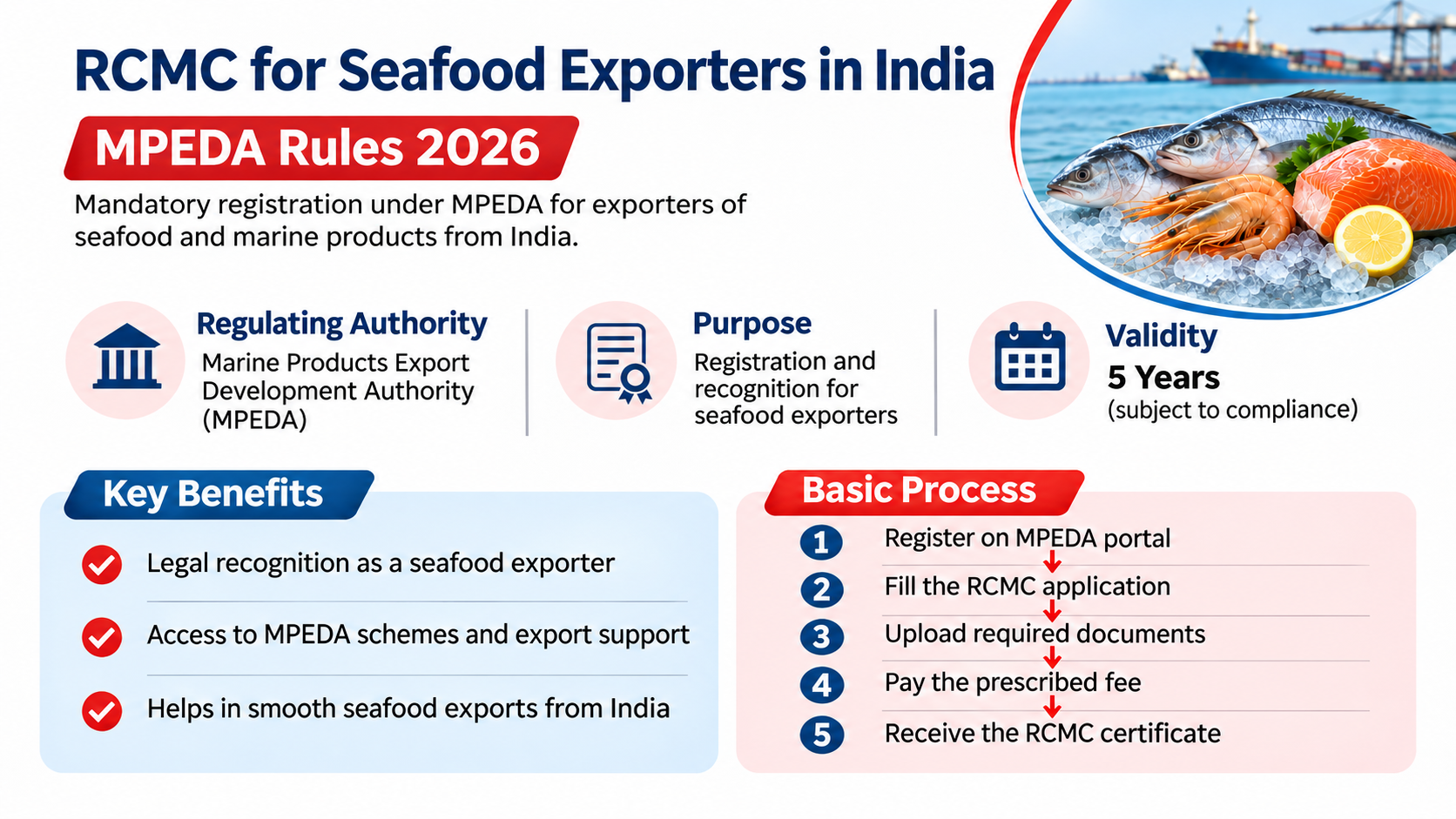
It establishes membership with the Marine Products Export Development Authority (MPEDA), the designated authority for issuing RCMC to seafood exporters. However, MPEDA RCMC and statutory exporter registration are two separate requirements, and understanding the difference is essential before entering international markets.
The opportunity is substantial. According to the Ministry of Commerce and Industry, India exported 19,72,018 metric tonnes of seafood worth Rs 73,890.46 crore (US$8.46 billion) during FY 2025–26, reaching a record high. Frozen shrimp remained the leading export product, while the United States and China were major destinations.
What Is MPEDA RCMC for Seafood Exporters?
Before applying for RCMC, seafood exporters should understand the basic MPEDA Registration requirements. These include selecting the correct exporter category, preparing the necessary documents and completing the registration process. For a detailed explanation, read our guide on MPEDA Registration in India – Eligibility, Documents and Process.A Practical Example
Consider a fictional entrepreneur, Arjun, who starts a seafood trading business in Kochi. He obtains an IEC and enters into discussions with an overseas buyer interested in frozen fish. Arjun assumes that his IEC is sufficient to begin exporting. However, he later discovers that covered commercial marine product exports generally require statutory MPEDA exporter registration. He must also assess whether RCMC is required for his intended Foreign Trade Policy activities.
The correct sequence is to establish the business, meet the applicable MPEDA exporter registration conditions and then apply for RCMC where relevant. MPEDA's official guidance confirms this distinction and provides an online RCMC facility for registered exporters and eligible prospective manufacturer exporters. Businesses can also read the MPEDA Registration Online: Process and Benefits guide to understand the broader exporter registration process.
Is RCMC Mandatory for Every Seafood Exporter?
Not every export-related certificate serves the same purpose. For ordinary commercial exports of covered marine products, statutory MPEDA exporter registration is generally required, subject to exceptions under the applicable rules. RCMC is a separate membership certificate.
Under Paragraph 2.57 of the Foreign Trade Policy, 2023, an RCMC is generally relevant when applying for specified import-export authorisations, concessions or benefits, unless an exemption applies. Therefore, an exporter should not assume that RCMC alone authorises a shipment or that every ordinary shipment requires a separate RCMC application.
|
Requirement |
Why an exporter needs it |
|
IEC |
Identifies the business for foreign trade |
|
MPEDA Exporter Registration |
Satisfies applicable statutory registration requirements |
|
MPEDA RCMC |
Establishes membership for relevant FTP purposes |
|
Processing facility approval |
Supports compliance of relevant seafood handling or processing operations |
|
Health and export certificates |
Meets applicable shipment and destination-market conditions |
For Arjun, the practical lesson is that possessing an IEC does not mean every regulatory step has been completed. He must identify his exporter category, obtain the required registrations and ensure that the seafood is handled through facilities that satisfy the relevant rules.
The Laws Behind MPEDA RCMC Registration
The registration process is supported by several Indian laws. Understanding their basic purpose is useful because different laws regulate different stages of the export transaction.
Marine Products Export Development Authority Act, 1972
The MPEDA Act, 1972 established the Marine Products Export Development Authority under the Ministry of Commerce and Industry. Section 9(2)(h) provides the statutory basis for registration of marine products exporters. Section 9(2)(b) is relevant to registration-related functions concerning fishing vessels and processing entities. The Act also supports MPEDA's responsibilities relating to export promotion, quality development and the marine products industry.
MPEDA Rules, 1972
Rules 40–42 govern important aspects of exporter registration, including the restriction on exports without the prescribed registration, application requirements and the grant or refusal of registration. The rules provide exceptions for specified categories of transactions, which must be examined according to their conditions.
Foreign Trade (Development and Regulation) Act, 1992
The Foreign Trade (Development and Regulation) Act provides the legal foundation for India's import-export regulatory system. Section 7 is relevant to IEC requirements. Commercial exporters generally need an IEC, subject to applicable exemptions.
Foreign Trade Policy, 2023
The Foreign Trade Policy governs RCMC-related requirements for specified trade authorisations and benefits. The Handbook of Procedures also contains provisions on RCMC validity, selection of registering authorities, changes in business particulars and other procedural matters.
Export Quality and Food Safety Regulations
Seafood exporters may also need to comply with the Export (Quality Control and Inspection) Act, 1963, applicable food safety rules, customs laws and requirements relating to processing facilities. The precise obligations depend on whether the company exports frozen shrimp, chilled fish, dried seafood, live marine products or another product category. The important point is that RCMC does not replace statutory exporter registration, food safety approvals or customs documentation.
Can You Export Seafood Without Owning a Processing Plant?
This is one of the most practical questions for new seafood entrepreneurs. Suppose Arjun receives an order for 20 tonnes of frozen shrimp from an overseas buyer. He can purchase the shrimp from suppliers, but he does not own a processing plant, freezing facility or cold storage unit. Does he need to invest in a complete seafood factory before starting his export business?
Not necessarily. MPEDA recognises different exporter categories, including manufacturer exporters and merchant exporters. A manufacturer exporter generally owns an approved processing plant or another eligible approved facility. A merchant exporter, on the other hand, may use the surplus capacity of an approved processing or handling facility.
In Arjun's case, he could explore the merchant exporter route. However, simply hiring a cold storage provider is not enough. He must satisfy MPEDA's prescribed conditions, including appropriate processing arrangements, endorsements and financial security where applicable.
MPEDA recognises four principal exporter categories
|
Type of Exporter |
Description |
|---|---|
|
Manufacturer Exporter |
Owns an approved seafood processing plant or eligible handling facility. |
|
Merchant Exporter |
Exports seafood using an approved processing or handling facility without owning it. |
|
Route-through Merchant Exporter |
Meets the prescribed DGFT recognition requirements and MPEDA conditions. |
|
Ornamental Fish Exporter |
Exports ornamental fish under the relevant MPEDA registration category. |
The correct category determines the registration documents, facility requirements and applicable financial arrangements.
Which Seafood Products Require MPEDA Registration?
MPEDA's export registration system covers several types of marine products, not only frozen shrimp. The authority recognises eight broad product categories.
|
Seafood category |
Examples |
|
Frozen marine products |
Frozen shrimp, prawns, fish, squid and cuttlefish |
|
Canned marine products |
Canned fish and other processed seafood |
|
Freeze-dried products |
Applicable freeze-dried marine products |
|
Live marine products |
Live fish, crabs and other eligible seafood |
|
Dried marine products |
Dried fish and other dried seafood |
|
Chilled marine products |
Fresh chilled fish and seafood |
|
Ornamental fish |
Aquarium and ornamental fish |
|
Other marine products |
Specified edible and non-edible marine-derived products |
Meera runs a small business exporting ornamental aquarium fish. Her business operates differently from Arjun's frozen shrimp business because the products have different handling, storage and transport requirements.
Meera should not automatically select the frozen seafood exporter category or assume that Arjun's processing facility requirements apply to her. This is why selecting the correct product category and ITC (HS) code is important before applying.
Documents Required for MPEDA RCMC Registration
A common misconception is that every exporter must submit a large collection of documents every time an RCMC application is made. In practice, much of the documentation relates to the initial MPEDA exporter registration.Once an exporter is registered, MPEDA's RCMC procedure uses the existing registration information.
|
Document |
Why it matters |
|
Import Export Code |
Identifies the exporter under DGFT |
|
Business constitution documents |
Establishes the applicant's legal structure |
|
Applicant identification and address |
Verifies the business and authorised person |
|
Scheduled bank certificate |
Supports financial verification |
|
Processing facility registration |
Establishes approved processing arrangements |
|
Storage premises details |
Identifies relevant storage facilities |
|
Processing agreement |
Supports merchant exporter registration |
|
Joint undertaking |
Records prescribed responsibilities |
|
Bank guarantee, where applicable |
Provides required financial security |
|
DGFT recognition document |
Supports specified exporter categories |
Example: Why a Processing Agreement Matters
Suppose Arjun signs an agreement with an approved seafood processing plant. The agreement establishes the relationship between the merchant exporter and facility owner. MPEDA may also require the merchant exporter's details to be endorsed on the relevant facility registration certificate.
Without the prescribed agreement or endorsement, Arjun's merchant exporter registration may not satisfy MPEDA's requirements. This illustrates why documentation should reflect the actual business model.
How to Apply for MPEDA RCMC Online in 2026
The MPEDA RCMC application process is available online through the authority's registration portal. For new businesses, it is useful to approach the process in two stages: first, complete the applicable statutory exporter registration; second, obtain RCMC for the relevant Foreign Trade Policy purposes.
|
Step |
Process |
What the exporter should do |
|
1 |
Obtain IEC |
Secure a valid IEC from DGFT |
|
2 |
Select exporter category |
Identify manufacturer, merchant or another applicable category |
|
3 |
Complete MPEDA registration |
Submit the required statutory exporter registration application |
|
4 |
Access RCMC service |
Log in through the MPEDA registration portal |
|
5 |
Verify particulars |
Review the exporter registration and business details |
|
6 |
Pay applicable fees |
Complete the prescribed payment |
|
7 |
Submit application |
Provide any additional information requested |
|
8 |
Obtain certificate |
Receive RCMC following approval |
What Should a New Exporter Check Before Applying?
A new applicant should first verify the IEC details, the exporter category, the seafood product and the proposed processing arrangements. For a merchant exporter, the authority may require a processing agreement, joint undertaking, facility endorsement and financial security.
For a manufacturer exporter, the processing or handling establishment must satisfy the relevant approval and registration conditions.Already registered exporters should ensure that their existing MPEDA information remains accurate before applying for RCMC.
MPEDA RCMC Fees in 2026: What Will an Exporter Actually Pay?
Cost is another area where new exporters often become confused. An online search may show a government fee for MPEDA exporter registration, a separate RCMC fee and references to substantial bank guarantees. These are not all the same type of charge. MPEDA's published certificate-fee schedule specifies:
|
Particulars |
Published amount |
|
MPEDA Exporter Registration |
Rs 5,000 |
|
MPEDA RCMC |
Rs 5,000 |
|
GST on RCMC at 18% |
Rs 900 |
|
Total MPEDA RCMC fee |
Rs 5,900 |
The Rs 5,900 amount is the published RCMC fee including GST. Exporter registration charges, facility approvals and any other applicable costs should be calculated separately.
What About Merchant Exporter Bank Guarantees?
This is particularly important for businesses such as Arjun's. MPEDA's currently accessible official exporter guidance lists a bank guarantee of Rs 25 lakh for five years for new merchant exporters of frozen and value-added marine products.
It also lists Rs 5 lakh for specified chilled, dried and other categories, with additional guarantees for certain extra facility agreements. However, another MPEDA exporter information page and older registration documents still refer to a Rs 15 lakh guarantee for new frozen marine product merchant exporters. These official publications are not fully consistent.
An applicant should therefore obtain confirmation of the operative bank guarantee requirement directly from MPEDA for the relevant product category and application date before arranging security.
MPEDA RCMC Validity: Why Two Expiry Dates Matter
Imagine that Arjun successfully obtains his MPEDA exporter registration and RCMC. He might assume that both certificates expire on the same date. That assumption can create compliance difficulties later. The two certificates generally have different validity periods.
MPEDA exporter registration is generally valid for three years, while MPEDA RCMC ordinarily remains valid for five licensing years. For example, RCMC issued during the 2026–27 licensing year would ordinarily be valid until 31 March 2031, unless otherwise specified.
The general RCMC validity period is calculated from 1 April of the licensing year of issue, rather than simply adding five calendar years to the actual issuance date. MPEDA's official RCMC guidance, updated on 29 October 2026, confirms this approach. However, the longer RCMC validity does not allow an exporter to ignore expiry of the underlying statutory registration. Exporters should monitor both certificates and complete renewal or revalidation requirements within the prescribed periods.
The Real Test Begins After Registration: Seafood Quality and Export Compliance
Obtaining MPEDA Registration and RCMC is important, but international seafood trade involves additional responsibilities. Return to Arjun's example. His business now has the necessary registration and an approved processing arrangement. The overseas buyer is ready to receive the shipment.
A few days before dispatch, the buyer asks for product traceability records, processing establishment information and relevant health certification. Arjun realises that registration alone is not sufficient to establish that the consignment meets the importing country's requirements. This is a common compliance challenge for new exporters.
Seafood Quality and Health Certification
Seafood exporters must meet applicable hygiene, processing, testing and product safety requirements. Depending on the product and destination, requirements may involve the Export Inspection Agency, Export Inspection Council, approved establishments and relevant health certification.
For instance, consignments destined for the European Union may be subject to specific establishment approval and sanitary requirements. Exporters should verify the current conditions applicable to the product and destination.
Traceability and Cold-Chain Management
Seafood can deteriorate quickly if handled or stored improperly. Exporters must therefore ensure that the product is processed, stored and transported under suitable conditions. Traceability records may help establish the origin of the seafood, processing history, relevant batch information and movement through the supply chain. A business exporting frozen shrimp should not assume that a general warehouse is equivalent to an approved seafood storage facility.
Customs and Banking Compliance
Alongside MPEDA-related requirements, exporters must complete applicable customs and foreign exchange procedures. Common documents include shipping bills, commercial invoices, packing lists and transport documents. Where applicable, AD Code Registration is also relevant to customs banking arrangements.
Updating Business Details
An exporter should maintain accurate registration particulars throughout its operations.Under Paragraph 2.82 of the DGFT Handbook of Procedures, changes in ownership, constitution, business name or address generally need to be reported to the relevant RCMC authority within one month. Failing to update important information may lead to discrepancies during subsequent registration or verification procedures.
What Are the Benefits of MPEDA RCMC for Seafood Exporters?
The immediate benefit of MPEDA RCMC is formal membership recognition under the applicable foreign trade system. However, its importance extends beyond the certificate.
MPEDA undertakes export promotion initiatives, publishes market information and participates in international seafood exhibitions. Its activities include facilitating buyer-seller interactions and sharing information relevant to Indian seafood exporters.
For exporters, potential benefits include:
|
Benefits |
Description |
|---|---|
|
Formal Membership Recognition |
Confirms that the business is registered with the designated export promotion authority. |
|
Access to Trade Information |
Helps exporters stay informed about international seafood markets, export trends and industry developments. |
|
Export Promotion Opportunities |
Provides opportunities to participate in eligible trade exhibitions and buyer-seller programmes, subject to applicable conditions. |
|
Better Compliance Organisation |
Encourages businesses to maintain proper registration documents and operational records. |
|
Industry Development Information |
Provides information about relevant MPEDA programmes related to seafood processing, quality improvement and export development. |
For example, if Arjun later wants to expand his exports from Japan into other markets, information about destination-country requirements and export promotion events may assist his business planning. However, RCMC does not guarantee overseas buyers, commercial contracts, financial assistance or eligibility for every government scheme.
Latest MPEDA Developments in 2026: What Seafood Exporters Should Know
India's Seafood Export Performance – FY 2025–26
According to the Ministry of Commerce and Industry, India recorded its highest seafood export value during FY 2025–26, as announced on 1 June 2026.
|
Particulars |
Export Performance (FY 2025–26) |
|---|---|
|
Total Export Value |
Rs 73,890 crore |
|
Total Export Quantity |
Rs 19.72 lakh metric tonnes (MT) |
|
Frozen Shrimp Export Value |
Rs 49,038 crore |
|
Major Export Destinations |
USA and China |
|
Reporting Authority |
Ministry of Commerce and Industry |
|
Announcement Date |
1 June 2026 |
|
Source |
Press Information Bureau (PIB) |
These figures highlight the growth and potential of India's seafood export industry. However, exporters must continue to comply with MPEDA registration, RCMC requirements, seafood quality standards and applicable export regulations to conduct international trade smoothly.
MPEDA Continues Online RCMC Applications
MPEDA's official RCMC guidance, updated on 29 October 2026, continues to provide online registration access and explains the certificate's general five-licensing-year validity. Exporters should use the current official portal and verify its instructions before applying.
Greater Importance of Market-Specific Compliance
Export businesses must recognise that different destinations impose different rules concerning seafood safety, processing establishments, traceability and documentation. An exporter entering a new overseas market should examine the destination's applicable requirements before confirming commercial delivery commitments.
Registration Requirements Remain Product-Specific
MPEDA's official exporter guidance continues to distinguish between manufacturer exporters, merchant exporters and other recognised exporter categories. Businesses should also verify the latest facility and bank guarantee requirements because some official documents contain different historical amounts.
Three Mistakes New Seafood Exporters Should Avoid
Consider three hypothetical businesses preparing their first export shipment.
Business A: Registration without checking exporter category
A seafood trader obtains an IEC and begins negotiations with an overseas buyer. The trader then discovers that the planned merchant exporter arrangement requires an approved processing facility and additional documents. The lesson is simple: determine the exporter category before committing to shipment arrangements.
Business B: Correct registration but incomplete quality documentation
A company receives its registration and prepares frozen seafood for export. However, the destination market requires specific establishment or sanitary documentation that the company has not arranged. The business may face shipment delays even though its registration is valid.
Business C: RCMC obtained but statutory registration overlooked
A company correctly records the five-year expiry of its RCMC but fails to monitor the shorter validity of its underlying MPEDA exporter registration. This creates a compliance problem that could have been avoided through a simple renewal calendar. All three situations demonstrate that successful exporting requires coordinated registration, documentation and ongoing compliance.
Conclusion
At the beginning of this article, Arjun had a prospective seafood buyer but did not fully understand the registration requirements. By the time he was ready to arrange his shipment, he had learned an important lesson: an IEC, statutory MPEDA exporter registration, RCMC and product-specific approvals serve different purposes.
For seafood exporters in India, the objective should not be to collect certificates without understanding their use.
It should be to establish a business that follows the applicable legal requirements from procurement and processing through to shipment and payment. In 2026, India's growing seafood export industry offers commercial opportunities for both manufacturers and merchant exporters.
Frequently Asked Questions (FAQs)
Q1. Is RCMC mandatory for seafood exporters in India in 2026?
Ans: MPEDA exporter registration is generally mandatory for covered commercial seafood exports. RCMC is a separate membership certificate relevant to specified Foreign Trade Policy authorisations, benefits and concessions, unless an exemption applies.
Q2. How can I obtain MPEDA RCMC online?
Ans: After completing the applicable MPEDA exporter registration, applicants can use the official MPEDA registration portal to apply for RCMC. They must verify business details, complete the prescribed application and pay the applicable fees.
Q3. What is the MPEDA RCMC fee in 2026?
Ans: MPEDA's published RCMC fee is Rs 5,000 plus 18% GST, totalling Rs 5,900. This is separate from exporter registration charges and any additional facility or financial security requirements.
Q4. Can I export seafood without owning a processing plant?
Ans: Yes, eligible merchant exporters may export seafood using surplus capacity at an approved processing or handling facility. They must satisfy the applicable agreement, endorsement, financial security and registration conditions.
Q5. What is the validity of MPEDA RCMC?
Ans: MPEDA RCMC is ordinarily valid for five licensing years, unless otherwise specified. The underlying statutory exporter registration generally has a different validity period and must be maintained separately.
Q6. Is an IEC sufficient for seafood exports from India?
Ans: No. IEC alone does not replace applicable statutory MPEDA exporter registration, facility approvals, customs documentation or importing-country requirements.
Q7. Is a bank guarantee necessary for MPEDA RCMC?
Ans: A bank guarantee is not a universal RCMC requirement. Certain merchant exporter categories have separate financial security conditions under MPEDA's exporter registration guidelines.
Q8. Can a new seafood startup apply for MPEDA RCMC?
Ans: Yes. An eligible startup can apply after satisfying the relevant exporter registration requirements. It must select the correct category and comply with the applicable business, facility and documentation conditions.
Q9. Does MPEDA RCMC guarantee government subsidies?
Ans: No. RCMC may be an eligibility requirement for particular export promotion programmes, but government assistance depends on separate scheme conditions and approval.
Q10. Can MPEDA Registration be rejected due to incomplete documents?
Ans: Yes. MPEDA may seek clarification or refuse registration where the applicant fails to satisfy the prescribed requirements. Accurate business details and complete category-specific documents are important.
Article last updated on : 06 Nov 2026.