


Imagine a small carpet manufacturer in Bhadohi, Uttar Pradesh, who has spent years making beautiful handmade carpets for Indian customers. One day, a buyer from Germany contacts him with an order for 100 carpets.
The manufacturer is excited, but the buyer asks an important question: Does your business have the registrations required for exporting carpets from India? This is where Carpet Export Promotion Council Registration (CEPC Registration) becomes relevant.
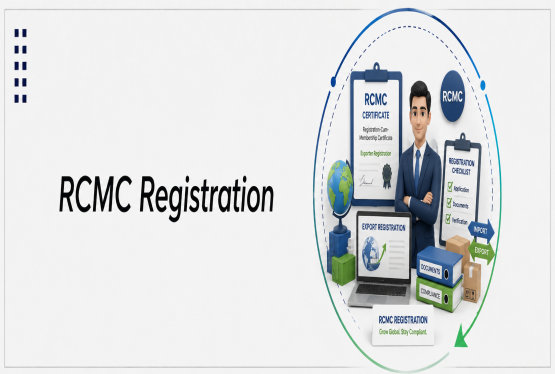
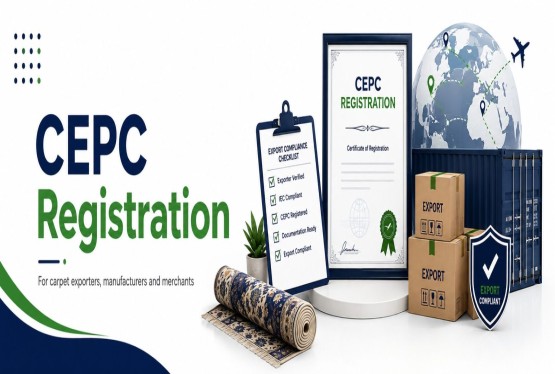
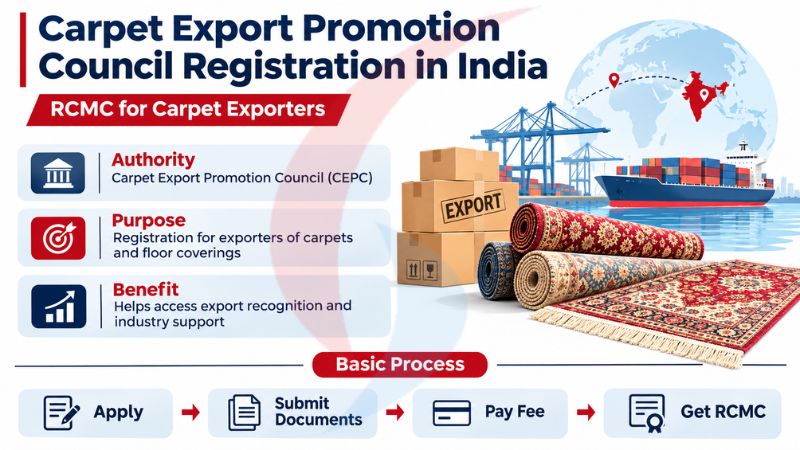
CEPC Registration allows eligible carpet manufacturers and merchant exporters to obtain a Registration-cum-Membership Certificate (RCMC Registration) from the Carpet Export Promotion Council. The certificate supports applicable Foreign Trade Policy requirements and provides access to export promotion activities.
What Is Carpet Export Promotion Council Registration?
The Carpet Export Promotion Council (CEPC) was established in 1982 to promote India's handmade carpet industry in international markets. It operates under the aegis of the Ministry of Textiles, Government of India.
CEPC helps exporters through international trade exhibitions, buyer-seller meetings, market information and other export promotion programmes.
An RCMC (Registration-cum-Membership Certificate) confirms that a business is registered with a recognised Export Promotion Council for its relevant products.
For example, suppose Ravi operates a handmade carpet business in Bhadohi. He already supplies carpets to Indian retailers but now wants to sell directly to international customers. After obtaining an Import Export Code (IEC), he can apply for CEPC membership and RCMC where required.
For a wider understanding of export membership, read How to Apply for RCMC Registration Online in India
Is CEPC Registration Mandatory for Carpet Exporters?
CEPC RCMC is not a universal licence for every carpet export shipment. Under Paragraph 2.57 of India's Foreign Trade Policy, 2023, RCMC is generally required for specified trade authorisations, benefits or concessions, unless exempted.
For instance, a business exporting freely exportable handmade carpets may not require RCMC merely to complete an ordinary shipment. However, specific schemes or authorisations may require it.
Importantly, CEPC is the appropriate registering authority only where the products fall within its assigned jurisdiction. Certain handloom or silk floor coverings may fall under other export promotion councils.
Important 2026 Update
DGFT Notification No. 36/2026-27, dated 15 September 2026, introduced an exemption from the relevant RCMC requirement for export consignments with an FOB value not exceeding Rs 3 lakh.
For example, if Ravi sends a trial shipment worth Rs 2.5 lakh, the exemption may apply. However, IEC, customs and other applicable legal requirements must still be followed.
Laws Governing CEPC Registration in India
Carpet Export Promotion Council Registration is connected with India's foreign trade laws. The Foreign Trade (Development and Regulation) Act, 1992 provides the legal basis for regulating imports and exports. Section 7 deals with IEC requirements, while Sections 3 and 5 relate to import-export regulation and Foreign Trade Policy.
Under the Foreign Trade Policy, 2023, Paragraphs 2.56 and 2.57 recognise Export Promotion Councils and prescribe relevant RCMC requirements.
The DGFT Handbook of Procedures governs the e-RCMC application, certificate validity, amendments, membership conditions and related procedures. Carpet exporters must also follow applicable provisions of the Customs Act, 1962, GST laws, FEMA and relevant labour legislation.
Who Can Apply for CEPC RCMC Registration?
CEPC membership is available to eligible businesses involved in the export of handmade carpets, rugs and other covered floor coverings.
|
Exporter category |
Business activity |
Example |
|
Manufacturer Exporter |
Manufactures carpets and exports them |
A carpet factory in Bhadohi |
|
Merchant Exporter |
Purchases carpets from manufacturers and exports them |
A Delhi-based trading business |
|
Merchant-cum-Manufacturer Exporter |
Manufactures and also purchases carpets for export |
A Jaipur business with its own workshop and outside suppliers |
Let's understand this with a simple example.
Ravi runs a small carpet manufacturing business where his workers make handmade woollen carpets. Neha, on the other hand, does not manufacture carpets herself. Instead, she buys them from local artisans and sells them to customers in other countries.
Both Ravi and Neha can apply for CEPC Registration, but the documents they need may be different because they run their businesses differently. Since Ravi manufactures carpets, he needs to provide documents showing that he is involved in manufacturing.
If his business is registered as an MSME, his Udyam Registration Certificate showing NIC Code 1393, which covers the manufacture of carpets and rugs, may be required as supporting evidence. Neha, as a merchant exporter, would need to submit the documents applicable to her business category.
Documents Required for Carpet Export Promotion Council Registration
Before applying, exporters should ensure their business documents are accurate and consistent.
|
Document |
Purpose |
|
Import Export Code (IEC) |
Identifies the exporter |
|
PAN and GST Registration |
Verifies business particulars |
|
Business Registration Documents |
Establishes legal constitution |
|
Supports MSME and manufacturing status where applicable |
|
|
Bank Soundness Certificate |
Financial verification |
|
Code of Conduct Affidavit |
Acceptance of prescribed CEPC requirements |
|
Partnership Deed or Incorporation Documents |
Required according to business type |
|
Export Performance Details |
Relevant to membership classification, where applicable |
CEPC requires applicants to accept its Code of Conduct, including commitments concerning child labour in carpet production.
The council's procedures also require prescribed self-attested physical documents to be submitted within 15 days after RCMC issuance, where applicable. Incomplete documentation can delay registration or affect membership status.
How to Apply for CEPC RCMC Registration Online in 2026
The CEPC RCMC application is submitted through the DGFT e-RCMC Portal. The process is straightforward when the applicant has the required documents ready.
|
Step |
Application Process |
What You Need to Do |
|
1 |
Obtain IEC |
Get a valid Import Export Code from DGFT. |
|
2 |
Visit DGFT |
Log in to the official DGFT portal. |
|
3 |
Select e-RCMC |
Open the Registration-cum-Membership Certificate service. |
|
4 |
Choose CEPC |
Select Carpet Export Promotion Council. |
|
5 |
Enter Details |
Provide business, product and exporter information. |
|
6 |
Upload Documents |
Attach the prescribed supporting records. |
|
7 |
Pay Fees |
Make the applicable online payment. |
|
8 |
Submit Application |
Review and submit the application for verification. |
|
9 |
Obtain RCMC |
Download the approved certificate and complete any required document verification. |
For example, Ravi can complete the application online from his office in Bhadohi. He does not need to travel to Delhi simply to submit the electronic application.
However, he must ensure that his IEC, PAN, business name and address are correct before filing. For other export banking requirements, read How to Apply for AD Code Registration Online in 2026.
CEPC Registration Fees in 2026
The Carpet Export Promotion Council has published the following standard membership charges for FY 2026–27.
|
Fee Particulars |
Amount |
|
One-time Entrance Fee |
Rs 2,000 + GST |
|
Annual Membership Subscription |
Rs 6,000 + GST |
|
Illustrative First-Year Total |
Rs 9,440 (including 18% GST) |
|
Annual Renewal Subscription |
Rs 7,080 (including 18% GST) |
The actual amount should be verified on the DGFT portal before payment. Any applicable concession or special membership condition may affect the payable fee.
CEPC RCMC Validity and Renewal
Under the general DGFT rules, RCMC is ordinarily valid for five licensing years, unless otherwise specified. However, CEPC has separate annual membership subscription requirements. For FY 2026–27, CEPC prescribed 30 June 2026 as the normal renewal deadline. A late renewal period with additional charges was available until 30 September 2026.
Businesses that missed those deadlines should contact CEPC to confirm the applicable restoration procedure. For example, if Ravi receives an RCMC valid for five licensing years, he must still maintain his annual membership obligations. The certificate's expiry date should not be confused with annual subscription requirements.
Latest CEPC Registration Updates in 2026
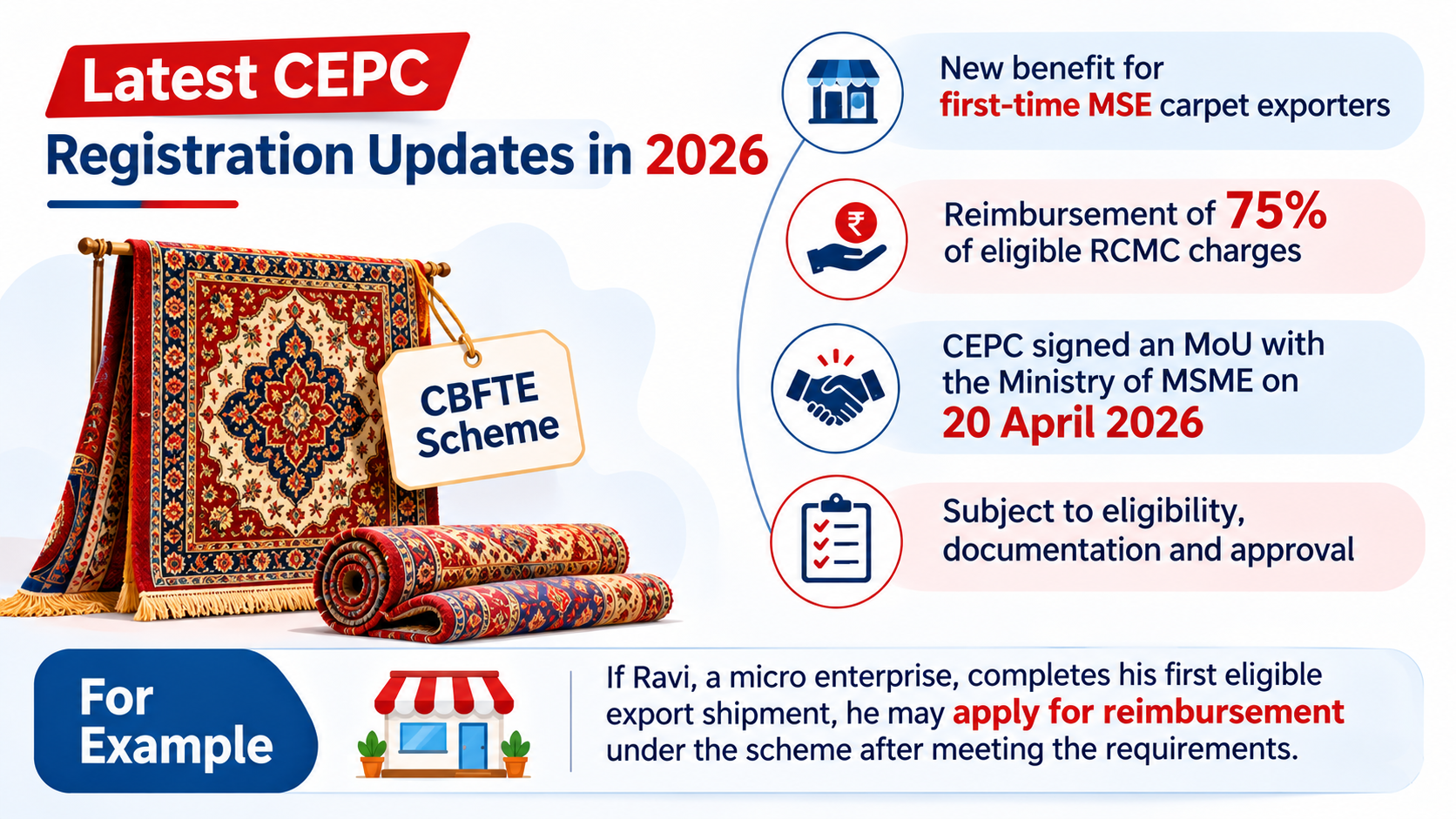
One important development for small carpet exporters is the Capacity Building of First Time MSE Exporters (CBFTE) scheme. Under the programme, eligible Micro and Small Enterprises can claim reimbursement of 75% of eligible RCMC charges, subject to the applicable conditions.
CEPC signed an agreement with the Ministry of MSME on 20 April 2026 for implementing the RCMC fee reimbursement component. For example, if Ravi qualifies as a micro enterprise and completes his first eligible export shipment, he may be able to apply for reimbursement after fulfilling the scheme's requirements.
Benefits of Carpet Export Promotion Council Registration
CEPC Registration offers several benefits to Indian carpet exporters who want to expand their business internationally. The Carpet Export Promotion Council helps eligible members explore overseas markets, participate in trade exhibitions and connect with potential international buyers.
It also shares useful information about export trends, government initiatives and developments in the carpet industry. For example, Ravi, who runs a small handmade carpet business in Bhadohi, wants to sell his carpets to customers in Europe.
Through CEPC membership, he may get opportunities to attend international exhibitions, understand buyer preferences and build business connections. The main benefits are explained below:
|
Benefits |
How It Helps Carpet Exporters |
|---|---|
|
Official Membership Recognition |
Confirms that the exporter is registered with a recognised Export Promotion Council. |
|
International Market Opportunities |
Helps exporters explore overseas markets and understand demand for Indian handmade carpets. |
|
Trade Fairs and Exhibitions |
Provides opportunities to participate in eligible international exhibitions and buyer-seller meetings. |
|
Access to Export Information |
Keeps exporters informed about market trends, export policies and industry developments. |
|
Government Scheme Information |
Helps eligible exporters learn about applicable export promotion schemes and initiatives. |
|
Business Networking |
Creates opportunities to connect with international buyers, industry professionals and other exporters. |
Important Compliance Requirements After Registration
Carpet exporters should maintain accurate IEC and RCMC records, follow applicable customs requirements and fulfil GST and foreign exchange obligations.
Businesses should also check product-specific requirements in destination countries, including relevant labelling, material and safety rules.Responsible manufacturing is particularly important for the handmade carpet industry.
Exporters must comply with applicable labour laws, including restrictions under the Child and Adolescent Labour (Prohibition and Regulation) Act, 1986, as amended.
For a detailed explanation of CEPC applicability, read the existing Compliance Calendar Learn article: What Is CEPC Registration & Can You Export Carpets Without It?.
Conclusion
Carpet Export Promotion Council Registration helps eligible carpet exporters obtain recognised membership and access relevant export promotion services. Whether a business manufactures handmade carpets in Bhadohi or purchases rugs from artisans for overseas customers, understanding the correct registration process is important.
The 2026 developments, including updated CEPC membership charges, the Rs 3 lakh RCMC exemption and potential reimbursement for eligible first-time MSE exporters, make it especially useful for new businesses to review the current rules. With proper registration, accurate documents and ongoing legal compliance, Indian carpet exporters can prepare more effectively for international trade.
Frequently Asked Questions (FAQs)
Q1. Is CEPC Registration mandatory for exporting carpets from India?
Ans: No, CEPC Registration is not compulsory for every carpet export shipment. However, exporters may need a valid CEPC RCMC to claim certain Foreign Trade Policy benefits, obtain applicable authorisations or participate in specific export promotion programmes.
Q2. Can I apply for CEPC Registration if I have just started my carpet export business?
Ans: Yes, new businesses can apply for CEPC Registration even without previous export experience. You generally need a valid Importer Exporter Code (IEC), PAN, GST registration and other documents required by CEPC for your business category.
Q3. How much does CEPC Registration cost in India in 2026?
Ans: The standard CEPC entrance fee is Rs 2,000 plus GST, and the annual membership fee is Rs 6,000 plus GST. For a new member paying both at the standard rates, the first-year cost is Rs 9,440, including 18% GST.
Q4. Can I get CEPC Registration without owning a carpet manufacturing factory?
Ans: Yes, you can apply as a merchant exporter without owning a carpet manufacturing unit. CEPC allows eligible merchant exporters to register, provided they have the required business registrations and complete the prescribed application process.
Q5. How long is CEPC RCMC valid, and does it need renewal every year?
Ans: Although RCMC generally follows a five-licensing-year validity rule, CEPC has separate membership renewal requirements. For 2026–27, CEPC allows members to obtain RCMC validity for up to three years by paying the applicable subscription in advance.
Q6. How can I apply for CEPC Registration online in 2026?
Ans: You can apply through the official DGFT portal by selecting Services and then Apply for E-RCMC. Choose the Carpet Export Promotion Council, complete the application, upload the required documents and pay the applicable fees. CEPC will review your application before issuing the certificate.
Q7. What documents are required for CEPC RCMC Registration?
Ans: The main documents include IEC, PAN, GST Registration Certificate, bank soundness certificate and the prescribed affidavit. Manufacturer exporters may also need a Udyam Certificate, while companies and LLPs must provide their relevant incorporation documents.
Q8. Can MSMEs and small carpet exporters benefit from CEPC Registration?
Ans: Yes, eligible MSMEs and small carpet exporters can benefit from CEPC membership through trade information, export promotion activities and international networking opportunities. They may also explore applicable government assistance schemes, subject to eligibility and programme conditions.
Q9. What happens if I forget to renew my CEPC membership on time?
Ans: Failure to renew your CEPC membership can affect access to membership benefits and services. For 2026–27, CEPC allowed renewal without a late fee until 30 June 2026, followed by a late fee of Rs 500 plus GST until 30 September 2026. Non-renewal may lead to membership suspension.
Q10. Does CEPC Registration guarantee international buyers or export orders?
Ans: No, CEPC Registration does not guarantee international buyers, export orders or government financial assistance. However, it can help eligible carpet exporters participate in trade exhibitions, explore international markets and connect with potential buyers through export promotion programmes.
Article last updated on : 06 Nov 2026.