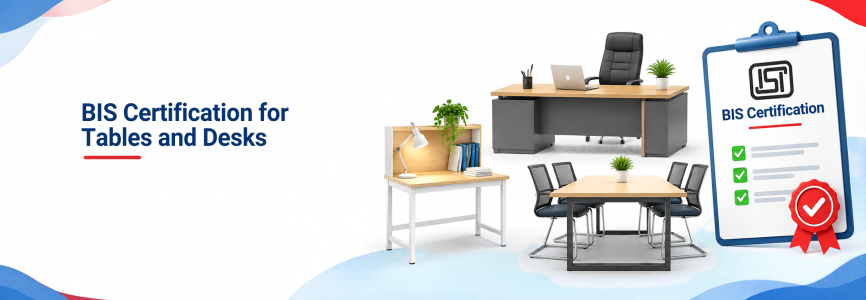



Tables and desks are used every day in homes, offices, schools and commercial spaces. Whether it is an office desk used for long working hours or a dining table used by a family, the furniture should be strong, stable and safe. A table may look attractive, but its appearance alone does not tell us how much weight it can support or how well it will perform after years of regular use. Weak joints, unstable legs or poor-quality materials can affect the safety and durability of the furniture. To improve furniture quality and protect consumers, the Bureau of Indian Standards (BIS) introduced IS 17633:2022 – Tables and Desks Specification.
The standard establishes requirements for the strength, stability, durability, dimensions and safety of tables and desks. The Government of India has also made BIS Certification compulsory for covered tables and desks under the Furniture (Quality Control) Order, 2025, subject to applicable exemptions and amendments. An important update is Amendment No. 1 to IS 17633:2022, which became applicable by 9 January 2026.
What is BIS Certification for Tables and Desks?
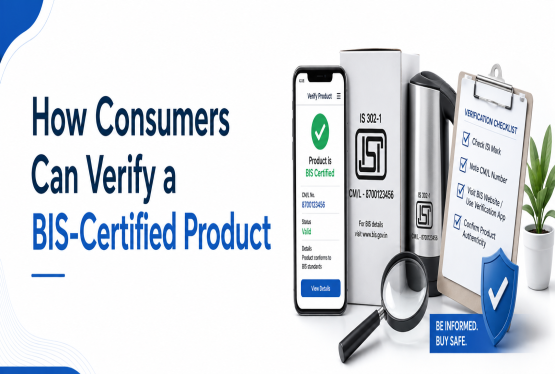
BIS Certification for Tables and Desks is a product certification process under which manufacturers demonstrate that their furniture meets the requirements of Indian Standard IS 17633:2022, including applicable amendments. The certification is issued by the Bureau of Indian Standards under Scheme-I of the BIS Conformity Assessment Regulations, 2018. After obtaining the required licence, the manufacturer can apply the ISI Mark to the products covered by that licence. The ISI Mark indicates that the product is manufactured under a BIS-certified arrangement and is required to comply with the applicable Indian Standard.
For example, a manufacturer producing office desks must ensure that the desks meet the relevant requirements for stability, strength, dimensions, material quality and product marking before selling them under the BIS licence. Certification is therefore not limited to testing one finished table. It also involves checking manufacturing facilities, quality control arrangements and the manufacturer's ability to maintain consistent product quality.
What is IS 17633:2022?
IS 17633:2022 is the Indian Standard titled Tables and Desks – Specification. It specifies performance and safety requirements for tables and desks intended for use by adults in seated or standing positions. The standard covers both fully manufactured furniture and ready-to-assemble furniture. For ready-to-assemble products, the applicable requirements are assessed on assembled units.
It mainly covers two categories:
-
Office tables: Tables and desks designed for offices and similar working environments.
-
Domestic tables: Tables intended for household use, such as dining tables and study tables.
The standard helps ensure that furniture can withstand normal use and does not become unsafe because of insufficient strength, poor stability or manufacturing defects. According to the official BIS summary, the standard addresses dimensions, surface-related properties, strength, durability and stability.
Which Tables and Desks Require BIS Certification?
The requirement applies to furniture falling within the scope of IS 17633:2022 and the applicable Quality Control Order.
Common examples include:
|
Furniture product |
Typical use |
|---|---|
|
Office desks |
Offices and workplaces |
|
Computer desks |
Computer workstations |
|
Study tables |
Homes and study areas |
|
Dining tables |
Household dining |
|
Writing desks |
Writing and office work |
|
Work tables |
General office activities |
|
Height-adjustable desks |
Sitting or standing work |
|
Ready-to-assemble tables |
Home and office furniture |
These are examples, not a separate government-notified product list. Whether a particular design requires certification depends on its intended use, construction and the scope of the standard. Products with electrical functions may also be subject to additional requirements.
Is BIS Certification Mandatory for Tables and Desks in India?
Yes. BIS Certification is mandatory for covered tables and desks under the Furniture (Quality Control) Order, 2025, subject to the commencement dates and exemptions specified in the order and subsequent amendments. The order was issued by the Department for Promotion of Industry and Internal Trade (DPIIT) under Section 16 of the BIS Act, 2016.
The original order covered six furniture categories:
The table below provides an overview of the BIS ISI Certification requirements for different furniture products in India. In this article, we will specifically cover IS 17633:2022, which applies to Table and Desks.
|
Indian Standard |
Furniture category |
|---|---|
|
IS 17631:2022 |
|
|
IS 17632:2022 |
|
|
IS 17633:2022 |
|
|
IS 17634:2022 |
|
|
IS 17635:2022 |
|
|
IS 17636:2022 |
The original implementation schedule provided 12 months from notification for general enterprises and 18 months for micro and small enterprises. This resulted in commencement dates of 13 February 2026 and 13 August 2026, respectively. The order also provides an exemption for certain Udyam-Registeration enterprises meeting specified investment and turnover limits. Further exemptions were introduced through amendments in 2026. Businesses should therefore check their eligibility rather than assume that every furniture product or manufacturer is treated in exactly the same way.
Latest Amendment No. 1 to IS 17633:2022
The Bureau of Indian Standards issued implementation guidelines on 5 January 2026 for Amendment No. 1 to IS 17633:2022. The deadline for implementing the amendment was 9 January 2026. This amendment introduced six important changes to the standard. These changes are particularly relevant for manufacturers, existing BIS licence holders and businesses applying for certification.
1. Additional Product Marking Requirements
Under amended Clause 9.1, manufacturers must include the product's performance category along with its recommended uses in the product marking. This means the marking should help identify the intended use of the table or desk.
For example, a manufacturer should ensure that the product marking correctly communicates the performance category applicable to the certified design. BIS specifically required existing licence holders to confirm implementation of this additional marking requirement.
2. Reduction in Stability Test Load
The amendment reduced the vertical load used for the stability test of the main surface from 200 Newtons to 100 Newtons, as specified in Table 2. This changes a particular testing condition. It does not mean that all other strength or durability requirements have been reduced.
3. Change in Vertical Load Durability Testing
The amendment clarified that the durability-under-vertical-load test is not applicable to surfaces positioned more than 965 mm above the ground, under Clause 7.4.1. This is relevant to certain taller work surfaces and standing desks. However, the exemption from this particular test does not automatically remove other safety, strength or stability requirements.
4. Removal of Mechanical Damage Resistance Test
The resistance to mechanical damage test previously listed under Clause 6(a) was removed. Manufacturers no longer need to carry out that particular test under the amended requirement.
5. Change in Clause 6 Heading
The title of Clause 6 was changed from Surface Performance to Raw Material Requirements. This change reflects the updated structure and requirements of the amended standard.
6. Change in Safety Testing Sample Requirements
Under Annex A, Clause A-1, the earlier requirement to conduct safety tests on the same sample was modified to allow samples from the same lot. This provides flexibility in selecting samples for the applicable testing process while maintaining the requirement for representative testing.
Summary of Amendment No. 1
|
Requirement |
Latest amendment |
|---|---|
|
Product marking |
Performance category and recommended uses added |
|
Main surface stability load |
Reduced from 200 N to 100 N |
|
Vertical load durability |
Not applicable to surfaces above 965 mm |
|
Mechanical damage resistance |
Test removed |
|
Clause 6 heading |
Changed to Raw Material Requirements |
|
Safety test samples |
Samples from the same lot permitted |
BIS also revised its Product Manual to PM/IS 17633/3/Dec 2025, including changes to grouping guidelines and the Scheme of Inspection and Testing. These changes are confirmed in the official BIS circular dated 5 January 2026.
Latest Furniture Quality Control Order Amendments in 2026
Apart from Amendment No. 1 to IS 17633:2022, the government introduced several changes to the Furniture (Quality Control) Order during 2026. It is important to understand the difference: an amendment to the Indian Standard changes technical or testing requirements, while an amendment to the Quality Control Order changes legal obligations, exemptions or certification arrangements.
Furniture (Quality Control) Amendment Order, February 2026
Through S.O. 774(E), published on 13 February 2026, the government introduced additional exemptions.
-
Research and development imports: Eligible BIS-certified manufacturers, or manufacturers who have applied for certification, may import up to 200 covered articles per financial year for research and development, subject to conditions. These products cannot be sold commercially and must be disposed of as scrap.
-
Existing stock: Eligible manufacturers may sell or display qualifying furniture manufactured or imported before the applicable implementation date for up to 12 months, subject to a self-declaration to BIS.
-
Imports for export manufacturing: Certain non-BIS-marked furniture products, components and sub-assemblies imported for manufacturing furniture intended for export may qualify for exemption, subject to declarations, record-keeping and restrictions on domestic sale.
Revised Exemption for Micro Enterprises
Another order, S.O. 777(E), dated 12 February 2026 and published on 13 February 2026, revised the exemption for certain Udyam-registered enterprises.
Under this amendment, the exemption applies where the relevant enterprise satisfies both conditions:
-
Investment in plant and machinery or equipment at original cost does not exceed Rs 1 crore.
-
Turnover for the previous financial year does not exceed Rs 5 crore, as certified by a Chartered Accountant.
The applicable Udyam registration and other legal conditions must also be satisfied. This replaces the lower Rs 25 lakh investment and Rs 2 crore turnover limits in the original furniture order.
Furniture (Quality Control) Second Amendment Order, March 2026
Through S.O. 1125(E), dated 2 March 2026, the government introduced transitional exemptions for certain imported furniture consignments. These include qualifying shipments dispatched before implementation, where the Bill of Entry is issued within the prescribed 180-day period. Certain goods ordered before implementation may also qualify where the Bill of Lading and Bill of Entry meet the specified deadlines. Importers must provide the prescribed supporting documents to BIS within the required period after clearance.
Transition Facilitation (Quality Control) Order, June 2026
The government introduced the Transition Facilitation (Quality Control) Order, 2026, through S.O. 3417(E) on 25 June 2026. This order covers furniture along with other specified product categories. It provides a conditional alternative compliance arrangement involving BIS licences under Scheme-II for eligible manufacturers and supply arrangements. However, this is not a general removal of mandatory BIS certification. Eligibility, approval and the specific requirements of the order must be checked before using this route.
BIS Testing Requirements for Tables and Desks
Testing is an important part of BIS Certification for Tables and Desks. The purpose is to check whether the furniture can remain safe and perform properly during regular use.
The exact tests depend on the product category, design and applicable amended standard.
1. Stability Test
A table should remain stable when normal forces are applied during use. The stability test checks whether the table is likely to tip over under specified testing conditions.
For example, when someone leans against an office desk, the furniture should not become dangerously unstable. The amended standard includes the revised 100 N vertical load for the specified main-surface stability test.
2. Strength Test
The strength test checks whether the table or desk can withstand specified loads without unacceptable damage or failure. This is particularly important for furniture used to support computers, books, office equipment and other everyday items.
3. Durability Test
A table may be used several times each day for many years. Durability testing checks how the furniture performs under repeated loading. These tests help identify problems that may arise from weak joints, poor construction or unsuitable materials. The 2026 amendment clarification relating to surfaces above 965 mm must be considered when determining applicable tests.
4. Raw Material Requirements
The standard includes requirements relating to the materials used in making tables and desks. Depending on the material and applicable provisions, these can include resistance to wet heat, dry heat, cold liquids, oils and fats, pencil hardness and adhesion performance.
For example, a table surface may come into contact with a warm cup or a spilled drink. The applicable material tests help evaluate its resistance to such conditions. Manufacturers should follow the current amended Clause 6 and not the superseded mechanical damage resistance test.
5. Dimensions and Workmanship
The standard also addresses dimensions, permitted tolerances, construction and workmanship. A poorly finished edge, weak connection or incorrectly assembled component may affect the quality and safety of a product. Manufacturers must ensure that the finished furniture conforms to the applicable dimensional and construction requirements.
Documents Required for BIS Certification of Tables and Desks
Manufacturers should prepare documents relating to their business, manufacturing premises, products and quality control arrangements before applying.
Common documents include:
-
Business registration certificate or incorporation documents.
-
Factory address proof and relevant manufacturing permissions.
-
PAN and GST Registration details, as applicable.
-
Factory layout and manufacturing process flowchart.
-
List of manufacturing machinery and equipment.
-
Details of testing facilities and available equipment.
-
Product specifications, designs and model numbers.
-
Raw material details and relevant quality records.
-
Quality control personnel details.
-
Authorisation letter for the responsible signatory.
-
Test reports and sample details, where applicable.
-
Other documents requested by BIS during application scrutiny.
The exact document requirements depend on the nature of the business, certification route and BIS application requirements.
BIS Certification Process for Tables and Desks
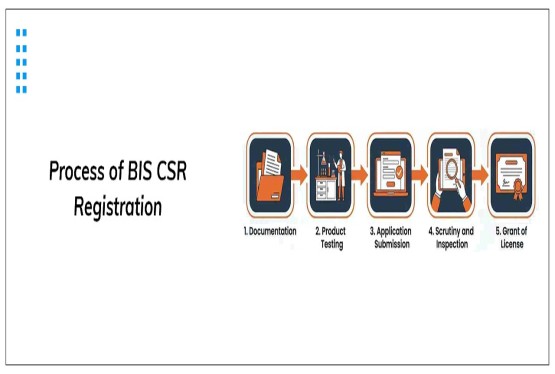
Manufacturers can apply for BIS Certification through the applicable BIS online certification system.
Identify the Applicable Standard
Confirm that the table or desk falls under IS 17633:2022. Review the product designs, categories and applicable amendments before starting the application.
Prepare the Manufacturing Facility
Ensure that manufacturing operations, quality control arrangements, testing facilities and product records meet the applicable BIS requirements.
Submit the BIS Application
Complete the application under the relevant certification route and provide the manufacturer's details, product scope and supporting documents.
Arrange Product Testing
Representative product samples must undergo the applicable tests through the prescribed testing arrangements. The test results should demonstrate conformity with the standard.
Complete Factory Assessment
Under the regular Scheme-I route, BIS assesses the manufacturing premises, production processes, quality control arrangements and relevant records.
Resolve Observations
If BIS identifies any deficiencies in the application, testing or manufacturing arrangements, the manufacturer must address them and provide the necessary evidence.
Receive BIS Licence
After satisfactory assessment and completion of the applicable formalities, BIS may grant the licence covering the approved tables or desk designs.
Maintain Ongoing Compliance
The manufacturer must continue meeting the applicable standard, follow the Scheme of Inspection and Testing, maintain records and use the Standard Mark correctly.
BIS Certification Fees for Tables and Desks
The cost of BIS Certification depends on the manufacturing unit, product range, testing requirements and certification arrangements. Common expenses include the BIS application fee, product testing charges, inspection-related charges, licence and marking fees, and any costs involved in upgrading testing or manufacturing facilities.
A manufacturer producing several table and desk designs may also need to consider additional testing and product grouping requirements. Since official charges may be revised, businesses should refer to the current BIS fee schedule before calculating their total certification cost.
Benefits of BIS Certification for Tables and Desks
BIS Certification provides several advantages for manufacturers, suppliers and consumers.
| Improved product safety | Testing helps identify furniture that does not meet the prescribed safety and stability requirements. |
| Better quality control | Manufacturers develop a more consistent process for checking raw materials, production and finished furniture. |
| Consumer confidence | The ISI Mark helps buyers recognise products manufactured under an applicable BIS licence. |
| Legal compliance | Certification allows covered manufacturers to comply with the applicable mandatory certification provisions. |
| Business opportunities | BIS-certified furniture may help manufacturers meet purchasing requirements of organisations that prefer or require products conforming to Indian Standards. |
Common Mistakes to Avoid During BIS Certification
Manufacturers sometimes face delays because they begin certification without properly understanding the standard or the product scope. One common mistake is using an outdated version of IS 17633:2022. The first amendment changed several technical requirements, making it important to follow the revised standard and product manual.
Another mistake is applying for one design and assuming that every model produced by the factory is automatically covered. BIS licences have an approved scope, and additional designs must be handled according to the relevant grouping and inclusion requirements. Manufacturers should also avoid using the ISI Mark before receiving the required authorisation. Incorrect marking, missing records and inadequate quality control can lead to compliance problems.
How Compliance Calendar LLP Can Help
Compliance Calendar LLP provides assistance to manufacturers and businesses seeking BIS Certification for Tables and Desks under IS 17633:2022. The certification process involves technical documentation, understanding applicable amendments, product testing, manufacturing assessments and ongoing compliance requirements.
Professional assistance can help businesses identify the applicable standard, prepare necessary records, coordinate certification formalities and address observations raised during the process. Manufacturers should also review the latest changes to BIS requirements before introducing new furniture designs or expanding their product range.
Frequently Asked Questions
Q1. Is BIS Certification mandatory for tables and desks in India?
Ans. Yes. BIS Certification is mandatory for covered tables and desks under the Furniture (Quality Control) Order, 2025, subject to applicable exemptions and subsequent amendments.
Q2. Which Indian Standard applies to tables and desks?
Ans. IS 17633:2022 is the applicable Indian Standard for tables and desks. Manufacturers must also comply with its applicable amendments.
Q3. What is the latest amendment to IS 17633:2022?
Ans. Amendment No. 1 introduced changes to product marking, stability testing, durability testing, raw material requirements and testing samples. BIS specified 9 January 2026 as the implementation deadline.
Q4. Does IS 17633:2022 apply to study tables?
Ans. Study tables may fall within the scope of IS 17633:2022 when their design and intended use are covered by the standard.
Q5. Is BIS Certification required for imported tables and desks?
Ans. Covered imported tables and desks must meet the applicable Quality Control Order requirements unless a specific exemption or transitional provision applies.
Q6. Does BIS Certification apply to wooden and metal tables?
Ans. The standard is not limited to one material. Applicability depends on the furniture's design, intended use and the requirements of IS 17633:2022.
Q7. Can one BIS licence cover different table models?
Ans. A BIS licence may cover different approved models or designs within its permitted scope, subject to the relevant grouping and inclusion requirements.
Q8. What tests are required for BIS Certification of tables and desks?
Ans. Applicable tests include stability, strength, durability, dimensions, workmanship and raw material-related tests under the amended standard.
Q9. Is BIS Certification mandatory for small furniture manufacturers?
Ans. It depends on the enterprise's eligibility. The Quality Control Order contains exemptions for qualifying Udyam-registered enterprises and other specified situations.
Q10. How can manufacturers apply for BIS Certification?
Ans. Manufacturers can submit an application through the applicable BIS certification portal, complete the required testing and assessment procedures, and obtain a licence after meeting the prescribed requirements.
Article last updated on : 05 Nov 2026.