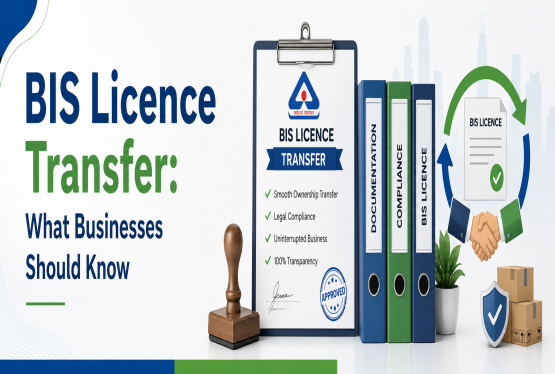



The Government of India has introduced mandatory quality standards for furniture to strengthen product safety, improve manufacturing practices and ensure that consumers receive reliable products. As part of this initiative, general-purpose chairs and stools have been brought under the BIS ISI Certification requirements. IS 17632:2022 is the Indian Standard that specifies the quality, safety, strength, structural stability and durability requirements for General Purpose Chairs and Stools. Under the Furniture (Quality Control) Order, 2025, manufacturers and importers must ensure that covered products meet the prescribed standard and carry the ISI Mark under a valid BIS licence before they are supplied to the Indian market, unless an applicable exemption applies.
The mandatory requirements took effect in 2026, marking an important regulatory change for India's furniture industry. The government has also issued several amendments addressing implementation timelines, exemptions for eligible MSMEs, existing stock and imported furniture. For manufacturers, importers and sellers, understanding these requirements is essential to maintain compliance and avoid regulatory difficulties.
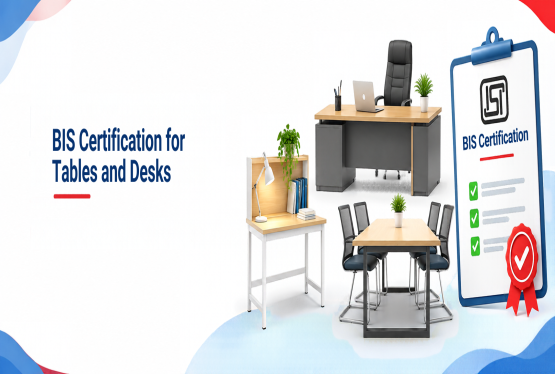
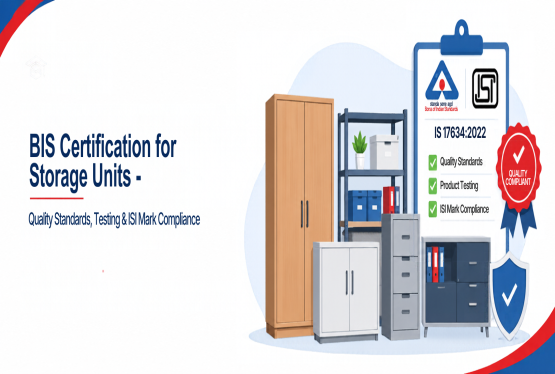
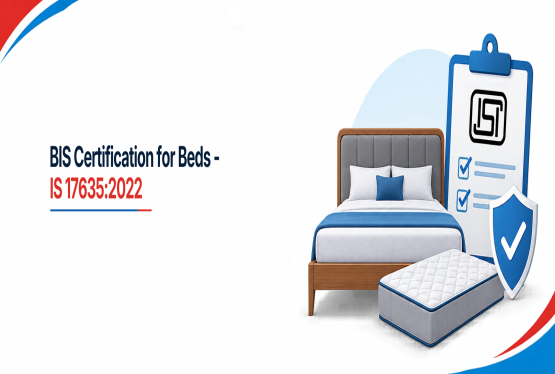
The table below provides an overview of the BIS ISI Certification requirements for different furniture products in India. In this article, we will specifically cover IS 17632:2022, which applies for General Purpose Chairs and Stools.
|
Product category |
Applicable Indian Standard |
|---|---|
|
IS 17631:2022 |
|
|
IS 17632:2022 |
|
|
IS 17633:2022 |
|
|
IS 17634:2022 |
|
|
IS 17635:2022 |
|
|
IS 17636:2022 |
What is BIS Certification for General Purpose Chairs and Stools?
BIS Certification for General Purpose Chairs and Stools is a product certification process that confirms whether the furniture meets the requirements of IS 17632:2022. The standard applies to general-purpose seating products intended for everyday use, including domestic and institutional applications. It focuses on whether the chair or stool is properly constructed, stable, strong and capable of withstanding normal use.
For example, a wooden dining chair should not become unstable when someone sits or leans on it. Similarly, a metal stool used in a cafeteria should withstand the loads and repeated use specified in the standard. Manufacturers must demonstrate that their products meet the applicable requirements. After satisfactory assessment, BIS may grant a licence allowing the ISI Mark to be used on the approved products.
Is BIS Certification Mandatory for Chairs and Stools in India in 2026?
Yes. BIS certification is mandatory for general-purpose chairs and stools covered under IS 17632:2022, subject to the applicable exemptions. The Department for Promotion of Industry and Internal Trade (DPIIT) introduced the Furniture (Quality Control) Order, 2025, through notification S.O. 801(E), dated 13 February 2025. The order was issued under Section 16 of the Bureau of Indian Standards Act, 2016. It requires notified furniture products to comply with the relevant Indian Standards and carry the ISI Mark under a valid BIS licence through Scheme I of the BIS Conformity Assessment Regulations, 2018.
Mandatory Implementation Dates
|
Business category |
Implementation |
|
General manufacturers |
13 February 2026 |
|
Micro and small enterprises |
Extended period of 18 months from publication, ending in August 2026 |
|
Qualifying smaller Udyam-registered manufacturers |
Conditional exemption |
|
Eligible furniture imports |
Specific transitional exemptions under 2026 amendments |
The Furniture QCO covers six categories: work chairs, general-purpose chairs and stools, tables and desks, storage units, beds and bunk beds.
Which Chairs and Stools Are Covered under IS 17632:2022?
IS 17632:2022 covers general-purpose chairs and stools, including fully manufactured products and ready-to-assemble furniture.
Depending on the design and intended use, the standard may apply to:
- Wooden dining chairs and stools
- Metal chairs and stools
- General-purpose plastic chairs and stools
- Household seating chairs
- Restaurant and cafeteria seating
- Institutional chairs and stools
- General-purpose visitor chairs
- Ready-to-assemble chairs and stools
However, product classification is important. Not every seating product automatically falls under IS 17632:2022. Specialised seating, such as work chairs and reclining chairs, may be covered by different standards. Certain moulded plastic chairs may also have separate product-specific requirements.
Domestic and Institutional Furniture
IS 17632:2022 distinguishes between two important use categories.
Type 1 – Domestic use: Chairs and stools intended for ordinary household applications, such as seating used in homes.
Type 2 – Institutional use: Chairs and stools intended for institutional and commercial settings, where the frequency and nature of use may be different.
Manufacturers should identify the appropriate category because testing and performance requirements can depend on the intended use.
Important Technical Requirements under IS 17632:2022
The purpose of the standard is not to make every chair look the same. Manufacturers can use different designs and materials, provided their products satisfy the applicable requirements.
1. Design and Workmanship – Clause 4
Chairs and stools should be properly manufactured without unsafe sharp edges, exposed projections or other dangerous features.
For example, a metal chair should not have unfinished welding edges that could injure someone. Similarly, a wooden stool should have properly finished components and secure joints.
2. Dimensions – Clause 5
The standard covers relevant dimensional requirements for chairs and stools. Depending on the product design, manufacturers must check applicable measurements such as seat dimensions and other prescribed construction details. Product drawings and dimensional records are important during BIS assessment.
3. Surface Performance – Clause 6
Surface performance concerns the suitability of furniture materials and finishes. Depending on the applicable standard and amendment, requirements may relate to surface finishes, upholstery and other relevant material characteristics. Manufacturers should consult the current amended standard before finalising this part of the testing schedule.
4. Stability Testing – Clause 7
A chair should remain stable under the conditions specified in the standard. Stability testing evaluates the likelihood of a chair or stool overturning during prescribed loading conditions.
For example, when someone shifts their weight while seated, the furniture should meet the applicable stability requirements.
5. Strength Testing
Strength testing evaluates whether chairs and stools can withstand prescribed loads without unacceptable structural failure. The seat, backrest, legs, joints and other applicable components may be assessed depending on the product design.
6. Durability Testing
Furniture is not used only once. People sit, stand up, move and place repeated pressure on chairs and stools. Durability tests assess the product's ability to withstand repeated loading and use. T
Amendment No. 1 to IS 17632:2022 – Important 2025 Update
One important development is Amendment No. 1:2025 to IS 17632:2022. BIS confirmed this technical amendment during its furniture-standards awareness programme held in Mumbai on 26 May 2026. The programme discussed recent changes to furniture standards, technical requirements, product manuals, testing procedures and implementation.
This amendment is important because furniture manufacturers must follow the latest version of the applicable Indian Standard, including amendments notified by BIS. Manufacturers should not rely entirely on old product manuals or test reports without checking the latest amendment. The complete clause-by-clause amendment should be verified through the official BIS Standards Portal: https://standards.bis.gov.in/website/standard-details
Latest Furniture Quality Control Order Amendments in 2026
Since the Furniture QCO was notified in 2025, the government has introduced several important changes.
|
Notification |
Date |
Key update |
|
Furniture QCO, S.O. 801(E) |
13 February 2025 |
Made BIS certification mandatory for six furniture categories |
|
Furniture QCO Amendment, S.O. 774(E) |
12 February 2026 |
R&D imports, existing stock and export-related import exemptions |
|
QCO exemption amendment, S.O. 777(E) |
12 February 2026 |
Revised exemption limits for qualifying smaller manufacturers |
|
Second Amendment, S.O. 1125(E) |
2 March 2026 |
Conditional relief for certain imported furniture |
|
Transition Facilitation Order, S.O. 3417(E) |
25 June 2026 |
Conditional alternative compliance arrangements |
|
Third Amendment, S.O. 5950(E) |
2 November 2026 |
Revised deadlines for qualifying imported furniture consignments |
BIS Certification Exemption for MSMEs in 2026
Many small manufacturers are concerned about the cost of BIS Certification. To address this, the government revised the exemption limits for certain Udyam-registered enterprises manufacturing notified goods domestically.
The prescribed conditions include:
- Investment in plant and machinery or equipment at original cost must not exceed Rs 1 crore.
- Turnover for the previous financial year must not exceed Rs 5 crore, as certified by a Chartered Accountant.
- The enterprise must be registered on the Udyam Portal.
- Other conditions of the exemption must be satisfied.
For example, a small wooden-chair manufacturer with Rs 40 lakh in qualifying investment and Rs 2 crore in previous-year turnover may qualify if all other requirements are satisfied. However, MSME Registration alone does not automatically provide exemption.
BIS Product Manual and Model Grouping Guidelines
BIS Product Manuals explain how manufacturers should prepare samples, identify models and maintain testing arrangements for certification. The original December 2022 Product Manual for IS 17632:2022 covered both fully manufactured furniture and ready-to-assemble products. Under that manual, each chair or stool design/model was to be tested to cover the corresponding declared model. Manufacturers also had to declare principal materials, model details, drawings and photographs.
BIS subsequently listed a revised Product Manual for IS 17632:2022 in June 2025.
Manufacturers should use the latest applicable Product Manual and Amendment No. 1, particularly when deciding whether different chair or stool variants require separate testing or can be covered within an approved licence scope.
BIS Testing and Sample Requirements for Chairs and Stools
The original BIS Product Manual specified the following sample arrangements.
|
Sample |
Purpose |
|
Two complete chairs or stools |
Dimensional and safety testing under Clauses 4, 5 and 7 |
|
Material panels |
Applicable surface-performance testing |
|
Fabric and leather pieces |
Applicable material and upholstery testing |
The Product Manual also identifies design and workmanship, dimensions, stability and strength as tests that may be conducted during factory assessment. Actual testing must follow the current amended standard and latest BIS instructions.
Documents Required for BIS Certification of Chairs and Stools
Manufacturers should generally prepare the following documents:
- Business registration documents
- Factory address and ownership or lease records
- Factory layout
- Manufacturing process flowchart
- Machinery and equipment list
- Testing equipment details
- Product drawings and photographs
- Model numbers and material specifications
- Quality control and testing records
- Authorised signatory documents
- Laboratory reports, where applicable
BIS may require further documents depending on the manufacturing facility and the application route.
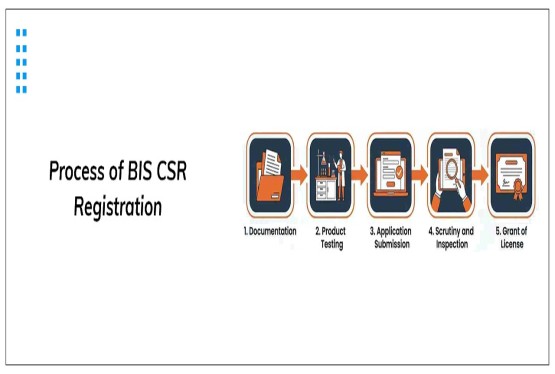
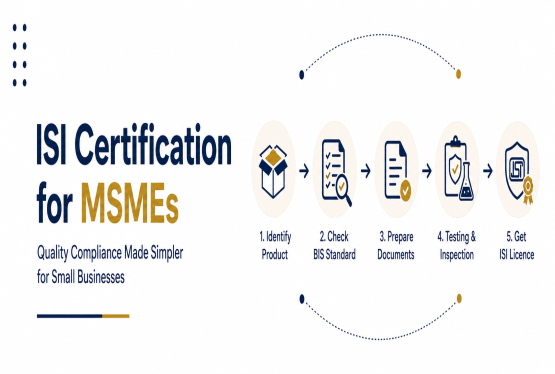
BIS Certification Process for General Purpose Chairs and Stools
The certification process generally follows Scheme I of the BIS Conformity Assessment Regulations, 2018.
Step 1: Identify the applicable standard
Confirm whether the chair or stool falls under IS 17632:2022 and identify any applicable amendments.
Step 2: Prepare the manufacturing facility
Ensure that manufacturing equipment, inspection arrangements and quality control procedures meet the applicable BIS requirements.
Step 3: Identify product models
Prepare details of the chair and stool models proposed for certification, including drawings, materials and intended-use categories.
Step 4: Arrange product testing
Prepare samples and arrange the required tests under the current Indian Standard and Product Manual.
Step 5: Apply online
Submit the application through the official BIS Manakonline portal: manakonline.in
Step 6: Complete BIS assessment
BIS examines the documents, evaluates manufacturing arrangements and reviews product conformity. The applicant must address any deficiencies.
Step 7: Obtain the BIS licence
After satisfactory assessment and payment of applicable fees, BIS may grant the licence. The manufacturer can then use the ISI Mark on products covered by the approved scope.
BIS Certification Fees for General Purpose Chairs and Stools
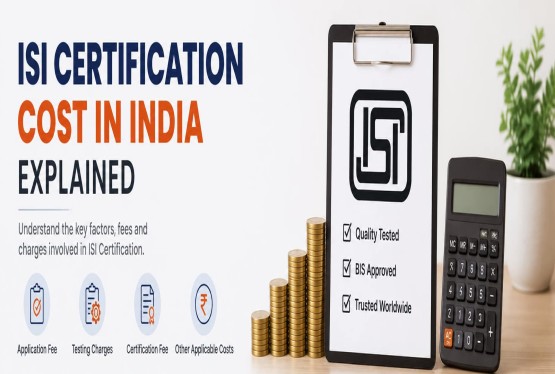
The BIS certification cost includes applicable application, inspection, laboratory testing and marking fees. The BIS marking-fee schedule published in January 2026 lists the following figures for IS 17632.
|
Manufacturer category |
Listed minimum marking fee |
|
Large-scale |
Rs 2,47,000 |
|
Medium-scale |
Rs 1,98,000 |
|
Small-scale |
Rs 1,23,500 |
|
Micro-scale |
Rs 49,400 |
The published unit marking rate is Rs 41.20 per 100 pieces. These figures are marking-fee tariff entries, not a complete certification quotation. Actual liability depends on the applicable BIS category, concessions and current fee rules. Application, inspection and testing charges are additional. For laboratory testing, charges vary by facility and testing scope.
BIS Certification for Imported Chairs and Stools
Imported general-purpose chairs and stools covered under the Furniture QCO generally require BIS compliance. Foreign manufacturers can seek certification through the Foreign Manufacturers Certification Scheme (FMCS). Indian importers should check whether the overseas factory has a valid BIS licence covering the relevant products. A foreign testing certificate alone does not automatically replace mandatory BIS certification. Importers relying on the November 2026 transitional exemption must ensure that their documentation and shipment dates meet all prescribed conditions.
Difference Between IS 17631:2022 and IS 17632:2022
|
Particular |
IS 17631:2022 |
IS 17632:2022 |
|
Product |
General-purpose chairs and stools |
|
|
Common use |
Office workstations |
Household and institutional seating |
|
Examples |
Adjustable office work chairs |
Dining chairs, stools and general seating |
|
Mandatory under Furniture QCO |
Yes |
Yes |
|
Certification route |
BIS Scheme I |
BIS Scheme I |
Manufacturers producing both work chairs and general-purpose seating should identify the correct standards separately.
Penalty for Selling Chairs and Stools Without BIS Certification
Manufacturing, importing or selling products covered by a mandatory Furniture QCO without satisfying its requirements may lead to action under the BIS Act, 2016. Depending on the violation, penalties may include fines, imprisonment and enforcement action concerning non-compliant products. A manufacturer must not use the ISI Mark without a valid licence or represent uncertified products as BIS-certified.
How Compliance Calendar LLP Can Help
Compliance Calendar LLP assists furniture manufacturers, importers and businesses in understanding BIS certification requirements and preparing compliance documentation. Our services include guidance on product classification, identifying applicable standards, application documentation, testing coordination and responding to BIS observations.
Frequently Asked Questions
Q1. Is BIS certification mandatory for general-purpose chairs and stools in India?
Ans. Yes. BIS certification is mandatory for covered chairs and stools under IS 17632:2022 and the Furniture (Quality Control) Order, 2025, unless an applicable exemption applies.
Q2. What is IS 17632:2022?
Ans. IS 17632:2022 is the Indian Standard that specifies quality, safety, strength, stability and durability requirements for general-purpose chairs and stools intended for domestic and institutional applications.
Q3. When did mandatory BIS certification for chairs and stools begin?
Ans. The general implementation date was 13 February 2026. Micro and small enterprises received an extended period of 18 months from the QCO's publication in February 2025.
Q4. Does BIS certification apply to wooden and plastic chairs?
Ans. It can. Applicability depends on the product's design, use and relevant Indian Standard. Different materials do not automatically exempt a chair from certification.
Q5. What is Amendment No. 1 to IS 17632:2022?
Ans. Amendment No. 1:2025 is a technical amendment to the standard, confirmed by BIS in 2026. Manufacturers should refer to the official amended standard to determine the exact requirements.
Q6. Are small furniture manufacturers exempt from BIS certification?
Ans. Certain Udyam-registered manufacturers may qualify for exemption if investment in plant and machinery or equipment at original cost does not exceed ?1 crore and previous-year turnover does not exceed Rs 5 crore, subject to prescribed conditions.
Q7. What tests are required for BIS certification of chairs and stools?
Ans. Tests cover applicable dimensions, design and workmanship, stability, strength, durability and relevant material-performance requirements under the current standard.
Q8. Can imported chairs and stools be sold without BIS certification?
Ans. Generally, covered imports require BIS compliance. However, specific exemptions may apply, including the transitional import provisions under the November 2026 amendment.
Q9. How much does BIS certification cost for chairs and stools?
Ans. The total cost depends on the manufacturer's category, marking fees, testing requirements, factory inspection and other applicable charges. The published minimum marking fees vary by category.
Q10. How can a manufacturer apply for BIS certification under IS 17632:2022?
Ans. Manufacturers can identify the applicable product standard, prepare documents and testing arrangements, and submit an application through BIS Manakonline. BIS assesses the application before granting the licence.
Article last updated on : 05 Nov 2026.