


Imagine a small garment manufacturer in Tiruppur who has spent years producing cotton T-shirts for Indian clothing brands. One day, an email arrives from a buyer in Germany asking whether the manufacturer can supply 15,000 T-shirts for an upcoming collection.
The order could change the future of the business. The manufacturer has the workers, machines, fabric suppliers and production capacity. But while discussing the shipment, the buyer asks for the company's export credentials.
The manufacturer already has GST registration and a business bank account. Is that enough? Does the company need an Import Export Code (IEC)? What is AEPC Registration? Is the Apparel Export Promotion Council RCMC Registration compulsory? And how much will registration cost in 2026?
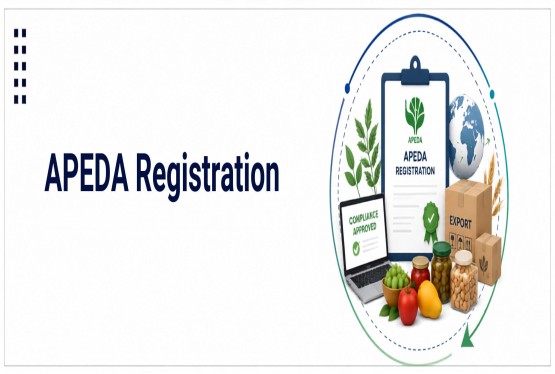
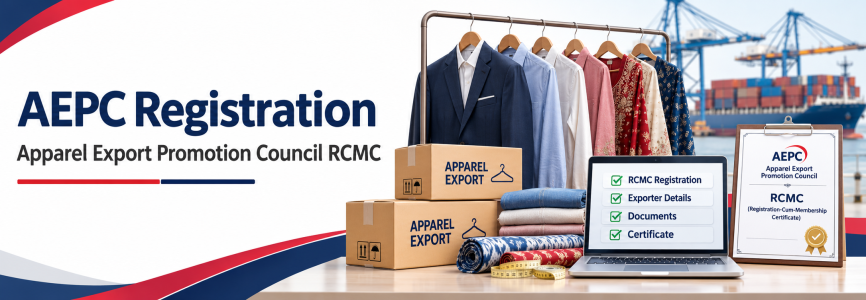
AEPC Registration allows eligible garment exporters to obtain membership and a Registration-cum-Membership Certificate (RCMC) from the Apparel Export Promotion Council. The certificate establishes the exporter's affiliation with the recognised council and supports applicable Foreign Trade Policy requirements.
India's apparel export sector offers significant opportunities. According to the Ministry of Textiles, India's readymade garment exports reached approximately ?1,39,350 crore in FY 2025–26, compared with ?1,35,428 crore in FY 2024–25.
However, receiving international orders is only one part of the export business. Exporters must also understand registration, customs procedures, product classification, export incentives, overseas buyer requirements and applicable Indian laws.
What Is AEPC Registration in India?
The Apparel Export Promotion Council (AEPC) is a recognised export promotion organisation representing India's garment export sector. It operates as a Section 8 company under the Companies Act, 2013 and works on trade promotion, policy representation, market development and services for apparel exporters.
AEPC Registration refers to registering with the council under the appropriate membership category and obtaining the applicable RCMC.
RCMC stands for Registration-cum-Membership Certificate. It establishes that the exporter is registered with a recognised Export Promotion Council for the relevant line of business.
Suppose our fictional garment manufacturer is called Kavya Apparels. Its owner, Ananya, wants to begin exporting readymade cotton T-shirts.
After obtaining an IEC and setting up the necessary export arrangements, she examines whether AEPC RCMC is required for the Foreign Trade Policy benefits or authorisations her business intends to use.
She does not need to own an enormous garment factory or export crores of rupees before applying as a Registered Exporter. AEPC recognises eligible manufacturer exporters and merchant exporters.
Is AEPC Registration Mandatory for Garment Exporters?
AEPC RCMC is not a substitute for an IEC, and it is not automatically compulsory for every ordinary garment shipment. Its legal necessity depends on the relevant Foreign Trade Policy requirements.
Paragraph 2.57 of the Foreign Trade Policy, 2023 generally requires an RCMC when applying for specified import-export authorisations or benefits and concessions under the policy, unless exempted.
For example, Ananya may be able to export an ordinary, freely exportable garment consignment using the applicable IEC and customs procedures without needing an RCMC solely for the act of exporting.
However, if her business wants to apply for a scheme, authorisation or benefit for which RCMC is prescribed, it must meet that requirement.
|
Registration or approval |
Main purpose |
|
IEC |
Identifies the exporter under DGFT procedures |
|
GST Registration |
Compliance with applicable GST law |
|
AEPC RCMC |
Export promotion membership and relevant FTP requirements |
|
AD Code Registration |
Relevant customs banking arrangements |
|
Factory and labour compliances |
Applicable manufacturing and employment obligations |
|
Product-specific certification |
Required where Indian or importing-country rules apply |
An exporter should examine these requirements individually rather than assuming that AEPC membership replaces them.
Laws and Legal Provisions Governing AEPC RCMC
AEPC Registration is connected with India's foreign trade regulatory system. Several legal provisions are relevant.
Foreign Trade (Development and Regulation) Act, 1992
The Foreign Trade (Development and Regulation) Act, 1992 provides the legal foundation for regulating imports and exports.
Section 7 governs IEC requirements, subject to prescribed exemptions. Sections 3 and 5 support the government's powers concerning import-export regulation and formulation of Foreign Trade Policy.
Foreign Trade Policy, 2023
Paragraph 2.56 recognises the role of Export Promotion Councils as registering authorities for RCMC.
Paragraph 2.57 describes the circumstances in which an RCMC is generally required for specified Foreign Trade Policy purposes.
Applicants should read these provisions with the amendments operative on the relevant transaction date.
Handbook of Procedures, 2023
Chapter 2 of the DGFT Handbook of Procedures regulates the practical RCMC system, including registration with the appropriate council, validity, changes in business particulars, de-registration and appeals.
The consolidated Chapter 2 published in 2026 sets out RCMC validity in Paragraph 2.95, changes in constitution in Paragraph 2.96, de-registration in Paragraph 2.97 and appeals in Paragraph 2.98. Earlier versions used different paragraph numbering.
DGFT
Companies Act, 2013
AEPC itself operates as a Section 8 company. The Companies Act also governs the incorporation and corporate compliance of garment exporters registered as companies.
Customs Act, 1962 and GST Laws
Garment exporters must comply with the relevant customs procedures, including shipping bills, classification, valuation and export declarations.
GST treatment depends on the applicable provisions governing exports, including zero-rated supply rules under the Integrated Goods and Services Tax Act, 2017.
RCMC does not eliminate these obligations.
4. Who Can Apply for AEPC Registration?
AEPC recognises both manufacturer exporters and merchant exporters dealing in garments.
A manufacturer exporter produces garments through its own manufacturing arrangements, while a merchant exporter generally purchases garments from manufacturers or suppliers and exports them to overseas buyers.
For example, Ananya manufactures T-shirts in Tiruppur. Another entrepreneur, Rahul, operates from Delhi and purchases finished shirts from different garment manufacturers for export to buyers in the United Arab Emirates.
Their business models differ, but both may qualify for AEPC registration if they meet the relevant conditions.
AEPC has two important membership categories.
Registered Exporter
This category is generally available to eligible apparel exporters, including manufacturer exporters and merchant exporters.
It is particularly relevant to new and smaller exporting businesses that do not yet meet the requirements for Member Exporter status.
Member Exporter
Member Exporter status carries additional membership conditions.
AEPC's published eligibility rules generally require applicants to have been Registered Exporters for at least two years and to satisfy prescribed average export turnover thresholds over the preceding two financial years.
|
Business category |
Published average export turnover condition |
|
Micro enterprise |
?25 lakh |
|
Small enterprise |
?50 lakh |
|
Medium enterprise |
?1 crore |
|
Other enterprises |
Above ?1 crore |
Applicants seeking conversion must satisfy the council's membership conditions and provide supporting export turnover records.
AEPC's current eligibility guidance identifies CA-certified or bank-certified garment export turnover and Udyam registration among the relevant documents for applicable MSME conversions.
AEPC
The important lesson for new exporters is that the higher Member Exporter thresholds should not be confused with eligibility for ordinary Registered Exporter status.
5. Documents Required for AEPC RCMC Registration
Ananya is now ready to apply for AEPC Registration. Her company has received an overseas enquiry, but before opening the DGFT portal, she needs to ensure that her business records are complete.
The application should establish the identity of the exporter, its legal constitution, principal business activity and relevant garment export particulars.
The documents commonly required or relevant include:
|
Document |
Purpose |
|
Import Export Code (IEC) |
Identification of the exporting business |
|
PAN |
Tax and business identity verification |
|
GST Registration Certificate |
Verification of GST particulars, where applicable |
|
Certificate of Incorporation |
Proof of registration for companies and LLPs |
|
Partnership Deed |
Business constitution proof for partnership firms |
|
Address Details |
Registered office and business address verification |
|
Bank Details |
Verification of relevant banking information |
|
Authorised Signatory Details |
Identification of the applicant |
|
Export Turnover Certificate |
Relevant to turnover-based classification or membership conversion |
|
Udyam Registration |
MSME status, where relevant |
|
Declaration or Undertaking |
Confirmation of prescribed membership conditions |
The final document checklist depends on the applicant category and the current requirements displayed on the DGFT e-RCMC portal.
For example, a newly established proprietorship should not automatically assume that the two-year export turnover documents required for conversion to Member Exporter status are compulsory for initial Registered Exporter membership.
Before applying, Ananya should also ensure that the business name and PAN details correspond with the IEC records.
A mismatch between the IEC and application details can delay processing even when the remaining documents are available.
6. AEPC Registration Online Process Through DGFT
AEPC RCMC applications are processed through the DGFT common electronic RCMC platform.
AEPC adopted the e-RCMC system for fresh issuance, renewal and amendment from 1 April 2022. Therefore, applicants should use the current DGFT procedure rather than older paper application instructions.
aepcindia.com
Step-by-Step AEPC RCMC Application
- Obtain an IEC: Apply for an Import Export Code and verify that the business information is correct.
- Visit the DGFT Portal: Access DGFT's official website and log in to the exporter account.
- Open e-RCMC: Select the Registration-cum-Membership Certificate service.
- Choose AEPC: Select Apparel Export Promotion Council as the registering authority for the relevant garment business.
- Enter Business Details: Complete the application, including product, IEC, business and membership information.
- Upload Documents: Provide the documents and declarations required for the selected category.
- Complete Authentication: Use the digital signature or other permitted electronic authentication method.
- Pay Membership Charges: Pay the applicable amount shown for the application.
- Submit and Track: Monitor the application and respond to any clarification requested by AEPC.
- Obtain RCMC: After approval, access the electronically issued certificate through the DGFT system.
What Happens After Application Submission?
After submitting her application, Ananya should monitor the portal regularly. AEPC may seek clarification if business documents, IEC details or membership information are incomplete.
The time required for approval depends on the application and verification process. Applicants should not assume that every certificate will be issued within a guaranteed number of days.
For a general explanation of the DGFT system, refer to RCMC Registration in India.
7. AEPC Registration Fees in 2026–27
For many new apparel exporters, registration cost is an important consideration.
The AEPC fee structure depends on the exporter's membership category and turnover.
AEPC has published the following RCMC renewal and annual subscription charges for FY 2026–27:
|
AEPC membership category |
Annual charge (excluding GST) |
Including 18% GST |
|
Registered Exporter – Turnover up to ?5 crore |
?12,000 |
?14,160 |
|
Registered Exporter – Above ?5 crore up to ?50 crore |
?15,000 |
?17,700 |
|
Registered Exporter – Above ?50 crore |
?20,000 |
?23,600 |
|
Member Exporter |
?20,000 |
?23,600 |
These amounts are confirmed by AEPC's current published renewal schedule.
AEPC
Example: AEPC Fee for a Small Garment Exporter
Suppose Ananya's garment business falls within the Registered Exporter category and has annual turnover below ?5 crore.
Using the published 2026–27 annual subscription rate, the charge would be ?12,000 plus applicable GST of ?2,160, giving a total of ?14,160.
However, a first-time applicant should also verify whether an entrance charge or another applicable admission amount is payable. The published renewal schedule should not be treated as a complete quotation for every fresh registration.
Is AEPC Membership a One-Time Payment?
No. This is an important distinction.
The RCMC has a general five-licensing-year certificate validity, but AEPC membership and annual subscription obligations must be maintained according to the council's rules.
Therefore, obtaining a certificate with a five-year expiry date does not necessarily mean that one payment covers all five financial years.
8. AEPC RCMC Validity and Renewal
Under the general DGFT rules, RCMC is valid for five licensing years unless otherwise specified.
The period normally begins on 1 April of the licensing year of issue and concludes on 31 March of the fifth licensing year.
For example, assume Ananya obtains her RCMC during FY 2026–27.
|
Particulars |
Illustration |
|
RCMC issued during |
FY 2026–27 |
|
Deemed validity begins |
1 April 2026 |
|
General expiry date |
31 March 2031 |
|
Annual AEPC subscription |
Payable as prescribed for each relevant year |
The expiry date must be checked on the actual certificate.
How to Renew AEPC RCMC
AEPC instructs members to renew through the DGFT online platform.
An exporter should review its membership details, pay the applicable annual subscription and complete any renewal or amendment requirements shown in the system.
This is particularly relevant where the business has changed its registered address, name or ownership structure.
Under Paragraph 2.96 of the consolidated 2026 DGFT Handbook of Procedures, an RCMC holder must generally intimate changes in ownership, constitution, name or address to the registering authority within one month.
Can AEPC Membership Be Cancelled?
Yes. The applicable DGFT procedures permit de-registration for violations of registration conditions.
Paragraph 2.97 provides for a show-cause notice and reasonable opportunity to respond before de-registration. Paragraph 2.98 provides for an appeal within 45 days to DGFT or the designated appellate authority.
These provisions demonstrate that RCMC is not merely a certificate to obtain once and forget. Membership conditions must be respected throughout the registration period.
9. Benefits of AEPC RCMC: What Does a Garment Exporter Actually Gain?
Ananya initially considers AEPC Registration because of its regulatory importance. But once she starts preparing for overseas sales, she realises that international garment trading requires much more than completing export forms.
Her German buyer wants information about fabric composition, packaging, production capacity and delivery timelines.
A second buyer asks about responsible sourcing and workplace conditions.
These questions show why an exporter needs access to credible industry information and trade development opportunities.
International Trade Fairs and Buyer Meetings
AEPC organises or facilitates trade promotion activities and provides information concerning international business opportunities.
Eligible members may be able to participate in exhibitions, buyer-seller meetings or other programmes under the prescribed terms.
Such opportunities can help exporters explore markets beyond their existing customer network.
Export Policy Updates
Foreign trade rules can change through DGFT notifications, customs amendments and government policy measures.
AEPC regularly circulates information concerning trade regulations, export schemes, market access and sector-specific issues.
This helps businesses stay informed, although individual exporters remain responsible for verifying their own legal requirements.
Market and Product Information
Apparel exporters need to understand international demand, product preferences and changing buyer expectations.
For example, Ananya may discover interest in sustainable cotton clothing or technical garments while assessing potential overseas markets.
AEPC's market information and export statistics can support such business decisions.
Export Promotion Benefits
RCMC may be necessary for particular Foreign Trade Policy schemes or authorisations.
However, AEPC Registration does not automatically guarantee a subsidy, duty benefit, overseas order or financial assistance. Each programme has its own eligibility and documentation rules.
10. Latest AEPC Registration and Apparel Export Updates in 2026
Several developments during 2026 are important for apparel exporters.
New ?3 Lakh RCMC Exemption Under DGFT Notification 36/2026-27
One of the most significant 2026 changes concerns low-value export consignments.
On 15 September 2026, DGFT issued Notification No. 36/2026-27, introducing Paragraph 2.57(c) into the Foreign Trade Policy.
The amendment exempts export consignments having a Free-on-Board (FOB) value not exceeding ?3,00,000 from the RCMC or Certificate of Registration requirement under the relevant Foreign Trade Policy provisions.
For consignments exceeding ?3 lakh, the ordinary RCMC requirements continue to apply wherever otherwise prescribed. The exemption does not remove IEC, customs, product-specific or other statutory obligations.
Press Information Bureau+1
Example: Two Orders, Different RCMC Treatment
Suppose Ananya receives two orders from separate overseas buyers.
|
Export consignment |
FOB value |
RCMC position under 2026 exemption |
|
Small trial shipment |
Rs 2,40,000 |
Exempt from the relevant FTP RCMC requirement |
|
Commercial garment order |
Rs 8,50,000 |
RCMC required where otherwise prescribed |
This is a practical advantage for smaller exporters testing international markets.
However, the exemption concerns the RCMC requirement itself. It does not automatically exempt the consignment from other applicable export rules.
India's Readymade Garment Exports Reached ?1,39,350 Crore
India's garment export sector recorded growth during FY 2025–26.
|
Export indicator |
FY 2024–25 |
FY 2025–26 |
|
Readymade garment exports |
Rs 1,35,428 crore |
Rs 1,39,350 crore |
|
Textile and apparel exports, including handicrafts |
Rs 3,19,573 crore |
Rs 3,25,339 crore |
Rounded figures from the Ministry of Textiles, July–August 2026.
The Ministry also identified Tiruppur, Gautam Buddha Nagar, Bengaluru Urban and Gurugram among India's major textile and readymade garment export districts.
These figures demonstrate the scale of India's apparel export industry and the continued importance of export readiness.
New Export Promotion Mission Programmes
During 2026, AEPC circulated information about initiatives under the Export Promotion Mission, including support relating to trade compliance, accreditation, market access and export finance.
For example, AEPC published information regarding the Trade Regulations, Accreditation & Compliance Enablement (TRACE) initiative in July and August 2026.
Eligible exporters should examine the official scheme conditions before applying for any assistance. AEPC membership alone does not guarantee eligibility.
Textile Statistical Reporting and Market Compliance
AEPC also issued a circular in August 2026 concerning registration and timely submission of statistical returns through the Textile Statistical Return System (TSRS).
Exporters should separately assess whether textile statistical reporting obligations apply to their manufacturing or business activities.
The council has also conducted programmes concerning international market access, free trade agreements and changing overseas regulatory expectations.
Legal Compliance After AEPC Registration
Let us return to Ananya's first German order. She has now obtained her IEC, completed the applicable AEPC registration and prepared the garments.
Her buyer asks for the final shipment documents and confirmation of the agreed fabric specifications. The logistics provider requests customs details, while the bank needs information concerning the export payment.
Customs and Export Documentation
Exporters must comply with the Customs Act, 1962 and applicable export procedures.
Depending on the shipment, the documents may include a commercial invoice, packing list, shipping bill, transport documents and other prescribed declarations.
Correct ITC (HS) classification is essential because the export policy and applicable benefits depend on the product.
GST Compliance
Exports are generally treated as zero-rated supplies under Section 16 of the IGST Act, 2017.
Eligible exporters may export under a Letter of Undertaking without payment of integrated tax and claim refunds of unutilised input tax credit, subject to applicable conditions. Alternative permitted export and refund arrangements must follow the operative GST provisions.
Foreign Exchange Requirements
Export proceeds must be realised and repatriated in accordance with the applicable FEMA rules and RBI directions. Exporters should maintain banking records, invoices and evidence supporting their international transactions.
Product Quality and Buyer Requirements
Garment exporters must ensure that products meet the agreed specifications and applicable destination-market requirements.
For instance, an overseas buyer may require particular labelling, fibre composition information, chemical compliance records or product testing.
Labour and Factory Requirements
Where garments are manufactured in India, applicable factory, employment, wage, occupational safety and environmental requirements must also be considered.
AEPC membership does not exempt a manufacturer from these statutory obligations.
Common AEPC Registration Mistakes New Exporters Should Avoid
Consider three fictional garment exporters preparing to enter overseas markets.
Exporter A: Applying without an IEC
A new apparel business completes its company registration and GST formalities but begins the AEPC RCMC application without arranging an IEC.
Because the e-RCMC process is linked to DGFT exporter information, the business needs to establish the relevant IEC details first.
Exporter B: Selecting the Wrong Membership Category
A startup with no previous export sales assumes that it cannot obtain AEPC Registration because the Member Exporter category has turnover requirements.
The startup overlooks the separate Registered Exporter category, which may be available to eligible new garment exporters.
Exporter C: Ignoring Annual Subscription
A company receives an RCMC showing a five-licensing-year validity period and assumes there are no further membership obligations.
It later discovers that AEPC has separate annual subscription requirements.
These examples highlight the importance of understanding the distinction between registration eligibility, certificate validity and continuing membership compliance.
Conclusion: From a Garment Workshop to International Markets
When Ananya first received the overseas enquiry, she believed that completing the garments would be the biggest challenge.
But entering international trade required her to understand IEC, AEPC Registration, RCMC, membership fees, customs procedures, buyer requirements and export documentation.
AEPC Registration is not simply another certificate. It provides eligible exporters with formal council membership and access to relevant export promotion resources, while RCMC supports compliance with applicable Foreign Trade Policy provisions.
The 2026 changes are particularly relevant for MSMEs and new exporters. The ?3 lakh RCMC exemption reduces a specific compliance requirement for small-value consignments, while AEPC's updated membership charges and export promotion programmes remain important for businesses planning regular international shipments.
For apparel manufacturers and merchant exporters, the practical approach is to identify the correct registration category, keep accurate business information, understand the applicable legal requirements and maintain ongoing compliance.
With the right preparation, a small garment business can gradually develop the operational and regulatory readiness needed to serve international customers.
13. Frequently Asked Questions on AEPC Registration in India (2026)
Q1. What is AEPC Registration in India?
AEPC Registration is the process through which eligible garment exporters obtain membership and an RCMC from the Apparel Export Promotion Council. The certificate is relevant to specified Foreign Trade Policy requirements and gives exporters access to applicable council services.
Q2. Is AEPC RCMC mandatory for garment exporters in 2026?
AEPC RCMC is generally required for applicable Foreign Trade Policy authorisations, concessions and benefits unless exempted. Under the September 2026 amendment, export consignments with FOB value up to ?3 lakh are exempt from the relevant RCMC requirement.
Q3. How can I apply for AEPC Registration online?
Applicants can visit the DGFT portal, log in with their exporter credentials, select the e-RCMC service and choose AEPC as the registering authority. After submitting the required information, documents and payment, the application is processed for issuance.
Q4. What are the AEPC RCMC fees for FY 2026–27?
AEPC's published annual renewal charges for Registered Exporters range from ?12,000 to ?20,000 plus GST, depending on turnover. Member Exporter charges are ?20,000 plus GST. Additional admission charges may apply to fresh applicants.
Q5. Can a new garment export startup obtain AEPC Registration?
Yes. Eligible startups, proprietorships, partnerships, LLPs and companies engaged in garment exports may apply under the appropriate membership category. The higher turnover requirements for Member Exporter status do not automatically apply to initial Registered Exporter registration.
Q6. What documents are required for AEPC RCMC?
Common documents include IEC, PAN, relevant business registration records, applicant details and prescribed declarations. Export turnover certification and Udyam documents may be required for particular membership categories or conversion applications.
Q7. What is the validity of AEPC RCMC?
AEPC RCMC generally has a validity period of five licensing years under DGFT procedures, unless otherwise specified. However, exporters must separately maintain their annual AEPC subscription and comply with applicable membership requirements.
Q8. Can a merchant exporter register with AEPC without owning a garment factory?
Yes. AEPC recognises eligible merchant exporters as well as manufacturer exporters. A merchant exporter may source garments from suppliers and export them, provided the business satisfies the relevant membership and statutory requirements.
Q9. Does AEPC Registration guarantee export subsidies?
No. AEPC Registration may help fulfil membership requirements for certain schemes, but financial benefits and assistance depend on their individual eligibility rules. Registration alone does not guarantee government subsidies or export orders.
Q10. What is the latest DGFT RCMC exemption for small exporters?
DGFT Notification No. 36/2026-27, dated 15 September 2026, introduced an exemption for export consignments with FOB value not exceeding ?3 lakh. Other export compliance requirements continue to apply.
Article last updated on : 05 Nov 2026.