




Hallmark Registration is an important compliance requirement for jewellers dealing in gold and silver jewellery in India. It is connected with the Bureau of Indian Standards, commonly known as BIS. Hallmarking helps customers identify the purity and fineness of jewellery and also helps jewellers build trust in the market. Earlier, many jewellers used to search for Hallmark Registration renewal because BIS registrations and licences generally had fixed validity periods. However, under the present BIS hallmarking system, the registration certificate granted to jewellers for selling hallmarked gold and silver jewellery is valid for lifetime. This means that a jeweller who has obtained BIS hallmark registration for sale of hallmarked jewellery is generally not required to renew the registration again and again.
Still, the topic of Hallmark Registration Renewal is important because many jewellers are confused about whether renewal is required, what legal compliances must be maintained after registration, and what happens if the business details change. Renewal may also be relevant in the case of Assaying and Hallmarking Centres, which have a separate recognition process under BIS norms.
Meaning of Hallmark Registration
Hallmark Registration is the registration obtained from BIS by jewellers who sell hallmarked gold or silver jewellery and artefacts. BIS hallmarking certifies that the jewellery has been tested and marked as per prescribed purity standards. A hallmark generally represents the purity of the article and confirms that the article has been tested through an authorised system. In India, hallmarking is regulated by BIS under the BIS Act, 2016, BIS Rules, 2018 and BIS Hallmarking Regulations. For jewellers, BIS registration is required when they sell hallmarked jewellery or artefacts. It gives legal recognition to the jeweller for dealing in hallmarked articles. Without proper registration, a jeweller may face legal issues if they sell jewellery in violation of hallmarking rules.
Current Position on Hallmark Registration Renewal
The most important point is that BIS hallmark registration for jewellers is currently valid for lifetime. This means that once a jeweller obtains the BIS certificate of registration for selling hallmarked gold or silver jewellery, the jeweller does not have to renew it periodically. This lifetime validity has reduced compliance burden for jewellers. Earlier, many businesses were concerned about renewal dates, late fees and validity expiry. Now, for normal jeweller registration, renewal is not required in the usual course.
However, lifetime validity does not mean that the jeweller can ignore compliance. The jeweller must continue to follow BIS hallmarking rules. If the jeweller violates the conditions of registration, sells non-compliant jewellery, misuses the hallmark, or fails to maintain proper records, BIS may take action including suspension or cancellation of registration.
Hallmark Registration Rules and Regulations
Hallmark registration and hallmarking compliance are governed by the Bureau of Indian Standards Act, 2016, BIS Rules, 2018 and BIS Hallmarking Regulations, 2018, along with amendments and orders issued from time to time. The BIS Act, 2016 gives legal authority to BIS to regulate standards, certification and use of standard marks. Hallmarking falls under the standard marking system for precious metal articles. The BIS Hallmarking Regulations provide the rules for registration of jewellers, recognition of assaying and hallmarking centres, use of hallmark, inspection, suspension, cancellation and other compliance requirements. The government has also issued mandatory hallmarking orders for certain gold jewellery and artefacts. This means that in notified cases and notified areas, jewellers are required to sell only hallmarked jewellery of specified purity grades.
Who Needs Hallmark Registration?
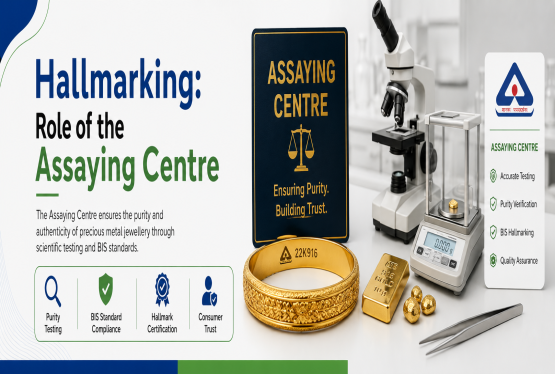
Hallmark registration is required by jewellers who sell hallmarked gold or silver jewellery or artefacts. This may include retail jewellers, wholesale jewellers, jewellery showrooms, jewellery chains and businesses selling precious metal articles to customers. A jeweller may be a proprietorship firm, partnership firm, LLP, private limited company, public company or any other legally recognised business entity. The registration is linked with the business and its premises. Jewellers who only manufacture jewellery for another registered jeweller may still need to check their exact role in the supply chain. If they directly sell hallmarked jewellery, registration becomes important. Assaying and Hallmarking Centres are different from jewellers. They test jewellery and apply hallmarking as per BIS norms. They require recognition from BIS and must comply with separate technical and operational requirements.
Is Renewal Required for Jewellers?
For jewellers, renewal is generally not required because BIS jeweller registration is valid for lifetime. The jeweller can continue using the registration as long as the business complies with BIS rules and the registration is not suspended or cancelled. However, jewellers should update their details if there is any change in business name, address, constitution, authorised signatory, contact details or other important information. If the business structure changes, the jeweller should check whether modification, fresh registration or intimation to BIS is required.
For example, if a proprietorship converts into a private limited company, or if a jeweller opens a new branch, proper compliance should be checked. Lifetime validity should not be treated as a free right to operate without updating business information.
Renewal for Assaying and Hallmarking Centres
Assaying and Hallmarking Centres are not the same as jewellers. These centres test gold and silver jewellery and mark the articles with BIS hallmark. Such centres require BIS recognition. For Assaying and Hallmarking Centres, renewal of recognition may be applicable as per BIS guidelines. The centre must submit renewal application, required fees and enclosures through the prescribed online portal. If the centre is under suspension, cancellation process, deferment or has unresolved non-compliances, renewal may not be automatic. BIS may examine the pending issues before allowing renewal. Non-submission of documents or fees can be treated as violation of BIS Hallmarking Regulations. Therefore, while jeweller registration is valid for lifetime, Assaying and Hallmarking Centres must carefully track validity and renewal requirements.
Documents Generally Required for Hallmark Registration Compliance
- PAN Card
- GST Certificate
- Business registration proof
- Aadhaar/ID proof of owner or authorised person
- Shop address proof
- Rent agreement or ownership proof
- Shop and Establishment Certificate, if applicable
- Partnership deed/LLP agreement/COI, if applicable
- BIS Hallmark Registration Certificate
- Purchase and sale invoices
- Stock records
- Hallmarking receipts from recognised centres
- HUID details, if applicable
- BIS notices or compliance records, if any
Process Related to Hallmark Registration
The process for jewellers is simple. The jeweller needs to apply online through the BIS Manakonline portal. After entering the required details, the registration is generally granted instantly. The jeweller can download the certificate from the portal. Since the registration is valid for lifetime, no regular renewal application is required for jewellers. However, the jeweller must keep login credentials safe and should regularly check the portal for any notices, updates or compliance requirements.
If any information changes, the jeweller should update or correct the details as per BIS procedure. If BIS asks for clarification or documents during scrutiny or inspection, the jeweller should respond within the given time. For Assaying and Hallmarking Centres, the renewal process is more detailed. The centre must file renewal request with applicable fees and documents. BIS may review compliance status, pending dues, earlier violations, suspension history and operational readiness before renewing recognition.
Legal Duties After Hallmark Registration
After obtaining hallmark registration, the jeweller must follow all BIS hallmarking rules. The jeweller should sell only properly hallmarked jewellery where mandatory hallmarking applies. The jeweller should not misuse BIS hallmark or make false claims about purity. The jeweller must ensure that the article sold to the customer matches the declared purity. If there is shortage in purity or fineness, liability may arise. The registered jeweller who gets the article hallmarked may be responsible for purity, and the jeweller selling the article may be liable to compensate the customer in case of shortage.
The jeweller should issue proper invoices and maintain records. The invoice should clearly describe the jewellery article, weight, purity and other relevant details. Proper invoicing helps in consumer protection and also protects the jeweller during inspections. Jewellers should use only recognised Assaying and Hallmarking Centres for hallmarking. Getting jewellery marked from an unauthorised centre or using fake hallmarking can lead to serious legal consequences.
HUID and Its Importance
HUID means Hallmark Unique Identification. It is an important part of the modern hallmarking system. It helps in tracking and verifying hallmarked jewellery. Customers can verify hallmarked jewellery through the BIS Care App by using the HUID number. This increases transparency and reduces the risk of fake hallmarking.
For jewellers, HUID compliance is important because it creates a record of the hallmarked article. Selling jewellery without proper HUID where it is mandatory may create legal risk.
Consequences of Non-Compliance
If a jeweller violates hallmarking rules, BIS may take action under the BIS Act and applicable regulations. Action may include notice, inspection, suspension of registration, cancellation of registration, seizure of goods, prosecution, fine or imprisonment depending on the nature of violation. Misuse of hallmark, fake hallmarking, selling non-hallmarked jewellery where hallmarking is mandatory, wrong purity declaration and use of unauthorised hallmarking centres are serious violations. For Assaying and Hallmarking Centres, failure to renew recognition, non-payment of fees, non-submission of documents, poor testing practice, wrong marking or violation of BIS guidelines may result in suspension or cancellation of recognition.
Difference Between Registration Renewal and Compliance Continuation
Many jewellers confuse renewal with compliance continuation. Renewal means applying again to extend the validity of a certificate. Compliance continuation means following all legal conditions even after the certificate is granted. In the case of jewellers, renewal may not be required because the certificate is valid for lifetime. But compliance continuation is always required. A lifetime certificate can still be cancelled if the jeweller violates the law. Therefore, jewellers should focus on maintaining correct records, using recognised hallmarking centres, selling jewellery with proper hallmark, verifying HUID and responding to BIS notices.
Practical Checklist for Jewellers
Jewellers should keep the BIS registration certificate safely. They should display registration details where required and ensure that customer-facing staff understand hallmarking rules. They should check whether the jewellery article falls under mandatory hallmarking. They should send jewellery only to recognised Assaying and Hallmarking Centres. They should verify that the hallmarked article carries proper purity mark and HUID. Invoices should be clear and complete. Records of hallmarking should be matched with stock and sale records. Any customer complaint related to purity should be handled seriously. If there is any change in business constitution, premises, branch, GST number, contact details or authorised person, the jeweller should check the BIS portal and update details as required.
Common Mistakes in Hallmark Registration Renewal
- The first mistake is assuming that renewal is required every year for jeweller registration. Under the current system, jeweller registration is valid for lifetime.
- The second mistake is believing that lifetime validity means no compliance. This is incorrect. BIS can still take action if rules are violated.
- The third mistake is using unauthorised hallmarking centres. Jewellers must use recognised centres only.
- The fourth mistake is not maintaining invoices and hallmarking records. Poor records can create problems during inspection or complaint handling.
- The fifth mistake is ignoring BIS notices. If BIS sends any notice or asks for clarification, the jeweller should reply within the prescribed time.
Why Hallmark Registration Compliance Matters
Hallmark registration compliance protects both jewellers and customers. Customers get assurance about purity. Jewellers get legal recognition and market credibility. In the jewellery business, trust is very important. A hallmarked article gives confidence to the buyer that the jewellery has been tested under the BIS system. It also helps organised jewellers compete fairly with non-compliant sellers. For businesses, compliance reduces the risk of penalty, seizure, prosecution and reputational loss. A jeweller who maintains proper hallmarking compliance can build long-term customer confidence.
Conclusion
Hallmark Registration Renewal is an important topic, but the current legal position for jewellers is simple. BIS hallmark registration for jewellers selling hallmarked gold and silver jewellery is valid for lifetime, so regular renewal is generally not required. However, lifetime validity does not remove legal responsibility. Jewellers must continue to follow BIS hallmarking rules, sell properly hallmarked jewellery, maintain records, use recognised hallmarking centres and update business details when required.
For Assaying and Hallmarking Centres, renewal of recognition may still be applicable as per BIS guidelines. Such centres must file renewal applications, pay fees and comply with technical and operational requirements. In simple words, jewellers should not worry about yearly renewal, but they should take hallmark compliance seriously. A valid registration, proper records and lawful sale of hallmarked jewellery are essential for running a safe and trusted jewellery business in India.
FAQs
Q1. What is Hallmark Registration Renewal?
Ans. Hallmark Registration Renewal means extending the validity of a BIS hallmark registration or recognition. However, for jewellers, BIS hallmark registration is currently valid for lifetime, so regular renewal is generally not required.
Q2. Is BIS hallmark registration renewal required for jewellers?
Ans. No, regular renewal is generally not required for jewellers because the BIS certificate of registration for selling hallmarked gold and silver jewellery is valid for lifetime.
Q3. Does lifetime validity mean no compliance is required?
Ans. No. Lifetime validity only means that the registration does not expire normally. The jeweller must still follow BIS hallmarking rules and maintain proper compliance.
Q4. Can BIS cancel hallmark registration?
Ans. Yes. BIS can cancel or suspend registration if the jeweller violates hallmarking rules, misuses hallmark, gives false information or fails to comply with BIS directions.
Q5. Is renewal required for Assaying and Hallmarking Centres?
Ans. Yes, renewal may be required for Assaying and Hallmarking Centres because they operate under a separate BIS recognition system. They must follow BIS renewal and operational guidelines.
Q6. Is any fee payable for jeweller hallmark registration renewal?
Ans. For normal jeweller registration, renewal is generally not applicable because the registration is valid for lifetime. Therefore, no periodic renewal fee is usually required.
Q7. What should a jeweller do if business details change?
Ans. The jeweller should update or correct the details on the BIS portal as per the applicable procedure. Changes in business name, address, constitution or authorised person should not be ignored.
Q8. Can a jeweller sell non-hallmarked jewellery?
Ans. Where mandatory hallmarking applies, the jeweller must sell only hallmarked jewellery of specified purity standards. Selling non-compliant jewellery may lead to legal action.
Q9. What is HUID in hallmarking?
Ans. HUID means Hallmark Unique Identification. It is a unique code used for verification and traceability of hallmarked jewellery.
Q10. Why is hallmark registration important for jewellers?
Ans. Hallmark registration gives legal recognition to jewellers for selling hallmarked jewellery. It builds customer trust, supports legal compliance and reduces the risk of penalties.


_crop10_thumb.jpg)


_crop10_thumb.jpg)


-Form_crop10_thumb.jpg)

_crop10_thumb.jpg)


_learn_crop10_thumb.jpeg)


_crop10_thumb.jpg)

_crop10_thumb.jpg)


_crop10_thumb.jpg)




_for_Foreign_Directors_learn_crop10_thumb.jpeg)


_Act,_2015_learn_crop10_thumb.jpg)











_learn_crop10_thumb.jpg)










































_crop10_thumb.jpg)

_crop10_thumb.jpg)


_(1)_crop10_thumb.jpg)











_crop10_thumb.png)












_crop10_thumb.jpg)


_crop10_thumb.jpg)








_crop10_thumb.png)


_crop10_thumb.jpg)









_crop10_thumb.png)