
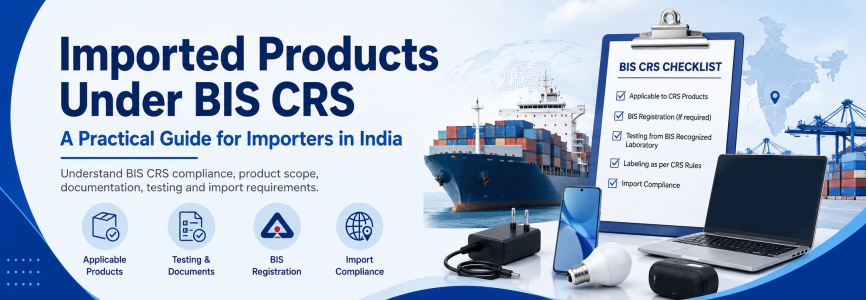



Importing electronic and IT products into India is not only about finding the right supplier, negotiating price and clearing customs. For many products, importers also have to ensure that the product is registered under the Bureau of Indian Standards Compulsory Registration Scheme, commonly known as BIS CRS. BIS CRS applies mainly to notified electronics and IT goods. Under this scheme, certain products cannot be manufactured, imported, stored for sale, sold or distributed in India unless they conform to the applicable Indian Standard and carry valid BIS registration. The CRS framework is operated by BIS under Scheme II of the BIS Conformity Assessment Regulations, 2018.
For importers, this requirement is very important because goods may get delayed, rejected or held at customs if BIS CRS compliance is not completed before import. This article explains what BIS CRS is, which imported products require it, who should apply, the process, documents and common mistakes importers should avoid.
What is BIS CRS?
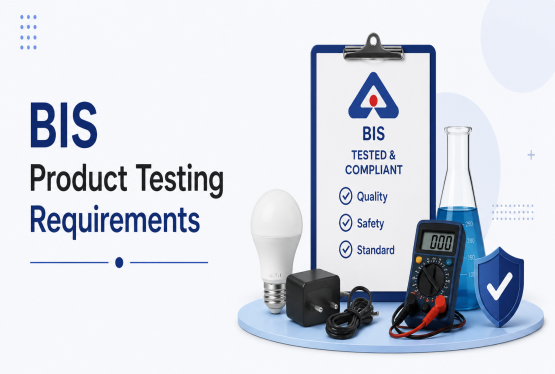
BIS CRS stands for Compulsory Registration Scheme. It is a registration-based compliance system introduced for notified electronic and IT products. Under this scheme, the manufacturer must get the product tested from a BIS-recognised laboratory and then apply to BIS for registration. The CRS requirement is based on self-declaration of conformity. This means the manufacturer declares that the product conforms to the relevant Indian Standard after successful testing. BIS then grants a registration number, which must be marked on the product before it is sold in India. BIS has clearly stated that manufacturers of notified products must apply for registration after getting the product tested from BIS-recognised labs. The order also restricts manufacture, storage for sale, import, sale or distribution of non-conforming goods.
Why BIS CRS Matters for Imported Products
Imported products are checked not only from a commercial angle but also from a regulatory angle. If a product falls under BIS CRS, the importer must ensure that the foreign manufacturer has a valid BIS CRS registration for that specific product, model and brand. The importer cannot simply rely on foreign test certificates, CE marking, FCC approval or ISO certification. BIS CRS requires testing as per the applicable Indian Standard and registration with BIS. If this is missed, the goods may face customs clearance issues.
For example, if an importer brings laptops, power banks, LED lights or certain adapters into India, BIS CRS may be applicable depending on the exact product category and notification. The official CRS product list includes electronics and IT goods such as automatic data processing machines, amplifiers, electronic clocks and several other notified products.
Who Needs BIS CRS for Imported Products?
In the case of imported products, the application is generally made by the foreign manufacturer, not the Indian importer. However, the Indian importer plays a major role in coordinating the process. The foreign manufacturer must obtain BIS CRS registration before the products are imported and sold in India. If the manufacturer is located outside India, an Authorized Indian Representative, also called AIR, is usually appointed to communicate with BIS and handle compliance responsibilities in India. The importer must verify whether the registration is valid, whether the correct model is covered and whether the brand name is properly included. Importing goods under another company’s BIS registration without proper authorization can create compliance risks.
Products Commonly Covered Under BIS CRS
BIS CRS covers notified electronics and IT products. The exact list may change from time to time through government notifications, so importers should always check the latest official list before shipment. Common examples of products that may fall under BIS CRS include:
Mobile phones, laptops, tablets, power banks, LED lights, adapters, CCTV cameras, printers, scanners, smart watches, electronic musical systems, electronic games, microwave ovens, televisions and similar electronic products. This list is only indicative. The actual applicability depends on the product category, technical specifications and the relevant Indian Standard mentioned in the official notification.
Difference Between BIS CRS and BIS ISI Mark
Many importers get confused between BIS CRS and BIS ISI certification. Both are BIS compliance systems, but they are not the same. BIS CRS is mainly for notified electronics and IT goods under Scheme II. It is registration-based and works on self-declaration of conformity after testing. BIS ISI certification is generally licence-based and applies to various products under Scheme I. In ISI certification, factory inspection, testing facilities and ongoing surveillance may be involved depending on the product. So, before importing any product, the importer must first identify whether the product falls under CRS, ISI certification, FMCS or any other BIS scheme.
BIS CRS Process for Imported Products
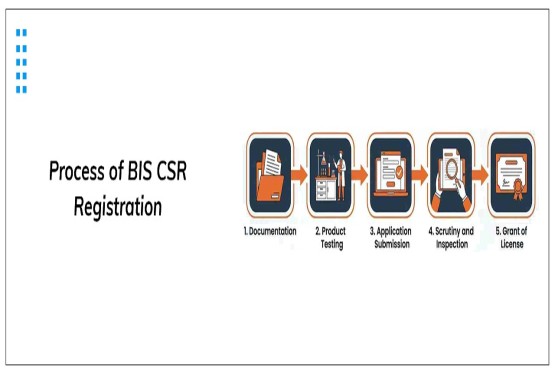
The BIS CRS process for imported products usually starts with product identification. The importer and foreign manufacturer must check whether the product falls under the notified CRS list. After this, product samples are arranged and tested in a BIS-recognised laboratory in India. The test report must match the applicable Indian Standard. Once the test report is issued, the manufacturer applies for BIS CRS registration through the online portal. For foreign manufacturers, the details of the Authorized Indian Representative are also provided. BIS examines the application, test report, factory details, brand details and other documents. If everything is found correct, BIS grants the registration. After registration, the manufacturer can use the BIS Standard Mark with the registration number on the product and packaging as applicable.
Documents Required for BIS CRS Registration
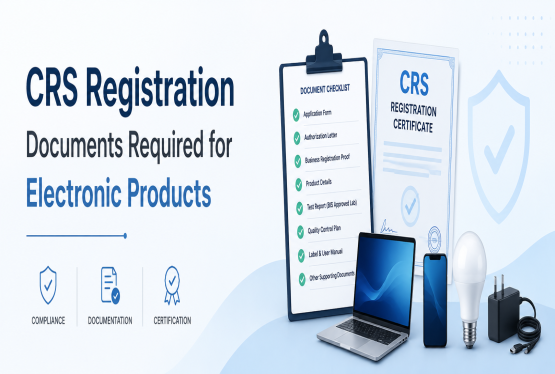
The documents may vary depending on the product and applicant, but generally include: Business licence of the foreign manufacturer, factory address proof, product details, brand authorization, test report from BIS-recognised laboratory, undertaking, nomination of Authorized Indian Representative, trademark or brand documents, model details, technical specifications, labels and marking details. Importers should make sure that the documents are consistent. Differences in brand name, factory address, model number or product description can lead to delay or rejection.
Role of Authorized Indian Representative
For foreign manufacturers, the Authorized Indian Representative plays an important role. AIR acts as the local representative of the foreign manufacturer in India. The AIR communicates with BIS, submits documents and takes responsibility for compliance in India. The AIR may be an Indian branch office, subsidiary, importer, distributor or any other eligible Indian entity authorized by the foreign manufacturer. Choosing the right AIR is important because BIS-related notices, renewals and compliance communication may be routed through the AIR.
Customs Clearance and BIS CRS
Customs authorities may check BIS CRS compliance at the time of import. If the product is covered under CRS and valid registration is not available, clearance may become difficult. Importers should ensure that the BIS registration number, brand name, model number and product description match the shipment documents. Invoice, packing list and bill of entry should be aligned with the BIS registration details. A common mistake is importing a model that is not included in the BIS certificate. Even if the manufacturer has BIS registration for one model, it does not automatically cover all models unless they are specifically included.
Validity and Renewal of BIS CRS
BIS CRS registration is granted for a specified period and must be renewed before expiry. Importers should track the validity of the registration before placing fresh orders. If the registration expires and goods are shipped during the expired period, customs and market sale issues may arise. Renewal planning should be done in advance to avoid business disruption.
Labelling and Marking Requirements
Once BIS CRS registration is granted, the product must carry the required BIS marking details. The marking generally includes the Standard Mark and the registration number. The marking should be clear, durable and placed as per BIS requirements. Incorrect marking, missing registration number or use of BIS mark without valid registration can lead to legal and commercial issues.
Common Mistakes Importers Should Avoid
Importers often make mistakes because they assume BIS compliance is only the manufacturer’s responsibility. In practice, the importer is also affected if goods are stopped, delayed or questioned. Some common mistakes include importing without checking CRS applicability, relying only on foreign certifications, using expired BIS registration, importing models not covered in the certificate, mismatch in brand name, appointing an unsuitable AIR and not checking latest BIS notifications. Another common issue is last-minute compliance. BIS testing and registration may take time, so the process should be started before shipment planning.
Penalties and Business Risks
Non-compliance with BIS CRS can lead to serious business consequences. Goods may be held at customs, sale may be restricted and the business may face regulatory action. It can also damage the importer’s reputation with customers and distributors. BIS certification becomes compulsory for products notified by the Central Government for reasons such as public interest, safety, health, environmental protection, prevention of unfair trade practices and national security. For importers, BIS CRS should not be treated as a formality. It is a mandatory compliance requirement for notified products.
How Importers Can Stay Compliant
Importers should create a compliance checklist before importing any electronic or IT product. First, identify the product category and check whether it falls under the CRS list. Second, confirm the applicable Indian Standard. Third, check whether the foreign manufacturer already has valid BIS registration. If registration is not available, the importer should coordinate with the manufacturer for testing, documentation, AIR appointment and application filing. Before shipment, the importer should also verify model coverage, brand coverage, registration validity and marking details.
Conclusion
BIS CRS is a key compliance requirement for imported electronics and IT products in India. If a product is notified under CRS, it cannot be imported or sold in India without valid BIS registration. For importers, the safest approach is to check BIS applicability before placing the order. A small mistake in model number, brand name, test report or registration validity can delay the entire shipment.
With proper planning, correct documentation and timely BIS registration, importers can avoid unnecessary penalties, customs issues and market disruption. BIS CRS compliance not only supports legal import but also builds customer trust in product safety and quality.
FAQs
Q1. What is BIS CRS for imported products?
Ans. BIS CRS is a compulsory registration scheme for notified electronics and IT products. If an imported product is covered under CRS, it must have valid BIS registration before sale in India.
Q2. Who applies for BIS CRS for imported goods?
Ans. The manufacturer usually applies for BIS CRS registration. In the case of foreign manufacturers, an Authorized Indian Representative is generally appointed for compliance in India.
Q3. Can an importer apply for BIS CRS directly?
Ans. Usually, BIS CRS registration is manufacturer-based. An importer can act as Authorized Indian Representative if properly authorized by the foreign manufacturer.
Q4. Is BIS CRS required for all imported products?
Ans. No. BIS CRS is required only for products notified under the Compulsory Registration Scheme. Importers must check the official product list before import.
Q5. Are CE or FCC certificates enough for India?
Ans. No. CE, FCC or other foreign approvals do not replace BIS CRS. For notified products, testing as per Indian Standard and BIS registration are required.
Q6. Can one BIS registration cover all models?
Ans. Not always. BIS registration covers only the models included in the registration scope. Importers must check whether the exact model is covered.
Q7. What happens if goods are imported without BIS CRS?
Ans. The shipment may face customs clearance issues, sale restrictions and regulatory action. It may also cause business delays and financial loss.
Q8. Is BIS CRS registration required before shipment?
Ans. Yes. For covered products, registration should be completed before import and sale in India. Starting the process after shipment can create avoidable risks.
Q9. How long is BIS CRS registration valid?
Ans. BIS CRS registration is valid for a specified period and must be renewed before expiry. Importers should check validity before every shipment.
Q10. Why should importers verify BIS details before buying goods?
Ans. Importers should verify BIS details to avoid customs delay, wrong model import, expired registration and illegal sale in India. Proper checking protects both business and customers.


_crop10_thumb.jpg)


_crop10_thumb.jpg)


-Form_crop10_thumb.jpg)

_crop10_thumb.jpg)


_learn_crop10_thumb.jpeg)


_crop10_thumb.jpg)

_crop10_thumb.jpg)


_crop10_thumb.jpg)




_for_Foreign_Directors_learn_crop10_thumb.jpeg)


_Act,_2015_learn_crop10_thumb.jpg)










_learn_crop10_thumb.jpg)










































_crop10_thumb.jpg)

_crop10_thumb.jpg)

_(1)_crop10_thumb.jpg)










_crop10_thumb.png)










_crop10_thumb.jpg)

_crop10_thumb.jpg)








_crop10_thumb.png)

_crop10_thumb.jpg)







_crop10_thumb.png)









_crop10_thumb.jpg)
