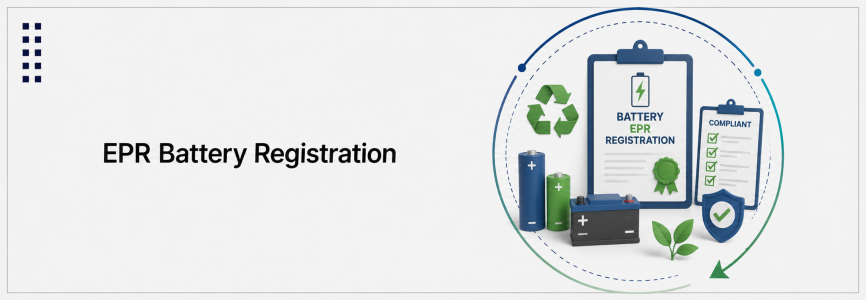



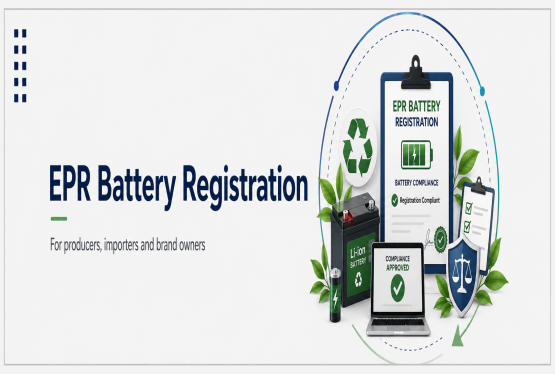
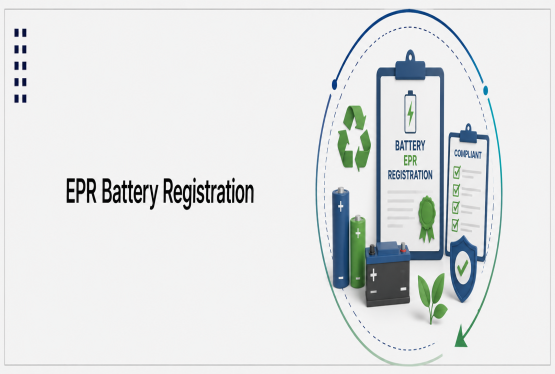
Battery EPR Registration has become an important legal requirement for businesses dealing with batteries in India. If a business manufactures batteries, imports batteries, sells batteries under its own brand, or imports products containing batteries, it may fall under the Battery Waste Management Rules, 2022.
The main purpose of Battery EPR Registration is to make producers responsible for the collection, recycling, refurbishment and safe management of waste batteries introduced by them in the Indian market. The law follows the principle that the producer who places batteries in the market must also take responsibility for their end-of-life management.
Battery waste is a serious environmental concern because batteries may contain materials such as lead, lithium, cadmium, nickel, zinc, acid and other chemical substances. If waste batteries are not collected and recycled properly, they can harm soil, water, human health and the environment.
What is EPR Battery Registration?
EPR stands for Extended Producer Responsibility. In simple words, it means that the producer is responsible for the battery even after it is sold and used by the consumer.
Under the Battery Waste Management Rules, 2022, producers must register on the centralized online portal developed by the Central Pollution Control Board, commonly called CPCB. The CPCB portal is the official platform for registration of producers, recyclers and refurbishers under the Battery Waste Management Rules, 2022.
The rules apply to all types of batteries, irrespective of chemistry, shape, volume, weight, material composition and use. This means the law covers portable batteries, electric vehicle batteries, automotive batteries and industrial batteries.
Legal Rules Governing Battery EPR Registration
Battery EPR Registration is governed mainly by the Battery Waste Management Rules, 2022. These rules were notified by the Ministry of Environment, Forest and Climate Change under the Environment Protection Act, 1986.
The Battery Waste Management Rules, 2022 replaced the earlier battery waste framework and introduced a stronger EPR-based compliance system. The rules came into force from the date of publication in the Official Gazette and apply to producers, dealers, consumers and entities involved in collection, segregation, transportation, refurbishment and recycling of waste batteries.
The legal base of these rules comes from the Environment Protection Act, 1986, including powers under Section 3, Section 6, Section 8 and Section 25. These provisions allow the Central Government to make rules for protection and improvement of environment, handling of hazardous substances and related compliance requirements.
Who Needs Battery EPR Registration?
Battery EPR Registration is required for producers. The term “producer” is very important because it decides who has the legal responsibility under the rules.
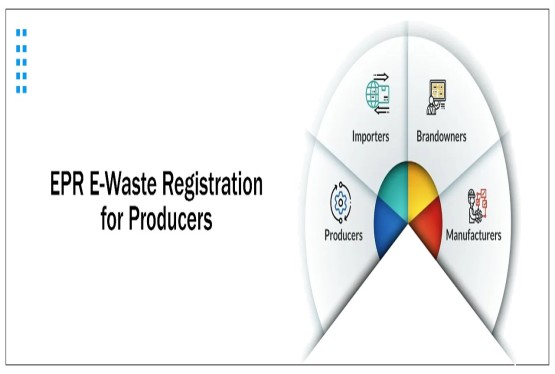
As per the Battery Waste Management Rules, a producer includes an entity engaged in manufacturing and selling batteries, including refurbished batteries, under its own brand. It also includes a person or entity selling batteries under its own brand even if those batteries are manufactured by another manufacturer or supplier. Importers of batteries and importers of equipment containing batteries are also covered.
This means Battery EPR Registration may be required for battery manufacturers, battery importers, EV battery businesses, power backup battery sellers, electronics brands importing battery-operated products, private label battery sellers, and companies selling products that contain batteries.
Types of Batteries Covered Under EPR
The Battery Waste Management Rules cover all types of batteries. This wide coverage is important because battery use is no longer limited to vehicles or inverters.
- Portable batteries are commonly used in consumer electronics, toys, small devices, mobile accessories and household products. Electric vehicle batteries are used in two-wheelers, three-wheelers, cars, buses and other EV applications.
- Automotive batteries are used in vehicles for ignition, lighting and other vehicle operations. Industrial batteries are used in UPS systems, telecom towers, energy storage systems, solar storage units, manufacturing facilities and other industrial applications.
Because the rules apply to all types of batteries, businesses must check not only the battery sold separately but also whether their equipment contains batteries.
Main Objective of EPR Battery Registration
The main objective of EPR Battery Registration is to ensure proper collection and management of waste batteries. The law does not allow waste batteries to be handled casually or disposed of in an unsafe manner.
The producer has to meet collection, recycling or refurbishment obligations based on batteries made available in the market. The rules clearly state that waste batteries collected by the producer must be sent for recycling or refurbishment and should not be sent for landfilling or incineration.
This legal approach helps create a formal recycling ecosystem. It also improves traceability because producers, recyclers and refurbishers are connected through the online portal.
Step 1: Identify Whether Your Business is a Producer
The first step is to check whether your business falls under the definition of producer. Many businesses assume that EPR applies only to manufacturers, but this is not correct. If you import batteries, sell batteries under your own brand, get batteries manufactured from a third party and sell them under your brand, or import equipment containing batteries, you may be treated as a producer.
For example, an electronics brand importing wireless headphones with lithium batteries may need Battery EPR Registration. Similarly, an importer of power banks, toys, EV batteries, inverters or battery-operated machines may also fall under the producer category.
Step 2: Identify the Battery Category and Composition
After confirming applicability, the next step is to identify the type and composition of batteries handled by the business.
The CPCB SOP for producer registration requires the applicant to provide battery type, brand name, producer category, battery composition and HSN code. Battery composition may include lead-acid, lithium-ion, nickel-cadmium, zinc-based batteries or other battery chemistry.
This step is important because EPR targets and compliance obligations are linked to the type, weight and category of batteries placed in the market. Incorrect battery classification can create issues during application review or later compliance.
Step 3: Collect Business and Legal Documents
Before applying, the applicant should keep all legal and business documents ready. Proper documentation helps reduce the chances of delay or query on the CPCB portal.
The documents generally include GST certificate, PAN card, CIN certificate in case of company, details of authorized person, website details, brand details, battery type details, HSN code, sales data, battery composition details and other business registrations.
The CPCB SOP mentions GST number and GST certificate, company PAN card, CIN certificate, consent under Air and Water Acts and authorization under Hazardous Waste Rules if the unit is involved in production facility, DIC registration certificate, and IEC in case of importers.
Step 4: Create Login on CPCB Battery EPR Portal
The next step is to create an account on the official CPCB Battery EPR portal. The portal is designed for registration of producers, recyclers and refurbishers under the Battery Waste Management Rules, 2022.
The applicant should use the details of the authorized person while creating the login. CPCB also advises users to use a dedicated email ID and mobile number of the authorized person for login and not the contact details of consultants or agents.
After signing up, the applicant can access the producer registration form and start filling the required details section-wise.
Step 5: Fill General Information
In the general information section, the applicant must provide business details such as name of producer, registered address, website address, branch address and authorized person details.
The authorized person details generally include name, designation, mobile number and email ID. These details must be correct because future portal communication, queries and compliance updates may be linked to them.
The applicant should ensure that business details match official records such as GST certificate, MCA records, PAN database and import-export documents, wherever applicable.
Step 6: Fill Battery Type, Brand and HSN Details
The next part of the application relates to battery details. Here, the producer must select the category under which it operates and the type of batteries sold in the market.
The applicant must provide battery composition, brand name and HSN code. The brand name should match the brand under which batteries or battery-containing products are sold.
If multiple battery types are handled, details should be properly entered for each relevant category. This becomes important for future target calculation, sales data reporting and EPR certificate adjustment.
Step 7: Add Sales Data
Sales data is one of the most important parts of Battery EPR Registration. The producer must provide details of batteries placed in the market, generally in dry weight in kilograms.
The CPCB SOP requires the producer to select the sales year, battery type, battery composition and quantity sold in dry weight. The producer must also upload year-wise sales data for each battery type and composition as per the format provided on the portal.
The sales data should be accurate and supported by records such as invoices, import data, GST returns, financial statements and stock records. Wrong reporting may later result in mismatch, audit issues or environmental compensation.
Step 8: Add Battery Material Composition
The producer must also enter the material composition of batteries. This includes the average percentage composition of constituents present in the selected battery type.
For example, if a lithium-ion battery category is selected and the producer has sold different lithium-ion chemistries, the average percentage of constituents present in the battery may need to be entered as per the portal requirement.
This data is important for material recovery and recycled material compliance under the Battery Waste Management Rules.
Step 9: Upload Documents and Pay Fees
After entering business, battery and sales details, the applicant must upload required documents. These may include GST certificate, PAN, CIN, IEC, DIC registration, environmental consents and other supporting documents depending on the business model.
The application also requires declaration and payment of fees. As per the SOP, declaration and payment are linked to annual turnover or revenue of the company.
Before final submission, the applicant should check each document for clarity, validity and consistency. Blurred documents, mismatch in business name or incomplete uploads may lead to queries.
Step 10: Submit Application and Track Status
Once all details are filled and documents uploaded, the application can be submitted on the portal. The CPCB may examine the details and raise queries if clarification is needed.
The Battery Waste Management Rules state that CPCB registers producers through the online portal in Form 1(B). The rules also provide that registration is to be done within two weeks from submission of a completed application, and producer registration is valid for five years.
After approval, the registration certificate can be downloaded from the portal. The producer should keep a copy safely because it may be required for business operations, customer verification, marketplace compliance, import compliance and future filings.
EPR Plan and Annual Return Requirements
Registration is not the end of compliance. After Battery EPR Registration, the producer must continue to meet EPR obligations.
The rules require producers to provide an EPR Plan in Form 1(C) to CPCB by 30th June every year for batteries manufactured in the preceding financial year. The plan must include information on quantity, weight and dry weight of battery materials through the centralized portal.
Producers are also required to file annual returns in Form 3 regarding waste batteries collected and recycled or refurbished towards fulfilling EPR obligations. The rules mention filing with CPCB and the concerned State Pollution Control Board by 30th June of the next financial year.
EPR Targets and EPR Certificates
EPR targets are the backbone of Battery EPR compliance. A producer must meet collection, recycling or refurbishment targets based on batteries placed in the market.
The rules allow producers to meet their EPR obligations by engaging themselves or authorizing another entity for collection, recycling or refurbishment. However, the responsibility for meeting the EPR target remains with the producer.
Recyclers and refurbishers can generate EPR certificates based on the quantity of batteries processed and applicable recovery targets. Producers can purchase EPR certificates to meet their obligations, and such certificates are adjusted against the producer’s liability on the portal.
Recent Update: Recycled Material Requirement
One important recent update relates to minimum use of recycled materials in new batteries.
The Battery Waste Management Second Amendment Rules, 2024 revised the table under Rule 4(14). As per the amended table, portable and electric vehicle batteries have minimum recycled material requirements of 5%, 10%, 15% and 20% for FY 2027-28, 2028-29, 2029-30 and 2030-31 onwards respectively. Automotive and industrial batteries have requirements of 35%, 35%, 40% and 40% for the same financial years.
This update is important for battery producers because compliance is no longer limited to collection and recycling. Producers must also plan for recycled material use in new batteries as per applicable timelines.
Recent Update: Labelling and QR Code Requirement
The Battery Waste Management Amendment Rules, 2025 introduced important changes related to labelling and marking.
The 2025 amendment allows producers, subject to providing information in writing to CPCB, to print a barcode or QR code containing the EPR registration number on the battery or battery pack, equipment containing the battery, packaging of the battery, packaging of the equipment, or bulk packaging for batteries not meant for retail sale. It also allows printing of the Extended Producer Registration number on the product information brochure.
The same amendment also states that certain packaging covered under Rule 26 of the Legal Metrology Packaged Commodities Rules, 2011 is excluded from the specific clause requirement. It further provides that marking of chemical symbols “Cd” or “Pb” is not applicable where cadmium or lead concentration is below the prescribed limits.
Renewal of Battery EPR Registration
Battery EPR Registration is not permanent. The rules provide that producer registration is valid for five years. Renewal must be applied for before expiry. The producer must file renewal in Form 1(A) before sixty days of expiry. This timeline is important because delay in renewal may affect business continuity and compliance status. At the time of renewal, the producer should ensure that annual returns, EPR targets, sales data and certificate adjustments are updated. Pending liabilities or non-compliance may affect smooth renewal.
Penalty and Environmental Compensation
Non-compliance with Battery EPR obligations can lead to serious consequences. The rules allow suspension or cancellation of registration and imposition of environmental compensation after giving reasonable opportunity of being heard.
Environmental compensation may be levied for activities carried out without registration and for non-fulfilment of EPR targets or obligations. CPCB may levy environmental compensation on producers, while SPCB may act against recyclers, refurbishers and other entities operating in their jurisdiction.
Payment of environmental compensation does not remove the original EPR obligation. The unfulfilled obligation may be carried forward for up to three years, and partial return of environmental compensation may be available if the shortfall is addressed within the specified period.
Common Mistakes in Battery EPR Registration
Many applications face delays because businesses do not identify the correct producer category. Some importers think that only battery manufacturers need registration, which is incorrect.
Another common mistake is wrong battery classification. Businesses sometimes enter incorrect battery type, battery chemistry or HSN code. This may affect target calculation and compliance reporting. Incorrect dry weight reporting is also a major issue. Since EPR targets are linked to weight, sales data should be supported by invoices, import documents, technical sheets and internal records.
Why Professional Assistance is Helpful
Battery EPR Registration involves legal, technical and portal-based compliance. It is not only a registration form but a continuing responsibility.
Businesses must understand battery category, composition, producer status, sales data, EPR target, recycled material requirement, annual return, EPR certificates and environmental compensation. Professional assistance can help businesses prepare correct documents, file the application properly, respond to CPCB queries and manage post-registration compliance.
Conclusion
Battery EPR Registration is mandatory for producers covered under the Battery Waste Management Rules, 2022. It applies to manufacturers, brand owners, importers and businesses importing equipment containing batteries.
The process involves identifying applicability, collecting documents, creating login on CPCB portal, filing producer details, adding battery type and composition, uploading sales data, submitting documents, paying fees and tracking approval.
After approval, the business must continue to meet EPR targets, file annual returns, purchase or adjust EPR certificates where required, follow recycled material obligations and comply with labelling updates. The recent amendments in 2024 and 2025 have made Battery EPR compliance more detailed, especially in relation to recycled material use, QR code or barcode-based EPR registration marking and updated labelling conditions.
For businesses dealing in batteries or battery-containing products, timely Battery EPR Registration is not only a legal requirement but also a responsible step toward environmental protection and sustainable business growth. For Battery EPR Registration, documentation, CPCB portal filing, annual compliance and EPR certificate support, you can connect with Compliance Calendar LLP.
Frequently Asked Questions (FAQs)
Q1. What is EPR Battery Registration?
Ans: EPR Battery Registration is a mandatory compliance requirement for producers, importers, and brand owners dealing with batteries or battery-operated products.
It is governed by the Battery Waste Management Rules, 2022 and issued through the CPCB Battery EPR portal.
This registration ensures that businesses take responsibility for the collection, recycling, and safe disposal of used batteries.
Q2. Who needs to apply for EPR Battery Registration?
Ans: Manufacturers, importers, brand owners, and sellers placing batteries in the Indian market must obtain EPR Battery Registration.
It also applies to businesses importing products containing batteries such as electronics, electric vehicles, and power banks.
Any entity introducing batteries into the market must check its EPR obligations.
Q3. Is EPR Battery Registration mandatory in India?
Ans: Yes, EPR Battery Registration is compulsory under the Battery Waste Management Rules, 2022.
Businesses falling under the producer category cannot legally operate without this registration.
Non-compliance may result in penalties, environmental compensation, or suspension of operations.
Q4. Which authority issues EPR Battery Registration?
Ans: The Central Pollution Control Board (CPCB) is the authority responsible for issuing EPR Battery Registration.
Applications must be submitted online through the CPCB Battery EPR portal.
CPCB reviews all submitted details before granting approval.
Q5. What types of batteries are covered under EPR Battery Registration?
Ans: EPR Battery Registration covers portable, automotive, industrial, and electric vehicle batteries.
It applies to all battery types regardless of size, chemistry, or usage.
This includes lithium-ion, lead-acid, nickel-cadmium, and other battery technologies.
Q6. What documents are required for EPR Battery Registration?
Ans: Applicants must provide documents such as GST certificate, PAN, CIN, and IEC for importers.
Additional details include battery specifications, brand information, HSN codes, and sales data.
The exact documentation may vary depending on the applicant’s business category.
Q7. How can I apply for EPR Battery Registration?
Ans: You need to register on the CPCB Battery EPR portal and complete the application form.
Upload all required documents, provide battery details, and pay the applicable fee.
Once approved, the EPR Battery Registration certificate can be downloaded online.
Q8. What is the validity of EPR Battery Registration?
Ans: EPR Battery Registration is typically valid for five years.
Businesses must apply for renewal before the expiry date.
Timely renewal ensures uninterrupted compliance and operations.
Q9. What is an EPR target under Battery Waste Management Rules?
Ans: An EPR target refers to the obligation assigned to producers for collecting and recycling waste batteries.
It is based on the quantity of batteries introduced into the market.
Producers must meet these targets through authorized recyclers or refurbishers.
Q10. What happens if EPR Battery Registration is not obtained?
Ans: Failure to obtain EPR Battery Registration can lead to legal consequences.
CPCB may impose penalties, environmental compensation, or restrict business activities.
It may also affect import permissions and marketplace operations.


_crop10_thumb.jpg)


_crop10_thumb.jpg)


-Form_crop10_thumb.jpg)

_crop10_thumb.jpg)


_learn_crop10_thumb.jpeg)


_crop10_thumb.jpg)

_crop10_thumb.jpg)


_crop10_thumb.jpg)




_for_Foreign_Directors_learn_crop10_thumb.jpeg)


_Act,_2015_learn_crop10_thumb.jpg)










_learn_crop10_thumb.jpg)




































_crop10_thumb.jpg)

_crop10_thumb.jpg)

_(1)_crop10_thumb.jpg)








_crop10_thumb.png)







_crop10_thumb.jpg)

_crop10_thumb.jpg)






_crop10_thumb.png)
_crop10_thumb.jpg)








_crop10_thumb.png)