_crop6_thumb.jpg)



Starting an export business from India is exciting, but it is also a compliance-driven journey. Many new exporters believe that once they obtain an Importer Exporter Code, they are ready to start exporting. While IEC is the first and most basic requirement, it is not the only compliance that matters. For many exporters, especially those who want to claim benefits under the Foreign Trade Policy, apply for export promotion schemes, deal with product-specific councils, or build credibility in international trade, RCMC Registration becomes an important step.
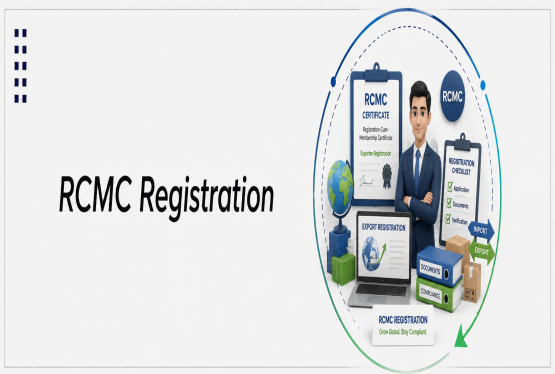
RCMC stands for Registration-Cum-Membership Certificate. It is issued by an Export Promotion Council, Commodity Board, Development Authority or any other competent authority recognised by the Government of India. In simple words, RCMC proves that an exporter is registered with the concerned export promotion body for the product or service category in which they are dealing.
For example, an exporter dealing in agricultural and processed food products may need registration with APEDA. A spice exporter may need registration with the Spices Board. A marine product exporter may approach MPEDA. Similarly, exporters of garments, engineering goods, chemicals, pharmaceuticals, handicrafts, electronics, services and other product categories are generally linked with their respective Export Promotion Councils.
RCMC Registration is not just a certificate. It connects the exporter with the official export promotion ecosystem of India. It helps the exporter access policy benefits, government schemes, trade updates, market development support, export guidance, buyer-seller opportunities and product-specific compliance information. That is why, if a business is planning to export seriously and professionally, RCMC Registration should be considered at the beginning of the export journey.
What is RCMC Registration?
RCMC Registration is a formal registration obtained by an exporter from the relevant Export Promotion Council or recognised authority. The certificate confirms that the exporter is a member of that council or authority and is engaged in export of the relevant goods or services.
The word “Registration-Cum-Membership” itself explains its purpose. It works as a registration of the exporter as well as membership with the concerned export promotion body. The exporter is required to declare its main line of business while applying for RCMC. This is important because the RCMC issuing authority depends on the product or service category of the exporter.
For instance, if a business exports basmati rice, processed food, fruits, vegetables, cereals or other scheduled agricultural products, APEDA may be the relevant authority. If the exporter deals in spices, the Spices Board may be relevant. If the exporter deals in leather products, the Council for Leather Exports may be relevant. If the exporter deals in engineering goods, the Engineering Export Promotion Council may be the appropriate authority.
RCMC is generally issued for a fixed period and must be renewed before expiry. The certificate contains details such as the exporter’s name, IEC, address, product category, membership type and issuing authority. In today’s system, RCMC applications are largely processed online through the DGFT e-RCMC platform or through integrated council systems, depending on the authority.
Why RCMC Registration Matters for Exporters
RCMC Registration matters because exports are not only about shipping goods outside India. Exporters also interact with Customs, DGFT, banks, export promotion schemes, incentive benefits, product-specific authorities and foreign buyers. A valid RCMC helps create a recognised compliance identity for the exporter.
For a new exporter, RCMC gives confidence that the business is registered with the correct authority. It also helps the exporter stay updated about product-specific export regulations, international trade fairs, government notifications, export promotion programmes and market access opportunities. Many Export Promotion Councils provide guidance, circulars, trade data, buyer information and policy support to their members.
From a legal point of view, RCMC becomes especially important where the exporter wants to apply for authorisations, concessions or benefits under the Foreign Trade Policy. Without a valid RCMC, such applications may face objections, delays or rejection, unless the exporter falls under an exempted category.
From a business point of view, RCMC also improves credibility. Foreign buyers, banks, government departments and trade bodies often prefer dealing with exporters who are properly registered and compliant. It shows that the exporter is not operating casually but is part of a regulated export system.
Legal Provisions for RCMC Registration in India
Foreign Trade (Development and Regulation) Act, 1992
The legal foundation of India’s export-import framework comes from the Foreign Trade (Development and Regulation) Act, 1992. This Act empowers the Central Government to regulate, develop and facilitate foreign trade. It also gives the Government power to frame the Foreign Trade Policy and issue rules, orders and procedures relating to import and export.
Section 3 of the Act empowers the Central Government to make provisions for development and regulation of foreign trade. Section 5 empowers the Government to formulate and announce the Foreign Trade Policy. Section 6 deals with the appointment and functions of the Director General of Foreign Trade. Section 7 is important because it deals with Importer Exporter Code, which is the basic requirement for undertaking export or import activities.
RCMC itself is not a standalone registration under a separate Act. It flows from the Foreign Trade Policy and the procedures issued by DGFT under the authority of the FTDR Act. Therefore, exporters should understand RCMC as part of India’s overall foreign trade compliance framework.
Foreign Trade Policy 2023
Foreign Trade Policy 2023 is the main policy document governing export and import benefits, authorisations, schemes and procedures in India. FTP 2023 continues to operate unless amended, which means exporters must keep tracking DGFT notifications, public notices and trade notices from time to time.
Under FTP 2023, Export Promotion Councils are recognised to function as registering authorities for issuing RCMC. These councils are responsible for promotion and development of exports for their respective product or service categories. They act as industry-specific bodies that connect exporters with policy support, export promotion activities and government initiatives.
The most relevant provision for RCMC is Para 2.57 of FTP 2023. It provides that any person applying for an authorisation to import or export under the FTP, except items listed as “Restricted” items in ITC (HS), or applying for any other benefit or concession under FTP, is required to provide RCMC granted by the competent authority, unless specifically exempted.
This means RCMC becomes legally relevant when the exporter wants to apply for benefits, concessions or authorisations under the Foreign Trade Policy. It is not merely a decorative membership certificate. It can be a mandatory supporting document for many FTP-linked applications.
Handbook of Procedures and Appendix 2T
The Handbook of Procedures supports the Foreign Trade Policy by laying down the practical process to be followed by exporters, importers, DGFT Regional Authorities and other authorities. It provides procedural clarity for filing applications, submitting documents, claiming benefits and complying with FTP requirements.
Appendix 2T is important because it lists Export Promotion Councils, Commodity Boards and other authorities authorised to issue RCMC. Exporters must identify the correct council based on their main line of business. Choosing the wrong authority may result in delay, objection or need for amendment.
If an exporter deals with multiple product categories, the main line of business should be carefully examined. In certain cases, exporters may need guidance to decide whether one RCMC is sufficient or whether membership with another council is also required for practical business purposes.
When is RCMC Registration Required?
When Applying for FTP Benefits or Concessions
RCMC Registration is required when an exporter wants to apply for benefits or concessions under the Foreign Trade Policy. This may include export promotion benefits, duty exemption-related schemes, authorisation-based benefits or other FTP-linked facilities.
The logic is simple. If the Government is offering a benefit to exporters under FTP, it must be able to verify that the exporter belongs to the relevant product or service category and is registered with the concerned competent authority. RCMC helps in that verification.
For example, an exporter applying under a scheme connected with a particular export sector may be asked to provide a valid RCMC. If the RCMC is expired, incorrect or issued by the wrong authority, the application may not move smoothly.
When Applying for Export or Import Authorisation Under FTP
RCMC is also required when an exporter applies for authorisation to import or export under the FTP, subject to the exceptions mentioned in the policy. Authorisation may be required in different situations depending on the product category, scheme or policy condition.
Exporters must remember that not all exports are treated in the same manner. Some products are freely exportable, some are restricted, some are prohibited, and some are subject to conditions. Where authorisation or scheme benefit is involved, RCMC compliance becomes more important.
When Dealing with Product-Specific Export Promotion Bodies
Certain export sectors are regulated or promoted through specific authorities. For example, agricultural and processed food products may come under APEDA, marine products under MPEDA, spices under the Spices Board, coir products under the Coir Board, tea under the Tea Board and so on.
In such cases, RCMC may become necessary not only for benefits but also for sectoral recognition and practical export operations. Many councils provide exporters with sector-specific circulars, export standards, quality requirements, market information and trade promotion support.
When Exporters Want to Participate in Trade Promotion Activities
Export Promotion Councils often organise trade fairs, buyer-seller meets, international exhibitions, export awareness programmes and market development activities. RCMC membership can help exporters participate in such opportunities. For small and medium exporters, this can be very useful. Export business requires market access, buyer trust and product visibility. RCMC gives access to an official network that may support exporters in expanding globally.
Is RCMC Mandatory for Every Exporter?
This is one of the most common questions asked by exporters. The answer is practical: RCMC is not mandatory for every exporter in every situation merely for making a basic export shipment. However, it becomes mandatory when the exporter wants to apply for authorisations, benefits or concessions under the Foreign Trade Policy, unless specifically exempted.
A business may be able to export freely exportable goods with IEC and other shipment documents. But if the same business wants to claim FTP benefits, participate in certain export promotion schemes or comply with product-specific authority requirements, RCMC may be required.
Therefore, exporters should not look at RCMC only from the narrow question of “Can I ship goods without it?” The better question is, “Will my export business need government benefits, council support, sectoral registration, buyer confidence or scheme access?” If the answer is yes, RCMC should be obtained at the beginning.
Recent Update on RCMC Requirement
A major clarification was issued by DGFT in 2024 regarding RCMC requirements for post-export remission-based schemes. There was confusion among exporters regarding whether RCMC was mandatory for claiming schemes such as Duty Drawback, RoSCTL and RoDTEP.
DGFT clarified that post-export remission-based schemes are different from authorisation-based or benefit/concession-based schemes under the FTP. Schemes such as Duty Drawback, Rebate of State and Central Taxes and Levies and Remission of Duties and Taxes on Export Products are meant to remit duties or taxes embedded in exported goods. For these remission-based schemes, RCMC is not required.
This clarification is important because many exporters, especially small exporters, were unsure whether they needed RCMC only to claim RoDTEP or similar remission benefits. The clarification provides relief by stating that exporters can claim these remission-based benefits without obtaining RCMC.
However, exporters should not misunderstand this update. The clarification does not remove the requirement of RCMC for all cases. RCMC continues to be required where the exporter applies for an authorisation to import or export under the FTP or applies for any other benefit or concession under the FTP, unless exempted.
IEC and RCMC: What is the Difference?
IEC and RCMC are often confused, but both serve different purposes. IEC stands for Importer Exporter Code. It is issued by DGFT and is the basic identification number required for undertaking import or export activities. Without IEC, a person generally cannot make exports or imports, unless exempted.
RCMC, on the other hand, is issued by the relevant Export Promotion Council, Commodity Board, Development Authority or competent authority. IEC identifies the exporter before DGFT, Customs and banks. RCMC identifies the exporter before the relevant export promotion body and confirms the exporter’s membership for a particular product or service category.
IEC comes first. RCMC comes after IEC. An exporter must generally have an active IEC before applying for RCMC. The IEC profile should also be updated, because mismatch in IEC details, PAN, firm name, address or business constitution may create issues during RCMC application.
Who Can Apply for RCMC Registration?
Any person or business entity engaged or intending to engage in exports can apply for RCMC, subject to the relevant council’s rules. This may include proprietorship firms, partnership firms, LLPs, private limited companies, public limited companies, trusts, societies, producer companies, cooperatives or other eligible business structures.
The exporter may be a manufacturer exporter, merchant exporter or service exporter depending on the nature of business. A manufacturer exporter exports goods manufactured by itself. A merchant exporter exports goods sourced from others. A service exporter provides eligible services to foreign clients.
While applying, the exporter must select the correct membership category and provide accurate details. Wrong selection may create complications later when the exporter applies for benefits or submits documents to authorities.
Documents Required for RCMC Registration
The documents required for RCMC Registration may vary depending on the Export Promotion Council, Commodity Board, or other authorised authority. However, most exporters need to submit basic documents to verify their business identity and export eligibility.
Common documents include:
- Importer Exporter Code (IEC) issued by DGFT
- PAN card of the business or proprietor
- GST registration certificate (if applicable)
- Certificate of Incorporation for companies or LLPs
- MOA and AOA for companies
- LLP Agreement for LLPs
- Partnership deed for partnership firms
- Proprietorship proof and identity proof for proprietors
- Address proof of the business
- Bank details or cancelled cheque
- Details of directors, partners, or proprietor
- Product or service details for export
- Export turnover details (if applicable)
- Authorisation letter or board resolution, if filed through a representative
Depending on the nature of the business, additional documents such as FSSAI licence, factory licence, MSME registration, manufacturing licence, or quality certifications may also be required.
Exporters should ensure that all documents are valid and that details such as name, address, PAN, IEC, GST, and bank information match across records to avoid delays or rejection of the application.
Process of RCMC Registration
RCMC Registration is generally completed online through the DGFT e-RCMC platform or through the concerned Export Promotion Council’s portal. The process is simple, but exporters must ensure that IEC details, documents, and product category are correctly mentioned to avoid delay or clarification.
Step 1: Obtain IEC
The first step is to obtain an Importer Exporter Code from DGFT. IEC is the basic identity required for import-export business in India. Before applying for RCMC, exporters should ensure that their IEC is active and updated with correct business name, address, PAN, email, mobile number, and bank details.
Step 2: Identify the Correct Export Promotion Council
After obtaining IEC, the exporter must identify the correct Export Promotion Council or authority based on the main product or service proposed to be exported. For example, agricultural product exporters may approach APEDA, spice exporters may approach the Spices Board, and engineering goods exporters may approach EEPC India. Selecting the wrong council can delay the application.
Step 3: Prepare Required Documents
The exporter should collect all documents required by the concerned council. These may include IEC, PAN, GST, incorporation documents, address proof, bank details, product details, and authorisation documents. All details should be checked carefully so that the business name, address, IEC, GSTIN, and bank information match across records.
Step 4: File the Online Application
Once the documents are ready, the exporter can file the application online. The applicant must enter business details, select the product or service category, choose the membership type, upload documents, and pay the applicable fee. The application should be filled carefully because incorrect information may lead to clarification or rejection.
Step 5: Verification by Authority
After submission, the concerned Export Promotion Council or authority verifies the application and documents. If any document is missing or any detail does not match, the authority may raise a clarification. The exporter should respond quickly and provide the required correction or additional document.
Step 6: Issuance of RCMC
Once the application is approved, the RCMC certificate is issued electronically. The exporter should download the certificate and check all details such as IEC, business name, address, product category, issuing authority, and validity period. If any error is found, correction should be requested immediately.
A valid RCMC should be safely maintained by the exporter, as it may be required for applying for FTP benefits, export promotion support, council membership services, and other export-related compliance purposes.
Validity and Renewal of RCMC
RCMC is generally valid for five financial years, unless otherwise specified. It is treated as valid from 1 April of the licensing year in which it is issued and remains valid until 31 March of the relevant year of expiry.
Exporters should track the expiry date and renew RCMC before it expires. An expired RCMC can create issues while applying for FTP benefits, authorisations or council services. Renewal usually requires submission of updated business details, export turnover information, membership fee and any other document required by the authority.
Amendment in RCMC
If there is any change in business details, the exporter should apply for amendment in RCMC. Changes may include business name, registered office, branch address, constitution, directors, partners, products, IEC details, GST details or contact information.
Keeping RCMC updated is important because authorities rely on the certificate for verification. If RCMC contains old or incorrect details, it may create problems during benefit claims, export documentation or council correspondence.
Common Mistakes Exporters Should Avoid
Many exporters make mistakes while applying for RCMC. The most common mistake is selecting the wrong Export Promotion Council. Another common mistake is applying with outdated IEC details or inconsistent documents.
Exporters also sometimes ignore renewal and realise the expiry only when they need to apply for a benefit. This causes unnecessary delay. Some exporters also assume that RCMC is not needed at all because they already have IEC. This assumption can be risky if they later plan to claim FTP benefits.
Another mistake is declaring the wrong main line of business. Since RCMC is linked with the exporter’s product or service category, the main business activity should be selected carefully.
Penalties and Consequences of Non-Compliance
RCMC is not generally treated like a criminal licence requirement for every export shipment. However, non-compliance can create serious practical and legal consequences where RCMC is required under FTP.
If an exporter applies for a benefit, concession or authorisation without valid RCMC, the application may be delayed, objected to or rejected. If benefits are claimed using incorrect information or wrong registration details, the authority may initiate recovery, suspension or other action under applicable foreign trade laws and procedures.
Incorrect declaration, misuse of certificate, false documents or non-compliance with FTP conditions may also lead to action under the FTDR Act, Foreign Trade Policy, Customs laws or other applicable regulations. Therefore, exporters should treat RCMC as part of their compliance discipline.
Why Start with RCMC Registration?
Export business requires planning. It is always better to complete compliance before receiving a serious foreign order rather than rushing at the time of shipment or benefit claim. RCMC Registration gives exporters a clean start.
It helps the exporter identify the correct product category, align with the relevant council, understand export benefits, stay updated about policy changes and avoid documentation issues later. It also creates a professional impression before buyers, consultants, banks and government authorities.
For startups, MSMEs and first-time exporters, RCMC can be especially useful because export promotion bodies often provide guidance, trade updates and market information that may not be easily available otherwise.
Conclusion
Planning to export from India should begin with the right compliance structure. IEC is the first step, but RCMC Registration is equally important for exporters who want to grow professionally, claim policy benefits, access export promotion support and deal with the correct sectoral authority.
RCMC is governed through the Foreign Trade Policy, Handbook of Procedures and DGFT-recognised Export Promotion Councils and authorities. It becomes particularly important when exporters apply for authorisations, benefits or concessions under FTP. Recent DGFT clarification has provided relief by stating that RCMC is not required for post-export remission-based schemes such as Duty Drawback, RoSCTL and RoDTEP, but the requirement continues for other FTP-linked authorisations, benefits and concessions.
For any exporter who wants to build a serious, compliant and scalable export business, RCMC should not be treated as an afterthought. It should be planned early, obtained from the correct authority, renewed on time and kept updated. In export business, compliance is not only a legal requirement; it is also a foundation for trust, growth and international credibility.
Frequently Asked Questions (FAQs)
Q1: What is RCMC Registration?
Ans: RCMC stands for Registration-Cum-Membership Certificate.
It is issued by an Export Promotion Council or authorised body.
It helps exporters get recognised for their export product or service category.
Q2: Is RCMC mandatory for all exporters?
Ans: RCMC is not mandatory for every basic export shipment.
However, it is required when exporters apply for FTP benefits, concessions or authorisations.
It is also useful for export promotion support and sector-specific guidance.
Q3: Who issues RCMC in India?
Ans: RCMC is issued by Export Promotion Councils, Commodity Boards and Development Authorities.
The issuing authority depends on the exporter’s main product or service category.
For example, APEDA issues RCMC for many agricultural and processed food products.
Q4: Is IEC required before applying for RCMC?
Ans: Yes, IEC is generally required before applying for RCMC.
IEC is the basic registration for import-export business in India.
Without an active IEC, the RCMC application may not be processed properly.
Q5: What is the validity of RCMC?
Ans: RCMC is generally valid for five financial years.
The certificate should be renewed before expiry.
An expired RCMC may create issues while claiming export benefits.
Q6: Can a merchant exporter apply for RCMC?
Ans: Yes, a merchant exporter can apply for RCMC.
The exporter must select the correct Export Promotion Council.
The application should match the product category being exported.
Q7: Is RCMC required for RoDTEP benefits?
Ans: As per DGFT clarification, RCMC is not required only for post-export remission-based schemes like RoDTEP.
However, exporters should check the latest scheme conditions before filing claims.
RCMC may still be required for other FTP benefits or authorisations.
Q8: What documents are required for RCMC?
Ans: Common documents include IEC, PAN, GST, address proof, bank details and business registration documents.
The exact documents may vary depending on the Export Promotion Council.
Product-specific licences may also be required in some cases.
Q9: Can RCMC be amended after approval?
Ans: Yes, RCMC can be amended if business details change.
Changes may include address, name, directors, partners, products or IEC details.
Exporters should keep RCMC updated to avoid compliance issues.
Q10: Why should exporters get RCMC early?
Ans: Getting RCMC early helps avoid delays in benefit claims and export authorisations.
It also connects exporters with the relevant export promotion body.
This improves compliance, credibility and access to export support.


_crop10_thumb.jpg)


_crop10_thumb.jpg)


-Form_crop10_thumb.jpg)

_crop10_thumb.jpg)


_learn_crop10_thumb.jpeg)


_crop10_thumb.jpg)

_crop10_thumb.jpg)


_crop10_thumb.jpg)





_for_Foreign_Directors_learn_crop10_thumb.jpeg)


_Act,_2015_learn_crop10_thumb.jpg)










_learn_crop10_thumb.jpg)











































_crop10_thumb.jpg)




_(1)_crop10_thumb.jpg)













_crop10_thumb.png)












_crop10_thumb.jpg)


_crop10_thumb.jpg)







_crop10_thumb.png)
_crop10_thumb.jpg)









_crop10_thumb.png)