
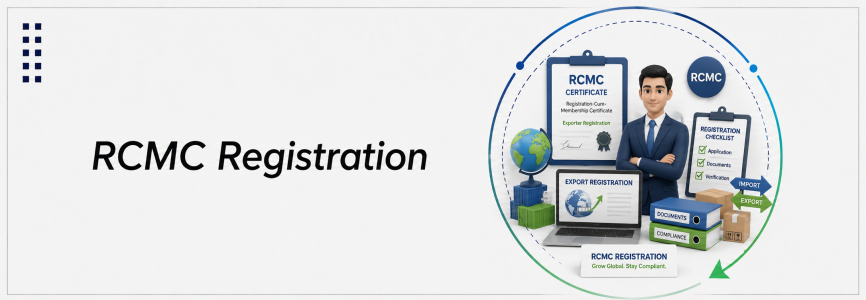



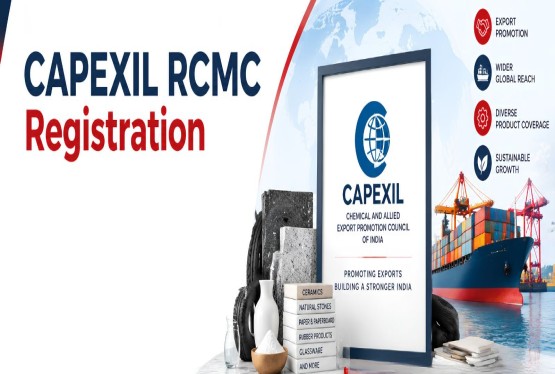
RCMC Registration stands for Registration-cum-Membership Certificate. It is issued by an Export Promotion Council, Commodity Board, Development Authority or another competent organisation recognised by the Directorate General of Foreign Trade. The certificate records the exporter as a member of the relevant export promotion body and establishes the exporter’s connection with the product or service sector in which it operates.
The Foreign Trade Policy 2023 defines RCMC as a certificate of registration and membership granted by an Export Promotion Council, Commodity Board, Development Authority or another competent authority. The legal framework for the policy arises principally from the Foreign Trade (Development and Regulation) Act, 1992. FTP 2023 was notified by the Central Government under Section 5 of that Act and came into force on 1 April 2023, subject to amendments notified from time to time.
Is RCMC Mandatory for Every New Exporter?
RCMC is not automatically required merely because a business makes an export shipment. Paragraph 2.57 of FTP 2023 provides that an exporter must obtain RCMC when applying for an authorisation under the Foreign Trade Policy, except in relation to the specified treatment of restricted items under the ITC (HS), or when applying for another benefit or concession under the policy, unless the exporter has been specifically exempted.
Therefore, a business that only carries out ordinary exports without claiming a policy authorisation, concession or benefit may not require RCMC solely under paragraph 2.57. However, registration may still be compulsory under a separate commodity law or regulatory framework. For example, exporters of spices, agricultural products, marine products, coir products or other regulated commodities may have to register with the relevant statutory board or authority before undertaking covered activities.
FTP 2023 also recognises certain sector-specific registrations as RCMC. A Certificate of Registration as Exporter of Spices issued by the Spices Board and registration with the Coir Board are treated as RCMC for their respective products. New exporters must therefore examine both the general FTP requirement and any separate legislation applicable to their commodity.
Legal Provisions Governing RCMC Registration
The principal provisions relating to RCMC are contained in Chapter 2 of FTP 2023 and the corresponding chapter of the Handbook of Procedures. Paragraph 2.56 of the policy recognises Export Promotion Councils as registering authorities for issuing RCMC. Paragraph 2.57 explains when registration is required, while paragraph 11.47 contains the policy definition of an RCMC.
The operational framework is contained in paragraphs 2.79 to 2.84 of the Handbook of Procedures 2023. These provisions address the application for membership, selection of the relevant registering authority, validity of registration, reporting changes in the exporter’s constitution, de-registration and the right to appeal against de-registration. Applications are made electronically in the prescribed ANF 2C format through the DGFT e-RCMC system.
Section 3 of the Foreign Trade (Development and Regulation) Act authorises the Central Government to make provisions concerning the development and regulation of foreign trade. Section 5 empowers the government to formulate and amend the Foreign Trade Policy. Section 11 deals with contraventions of the Act, rules, orders and the Foreign Trade Policy, including consequences for false documents, unauthorised trade and non-compliance with imposed conditions.
Checkpoint One: Establish the Legal Entity
Before applying for RCMC, the business must be legally established in India. The applicant may operate as a proprietorship, partnership firm, limited liability partnership, private limited company, public limited company, Hindu undivided family, trust, society, cooperative society or another legally recognised entity.
The legal name entered in the RCMC application should correspond with the name appearing in the applicant’s PAN, IEC, GST registration, incorporation records and bank account. A mismatch caused by spelling variations, abbreviations, outdated addresses or an unrecorded change in constitution can result in a deficiency notice or rejection.
A company should keep its Certificate of Incorporation, Memorandum of Association, Articles of Association and current director details ready. An LLP should maintain its Certificate of Incorporation, LLP agreement and designated-partner details. A partnership firm should retain its partnership deed and supplementary deeds, while a proprietorship should have documents linking the proprietor’s PAN and business name.
The object clause or business description should reasonably permit export, import, trading, manufacturing, processing, consultancy or the service activity proposed to be undertaken. Where the entity’s constitutional documents do not cover the intended export activity, the applicant may need to amend them before registration.
Checkpoint Two: Obtain and Activate the IEC
An Importer-Exporter Code is the primary identification number for a person undertaking import or export of goods from India. Paragraph 2.05 of FTP 2023 provides that no export or import of goods may ordinarily be undertaken without an IEC, unless the person or transaction falls within a notified exemption.
IEC is PAN-based and is issued electronically through the DGFT portal. The legal name, constitution, registered office, branch details, bank account and contact information in the IEC profile must remain accurate. Since the e-RCMC application draws information from the IEC profile, errors in the IEC record can automatically appear in the RCMC application.
Every IEC holder must electronically update or confirm its IEC details during the prescribed annual period, even where no information has changed. Failure to complete the required annual confirmation can lead to deactivation of the IEC. A deactivated IEC can disrupt the RCMC application, customs procedures and foreign-trade transactions.
Checkpoint Three: Identify the Correct Registering Authority
One of the most important steps is identifying the appropriate Export Promotion Council, Commodity Board or Development Authority. The selection is based primarily on the exporter’s main line of business and the products or services proposed to be exported.
An engineering-goods exporter may have to approach the council responsible for engineering exports, while an exporter of apparel, pharmaceuticals, chemicals, handicrafts, agricultural commodities, marine products, spices or services must select the authority recognised for that sector. The recognised bodies and their product coverage are specified through Appendix 2T of the Handbook of Procedures and related DGFT notifications.
Where a product is not covered by a specific Export Promotion Council or Commodity Board, or where a multi-product exporter cannot identify one principal product category, registration may generally be sought through the Federation of Indian Export Organisations, subject to the applicable DGFT provisions. Exporters must not select an authority merely because it charges a lower membership fee or appears easier to access.
The e-RCMC user guide requires the applicant to declare its main line of business and select the concerned council or board. Choosing an authority that does not cover the declared product can lead to a clarification request, rejection or the need to submit a fresh application to another organisation.
Checkpoint Four: Classify the Export Product Correctly
The applicant must determine the correct ITC (HS) classification of the products it proposes to export. ITC (HS) is India’s trade-classification system based on the internationally recognised Harmonized System. The chosen product code helps determine the export policy, applicable restrictions, competent Export Promotion Council and supporting regulatory requirements.
An incorrect code can result in registration with the wrong council, incorrect declarations, customs disputes or non-availability of export benefits. Businesses exporting multiple products should identify their principal product group and add the relevant product codes permitted by the e-RCMC system.
Service exporters should select the appropriate service category or service code where supported by the portal and the chosen registering authority. The description entered in the application must accurately reflect the applicant’s actual or proposed export activity rather than using a broad or misleading description.
Checkpoint Five: Prepare the Core RCMC Documents
There is no single universal documentary checklist applicable to every Export Promotion Council. ANF 2C provides a common electronic application structure, but each registering authority may prescribe additional documents according to its governing rules, membership categories and product sector.
The core records generally include the IEC, PAN, proof of legal constitution, registered-office details, branch-office details, GST registration where applicable, bank-account proof and an authorisation in favour of the person submitting the application. The applicant may also have to provide its Udyam Registration Certificate where it claims MSME status.
The ANF 2C application captures information such as the applicant’s IEC, PAN, constitution, company or LLP registration number, turnover, export performance, addresses, branches, industrial registrations, proprietor or partner details, directors, recognised status, product group and authorised representatives. Applicants should prepare records supporting each declaration made in the form.
A company may be required to submit a board resolution or authority letter authorising a director, employee or professional representative to complete the registration. In a partnership firm, the authority may arise from the partnership deed or a separate authorisation signed by the partners. A proprietorship application should be made or authorised by the proprietor.
Bank proof may consist of a cancelled cheque, bank certificate or another document prescribed by the council. The account should ordinarily be held in the same legal name as the applicant. GST details should correspond with the registered office or relevant branch declared in the application.
Documents should be clear, complete, valid and readable. Password-protected files, cropped certificates, unsigned authorisations, expired licences and documents bearing inconsistent names or addresses frequently result in objections.
Additional Checklist for Manufacturer Exporters
A manufacturer exporter must establish both its legal identity and its manufacturing capability. Paragraph 2.79 of the Handbook of Procedures provides that a manufacturer exporter seeking registration must furnish evidence supporting its manufacturing status.
Depending on the product sector, this may include Udyam registration, factory licence, GST registration showing the manufacturing premises, industrial licence, FSSAI licence, pollution-control consent, drug licence, BIS licence, plant-registration certificate, lease deed, electricity bill, machinery details or another sector-specific approval.
The manufacturing address should remain consistent across the RCMC application and operational licences. If the manufacturing activity is carried out through a supporting manufacturer or third-party facility, the applicant should review whether the concerned council permits that arrangement and what additional agreement or declaration is required.
A business that does not manufacture the goods should not describe itself as a manufacturer exporter merely to obtain a preferred membership category. Incorrect classification can lead to objection, cancellation and consequences for false declarations.
Checklist for Merchant and Service Exporters
A merchant exporter generally procures goods from manufacturers or suppliers and exports them without operating its own manufacturing facility. Such an applicant must establish its business constitution, IEC, tax status, banking relationship and authority to trade in the relevant products.
The council may seek invoices, supplier details, purchase arrangements, product literature or past export documents where relevant. A new business with no export history may be admitted as a prospective, potential or associate member under the applicable membership framework.
Service exporters must ensure that the service falls within the jurisdiction of the selected council or organisation. They should maintain supporting documents such as service agreements, professional registrations, invoices, foreign-remittance records and evidence describing the services supplied from India.
Online e-RCMC Application Process
The e-RCMC system provides a common electronic and paperless process for applications to participating Export Promotion Councils and Commodity Boards. The exporter logs in to the DGFT portal, opens the e-RCMC service and selects the option to apply for a certificate.
The portal retrieves authenticated information from the IEC profile. The exporter then selects the registering authority, office, membership category, product group, exporter type and relevant ITC (HS) or service codes. Details regarding certifications, authorised representatives, countries of export, turnover and firm profile may also be requested.
Supporting documents are uploaded electronically, after which the applicant completes the declaration and signs the application through the electronic method enabled by the portal. The applicable registration or membership fee is paid online, and an electronic receipt is generated.
The registering authority examines the application and may approve it, reject it or return it for correction. An applicant receiving a deficiency communication should respond within the permitted period and upload precise documents addressing each observation. Merely resubmitting the same documents without resolving the discrepancy may lead to further delay.
RCMC Fees and Tax Treatment
There is no single uniform RCMC fee fixed for every exporter. Membership, admission, registration, renewal and annual-subscription fees differ among Export Promotion Councils and Commodity Boards. The amount may also depend on whether the applicant is a merchant exporter, manufacturer exporter, associate member, ordinary member or MSME.
The portal displays the applicable fee according to the authority and selected category. GST may be charged by the issuing organisation, and the application may contain fields relating to tax deduction at source where relevant. Applicants should refer to the latest fee schedule of the selected council instead of relying on an amount quoted for another sector.
Validity, Renewal and Amendment
An RCMC is generally valid for five financial years, ordinarily beginning from 1 April of the licensing year in which it is issued and ending on 31 March of the fifth year, unless a different validity period applies under the rules of the issuing authority.
Exporters should distinguish certificate validity from annual membership obligations. A certificate may show multi-year validity while the council separately requires payment of an annual subscription or submission of periodic information. Non-payment of membership dues may affect membership rights or services even before the validity date shown on the certificate expires.
Where the name, address, ownership, constitution, partners, directors, branch details, product coverage or other material information changes, the exporter must apply for amendment. Paragraph 2.82 of the Handbook of Procedures requires changes in ownership, constitution, name or address to be communicated to the registering authority within one month.
The DGFT portal provides electronic amendment and renewal workflows. The portal user guide indicates that the renewal function becomes available for an expired certificate, although applicants should follow any advance-renewal or membership instructions separately prescribed by their council.
Post-Registration Legal Compliance
Obtaining RCMC does not complete all export compliance. It does not replace IEC, GST registration, LUT or bond requirements, customs registration, authorised dealer bank procedures, product licences, packaging and labelling rules, quality certificates or destination-country requirements.
Paragraph 2.06 of FTP 2023 identifies the principal documents for export of goods, including the transport document, commercial invoice-cum-packing list and shipping bill, bill of export or postal bill of export. Additional documents may be required under product-specific laws or regulations.
An agricultural exporter may require phytosanitary documentation, plant-quarantine compliance or APEDA registration. A food exporter may require FSSAI licensing and product-specific health certificates. A marine exporter may need MPEDA-related approvals, while a spice exporter may require CRES from the Spices Board. The relevant requirements depend on the product, processing activity, destination and export policy.
The exporter must maintain accurate invoices, shipping bills, bills of lading, bank-realisation records, foreign-remittance documents, purchase records and certificates used to claim benefits. Any benefit or authorisation obtained through incorrect declarations may be recovered and can expose the exporter to further proceedings.
De-Registration, Appeal and Legal Consequences
The registering authority may initiate de-registration where an exporter violates membership conditions, provides false information, ceases to be eligible or fails to comply with applicable requirements. The Handbook of Procedures requires the authority to issue a show-cause notice and provide a reasonable opportunity of being heard before taking a de-registration decision.
An exporter aggrieved by de-registration may file an appeal before the DGFT or the designated authority within the prescribed period, generally 45 days from the relevant decision. The appeal should explain the facts, legal grounds, procedural defects and supporting documents relied upon.
Non-compliance may also attract action under Section 11 of the Foreign Trade (Development and Regulation) Act. Contraventions, knowingly false statements and false or forged documents can lead to monetary penalties, suspension-related consequences and confiscation in appropriate cases. RCMC applicants must therefore ensure that every declaration is factually correct and supported by valid records.
Recent RCMC Updates New Exporters Should Know
DGFT has continued to revise Appendix 2T and the institutional framework of recognised Export Promotion Councils. For example, Public Notice No. 11/2025-26 renamed the Sports Goods Export Promotion Council as the Sports Goods and Toys Export Promotion Council. Public Notice No. 13/2025-26 also amended Appendix 2T in relation to specified product coverage. These changes demonstrate why exporters should rely on the latest DGFT appendix instead of an old council list circulated online.
A significant proposed change was published through DGFT Trade Notice No. 14/2026-27 dated 20 July 2026. DGFT invited stakeholder comments on a draft amendment proposing a de minimis exemption from RCMC and equivalent certificate requirements for export consignments having a free-on-board value not exceeding ?10,000.
As of 27 July 2026, this was a consultation proposal and not a final operative exemption merely because the draft had been circulated. Exporters should continue following the existing requirements until a final notification or public notice brings an exemption into force. Businesses should also examine whether separate commodity legislation would continue to require registration even if a limited FTP exemption is eventually introduced.
Common Mistakes to Avoid
New export businesses frequently apply to the wrong council, use an incorrect ITC (HS) code, upload an inactive IEC, select manufacturer status without supporting evidence or submit records bearing inconsistent names and addresses. Other common errors include missing authorisation letters, incomplete constitution documents, expired operational licences and payment under the wrong membership category.
Another mistake is assuming that RCMC itself grants permission to export every product. The certificate establishes registration or membership with the relevant authority, but the exporter must separately verify whether the goods are free, restricted, prohibited or subject to conditions under the ITC (HS) export policy.
Applicants should also avoid treating an RCMC obtained for one product group as automatic coverage for unrelated products. Additional product codes, amendment of the existing certificate or registration with another competent authority may be required.
Conclusion
RCMC registration is an important compliance checkpoint for new export businesses seeking recognition, authorisations, concessions or benefits under India’s Foreign Trade Policy. A complete application begins with a valid legal entity and active IEC, followed by correct product classification, selection of the appropriate registering authority and preparation of accurate supporting documents.
The exporter should verify paragraphs 2.56 and 2.57 of FTP 2023, the relevant provisions of the Handbook of Procedures, ANF 2C, Appendix 2T and the rules of the selected council. Manufacturer exporters must additionally establish their manufacturing status, while merchant and service exporters must accurately disclose the nature of their operations.
RCMC should be treated as part of a wider export-compliance system rather than a standalone permission. IEC maintenance, customs documentation, GST compliance, product-specific approvals, foreign-exchange realisation and destination-country requirements remain independently applicable.
Before filing, the applicant should conduct a final consistency review of its PAN, IEC, GST certificate, incorporation records, bank details, addresses, product codes and authorisation documents. A properly prepared application reduces objections and creates a stronger legal foundation for the exporter’s international operations.
Frequently Asked Questions (FAQs)
Q1. What is RCMC Registration?
Ans: RCMC stands for Registration-cum-Membership Certificate.
It is issued by an authorised Export Promotion Council or Commodity Board.
It confirms the exporter’s registration for a specific product or service sector.
Q2. Is RCMC mandatory for every exporter?
Ans: RCMC is generally required when an exporter claims benefits under the Foreign Trade Policy.
It may also be necessary for obtaining certain export authorisations or concessions.
Some exporters may additionally require registration under product-specific laws.
Q3. Is IEC required before applying for RCMC?
Ans: Yes, the applicant must ordinarily hold a valid Importer-Exporter Code.
The RCMC application is linked with the exporter’s IEC profile on the DGFT portal.
The IEC details must be active, accurate and updated before filing.
Q4. Which authority issues the RCMC certificate?
Ans: RCMC is issued by the Export Promotion Council or Commodity Board covering the product.
For products without a specific council, FIEO may be the appropriate authority.
The applicant must select the correct authority based on its main export activity.
Q5. What documents are required for RCMC Registration?
Ans: Common documents include IEC, PAN, GST certificate and entity-registration documents.
Bank proof, authorisation letter and product details may also be required.
Manufacturer exporters may need factory, Udyam and sector-specific licences.
Q6. What is the validity of an RCMC certificate?
Ans: An RCMC is generally valid for five financial years.
The exact validity period is mentioned on the certificate issued by the authority.
Annual membership fees may still be payable during the certificate’s validity.
Q7. Can a new exporter apply without export turnover?
Ans: Yes, a newly established business can generally apply without previous export turnover.
It may be registered as an associate, prospective or new member by the council.
The applicable membership category depends on the rules of the issuing authority.
Q8. Can a merchant exporter obtain RCMC?
Ans: Yes, both merchant exporters and manufacturer exporters can apply for RCMC.
A merchant exporter does not normally need to own a manufacturing facility.
It must provide legal, banking, tax and business-constitution documents.
Q9. Can details in an RCMC certificate be amended?
Ans: Yes, the exporter can apply for amendment through the prescribed electronic process.
Changes in name, address, constitution, ownership or product details should be reported.
Material changes should generally be communicated within the prescribed period.
Q10. What happens if incorrect documents are submitted?
Ans: Incorrect or misleading documents may result in objection, rejection or de-registration.
Benefits obtained through false declarations may also be recovered by the authorities.
The applicant may face penalties under the applicable foreign-trade laws.


_crop10_thumb.jpg)


_crop10_thumb.jpg)


-Form_crop10_thumb.jpg)

_crop10_thumb.jpg)


_learn_crop10_thumb.jpeg)


_crop10_thumb.jpg)

_crop10_thumb.jpg)


_crop10_thumb.jpg)





_for_Foreign_Directors_learn_crop10_thumb.jpeg)


_Act,_2015_learn_crop10_thumb.jpg)










_learn_crop10_thumb.jpg)











































_crop10_thumb.jpg)


_crop10_thumb.jpg)


_(1)_crop10_thumb.jpg)













_crop10_thumb.png)











_crop10_thumb.jpg)


_crop10_thumb.jpg)







_crop10_thumb.png)
_crop10_thumb.jpg)










_crop10_thumb.png)









_crop10_thumb.jpg)
