
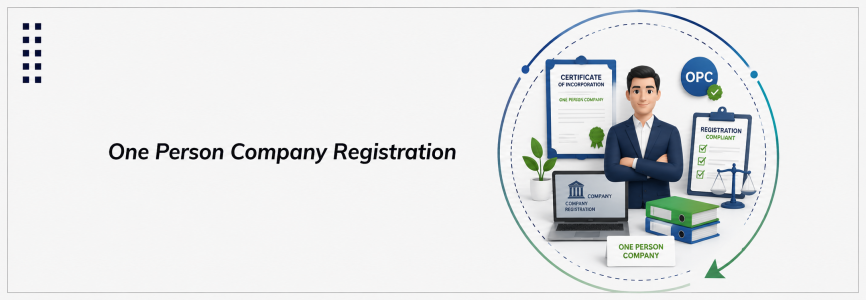



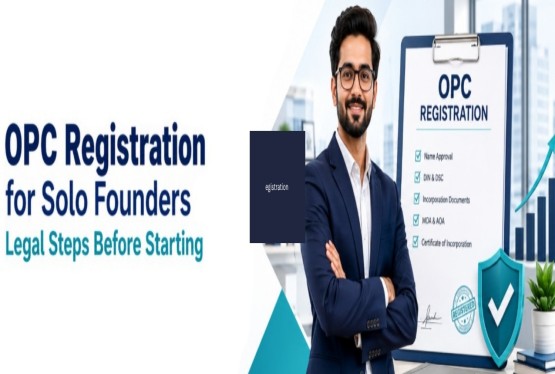
A One Person Company, commonly known as OPC, is a suitable business structure for solo entrepreneurs who want to run a company with limited liability and separate legal identity. It is useful for founders who want full control over business decisions but also want the credibility of a registered company. In India, OPC registration is done online through the Ministry of Corporate Affairs portal by filing the required incorporation forms and documents.
The concept of One Person Company was introduced under the Companies Act, 2013 to support individual entrepreneurs and bring small businesses into the formal corporate system. As per Section 2(62) of the Companies Act, 2013, a One Person Company means a company which has only one person as a member. This makes OPC different from a normal private limited company, where at least two members are required.
Today, registering an OPC online in India has become easier because MCA uses the SPICe+ incorporation process. Through this process, a founder can apply for company name approval, incorporation, DIN allotment, PAN, TAN, EPFO, ESIC, bank account opening and other linked registrations, depending on the application. This makes OPC registration faster and more organized for new business owners.
Meaning of One Person Company
A One Person Company is a company owned by one person. The single member acts as the owner and may also become the director of the company. Even though only one person owns the company, the OPC is treated as a separate legal entity. This means the company and the owner are legally different persons.
This separate legal identity is one of the biggest advantages of OPC registration. The company can own property, enter into contracts, open a bank account, raise invoices, receive payments, sue and be sued in its own name. The liability of the member is generally limited to the amount unpaid on shares, which protects the personal assets of the founder, subject to legal exceptions such as fraud or misuse of corporate identity.
An OPC is generally suitable for consultants, freelancers, service providers, small traders, online sellers, solo founders, technology professionals, designers, coaches, small manufacturers and professionals who want to build a formal business in their own name but with company status.
Legal Provisions Governing One Person Company
The main law governing OPC registration is the Companies Act, 2013. The definition of OPC is given under Section 2(62). Since OPC is a type of company, various provisions of the Companies Act apply to it, along with certain exemptions and relaxations given specifically to OPCs.
Section 3 of the Companies Act, 2013 allows formation of a company for any lawful purpose. An OPC can be formed as a private company by one person. The words “One Person Company” are required to be mentioned in brackets below the name of the company wherever its name is printed, affixed or engraved.
The rules relating to OPC eligibility, nominee, restriction and conversion are mainly covered under the Companies (Incorporation) Rules, 2014. Rule 3 deals with eligibility conditions for incorporating an OPC. Rule 4 deals with nomination by the subscriber or member. Rule 6 deals with conversion of OPC into a private company or public company.
Section 149 and Section 152 are relevant for directors. An OPC must have at least one director, and the sole member may also act as the first director. Section 173(5) gives relaxation to OPCs in relation to board meetings. Section 92 deals with annual return, and Section 134 deals with financial statements. These provisions are important because incorporation is only the first step; after registration, regular compliance also becomes necessary.
Recent Updates Related to OPC Registration
One important update came through the 2021 amendment to the Companies (Incorporation) Rules. The Ministry of Corporate Affairs amended OPC rules to encourage startups, innovators and small businesses. With effect from 1 April 2021, NRIs who are Indian citizens were allowed to incorporate OPCs in India. Earlier, NRIs were not allowed to incorporate OPCs.
Another important change was the reduction in the residency period from 182 days to 120 days for an Indian citizen to be considered resident for the purpose of OPC incorporation. This change helped Indian citizens who stay partly outside India but still want to register an OPC in India.
The earlier restriction on voluntary conversion of OPC before completion of two years was also removed. Now, an OPC can convert into a private company or public company at any time, subject to fulfilling the required number of members and directors. The earlier paid-up capital and turnover limits for mandatory conversion were also removed, allowing OPCs to grow without such restrictions.
These updates made OPC more practical for solo entrepreneurs and Indian citizen NRIs. It also gave OPC owners more flexibility to scale their business and convert into a private limited company whenever they want to bring in investors, co-founders or additional shareholders.
Who Can Register a One Person Company in India?
Only a natural person who is an Indian citizen, whether resident in India or otherwise, can incorporate a One Person Company. A company, LLP, partnership firm or any artificial legal person cannot become the sole member of an OPC.
The person incorporating the OPC must nominate another person who will become the member of the OPC in case of death or incapacity of the original member. This nominee requirement is a special feature of OPC because there is only one member. The nominee ensures continuity of the company if something happens to the sole member.
A person cannot incorporate more than one OPC or become nominee in more than one OPC at the same time. A minor cannot become a member or nominee of an OPC and cannot hold share with beneficial interest in an OPC. Further, an OPC cannot be incorporated or converted into a Section 8 company, and it cannot carry out non-banking financial investment activities, including investment in securities of any body corporate.
Minimum Requirements for OPC Registration
To register a One Person Company online in India, there must be one member, one nominee and at least one director. The member and director can be the same person. The OPC must have a proposed name, registered office address, lawful business object, digital signature and required documents.
The company must be registered with a proper name as per the Companies (Incorporation) Rules. The name should not be identical or too similar to an existing company, LLP or registered trademark. The name should also not contain prohibited or restricted words unless proper approval or justification is available.
A registered office is also required. This office can be commercial or residential, provided proper address proof, owner consent and utility bill are available. The registered office is the official address where notices from MCA, ROC and other authorities are received.
Documents Required for OPC Registration
For registering a One Person Company, the proposed member, director and nominee must keep all required documents ready before filing the incorporation application. These documents are used to verify identity, address, nominee consent, registered office details and digital signing authority. Proper documents help avoid resubmission and make the OPC registration process smoother.
Documents of Proposed Member and Director
The proposed member and director must submit identity and address proof for verification. For Indian citizens, PAN Card is mandatory. Apart from PAN, Aadhaar Card, voter ID, passport or driving licence may be used for identity and address verification.
Required documents include:
- PAN Card of the proposed member and director
- Aadhaar Card
- Voter ID, passport or driving licence, if required
- Recent passport-size photograph
- Active mobile number
- Valid email ID
- Residential address proof
Documents of Nominee
In OPC registration, appointing a nominee is mandatory. The nominee must give consent in Form INC-3. This form confirms that the nominee agrees to become the member of the OPC in case of death or incapacity of the sole member.
Required nominee documents include:
- PAN Card of nominee
- Aadhaar Card of nominee
- Identity proof
- Address proof
- Recent photograph
- Mobile number and email ID
- Consent in Form INC-3
The nominee should not already be a nominee in any other One Person Company. This condition must be checked before filing the OPC incorporation application.
Registered Office Documents
Every OPC must have a registered office address where official notices and legal communication can be received. For this, proper address proof of the registered office must be submitted.
Common registered office documents include:
- Recent electricity bill
- Water bill
- Gas bill
- Property tax receipt
- Rent agreement, if the property is rented
- No Objection Certificate from the owner
- Ownership proof, if the property is self-owned
If the office premises are rented, the rent agreement and NOC from the property owner should be attached. If the property is owned by the member or any other person, ownership proof and NOC should be submitted, as applicable.
Digital Signature Certificate
A Digital Signature Certificate is required because OPC incorporation forms are filed online through the MCA portal. The DSC is used to digitally sign the forms and submit them legally.
For DSC, the proposed director may need:
- PAN Card
- Aadhaar Card
- Photograph
- Mobile number
- Email ID
- Video verification, if required
The proposed director must obtain DSC before filing the OPC incorporation application.
Step-by-Step Process to Register an OPC Online in India
Registering a One Person Company online in India is a structured process completed through the MCA portal. The applicant needs to select a suitable name, arrange documents, obtain DSC, file SPICe+ forms, submit nominee consent and complete the incorporation application. Each step should be done carefully to avoid resubmission from the Registrar of Companies.
Step 1: Decide Business Activity and Select Company Name
The first step is to decide the main business activity of the OPC and choose a suitable company name. The name should represent the nature of the business and should follow MCA naming rules.
Before applying, it is better to check:
- Company name availability
- LLP name availability
- Trademark similarity
- Restricted or prohibited words
- Relevance of name with business activity
A proper name check helps reduce the chances of rejection or resubmission.
Step 2: Obtain Digital Signature Certificate
The next step is to obtain a Digital Signature Certificate for the proposed director. Since OPC registration is filed online, DSC is required for digitally signing the incorporation forms.
DSC is used for:
- Signing MCA forms online
- Verifying the identity of the proposed director
- Submitting incorporation documents legally
- Completing online company registration
Without DSC, the OPC incorporation application cannot be filed on the MCA portal.
Step 3: Apply for Name Reservation through SPICe+ Part A
After obtaining DSC, the applicant can apply for name approval through SPICe+ Part A. This part is used for reserving the proposed company name.
In SPICe+ Part A, the applicant needs to provide:
- Type of company as OPC
- Proposed company name
- Main business activity
- Relevant object details
- Supporting details, if required
If the name is approved, the applicant can proceed with incorporation. If the name is rejected, a fresh name or resubmission may be required.
Step 4: Fill SPICe+ Part B
Once the name is approved, the applicant must complete SPICe+ Part B. This is the main incorporation form used for company registration.
SPICe+ Part B includes details such as:
- Registered office address
- Capital structure
- Member details
- Director details
- Nominee details
- Business activity
- Stamp duty details
- Other incorporation information
All details should match the supporting documents. Any mismatch may lead to resubmission.
Step 5: Prepare eMOA and eAOA
The next step is to prepare eMOA and eAOA. These are important legal documents of the OPC and are filed electronically with the incorporation application.
eMOA includes:
- Main object clause
- Business activities of the OPC
- Liability clause
- Capital clause
- Subscriber details
eAOA includes:
- Internal rules of the company
- Shareholding rules
- Director-related provisions
- Meeting and management rules
- Company governance details
The object clause in eMOA should be drafted carefully because it defines the legal scope of the business.
Step 6: Fill AGILE-PRO-S Form
AGILE-PRO-S is a linked form filed along with SPICe+. It is used for certain linked registrations and services required at the time of incorporation.
AGILE-PRO-S may be used for:
- GSTIN application, if applicable
- EPFO registration
- ESIC registration
- Professional Tax registration in applicable states
- Bank account opening
- Shops and Establishment registration in certain cases
The details entered in AGILE-PRO-S should be accurate and should match the incorporation documents.
Step 7: Submit Nominee Consent in Form INC-3
Nominee consent is mandatory for OPC registration. The nominee gives consent in Form INC-3 to become the member of the OPC in case of death or incapacity of the sole member.
The applicant must attach:
- Form INC-3
- PAN Card of nominee
- Aadhaar Card of nominee
- Identity proof
- Address proof
- Photograph of nominee
- Mobile number and email ID
The nominee is not the owner during the lifetime and capacity of the sole member. However, the nominee becomes important for business continuity in case of death or incapacity of the member.
Step 8: Submit Application with Attachments and Fees
After completing the forms and attaching all documents, the applicant must submit the incorporation application on the MCA portal. Applicable government fees and stamp duty must also be paid.
The application generally includes:
- SPICe+ Part B
- eMOA
- eAOA
- AGILE-PRO-S
- Form INC-3
- Director and nominee documents
- Registered office proof
- NOC and rent agreement, if applicable
- DSC-based signing
Government fees and stamp duty may depend on authorized capital, state of registered office and applicable rules.
Step 9: ROC Verification and Certificate of Incorporation
After submission, the Registrar of Companies reviews the application and documents. If the ROC finds any defect, mismatch or missing document, the application may be sent for resubmission.
The applicant must correct issues such as:
- Name mismatch
- Incorrect address proof
- Missing NOC
- Incomplete nominee documents
- Wrong object clause
- Unclear attachments
- Incorrect form details
If everything is proper, the ROC approves the application and issues the Certificate of Incorporation. After this, the OPC becomes a legally registered company.
Certificate of Incorporation and GSTIN
Once the application is approved, the OPC receives its Certificate of Incorporation. This certificate contains the Corporate Identification Number and confirms that the company has been legally incorporated. PAN and TAN are also allotted as part of the incorporation process.
After incorporation, the company can open or activate its bank account, deposit share capital, issue share certificate, maintain statutory records and start business operations. If GST registration was applied through AGILE-PRO-S, GSTIN processing will depend on the details submitted and applicable GST rules.
Nominee in One Person Company
The nominee is one of the most important legal features of OPC. Since the company has only one member, the law requires the sole member to nominate another eligible person. The nominee’s name is mentioned in the memorandum, and written consent is obtained in Form INC-3.
The nominee can withdraw consent by giving notice. The member can also change the nominee by following the prescribed process and filing the required forms with MCA. If the sole member dies or becomes incapable of contracting, the nominee becomes the member of the OPC and must nominate another person within the prescribed time.
This nominee system ensures that the company does not become ownerless due to death or incapacity of the sole member. It supports perpetual succession, which is one of the important benefits of company registration.
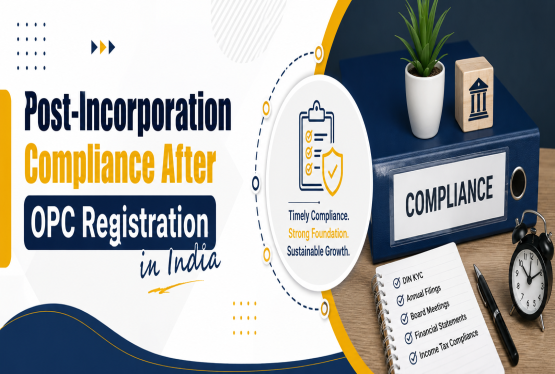
Compliance After OPC Registration
After OPC registration, the company must follow annual and event-based compliance. Incorporation does not mean the compliance responsibility is over. The OPC must maintain proper books of account, prepare financial statements, file annual forms and comply with tax laws.
An OPC is required to file annual return and financial statements with the ROC. It must also comply with income tax return filing, GST filing if registered under GST, TDS provisions where applicable, and other business-specific laws. The annual return of an OPC is signed by the company secretary, or where there is no company secretary, by the director.
An OPC has certain relaxations compared to other companies. For example, under Section 173(5), an OPC is required to conduct at least one board meeting in each half of a calendar year, and the gap between the two meetings should not be less than 90 days. However, this requirement does not apply where the OPC has only one director on its board.
In case of contracts by OPC with the sole member who is also the director, Section 193 becomes relevant. Such contracts must be recorded in writing or contained in a memorandum or entered in the minutes of the first board meeting held after entering into the contract, unless the contract is in the ordinary course of business.
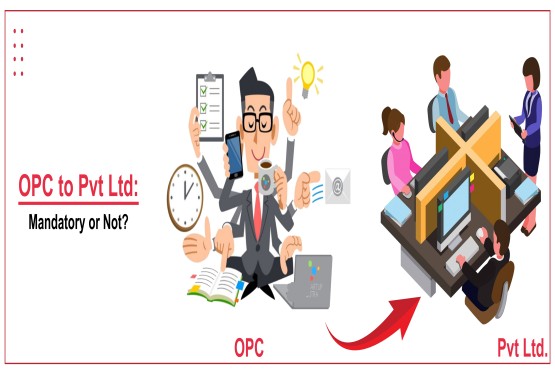
Conversion of OPC into Private Limited Company
An OPC may convert into a private limited company or public company. After the 2021 amendment, voluntary conversion is allowed at any time, subject to meeting the required legal conditions. For conversion into a private company, the OPC must increase the number of members and directors to at least two. For conversion into a public company, it must meet the minimum requirement of members and directors applicable to public companies.
The OPC must alter its memorandum and articles and file the prescribed form with the ROC. Conversion is often done when the founder wants to add co-founders, bring investors, issue shares to multiple persons, expand ownership or raise funds.
Benefits of OPC Registration
OPC registration gives a single founder the benefit of limited liability, separate legal identity, better credibility and complete control. Compared to a sole proprietorship, an OPC looks more formal and professional in front of customers, vendors, banks and investors.
It is also easier to build brand value under a registered company structure. The company can enter contracts, hire employees, open a current account and apply for various registrations in its own name. The founder can operate independently while still enjoying corporate identity.
OPC is especially useful for solo founders who do not want to add a second shareholder only for registration purposes. It gives them a clean legal route to start as a single-member company.
Limitations of OPC
OPC is not suitable for every business. If you plan to have multiple shareholders from the beginning, a private limited company may be better. OPC also cannot carry out non-banking financial investment activities, including investment in securities of any body corporate. It cannot be incorporated as a Section 8 company.
Since there is only one member, investor funding may require conversion into a private limited company. Also, even though OPC has fewer requirements than a private company in some areas, it still has ROC filing, tax filing and record maintenance obligations.
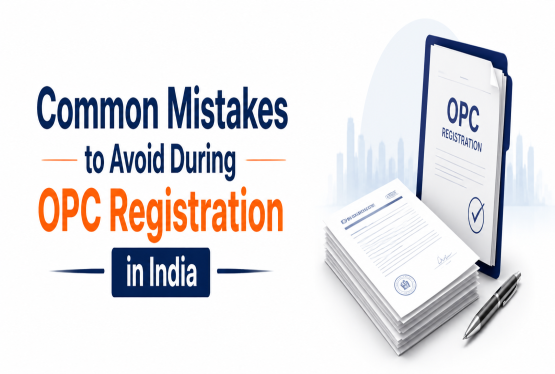
Common Mistakes to Avoid During OPC Registration
The most common mistake is choosing a name that is similar to an existing company or trademark. This can lead to name rejection. Another mistake is selecting a nominee who is already a nominee in another OPC or is not eligible under the rules.
Many applications also face resubmission because of unclear documents, old utility bills, wrong address proof, mismatch in PAN and Aadhaar details, missing NOC or weak object clause in MOA. These issues can be avoided by checking documents carefully before filing.
Another important mistake is assuming that OPC has no compliance after incorporation. OPC is a company and must follow annual filing and tax requirements. Non-compliance can lead to late fees, penalties and legal issues.
Conclusion
Registering a One Person Company online in India is a practical option for solo entrepreneurs who want limited liability, separate legal identity and full control over their business. The process is completed through MCA using SPICe+, eMOA, eAOA, AGILE-PRO-S and nominee consent in Form INC-3.
The legal provisions under the Companies Act, 2013 and Companies (Incorporation) Rules, 2014 make OPC a strong option for individual founders. Recent changes have made OPC more flexible by allowing Indian citizen NRIs to incorporate OPCs, reducing the residency period requirement and allowing conversion into private or public company at any time.
Before applying, the founder should check eligibility, select a proper name, prepare documents, choose an eligible nominee, arrange registered office proof and draft the business objects carefully. A well-prepared application can reduce resubmission and help the company get incorporated smoothly.
For a solo founder who wants to move from informal business to a legally recognized company, OPC registration can be a smart first step.
Frequently Asked Questions (FAQs)
Q1. What is One Person Company Registration?
Ans: One Person Company Registration is the process of registering a company with only one member.
It gives the founder a separate legal identity and limited liability protection.
OPC is suitable for solo entrepreneurs who want full control over their business.
It is registered online through the MCA portal.
Q2. Who can register a One Person Company in India?
Ans: Only a natural person who is an Indian citizen can register an OPC in India.
The person may be resident in India or otherwise, subject to applicable rules.
A company, LLP or partnership firm cannot become the sole member of an OPC.
The applicant must also appoint an eligible nominee.
Q3. Is nominee mandatory for OPC Registration?
Ans: Yes, nominee appointment is mandatory for One Person Company Registration.
The nominee becomes the member if the original member dies or becomes incapable.
Nominee consent is filed in Form INC-3 during incorporation.
The nominee must also be eligible as per OPC rules.
Q4. What documents are required for OPC Registration?
Ans: PAN Card, Aadhaar Card, photograph and address proof of the member are required.
Nominee documents and nominee consent are also required.
Registered office proof, utility bill, NOC and rent agreement may be needed.
DSC of the proposed director is also required for online filing.
Q5. How is OPC registered online in India?
Ans: OPC is registered online through the MCA portal using SPICe+ forms.
The process includes name approval, incorporation filing, eMOA and eAOA.
PAN, TAN and other linked registrations may also be applied through the same process.
After approval, MCA issues the Certificate of Incorporation.
Q6. Can an OPC be converted into a Private Limited Company?
Ans: Yes, an OPC can be converted into a Private Limited Company.
Conversion is generally done when the business wants more members or investors.
The OPC must increase the number of members and directors as required by law.
It must also file the prescribed forms with the ROC.
Q7. Is GST required for One Person Company?
Ans: GST is not mandatory for every OPC from the date of incorporation.
It becomes required if the OPC crosses the prescribed turnover limit or falls under mandatory GST categories.
An OPC may also take voluntary GST registration for business benefits.
GST applicability depends on business activity and turnover.
Q8. Can OPC have more than one director?
Ans: Yes, an OPC can have more than one director.
However, it can have only one member at the time of registration.
The sole member may also act as the first director.
Additional directors can be appointed as per company law.
Q9. Is OPC better than sole proprietorship?
Ans: OPC gives separate legal identity and limited liability protection.
A sole proprietorship does not have a separate legal identity from the owner.
OPC is more suitable for founders who want a formal company structure.
However, OPC also has annual compliance requirements.
Q10. What compliances are required after OPC Registration?
Ans: An OPC must maintain books of account and file annual forms with ROC.
It must also file income tax return and GST returns, if applicable.
Financial statements and annual return filing are important after incorporation.
Non-compliance may lead to penalties and late fees.


_crop10_thumb.jpg)


_crop10_thumb.jpg)


-Form_crop10_thumb.jpg)

_crop10_thumb.jpg)


_learn_crop10_thumb.jpeg)


_crop10_thumb.jpg)

_crop10_thumb.jpg)


_crop10_thumb.jpg)





_for_Foreign_Directors_learn_crop10_thumb.jpeg)


_Act,_2015_learn_crop10_thumb.jpg)










_learn_crop10_thumb.jpg)













































_crop10_thumb.jpg)


_crop10_thumb.jpg)


_(1)_crop10_thumb.jpg)







_crop10_thumb.png)







_crop10_thumb.jpg)


_crop10_thumb.jpg)





_crop10_thumb.png)
_crop10_thumb.jpg)







_crop10_thumb.png)









_crop10_thumb.jpg)
