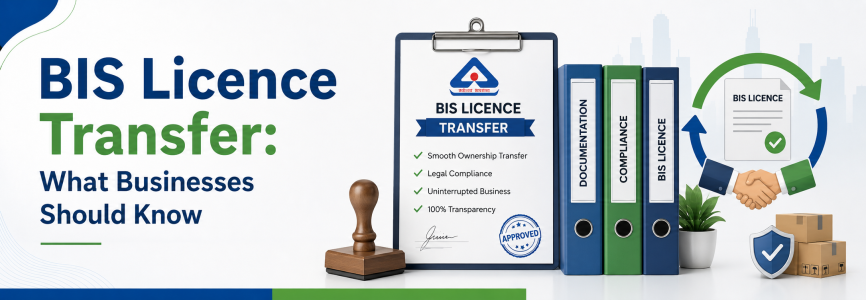



For manufacturers, a BIS licence is more than a certificate sitting in a compliance file. It gives the business the right to use the applicable BIS Standard Mark for specified products that conform to the relevant Indian Standard.
So, what happens when the business changes ownership, management, name, or structure?
This is where BIS Licence Transfer becomes an important compliance consideration. A business cannot simply hand over its BIS licence to another entity and continue using the Standard Mark. Changes involving ownership, management, or the identity of the licensee need to be properly communicated to BIS and appropriately endorsed, along with the required supporting documents. BIS guidelines specifically recognise such changes as “special situations” during the operation of a licence.
What Is a BIS Licence?
A BIS licence is granted under Section 13 of the BIS Act, 2016 for using a specified Standard Mark in relation to goods or articles conforming to the applicable standard. For products covered by compulsory certification requirements, obtaining the applicable BIS licence is mandatory. BIS also assesses the manufacturer's manufacturing infrastructure, process controls, quality control and testing capabilities before granting the licence. This is important because a BIS licence is closely connected with the manufacturer, manufacturing premises, product and applicable Indian Standard. Therefore, when one of these underlying details changes, the licence position must be reviewed.
Why Does BIS Licence Transfer Become Necessary?
Businesses can undergo several changes during their lifetime.
For example:
- A proprietorship may be converted into a company.
- A company may undergo a change in ownership.
- Two businesses may merge.
- A business may be acquired by another entity.
- The legal name of the licensee may change.
- Management or ownership arrangements may change.
- A manufacturing business may be reorganised.
In such situations, continuing to operate under the old BIS licence without checking the applicable requirements can create compliance problems. The correct approach is to determine what has changed and then follow the BIS procedure applicable to that particular situation.
Is a BIS Licence Automatically Transferable?
This is one of the most important questions businesses ask.
A BIS licence should not be treated like an ordinary commercial asset that can simply be transferred from one legal entity to another.
BIS certification is connected to the manufacturer's conformity with the relevant standard and the conditions of the licence. BIS guidelines state that in special situations involving change of name, management or ownership, appropriate details and documents are to be collected and the changes are to be duly endorsed in the licence. Therefore, businesses should not assume that a sale, merger or restructuring automatically transfers the certification rights to the new entity.
BIS Licence Transfer During Change of Ownership
A change in ownership can occur in several ways.
For example, shares of a company may be transferred to a new investor, or an acquisition may result in a new controlling group.
Whether the existing BIS licence can continue in the same form depends on the nature of the change and the applicable BIS requirements. The business should inform BIS and provide the necessary documents so that the certification records accurately reflect the relevant change. The objective is simple: the BIS records should match the legal and operational reality of the manufacturer.
BIS Licence and Change in Company Name
A business may change its legal name while continuing the same manufacturing operations.
For example, ABC Manufacturing Private Limited may legally change its name to XYZ Manufacturing Private Limited.
In such a situation, the company should not simply continue using the old licence details without updating the certification records. BIS guidelines specifically provide for changes in the name of the licensee as a special situation, with appropriate documentation and endorsement in the licence. This helps maintain consistency between the company's corporate records and its BIS certification.
What Happens When a Business Is Acquired?
An acquisition can be more complicated. Suppose Company A manufactures a BIS-certified product and Company B acquires its business. The transaction may involve the transfer of shares, assets, manufacturing operations, intellectual property or the entire business. The parties should first determine what exactly is being acquired. If the manufacturing entity itself remains the same legal entity, the situation may differ from one where the manufacturing business is transferred to a completely different legal entity. Therefore, businesses should review the transaction structure before assuming that the existing BIS licence can continue unchanged.
Merger and Amalgamation
Mergers can also create BIS compliance questions. When two companies merge, the surviving entity may inherit various business assets and operations. However, regulatory registrations and certifications should be reviewed individually.
A BIS licence should be examined to determine:
- Who is currently the licensee?
- Which manufacturing premises are covered?
- Which products are covered?
- What Indian Standard applies?
- Has the legal entity changed?
- Has the manufacturing process changed?
- Has the ownership or management changed?
The appropriate BIS procedure should then be followed based on the circumstances.
Manufacturing Premises Matter
One of the most important aspects of BIS certification is the manufacturing location. BIS states that a separate application is required for the same product manufactured at different factory locations. This means a business cannot assume that moving production to another factory automatically keeps the existing certification valid. BIS also provides a specific process for situations where a licensee shifts its manufacturing unit to a new address. The licensee is required to inform BIS and follow the prescribed requirements for the new premises. Therefore, a business transfer involving a change in manufacturing location requires particular attention.
Documents and Information to Review
The exact documents required can depend on the nature of the change and the applicable product-specific requirements.
However, businesses should generally be prepared to review documents relating to:
- Existing BIS licence
- Certificate of Incorporation
- Name-change documents, where applicable
- Ownership or management change documents
- Merger or acquisition documents
- Details of the manufacturing premises
- Product and Indian Standard details
- Existing scope of the licence
- Quality-control and testing arrangements
- Other documents requested by BIS
BIS guidelines make it clear that appropriate details and documents required at the time of grant of licence may need to be collected for special situations involving ownership, management or name changes.
What About the Scope of the Licence?
A business should also check the scope of its BIS licence during a transfer or restructuring. The licence is not a blanket approval for every product manufactured by the company. BIS explains that a licence is granted for a product against an Indian Standard and may cover specified varieties, grades or sizes within that standard. The Standard Mark cannot be used for varieties outside the approved scope. Therefore, when a business changes ownership or structure, it is a good opportunity to verify whether the existing scope still accurately represents the products being manufactured.
What If the Brand Name Changes?
Brand ownership and BIS licensing can sometimes become connected during a business restructuring. A company may acquire a brand, introduce a new brand, or transfer manufacturing rights to another entity.
Businesses should therefore review the relationship between:
Manufacturer → Brand → Product → BIS Licence → Manufacturing Location
Any mismatch between these elements should be addressed before products are marketed under the certification.
Why Businesses Should Not Delay the Process
One of the biggest mistakes businesses make is treating regulatory updates as something that can be completed after the transaction. Suppose a company completes an acquisition and immediately starts manufacturing products under the acquired business's existing BIS certification without checking the licence position. If the certification records do not properly reflect the new circumstances, the company may face compliance concerns. The safer approach is to identify BIS requirements before the transaction is completed. This allows the parties to include necessary regulatory actions in the transaction plan.
BIS Licence Transfer Checklist
Before proceeding with a business transfer or restructuring, manufacturers can use the following checklist:
Step 1: Review the Existing Licence
Check the licence number, licensee name, manufacturing address, product scope and applicable Indian Standard.
Step 2: Identify the Nature of Change
Determine whether the transaction involves a change in:
- Ownership
- Management
- Legal name
- Legal entity
- Manufacturing location
- Product scope
- Brand or manufacturing arrangement
Step 3: Review BIS Requirements
Check the applicable BIS guidelines and product-specific requirements. BIS maintains product manuals, Scheme of Inspection and Testing documents and other product-specific guidance for manufacturers.
Step 4: Prepare Supporting Documents
Collect corporate, ownership, manufacturing and certification documents relevant to the change.
Step 5: Communicate With BIS
Submit the required information through the applicable BIS process and respond to any queries raised by the concerned authority.
Step 6: Obtain Proper Endorsement
Do not assume that the change is complete merely because the transaction itself has been completed. Ensure that the relevant BIS records and licence are appropriately updated.
Common Mistakes to Avoid
Assuming the Licence Follows the Business Automatically
A commercial transaction does not necessarily mean that the BIS certification position remains unchanged.
Ignoring Manufacturing Location
Changing the factory location can have direct implications for certification.
Continuing to Use Outdated Details
If the licensee's legal name or other relevant particulars have changed, certification records should be updated appropriately.
Failing to Review Product Scope
A business should confirm that all products and varieties being marketed remain within the approved licence scope.
Waiting Until After the Transaction
BIS compliance should be considered during transaction planning rather than as an afterthought.
The Bigger Picture
BIS certification is ultimately about demonstrating conformity with applicable Indian Standards. BIS explains that granting a product certification licence involves assessment of manufacturing infrastructure, process controls, quality control and testing capabilities, along with establishing conformity of the product to the relevant standard. That is why changes in the legal or operational identity of a manufacturer deserve careful attention. A business may change its name, ownership or structure, but its responsibility to maintain product conformity does not disappear.
Conclusion
BIS Licence Transfer is not simply an administrative exercise. It can become an important compliance issue when a business undergoes a merger, acquisition, ownership change, restructuring, name change or relocation. The key principle is straightforward: the BIS licence and certification records should accurately reflect the manufacturer, premises, products and applicable regulatory position.
Businesses planning a transaction should therefore review their BIS licences as part of their broader legal and regulatory due diligence. Early review can help identify documentation gaps, prevent disruption to manufacturing and reduce the risk of compliance issues after the transaction.
FAQs
Q1. Can a BIS licence be transferred from one company to another?
Ans. A BIS licence should not be assumed to be automatically transferable. Changes in ownership, management or other relevant circumstances require review and appropriate endorsement as per applicable BIS requirements.
Q2. Is BIS approval required after a company changes its name?
Ans. The change should be communicated and appropriately endorsed in the BIS licence with the required supporting documents. BIS specifically provides for change in the name of the licensee.
Q3. What happens to a BIS licence after an acquisition?
Ans. The effect depends on the structure of the acquisition and whether the legal manufacturer, premises and certification details change. The licence should be reviewed with BIS before continuing operations under changed circumstances.
Q4. Can a BIS licence be used at another factory?
Ans. A BIS licence is linked to the manufacturing premises. BIS states that separate applications are required for the same product manufactured at different factory locations.
Q5. Does a merger automatically transfer BIS certification?
Ans. Not necessarily. The merger structure, surviving entity, manufacturing premises and licence details should be reviewed, and the appropriate BIS procedure should be followed.
Q6. What documents are needed for BIS licence changes?
Ans. Requirements vary according to the change. They may include the existing licence, corporate documents, ownership or management-change documents, manufacturing details and other documents requested by BIS.
Q7. Can the product scope also be changed during a licence update?
Ans. Yes. BIS provides a separate process for changes in the scope of a product licence, including addition or deletion of varieties, subject to applicable guidelines.
Q8. What if the manufacturing unit is relocated?
Ans. The licensee must inform BIS and follow the applicable procedure for the new premises. BIS provides specific guidance for shifting a manufacturing unit.
Q9. Why is BIS licence due diligence important during an acquisition?
Ans. It helps the buyer identify whether the certification, manufacturer details, premises and product scope properly correspond with the business being acquired.
Q10. When should businesses review their BIS licence during a transaction?
Ans. Ideally, the review should happen during transaction planning and due diligence, before the ownership, entity, premises or operational changes are implemented.


_crop10_thumb.jpg)


_crop10_thumb.jpg)


-Form_crop10_thumb.jpg)

_crop10_thumb.jpg)


_learn_crop10_thumb.jpeg)


_crop10_thumb.jpg)

_crop10_thumb.jpg)


_crop10_thumb.jpg)




_for_Foreign_Directors_learn_crop10_thumb.jpeg)


_Act,_2015_learn_crop10_thumb.jpg)










_learn_crop10_thumb.jpg)

































_crop10_thumb.jpg)

_crop10_thumb.jpg)
_(1)_crop10_thumb.jpg)







_crop10_thumb.png)








_crop10_thumb.jpg)

_crop10_thumb.jpg)







_crop10_thumb.png)
_crop10_thumb.jpg)







_crop10_thumb.png)