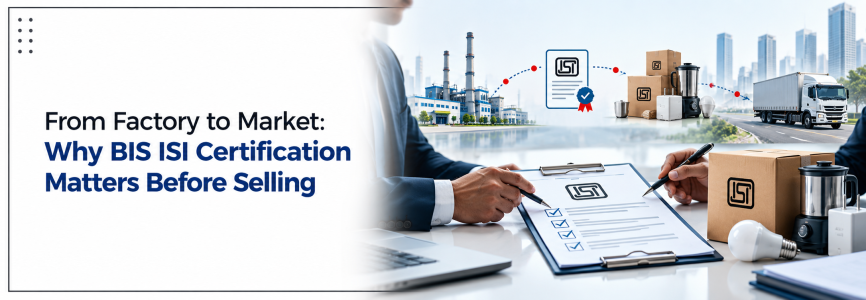



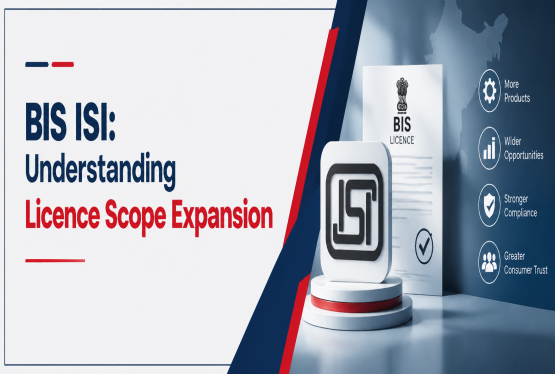
Bringing a product from the factory floor to the market involves much more than manufacturing, packaging and distribution. For many regulated products in India, one of the most important compliance steps is obtaining BIS ISI Certification before the product is sold. The ISI Mark, issued under the product certification framework of the Bureau of Indian Standards, indicates that a product conforms to the applicable Indian Standard. For products covered under mandatory Quality Control Orders, selling without the required BIS certification can create serious compliance problems.
For manufacturers, importers, brand owners and businesses planning to enter the Indian market, checking BIS applicability early can save time, cost and unnecessary delays.
What Is BIS ISI Certification?
BIS ISI Certification is a product certification mechanism under which eligible manufacturers can obtain a licence to use the ISI Standard Mark on products that comply with the relevant Indian Standard. The certification process is designed to ensure that products meet prescribed quality, safety and performance requirements. Depending on the product category, BIS may examine the manufacturing facility, quality control system, testing arrangements, production process and conformity of the product with the applicable Indian Standard. Once the required conditions are fulfilled, BIS may grant a licence for the specific product and manufacturing location.
Why BIS Certification Should Be Checked Before Selling
A common mistake businesses make is checking BIS requirements only after production has already started or after goods have been imported. This can create avoidable problems. If a product falls under mandatory BIS certification, the business may not be able to legally manufacture, import, distribute or sell it without complying with the applicable requirements.
That is why BIS applicability should ideally be checked during the product planning stage.
Before investing in bulk production, packaging, imports or marketing, businesses should confirm:
- Whether the product requires BIS certification
- Which Indian Standard applies
- Whether ISI Mark certification is mandatory
- Whether factory inspection is required
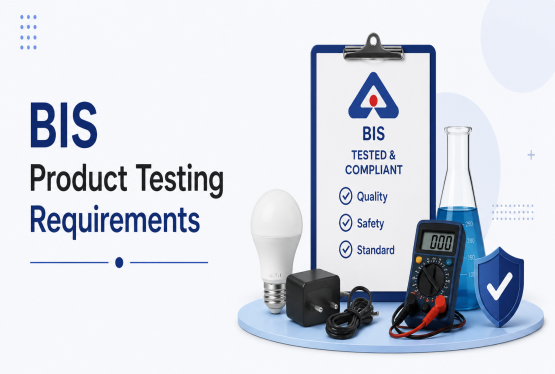
- What testing requirements apply
- Whether the manufacturer is eligible to apply
- What documents and infrastructure are required
Early compliance planning can significantly reduce commercial risk.
Who Needs BIS ISI Certification?
BIS ISI Certification is generally relevant to manufacturers whose products fall under a mandatory certification requirement. The licence is normally linked to the manufacturer and manufacturing unit, rather than simply to the seller or distributor. Indian manufacturers producing covered products may need to obtain the appropriate BIS licence before selling them. Foreign manufacturers supplying regulated products to India may also need to obtain BIS approval through the applicable certification route. Importers and brand owners must ensure that the products they source are properly certified wherever BIS requirements apply.
Products That May Require an ISI Mark
The ISI Mark applies to a wide range of regulated products. Depending on current Quality Control Orders and applicable standards, these may include products from sectors such as:
- Electrical appliances
- Household products
- Building materials
- Cables and wires
- Cement
- Steel products
- Kitchen and cookware products
- Hand tools
- Industrial products
- Safety-related products
- Consumer goods
Not every product automatically requires an ISI Mark. The requirement depends on whether the product is covered under a mandatory BIS certification framework and the exact Indian Standard applicable to it. This makes an accurate BIS applicability check important before starting the certification process.
From Manufacturing to Market: Where BIS Fits In
The journey of a regulated product generally begins with product design and manufacturing. At this stage, the manufacturer should identify the applicable Indian Standard and ensure that the factory has suitable production and testing facilities. The next step usually involves preparation of documents, quality records, product testing and application filing. Depending on the certification scheme, BIS may conduct a factory inspection to verify production facilities, machinery, quality control arrangements and testing capability. Product samples may also be tested to confirm compliance with the relevant Indian Standard. After successful assessment, the manufacturer may receive a BIS licence and permission to use the Standard Mark on the approved product. Only then should the business move confidently toward large-scale manufacturing, import, distribution or sale where certification is mandatory.
Why Manufacturers Should Not Wait Until the Last Moment
BIS certification can involve several stages, and delays may arise if the product fails testing or the manufacturing unit is not properly prepared. Waiting until the final stage of product launch can affect business timelines.
For example, delays may occur due to:
- Incorrect selection of Indian Standard
- Incomplete documents
- Product test failure
- Inadequate testing equipment
- Factory inspection observations
- Mismatch between product specifications and application details
- Improper marking or labelling
- Unclear product variants
- Missing technical records
- Regulatory clarifications
Starting early gives the manufacturer time to resolve these issues before the product reaches the market.
Why BIS ISI Certification Matters for Importers
Importers should not assume that certification can always be completed after goods reach India. Where BIS certification is mandatory, compliance should generally be considered before shipment. If the foreign manufacturer is required to obtain BIS approval, the importer should coordinate with the manufacturer well in advance.
Importers should check:
- Whether the imported product is covered by mandatory BIS requirements
- Whether the foreign manufacturer holds a valid BIS licence
- Whether the exact product model is covered
- Whether the applicable Indian Standard is correctly mentioned
- Whether marking and labelling requirements are satisfied
This can help prevent customs-related complications and market-entry delays.
How BIS Certification Builds Market Trust
Apart from regulatory compliance, the ISI Mark can also support consumer confidence. Consumers often associate the ISI Mark with product quality and safety because it indicates conformity with a recognized Indian Standard. For businesses, this can improve credibility in retail, institutional procurement and B2B markets. It can also help brands show that they have taken formal steps to meet prescribed technical requirements.
Common Mistakes Businesses Make
One of the most common mistakes is assuming that a similar product standard automatically applies to every model. Small differences in product design, voltage, capacity, material, use or construction can affect certification requirements. Another mistake is applying without checking factory readiness. A manufacturing unit should have suitable machinery, testing arrangements, quality personnel and proper records. Businesses should also avoid using the ISI Mark before obtaining the appropriate BIS licence. Incorrect or unauthorized use of the Standard Mark can create regulatory issues.
Importance of BIS Compliance Under QCOs
Quality Control Orders, commonly referred to as QCOs, are increasingly important for Indian manufacturers and importers. When a product is brought under a mandatory QCO, compliance with the specified Indian Standard can become compulsory from the applicable implementation date. Businesses should therefore regularly check new and upcoming QCOs affecting their industry. Manufacturers who start preparation early are generally in a better position to avoid disruption when the mandatory deadline arrives.
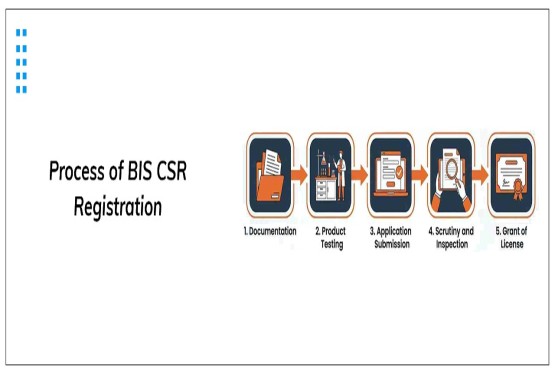
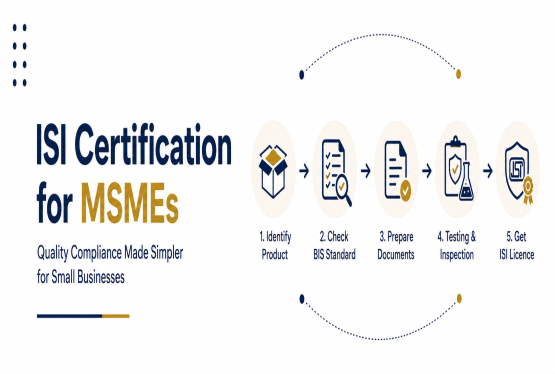
BIS Certification Process at a Glance
Although the exact procedure depends on the product and certification scheme, the process generally includes:
- Product applicability assessment
- Identification of relevant Indian Standard
- Factory readiness assessment
- Preparation of required documents
- Online application filing
- Product testing
- Factory inspection, where applicable
- Clarification and compliance response
- Grant of BIS licence
- Use of ISI Mark as per approved conditions
The process should be handled carefully because mistakes in the early stages can create unnecessary delays later.
Need Help with BIS ISI Certification?
For businesses planning to manufacture, import or sell regulated products in India, BIS compliance should be treated as an important part of market-entry planning. Compliance Calendar LLP assists businesses with BIS applicability checks, Indian Standard identification, application documentation, testing coordination, factory inspection preparation and certification support. If you are unsure whether your product requires an ISI Mark, it is better to check before production or shipment.
FAQs
Q1. What is BIS ISI Certification?
Ans. BIS ISI Certification is a product certification system under which eligible manufacturers can obtain permission to use the ISI Standard Mark on products that comply with the applicable Indian Standard.
Q2. Is BIS ISI Certification mandatory for all products?
Ans. No. BIS ISI Certification is mandatory only for products covered under compulsory certification requirements, including applicable Quality Control Orders.
Q3. Who can apply for an ISI Mark licence?
Ans. The manufacturer of the product is generally the eligible applicant. The licence is linked to the manufacturing unit and the approved product.
Q4. Can an importer apply for BIS ISI Certification?
Ans. In most cases, the actual manufacturer is required to obtain the licence. Importers should ensure that the products they import are covered by a valid BIS licence where certification is mandatory.
5. Do foreign manufacturers need BIS certification?
Ans. Yes, foreign manufacturers supplying products covered under mandatory BIS requirements may need to obtain certification through the applicable BIS route before selling those products in India.
6. How do I know whether my product requires an ISI Mark?
Ans. You need to identify the product category, applicable Indian Standard and any relevant Quality Control Order. A professional BIS applicability assessment can help determine whether certification is mandatory.
7. Is factory inspection required for BIS ISI Certification?
Ans. Factory inspection may be required depending on the applicable certification scheme. BIS may verify manufacturing infrastructure, testing facilities, quality control systems and production processes.
8. How long does BIS ISI Certification take?
Ans. The timeline depends on the product, testing requirements, factory readiness, documentation and clarification requirements. Proper preparation can help reduce avoidable delays.
9. Can a product be sold before BIS certification is received?
Ans. If the product is covered under mandatory BIS certification, selling or distributing it without the required certification may lead to compliance issues. Certification should be completed before commercial sale where required.
10. How can Compliance Calendar LLP help with BIS Certification?
Ans. Compliance Calendar LLP can assist with product applicability checks, identification of the correct Indian Standard, documentation, application filing, testing coordination, factory inspection preparation and overall BIS certification support.


_crop10_thumb.jpg)


_crop10_thumb.jpg)


-Form_crop10_thumb.jpg)

_crop10_thumb.jpg)


_learn_crop10_thumb.jpeg)


_crop10_thumb.jpg)

_crop10_thumb.jpg)


_crop10_thumb.jpg)




_for_Foreign_Directors_learn_crop10_thumb.jpeg)


_Act,_2015_learn_crop10_thumb.jpg)










_learn_crop10_thumb.jpg)




































_crop10_thumb.jpg)

_crop10_thumb.jpg)
_(1)_crop10_thumb.jpg)







_crop10_thumb.png)






_crop10_thumb.jpg)

_crop10_thumb.jpg)






_crop10_thumb.png)

_crop10_thumb.jpg)







_crop10_thumb.png)