




Gold and silver have always held significant importance in India, not only as jewellery but also as a form of investment and financial security. However, ensuring the purity and authenticity of these precious metals has always been a major concern for consumers. To protect buyers and bring transparency to the jewellery market, the Bureau of Indian Standards (BIS) introduced the hallmarking system for gold and silver articles. BIS Hallmarking is a certification system that verifies the purity of precious metal jewellery and artefacts. It assures consumers that the gold or silver article they purchase meets the prescribed purity standards. With increasing awareness among customers and stricter compliance requirements for jewellers, BIS hallmarking has become an essential part of the precious metal industry.
In 2026, BIS continues to strengthen hallmarking regulations with updated compliance requirements, revised hallmarking charges, and greater emphasis on digital traceability through the Hallmark Unique Identification (HUID) system. This guide explains the BIS Hallmarking Rules for Gold and Silver in 2026, including registration requirements, hallmark symbols, HUID verification, fees, benefits, penalties, and compliance requirements for jewellers.
What is BIS Hallmarking?
BIS Hallmarking is an official certification process conducted through BIS-recognised Assaying and Hallmarking Centres (AHCs) to verify the purity of gold and silver jewellery and articles. The hallmark acts as a guarantee that the precious metal contains the stated amount of pure gold or silver. The system helps prevent customers from being charged for higher purity while receiving lower-quality metal.
The BIS hallmark generally includes:
- BIS Standard Mark
- Purity/Fineness Grade
- Hallmark Unique Identification (HUID) Number
The HUID system provides a unique identification number for every hallmarked gold jewellery article, allowing customers to verify details through BIS platforms.
Importance of BIS Hallmarking for Gold and Silver
1. Ensures Purity Assurance
The biggest advantage of hallmarking is that it confirms the purity of precious metals. Customers can confidently purchase jewellery knowing that the purity mentioned on the article has been tested and certified.
For example:
- 22K916 means 22 carat gold with 91.6% purity
- 18K750 means 18 carat gold with 75% purity
- 14K585 means 14 carat gold with 58.5% purity
2. Protects Consumer Interest
Gold and silver purchases involve significant financial value. Without proper certification, customers may face risks such as:
- Lower purity than promised
- Difficulty during resale
- Reduced exchange value
BIS hallmarking provides transparency between jewellers and buyers.
3. Improves Market Transparency
The hallmarking system creates accountability among manufacturers, wholesalers, and retailers. It ensures that jewellery businesses maintain quality standards and follow regulatory requirements.
BIS Hallmarking Rules for Gold Jewellery in 2026
Gold jewellery sold in India must comply with BIS hallmarking requirements wherever mandatory hallmarking rules apply. Jewellers dealing with hallmarked gold jewellery are required to obtain BIS registration and ensure that jewellery articles are tested and marked through authorised Assaying and Hallmarking Centres. According to BIS guidelines, jewellers can apply online through the BIS portal for registration to sell hallmarked gold and silver jewellery.
BIS Hallmarking Rules for Silver Jewellery in 2026
Silver jewellery and artefacts are also covered under the BIS hallmarking. Silver articles can be hallmarked based on prescribed purity grades. Similar to gold jewellery, silver articles undergo testing at recognised Assaying and Hallmarking Centres before receiving the BIS hallmark. Hallmarking helps customers identify genuine silver articles and reduces the possibility of misleading purity claims.
Hallmark Unique Identification (HUID) Number
The Hallmark Unique Identification Number (HUID) is a six-digit alphanumeric code assigned to individual hallmarked gold jewellery articles.
The purpose of HUID is to:
- Provide traceability of jewellery articles
- Allow customers to verify authenticity
- Improve enforcement and monitoring
- Reduce chances of counterfeit hallmarking
Consumers can verify HUID details using BIS verification facilities and the BIS CARE application.
Before purchasing gold jewellery, customers should check:
? BIS logo
? Purity grade
? HUID number
? Jeweller details
BIS Hallmarking Charges Updated in 2026
BIS revised hallmarking charges applicable to gold and silver articles in 2026.
The updated charges include:
|
Article |
Revised Hallmarking Charge |
|
Gold Articles |
?75 per article |
|
Silver Articles |
?35 per article |
The minimum consignment charges also apply as prescribed under BIS regulations. The revised gold hallmarking fee increased from ?45 to ?75 per article, while silver charges remained unchanged. These charges are applicable for hallmarking services provided through authorised centres.
Who Needs BIS Hallmark Registration?
The following businesses generally require BIS hallmark registration:
1. Jewellery Manufacturers
Manufacturers producing gold or silver jewellery must ensure that their products comply with BIS hallmarking requirements.
2. Retail Jewellers
Retailers selling hallmarked jewellery must obtain BIS registration and follow applicable compliance obligations.
3. Importers and Traders
Businesses importing or trading precious metal jewellery may also need to comply with BIS requirements depending on their activities.
BIS Hallmark Registration Process for Jewellers
The registration process generally involves the following steps:
Step 1: Online Application
The jeweller needs to apply through the BIS online portal.
Step 2: Submission of Details
Basic business details, establishment information, and required declarations must be provided.
Step 3: BIS Registration Approval
After successful submission, BIS registration is issued as per applicable procedures.
Step 4: Sending Jewellery for Hallmarking
Jewellers submit jewellery articles to BIS-recognised Assaying and Hallmarking Centres.
Step 5: Testing and Marking
The articles are tested for purity and marked with the BIS hallmark and HUID.
Documents Required for BIS Hallmark Registration
Generally, jewellers may require:
- PAN Card of business
- Business registration proof
- Address proof
- Identity proof of authorised person
- GST registration details
- Details of jewellery establishment
- Other documents as required by BIS
The exact requirements may vary depending on the nature of the business.
BIS Assaying and Hallmarking Centres (AHCs)
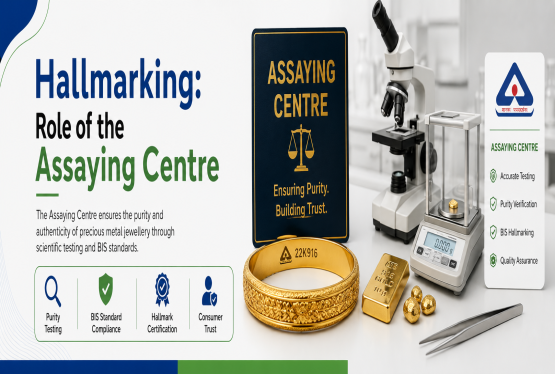
Assaying and Hallmarking Centres are laboratories recognised by BIS for testing precious metal articles.
Their responsibilities include:
- Testing purity of gold and silver articles
- Conducting scientific analysis
- Applying BIS hallmark
- Maintaining testing records
These centres play an important role in maintaining reliability and accuracy in the hallmarking system.
Penalties for Non-Compliance with BIS Hallmarking Rules
Selling jewellery without proper hallmarking or using false hallmark marks may result in legal consequences.
Possible actions may include:
- Monetary penalties
- Seizure of non-compliant articles
- Suspension or cancellation of registration
- Legal proceedings under applicable laws
Jewellers must ensure that their products comply with BIS standards to avoid regulatory issues.
Responsibilities of Jewellers Under BIS Hallmarking Rules
Jewellers should:
- Sell only compliant hallmarked jewellery
- Maintain purchase and sale records
- Ensure correct purity declaration
- Display BIS registration details
- Avoid misuse of hallmark symbols
- Keep updated with BIS amendments
Regular compliance checks help businesses maintain customer trust and avoid penalties.
Benefits of BIS Hallmarking for Customers
Better Purchase Confidence
Customers can verify purity before investing in expensive jewellery.
Higher Resale Value
Hallmarked jewellery generally receives better acceptance during resale or exchange.
Protection Against Fraud
The system reduces chances of customers paying higher prices for lower-quality metal.
Transparency in Jewellery Market
Hallmarking creates a standardised system for precious metal transactions.
How Consumers Can Verify BIS Hallmarked Jewellery?
Before buying gold or silver jewellery, customers should:
- Check the BIS logo.
- Verify purity/fineness marking.
- Check the HUID number.
- Verify HUID details through BIS verification tools.
- Purchase from registered jewellers.
Consumers should always ask for proper invoices mentioning purity details and jewellery specifications.
Role of Compliance Support for BIS Hallmarking
Businesses dealing in gold and silver jewellery must carefully manage regulatory requirements to avoid compliance problems.
Professional compliance assistance can help jewellers with:
- BIS registration guidance
- Document preparation
- Application filing support
- Regulatory updates
- Compliance review
Proper guidance ensures smoother registration and reduces chances of rejection or delays.
Conclusion
BIS Hallmarking Rules for Gold and Silver in 2026 focus on improving purity assurance, consumer protection, and transparency in the jewellery sector. With increased emphasis on HUID-based traceability and updated hallmarking charges, jewellers must ensure proper compliance with BIS requirements.
For consumers, buying BIS hallmarked jewellery provides confidence regarding purity and authenticity. For jewellers, maintaining BIS compliance is essential to build trust, avoid penalties, and operate smoothly in the regulated precious metal market. As regulations continue to evolve, businesses should regularly monitor BIS updates and maintain proper documentation to ensure continuous compliance.
FAQs
Q1. What is BIS Hallmarking for gold and silver?
Ans. BIS Hallmarking is a certification system that confirms the purity of gold and silver jewellery through testing conducted by BIS-recognised Assaying and Hallmarking Centres.
Q2. Is BIS hallmarking mandatory for gold jewellery?
Ans. Yes, BIS hallmarking is mandatory for gold jewellery in areas covered under mandatory hallmarking rules. Jewellers must follow BIS requirements before selling applicable gold articles.
Q3. What is HUID in BIS hallmarking?
Ans. HUID stands for Hallmark Unique Identification Number. It is a unique six-digit alphanumeric code assigned to hallmarked gold jewellery for traceability and verification.
Q4. What are the BIS hallmarking charges in 2026?
Ans. In 2026, the hallmarking charge for gold articles was revised to ?75 per article, while silver article hallmarking charges remained ?35 per article.
Q5. Can customers verify gold jewellery HUID online?
Ans. Yes, customers can verify HUID details through BIS verification facilities and the BIS CARE application.
Q6. Who requires BIS Hallmark Registration?
Ans. Jewellery manufacturers, retailers, and businesses dealing with hallmarked gold and silver jewellery may require BIS registration according to applicable rules.
Q7. What marks are present on BIS hallmarked gold jewellery?
Ans. A BIS hallmarked gold article generally contains the BIS logo, purity/fineness mark, and HUID number.
Q8. What happens if a jeweller sells non-compliant jewellery?
Ans. Selling jewellery without required hallmark compliance or using false marks may lead to penalties and regulatory action under applicable laws.
Q9. Is silver jewellery also covered under BIS hallmarking?
Ans. Yes, BIS hallmarking provisions also apply to silver jewellery and artefacts according to applicable standards.
Q10. How can jewellers maintain BIS compliance?
Ans. Jewellers should maintain valid BIS registration, use authorised hallmarking centres, maintain records, and follow updated BIS guidelines.


_crop10_thumb.jpg)


_crop10_thumb.jpg)


-Form_crop10_thumb.jpg)

_crop10_thumb.jpg)


_learn_crop10_thumb.jpeg)


_crop10_thumb.jpg)

_crop10_thumb.jpg)


_crop10_thumb.jpg)




_for_Foreign_Directors_learn_crop10_thumb.jpeg)


_Act,_2015_learn_crop10_thumb.jpg)











_learn_crop10_thumb.jpg)















































_crop10_thumb.jpg)


_crop10_thumb.jpg)


_(1)_crop10_thumb.jpg)















_crop10_thumb.png)

















_crop10_thumb.jpg)


_crop10_thumb.jpg)








_crop10_thumb.png)


_crop10_thumb.jpg)









_crop10_thumb.png)
